 29°C
29°C

Dominican Republic Promotes CO2 Refrigeration to Protect the Ozone Layer
The Dominican Republic is accelerating the adoption of environmentally friendly refrigeration technologies through a CO2 refrigeration project designed to phase out ozone-depleting substances while improving energy efficiency and supporting the country's climate commitments.


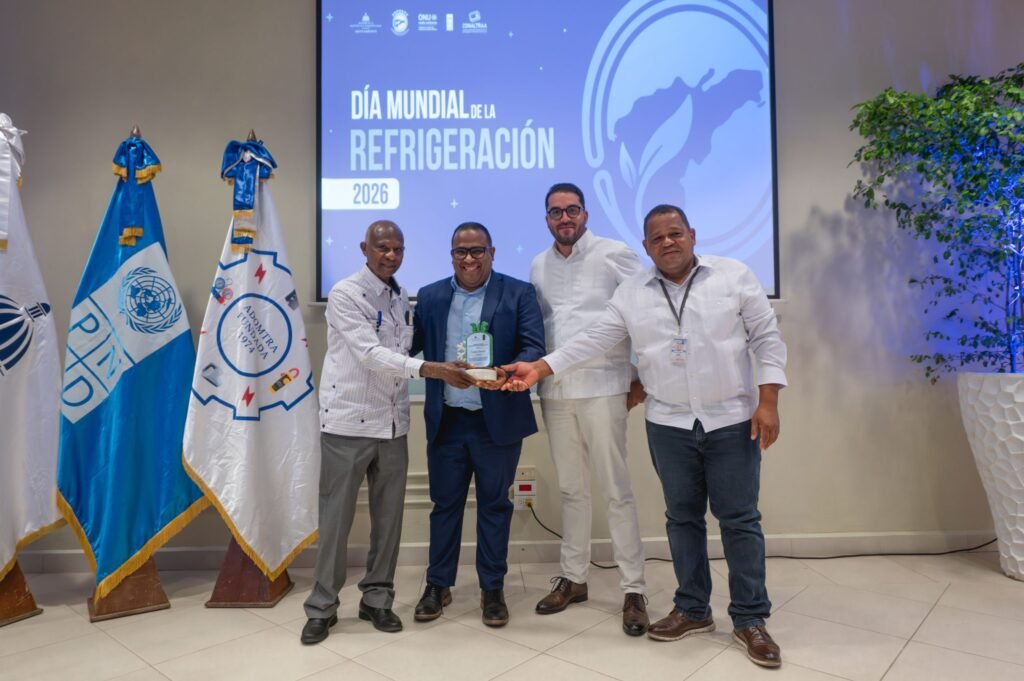
The Ministry of Environment and Natural Resources marked World Refrigeration Day by highlighting progress on the Dominican Republic’s CO2 refrigeration project, an initiative aimed at promoting cleaner, more energy-efficient cooling technologies as the country phases out substances that damage the ozone layer.
The project forms part of the third phase of the Hydrochlorofluorocarbons (HCFC) Phase-out Management Plan, which supports the gradual replacement of ozone-depleting refrigerants with environmentally sustainable alternatives that also contribute to climate change mitigation.
Supporting Sustainable Cooling Technologies
Officials emphasized that refrigeration plays a critical role in modern society by preserving food, protecting medicines and vaccines, improving energy efficiency, and supporting key sectors of the economy. The transition to low-impact refrigerants is considered an important step toward sustainable development and compliance with international environmental commitments.
The initiative is being implemented through a partnership involving the National Ozone Program of the Ministry of Environment, the United Nations Development Programme (UNDP), Grupo Ramos, the Dominican Association of Refrigeration and Air Conditioning Technicians (ADOMTRA), and the National Institute for Technical and Vocational Training (INFOTEP).
Preparing the Industry for the Future
Mario Pérez, director of the National Ozone Program, said the project lays the groundwork for accelerating the country’s transition to refrigeration systems that are cleaner, more efficient, and better suited to the Dominican Republic’s climate.
“We are working alongside all stakeholders in the sector to promote refrigeration that is more efficient, sustainable, and environmentally responsible,” Pérez said.
Omar Segura, dean of the Faculty of Engineering and Architecture at the Autonomous University of Santo Domingo (UASD), noted that refrigeration extends far beyond comfort, describing it as essential for food preservation, healthcare, industrial operations, and the sustainability of modern societies.
Meanwhile, Ramona Mejía, director of Validation and Certification at INFOTEP, highlighted the evolving role of refrigeration technicians, describing them as key contributors to energy efficiency and environmental protection.
Industry Collaboration and Technical Training
Roberto Samuel Climes, president of ADOMTRA, reaffirmed the association’s commitment to promoting the responsible use of refrigerants, strengthening technical expertise, and creating training opportunities for future professionals in the refrigeration sector.
Representing Grupo Ramos, maintenance and project management specialist Omar David Infante Moya presented the results of the company’s CO2 refrigeration project, which has been implemented in both new and existing facilities with technical support from the Ministry of Environment and the UNDP.
Engineer Jesús Rivera Dorado, president of Rivera & Asociados, also delivered a presentation emphasizing the importance of energy-efficient refrigeration systems in protecting the ozone layer and reducing the impacts of climate change.
Advancing Environmental Commitments
The event brought together representatives from government agencies, universities, international organizations, private companies, students, and technical associations, all of whom stressed the importance of continued training, innovation, and institutional cooperation.
Officials said expanding the adoption of environmentally sustainable refrigeration technologies will help the Dominican Republic protect the ozone layer, improve energy efficiency, and fulfill its international climate and environmental commitments while supporting long-term economic development.