 24°C


Dominican Disability Law Reform Should Guarantee Pain Management and Home Healthcare
A Dominican medical association is calling for changes to the country's disability legislation to guarantee comprehensive pain treatment, home-based medical services and continued rehabilitation for people unable to travel to healthcare facilities.


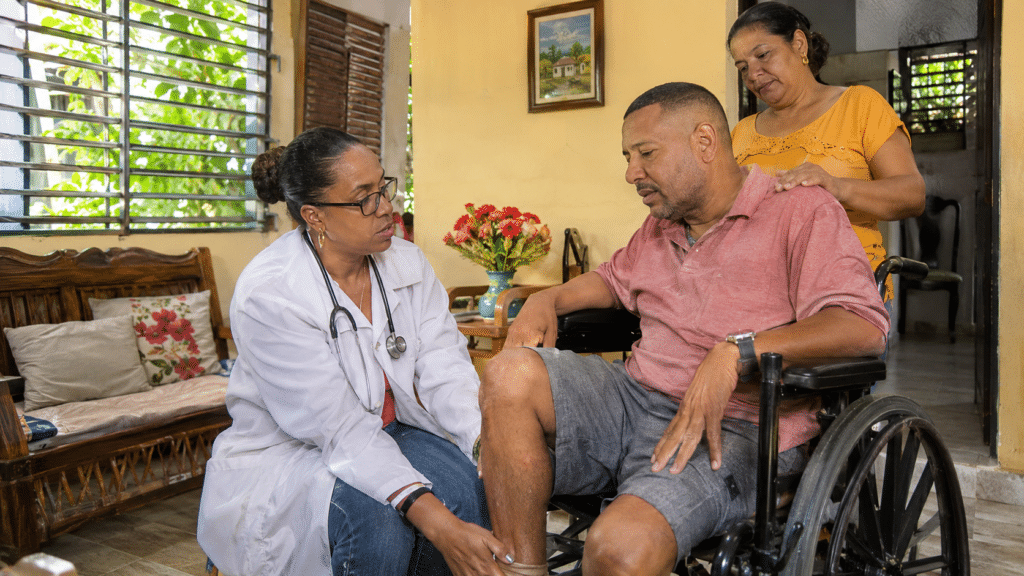
The proposed reform of the Dominican Republic’s Disability Law should recognize pain management as an essential component of healthcare and guarantee medical assistance for people who cannot reach hospitals or clinics, according to the Dominican Association for the Study and Treatment of Pain and Palliative Care (Adetdycp).
The organization has submitted a proposal to the Special Disability Commission of the Chamber of Deputies, arguing that access to assistive devices alone does not guarantee meaningful improvements in patients’ quality of life.
A wheelchair, for example, may help someone move around, but persistent pain can still prevent that person from sleeping, participating in rehabilitation sessions or leaving home. Adetdycp wants lawmakers to address these limitations through a more comprehensive approach to disability care.
The proposal calls for timely medical assessments, appropriate pain treatment, rehabilitation, psychological support and follow-up care after hospital discharge. It also recommends establishing clear institutional responsibilities, funding mechanisms and publicly accessible performance indicators.
“No one should have to wait until they have irreversibly lost their functional abilities before receiving care,” said Dr. Bethania Martínez del Villar, the association’s president.
Proposed reform would expand access to comprehensive pain treatment
Adetdycp argues that pain can become a significant obstacle to rehabilitation, particularly for people recovering from serious injuries, undergoing surgery or living with conditions affecting their mobility and independence.
Under the proposed changes, healthcare services would need to evaluate not only whether patients receive prescribed treatments or assistive equipment, but also whether those interventions produce tangible improvements in their daily lives.
Suggested indicators include patients’ ability to rest, improvements in mobility, participation in rehabilitation programs and continued access to prescribed treatment.
The association says these outcomes should help authorities determine whether healthcare interventions are actually improving patients’ functional abilities.
“We cannot call it inclusion based on statistics showing how many devices have been distributed if we do not know what happened to the person afterward,” Martínez del Villar said.
Home healthcare is already included in Dominican disability legislation
The proposal also seeks to make home-based medical care a functioning service rather than a provision that exists primarily on paper.
Article 68 of Law 5-13, the Dominican Republic’s legislation on equal rights for people with disabilities, assigns the National Disability Council (CONADIS) responsibility for supervising the creation and operation of home healthcare units in hospitals under the Ministry of Public Health.
The law also requires CONADIS to coordinate and promote a specific care protocol for people with disabilities.
Meanwhile, Article 14 of Decree 363-16, which regulates the legislation, assigns the Ministry of Public Health (MISPAS) and the National Health Service (SNS), in coordination with CONADIS, responsibility for ensuring that people with disabilities receive home healthcare through primary care units.
The regulation also provides for the development of a dedicated home healthcare protocol.
However, Adetdycp points to coordination difficulties identified in CONADIS’s 2023-2026 Institutional Strategic Plan, particularly involving Public Health authorities and the National Health Service. The association says the diagnosis also identified a lack of guidelines needed to implement home-based services.
To clarify the current situation, it is requesting an updated report detailing which protocol is in force, where home healthcare services operate, how many patients receive visits, which healthcare professionals participate and how the services are financed.
“We are not asking the government to invent a new obligation from scratch. We are asking it to turn an existing responsibility into a real and verifiable service,” the association’s president said.
Rehabilitation should continue after hospital discharge
Another central element of the proposal is the introduction of structured follow-up care for people recovering from traumatic injuries, amputations, nerve damage or persistent postoperative pain when their condition places them at risk of functional deterioration.
The association refers to the Jet Set nightclub tragedy as an example of why medical and rehabilitation support must continue beyond the initial emergency response. It does not assume that every survivor will develop a permanent disability, but argues that people recovering from serious injuries may require sustained assistance.
For patients whose pain makes it difficult to begin or continue rehabilitation, the organization wants clearer answers about who is responsible for arranging treatment and ensuring that people unable to leave their homes are not left without assistance.
Adetdycp also distinguishes between pain that causes functional limitations and pain experienced by someone who already has a disability. It argues that each case should be assessed individually, without automatically treating a pain diagnosis as proof of disability.
Proposal calls for public accountability and patient participation
Beyond expanding healthcare services, the association wants the revised legislation to require regular reports covering access to treatment, waiting times, geographical coverage and clinical outcomes.
It also proposes involving people with disabilities, caregivers and scientific medical organizations in the design and monitoring of healthcare services.
The objective is to establish a system in which assistive devices, pain management, rehabilitation and home healthcare work together rather than operate as disconnected interventions.
The proposal places responsibility on the relevant public institutions to coordinate primary care, specialist services, rehabilitation and home visits according to patients’ individual needs.
For people living with disabilities and their families, the distinction could be significant: receiving a wheelchair or leaving a hospital should not mark the end of medical support when pain or limited mobility continues to affect everyday life.
“We are not asking for fewer assistive devices. We are asking for their delivery to be the beginning, not the end, of a comprehensive response,” Martínez del Villar said.
The proposed changes now place the focus on how lawmakers and the responsible institutions address access to pain treatment, rehabilitation and home healthcare as part of the disability law reform.