 28°C
28°C

Leptospirosis In The Dominican Republic: What A New Study Found
A study published in Scientific Reports has identified marked geographic differences in the factors associated with previous Leptospira infection in the Dominican Republic, with freshwater exposure, river density and rainfall standing out in Espaillat and reported rat exposure emerging in San Pedro de Macorís. The research does not predict future outbreaks; instead, it shows how the environmental and social conditions linked to leptospirosis can vary substantially from one province to another, offering a more detailed picture of where prevention efforts may need to be tailored.


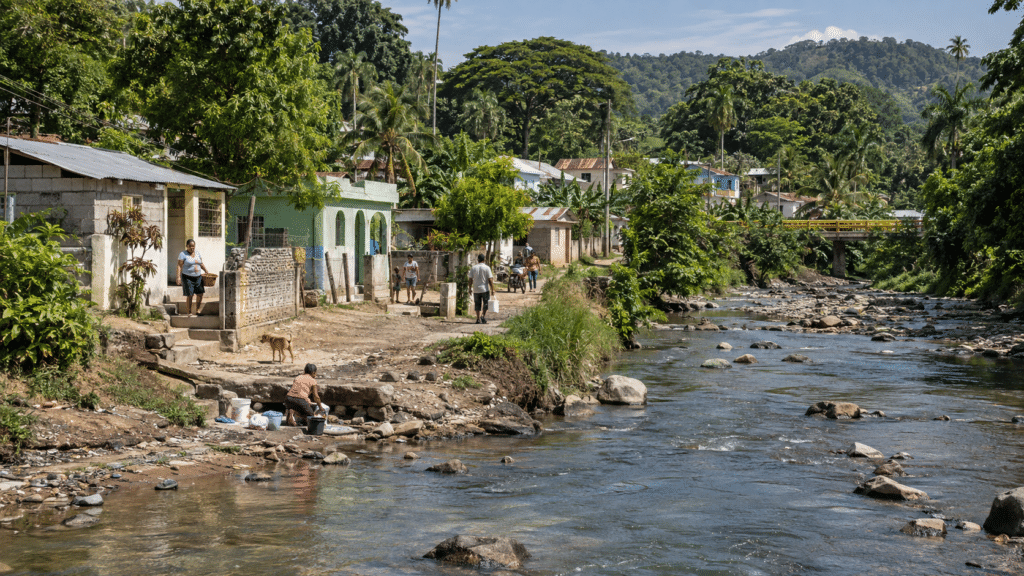
A study published in Scientific Reports has provided one of the most detailed examinations to date of how environmental and sociodemographic conditions associated with leptospirosis vary within the Dominican Republic. Rather than treating the country as a single epidemiological setting, researchers analyzed household-level data from 2,078 people in 23 communities in Espaillat and San Pedro de Macorís, using geographic statistical models to examine how potential risk factors changed from one location to another.
The central finding is that the factors associated with evidence of previous Leptospira infection were not uniform across the two provinces. In Espaillat, freshwater exposure, nearby rivers, bare ground and higher average rainfall were associated with greater odds of seropositivity. In San Pedro de Macorís, reported exposure to rats was associated with higher odds. Older age and male sex were also associated with higher odds in both provinces.
That distinction matters for public health because leptospirosis is not driven by a single pathway. The disease is caused by pathogenic bacteria of the genus Leptospira and is commonly acquired through contact with urine or tissues from infected animals or indirectly through contaminated water or soil. The bacteria can therefore connect environmental conditions, animal reservoirs, human behavior and infrastructure.
What The Dominican Republic Study Investigated
The research, led by Beatris Mario Martin and colleagues, was published on July 25, 2025, in Scientific Reports, a peer-reviewed journal published by Nature Portfolio. Its objective was not to count current cases or forecast an outbreak. Instead, the researchers wanted to determine whether environmental and sociodemographic factors associated with leptospirosis seropositivity changed geographically at a fine scale.
The work built on a larger national serosurvey conducted between June 30 and October 12, 2021. That survey included 6,683 participants between 6 and 97 years old from all 31 Dominican provinces and the National District. For the Scientific Reports analysis, however, researchers concentrated on two provinces that had been oversampled because they were also part of ongoing clinical surveillance for acute febrile illnesses: Espaillat in the northwest and San Pedro de Macorís in the southeast.
The distinction between the national survey and the final analytical sample is important. The study does not provide a nationwide map of leptospirosis risk at the household level. Its detailed geographic analysis covers only two of the country’s 31 provinces, plus the National District as part of the country’s broader administrative structure. The authors explicitly caution that the results should not automatically be generalized to the rest of the Dominican Republic.
How Researchers Measured Previous Infection
The study used seropositivity as its principal health outcome. This means researchers looked for antibodies against Leptospira in blood samples rather than simply counting people who had recently been diagnosed with symptomatic disease.
Field teams conducted interviews, collected venous blood and recorded the GPS coordinates of participating households. Questionnaires gathered information about individual characteristics such as age, sex, occupation and education, as well as household conditions including access to piped water, flooring materials and vehicle ownership. Environmental information was then linked to the geographic location of each household.
The blood samples were analyzed using the microscopic agglutination test (MAT), a serological method used to detect antibodies against Leptospira. The researchers tested against a panel of 20 pathogenic serovars, and a titer of at least 1:100 was considered seropositive and indicative of previous infection. Testing was performed at the U.S. Centers for Disease Control and Prevention’s Zoonoses and Select Agent Laboratory in Atlanta.
This approach provides an important advantage over relying exclusively on reported clinical cases: antibodies can reveal evidence of infection that may not have resulted in a recorded diagnosis. At the same time, seropositivity does not mean that a person was sick at the time of the survey, nor does it establish when the infection occurred. The study therefore measures evidence of prior exposure rather than a current outbreak.
The Sample Showed A Substantial Level Of Seropositivity
After participants with missing data were excluded, 2,078 people from 23 communities were included in the analysis. Their median age was 39 years, 64% were female, and 43.5% lived in rural communities. Overall, 237 participants, or 11.4%, were seropositive.
The proportion differed between the two provinces. In Espaillat, 127 participants, or 15.8%, were seropositive. In San Pedro de Macorís, 110 participants, or 8.6%, were seropositive. These figures describe the study population and should not be interpreted as national prevalence estimates.
The broader national survey on which the analysis was based had previously produced an adjusted leptospirosis seroprevalence estimate of 11.3% for the two target provinces. The new analysis goes further by asking why the probability of seropositivity may differ from one household location to another.
Why The Researchers Used Geographic Modeling
A conventional statistical model can identify whether a factor is associated with an outcome across a population. But it can miss an important feature of diseases influenced by local environmental conditions: the strength of an association may change from one place to another.
To address that problem, the researchers used generalized geographically weighted regression, or GGWR. In simple terms, the method allows statistical relationships to vary geographically rather than assuming that the same relationship applies everywhere.
The researchers first used generalized linear mixed-effects regression to identify variables associated with seropositivity in each province. They then applied geographically weighted regression to examine how the strength of those associations changed across locations. Because the two provinces differed substantially in their seroprevalence and geography, the final models were constructed separately rather than treating the provinces as one homogeneous area.
The environmental data included land-cover characteristics, river density and precipitation. The researchers also examined household and individual characteristics, including age, sex, occupation and reported exposure to freshwater or rats. Geographic information was linked to individual households using their recorded GPS locations.
Espaillat: Water And The Local Environment Stood Out
The pattern in Espaillat was strongly connected to water and the physical environment. In the province’s multivariable model, participants reporting freshwater exposure had substantially higher odds of seropositivity. The estimated odds ratio was 13.33, although the confidence interval was wide, reflecting uncertainty around the estimate.
The analysis also found associations with river density and long-term precipitation. Households in the highest quartile of river density within a 250-meter buffer had an odds ratio of 6.78, while the highest quartile of average precipitation over the preceding five years had an odds ratio of 5.41. These figures describe statistical associations with seropositivity; they do not demonstrate that rainfall or rivers directly caused the infections.
The geographically weighted model showed that the strength of the freshwater association itself varied across Espaillat. Its median odds ratio was 6.51, with estimates ranging from 5.94 to 6.98 across the study areas. This geographic variation was one of the reasons the researchers argued that public health interventions should account for local conditions rather than applying an identical risk profile to an entire province.
The study also identified bare ground as an environmental factor associated with seropositivity. In the GGWR analysis, bare-ground coverage above 1.44% around the household was associated with an odds ratio of approximately 3.70. The result illustrates how the analysis combined household-level information with characteristics of the surrounding landscape rather than looking only at individual behavior.
San Pedro de Macorís: A Different Risk Pattern
The picture changed considerably in San Pedro de Macorís. Water-related variables that were important in Espaillat did not show the same association in this province. Instead, reported exposure to rats emerged as a significant factor, with an odds ratio of 2.85 in the multivariable model. The geographically weighted analysis produced a median odds ratio of 2.59, with geographic variation in the strength of the association.
The difference is significant from a public-health perspective because it shows why a national label such as “leptospirosis risk” can conceal different local transmission environments. The authors point to differences in urbanization and economic activity as possible explanations for why environmental drivers were not identical between the provinces, while emphasizing that these are interpretations of the observed patterns rather than proof of a particular causal mechanism.
The researchers note that Espaillat has a much larger rural population share than San Pedro de Macorís in the data used for contextual analysis: approximately 54.7% compared with 5.9%. Farming activities also differ between the provinces. Such differences provide context for why contact with freshwater, land use and animals might have different relevance in different places.
Age And Sex Were Consistently Associated With Seropositivity
Despite the differences between provinces, two demographic patterns appeared in both models: older age groups and male sex were associated with higher odds of seropositivity.
In Espaillat, compared with participants aged 5 to 19, the odds ratios were 3.66 for those aged 20 to 34, 4.48 for those aged 35 to 49, 3.95 for those aged 50 to 64, and 11.80 for those aged 65 or older. Male participants had an odds ratio of 3.40 compared with females.
In San Pedro de Macorís, the corresponding age associations were also elevated: 4.90 for ages 20 to 34, 9.33 for ages 35 to 49, 6.51 for ages 50 to 64 and 12.65 for those 65 and older. Male participants had an odds ratio of 4.72.
The researchers suggest that repeated exposure over a lifetime and the persistence of antibodies after infection could partly explain the higher seropositivity observed among older participants. The findings do not establish that age itself causes infection. Rather, age can represent accumulated exposure over time as well as differences in activities and living conditions.
Outdoor Work Was More Complicated Than Expected
Leptospirosis is often associated with outdoor occupations such as farming and animal husbandry because those activities can increase contact with soil, water and animals. The Dominican Republic study, however, did not find a statistically significant association between outdoor work and seropositivity in the conventional multivariable models for either province.
The geographically weighted models told a more nuanced story. Outdoor work showed higher odds in parts of Espaillat but not in San Pedro de Macorís. The authors suggest that the difference may reflect the greater importance of farm-related activities in Espaillat. This is an example of why the study’s geographic approach matters: an association that is weak or absent at the provincial level may still vary considerably between local areas.
What The Findings Say About Rainfall And Flooding
Water is central to the biology of leptospirosis. Pathogenic Leptospira can persist in moist soil and freshwater, and heavy rainfall and flooding have been associated with leptospirosis outbreaks in many settings. The Scientific Reports study found that several water-related variables were associated with seropositivity in Espaillat, but not in the same way in San Pedro de Macorís.
This distinction is particularly relevant in the Dominican Republic, where hurricanes, tropical storms and heavy rainfall can produce flooding and other environmental disruptions. The country’s health authorities have previously issued epidemiological alerts after major rainfall and flooding because such conditions can increase risks from diseases including leptospirosis.
But the study should not be read as a forecast that a particular storm or period of rainfall will produce an outbreak. The researchers analyzed evidence of previous infection in a cross-sectional survey conducted in 2021. Their statistical associations identify factors connected with seropositivity in the sampled populations; they do not establish a time sequence capable of predicting future outbreaks.
Why Rats Matter In The San Pedro de Macorís Findings
Rodents are important reservoirs in the epidemiology of leptospirosis because infected animals can shed Leptospira bacteria in urine. Human exposure can occur when contaminated material reaches water, soil or surfaces that come into contact with the body.
In San Pedro de Macorís, the study found a significant association between reported rat exposure and seropositivity. The authors discuss sanitation, solid-waste management and rodent populations as relevant considerations in urban environments, although some of those factors were not directly measured at the household level in this analysis.
The Pan American Health Organization has likewise emphasized environmental sanitation and appropriate solid-waste management as part of leptospirosis risk reduction, particularly after disasters and in locations where displaced populations may be living in temporary shelters.
What The Results Mean For Public Health
The practical significance of the research is less about identifying a single national “risk factor” and more about showing that prevention can need a local geographic focus.
For Espaillat, the study authors point toward measures that reduce or manage exposure to potentially contaminated freshwater, alongside attention to environmental conditions associated with rivers and rainfall. For San Pedro de Macorís, they identify rodent control and waste management as areas that could receive greater attention. These are interpretations based on the study’s observed associations, not evidence from a trial showing that any particular intervention will prevent a specific number of infections.
This approach is consistent with the way leptospirosis is understood epidemiologically: transmission emerges from interactions among people, animal reservoirs and the physical environment. Conditions that matter in a rural community with frequent freshwater contact may not be the same as those that matter in a densely settled urban area where rodents and waste management play a larger role.
The Dominican Republic’s national surveillance system provides a separate picture based on reported disease rather than antibodies. The Office of National Statistics (ONE) maintains a health statistics series covering suspected leptospirosis cases by year and province from 2014 through 2025. Because surveillance data and serological surveys measure different things, the two sources should not be treated as interchangeable.
Recent Ministry of Public Health surveillance also demonstrates why reported case counts need to be interpreted in their proper time frame. In 2026, the ministry reported confirmed leptospirosis cases through its weekly epidemiological bulletins, with cumulative totals changing during the year. Those surveillance figures represent reported confirmed cases, whereas the 2021 research measured antibodies indicating previous exposure among people sampled in two provinces.
The Study’s Most Important Limitation: Geography
The strongest limitation is also the reason the research is valuable. The analysis is geographically detailed, but it covers only two provinces. The authors explicitly state that this limits the ability to generalize the findings across the Dominican Republic and the wider Caribbean.
That means the results should not be interpreted as evidence that freshwater is the dominant driver of leptospirosis everywhere in the country, or that rat exposure is equally important everywhere. The study demonstrates the opposite: the associations differed between the two locations examined.
The cross-sectional design is another limitation. Because exposure information and serological status were assessed within a survey rather than followed over time, the study cannot establish temporal patterns or determine whether an exposure preceded infection. The authors also note that the research may not capture more recent changes in transmission.
Some Potential Risk Factors Could Not Be Measured In Enough Detail
The researchers also point out limitations in the available environmental and questionnaire data. For example, reported rat exposure was recorded as a binary variable, meaning the analysis did not capture the frequency or intensity of contact with rats. That makes the measure less precise than a detailed exposure assessment.
Similarly, the environmental dataset did not include some potentially important variables, such as farm-animal density and proximity to sewage, because sufficiently detailed spatial data were unavailable. The authors note that these omissions could have affected the performance of the models differently in the two provinces.
The study also combined all Leptospira serogroups in its principal analysis. Different serogroups can have different animal reservoirs and transmission pathways, so combining them may obscure more specific relationships that could matter for targeted interventions.
What The Study Does — And Does Not — Establish
The distinction between association and causation is essential when interpreting the results. An odds ratio greater than one indicates that a particular characteristic was associated with greater odds of seropositivity in the statistical model. It does not, by itself, prove that the characteristic caused the infection.
For example, the association between freshwater exposure and seropositivity in Espaillat could reflect direct exposure to contaminated water, but freshwater contact may also be connected with other unmeasured behaviors or environmental conditions. Likewise, the association between rat exposure and seropositivity in San Pedro de Macorís does not establish that a specific encounter with a rat caused any individual’s infection.
The researchers therefore frame their findings as evidence that can help identify locally important drivers and improve the targeting of public health interventions. They do not present the model as a system for predicting individual infections or forecasting outbreaks.

Why The Findings Matter Beyond The Two Provinces
Although the study cannot be generalized mechanically to every part of the Dominican Republic, its broader lesson is relevant to the country’s public-health planning. Leptospirosis is shaped by the interaction of environmental exposure, human activity, animal reservoirs and infrastructure, so a single national risk profile may be too coarse for some prevention decisions.
The research provides a concrete demonstration of how that problem can be addressed. Instead of asking only whether rainfall, freshwater, rats or occupation are associated with leptospirosis in the country as a whole, the researchers asked where those relationships were stronger or weaker.
That geographic perspective can be particularly useful for a country with substantial variation in settlement patterns, land use, agricultural activity and proximity to rivers and other water sources. It also helps explain why two communities experiencing the same broad weather conditions may not necessarily face identical exposure pathways.
For international readers, the study offers a broader lesson about leptospirosis in tropical environments: environmental risk cannot always be understood from climate or geography alone. The human landscape — including sanitation, waste management, occupation, housing and patterns of contact with animals and water — can determine how environmental conditions translate into opportunities for transmission.
The Dominican Republic’s Surveillance Data Provide A Different Lens
Official surveillance and research-based serology answer different questions. The Ministry of Public Health’s surveillance system is designed to detect and report recognized disease events, while the serosurvey examined antibodies among sampled residents. A person can therefore contribute to a seroprevalence estimate without appearing in routine surveillance records, particularly if the infection was mild, undiagnosed or occurred in the past.
The distinction helps explain why a seropositivity figure should never be compared directly with an annual number of reported clinical cases as though they represented the same measure. ONE’s national health statistics identify a dedicated series for suspected leptospirosis cases by province, while PAHO’s regional data systems also distinguish between reported and confirmed cases depending on the dataset.
The available evidence therefore points to two complementary surveillance needs: continuing routine detection of clinical disease and improving understanding of the underlying exposure landscape. The Scientific Reports study contributes primarily to the second objective by showing where environmental and social associations differ at a much finer geographic scale.
A More Local View Of Leptospirosis
The study’s most consequential finding is not any single odds ratio. It is the geographic variation itself. Espaillat and San Pedro de Macorís, both within the same national health system, displayed different patterns of association between leptospirosis seropositivity and environmental or social conditions.
In Espaillat, freshwater exposure, river density, precipitation and characteristics of the surrounding ground were prominent in the analysis. In San Pedro de Macorís, reported rat exposure was more clearly associated with seropositivity. Older age and male sex were associated with higher odds in both provinces, while outdoor work showed a more localized pattern.
Those findings do not identify a single cause of leptospirosis in the Dominican Republic, nor do they predict when or where an outbreak will occur. They provide something more specific: evidence that the conditions associated with previous exposure can vary substantially over relatively short geographic distances, and that prevention strategies may be more informative when they are built around the environmental and social characteristics of individual communities.
For the Dominican Republic, that makes fine-scale epidemiological research particularly relevant. Understanding where water exposure matters most, where rodent exposure is more important and how these relationships interact with local living and working conditions can help public-health authorities interpret surveillance data with greater precision while avoiding the assumption that the same transmission pattern applies everywhere.