 29°C


More Than 594,000 Older Adults Work in the Dominican Republic
More than 594,000 people aged 60 and older participate in the Dominican Republic's labor market, representing 41.7% of the country's senior population, according to data from the National Statistics Office (ONE). Most are wage earners, while others work independently or operate businesses, highlighting the varied economic circumstances of older Dominicans.


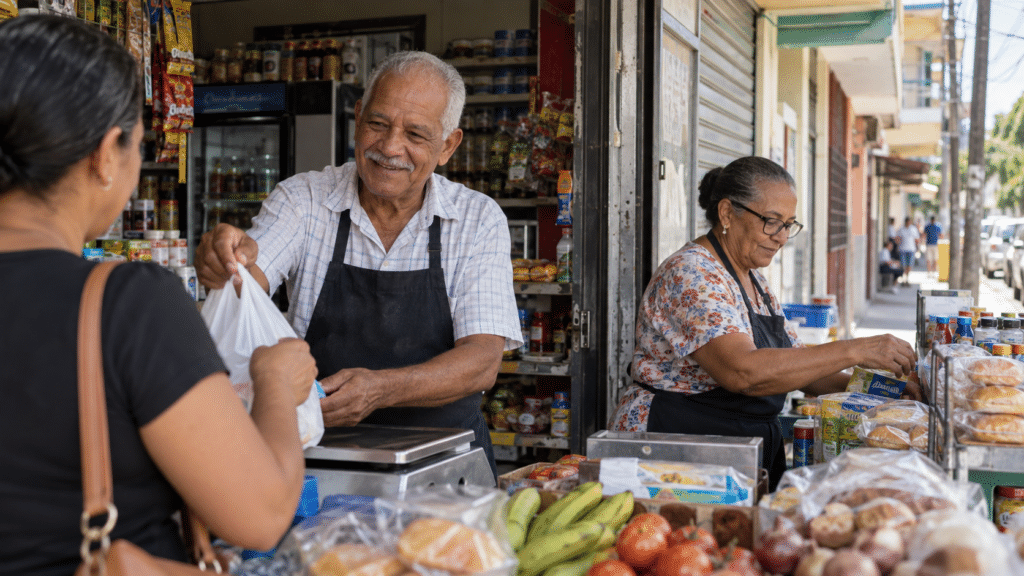
More than 594,000 people aged 60 and older are economically active in the Dominican Republic, according to figures based on the country’s 2022 National Population and Housing Census. The data show that 594,093 older adults participate in the labor market, equivalent to 41.7% of the approximately 1.42 million people in this age group counted by the National Statistics Office (ONE).
Employment takes several forms among older Dominicans, with salaried work accounting for the largest share. Self-employment and business ownership also contribute to their economic activity, while a majority of the country’s population aged 60 and older remains outside the labor force.
Wage Employment Is the Most Common Form of Work
Among older adults who work, 60.4% are classified as salaried employees. Another 25.4% are self-employed, while 10.1% are employers or business owners, according to the reported figures.
These categories reflect different ways older people remain economically active, from working for an employer to running an independent activity or employing others. The figures do not, by themselves, indicate whether these jobs are formal or informal, how much workers earn, or whether their employment is voluntary.
Continued participation in the labor market can be important for older adults who need additional income, want to remain professionally active or continue contributing to household expenses. However, the census figures alone do not establish the reasons individuals continue working after age 60.
Men Account for Two-Thirds of Economically Active Older Adults
The distribution of older workers differs substantially by sex. Men account for 397,991 of the 594,093 economically active people aged 60 and older, representing approximately 67% of the total. Women account for 196,102, or about 33%.
The data also show differences in employment arrangements. Among the reported categories, 29.5% of men work independently, compared with 17.5% of women. Men also represent 11.8% of those classified as employers, while the corresponding figure for women is 6.9%.
The figures indicate that men make up a larger share of the older population participating in the labor market, particularly in self-employment and employer roles. They should not be confused with employment rates calculated separately for all men and women aged 60 and older, which would require the total population of each group as the denominator.
Most Older Adults Are Outside the Labor Force
Despite the number of older people who remain employed or economically active, 830,643 people aged 60 and older, equivalent to 58.3% of the population in this age group, are classified as economically inactive.
Among those outside the labor force, 31.8% are engaged in household work. Another 21.8% report that they do not carry out any activity, while 18.4% attribute their inactivity to advanced age.
Economic inactivity does not necessarily mean that a person is unproductive or lacks responsibilities. Household work, for example, can involve substantial unpaid labor that is not recorded as employment in conventional labor-market statistics.
The figures also do not establish whether inactive older adults receive pensions, depend financially on relatives or have access to other sources of income. Those factors would need to be examined separately to assess their economic security.
What the Census Figures Reveal About Aging in the Dominican Republic
The findings provide a snapshot of how people aged 60 and older participated in the Dominican economy in 2022. They also highlight the importance of distinguishing between paid employment, independent economic activity, unpaid household responsibilities and retirement or other forms of inactivity.
For policymakers, these distinctions matter when evaluating access to pensions, social protection, health services and opportunities for people who wish or need to continue working as they age. The figures also underline the need to consider differences between men and women when assessing employment patterns and economic security in later life.
Because the figures come from the 2022 census, they should not be interpreted as a real-time measurement of the older population’s employment situation in 2026. Updated labor-market surveys and demographic statistics would be needed to determine how participation, employment arrangements and economic inactivity have changed since the census was conducted.