 26°C
26°C

Teenage Pregnancy in the Dominican Republic: An Updated Study
Teenage pregnancy in the Dominican Republic has declined substantially in recent years, but it remains a major public-health, education and development challenge. Official data show that 16,481 pregnancies among girls and young women under 19 were recorded in 2025, 7.65% fewer than in 2024 and 40% fewer than in 2021. Yet the country continues to have one of the highest adolescent fertility levels in Latin America and the Caribbean, while pregnancies among girls under 15, persistent socioeconomic inequalities and the links between early pregnancy, early unions, violence and school interruption remain significant concerns.


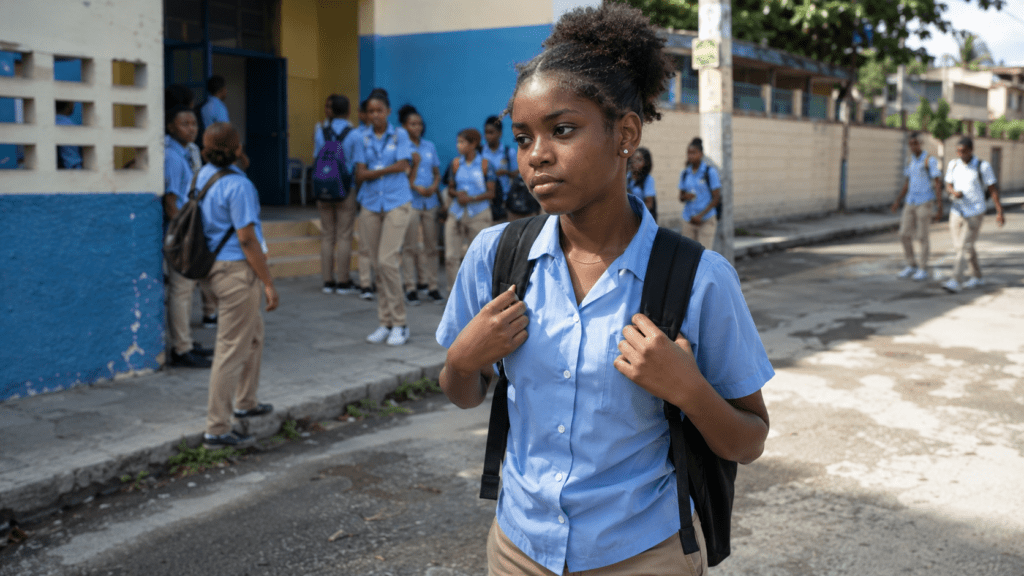
Teenage pregnancy in the Dominican Republic is a complex problem that cannot be explained simply by individual choices. It sits at the intersection of sexual and reproductive health, poverty, education, gender inequality, early unions, violence, access to contraception and the ability of adolescents to make informed decisions about their futures.
The latest official figures show meaningful progress. The Oficina Nacional de Estadística (ONE), the country’s national statistics office, recorded 16,481 pregnancies among adolescents under 19 in 2025, compared with 17,846 in 2024 and 27,476 in 2021. The reduction between 2021 and 2025 was 40.02%. At the same time, the proportion of adolescent pregnancies among all pregnancies increased slightly in 2025 because pregnancies among other age groups declined even faster.
That combination of progress and persistence is central to understanding the Dominican case. The country is moving in the right direction in absolute numbers, but the remaining cases are concentrated disproportionately among populations facing greater social and economic vulnerability. The challenge is therefore shifting from reducing a very large national total to preventing the pregnancies that remain most difficult to avoid and responding effectively when they occur.
The Current Picture of Teenage Pregnancy in the Dominican Republic
The most recent complete annual data provide a clearer picture than earlier quarterly estimates. In 2025, the Dominican Republic registered 16,481 adolescent pregnancies. Of these, 15,655 involved girls and young women aged 15 to 19, while 826 involved girls younger than 15. The latter group represented 5.01% of all adolescent pregnancies recorded during the year.
The decline is substantial when viewed over time. The number of recorded adolescent pregnancies fell from 27,476 in 2021 to 25,489 in 2022, 23,070 in 2023, 17,846 in 2024 and 16,481 in 2025. The reduction was therefore not limited to a single year but formed part of a longer downward trend.
| Year | Recorded adolescent pregnancies | Change from previous year |
|---|---|---|
| 2021 | 27,476 | — |
| 2022 | 25,489 | Down |
| 2023 | 23,070 | Down |
| 2024 | 17,846 | Down |
| 2025 | 16,481 | Down 7.65% |
These figures are important, but they should not be confused with the adolescent fertility rate. A count of pregnancies measures the number of recorded events during a period, while the adolescent fertility rate measures births per 1,000 women aged 15 to 19. International datasets therefore can show a different number from national administrative records without necessarily contradicting them.
The World Bank’s Gender Data Portal, using United Nations Population Division data, estimated the Dominican Republic’s adolescent fertility rate at 52.8 births per 1,000 women aged 15 to 19 in 2023. That was down from 67.0 in 2019 and 83.2 in 2015, demonstrating the longer-term improvement.
Why the Numbers Have Improved
The decline in adolescent pregnancy has occurred alongside a broader policy effort. The Dominican government launched the Policy for the Prevention and Care of Early Unions and Adolescent Pregnancy, commonly known as the PPA, in 2021. The policy is coordinated through the country’s child and adolescent protection institutions and brings together health, education, social protection and other government sectors.
The policy’s approach is broader than contraception alone. It seeks to prevent early unions, strengthen sexual and reproductive health education, expand opportunities for adolescents, address harmful gender norms and improve institutional responses to vulnerable children and adolescents.
There are signs that this broader approach has been accompanied by an expansion of services. In 2024, government authorities reported that the Ministry of Public Health and the National Health Service had increased the number of Units for Adolescent Care to 38 and trained 546 first-level healthcare professionals in the context of the national policy.
Prevention efforts have also expanded beyond the health system. In 2024, programs implemented by the Gabinete de Niñez y Adolescencia and the Consejo Nacional para la Niñez y la Adolescencia reached 28,765 people with activities related to life skills, health, comprehensive education, positive parenting and prevention of early unions and adolescent pregnancy.
More recently, the government, UNICEF and the Korean International Cooperation Agency reported the completion of a 2022–2025 project designed to change gender norms and prevent early unions. The initiative reached more than one million people and had an investment of approximately US$4.58 million. UNICEF reported that several of the project’s interventions were incorporated into national systems, including prevention programs in secondary schools and social-protection initiatives.
Despite the Decline, the Dominican Republic Remains a High-Burden Country
A falling number of cases does not mean the problem has disappeared. International comparisons continue to place the Dominican Republic among the countries in the region with high adolescent fertility.
The World Bank’s United Nations-based series places the Dominican Republic at 52.8 births per 1,000 women aged 15 to 19 in 2023, compared with a global rate of 39.1. The country’s rate has fallen substantially, but the gap with the global level remains.
UNICEF has also continued to describe adolescent pregnancy and early unions as major challenges for the country. In 2024, UNICEF cited ENHOGAR-MICS 2019 data showing that 20% of women aged 15 to 19 had already had a live birth or were pregnant with their first child. That figure is based on a household survey rather than administrative pregnancy records and should therefore not be compared directly with the annual ONE totals.
This distinction matters. Administrative records tell us how many pregnancies were registered in a particular period. Household surveys capture reproductive histories and circumstances among a representative population. Both are valuable, but they answer different questions.
The Under-15 Problem Requires Special Attention
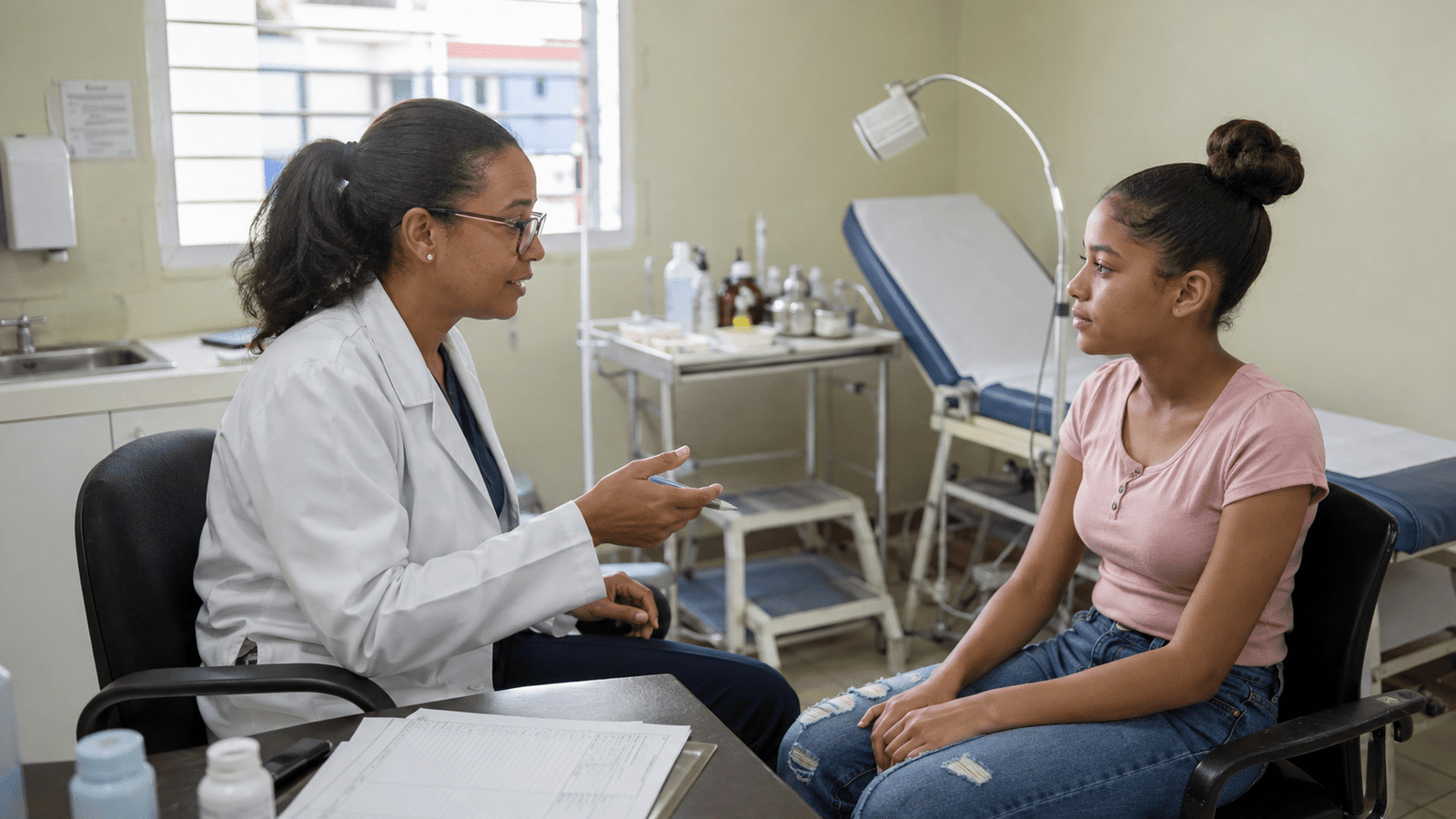
Pregnancy among girls under 15 is particularly important because it combines medical vulnerability with child-protection concerns. In 2025, the ONE recorded 826 pregnancies among girls younger than 15. That represented 5.01% of all adolescent pregnancies recorded that year.
Pregnancy at these ages cannot be treated simply as a younger version of pregnancy among older teenagers. The World Health Organization notes that adolescent mothers face greater risks of complications such as eclampsia, puerperal endometritis and systemic infection than women aged 20 to 24. Their babies also face higher risks of low birth weight, premature birth and severe neonatal conditions.
The Dominican health system has specific guidance for pregnancies involving girls under 15. The Ministry of Public Health’s protocol for this group recognizes the connection between very early pregnancy, social inequality and possible sexual violence and calls for comprehensive clinical and psychosocial management.
This is especially significant because sexual violence may be hidden behind some very early pregnancies. Dominican health guidance has emphasized the need for health professionals to identify possible violence, provide psychological support and activate protection mechanisms when necessary.
The Connection Between Teenage Pregnancy and Early Unions
Adolescent pregnancy and early unions are closely related, but they are not the same phenomenon. An adolescent can become pregnant without entering a union, while an early union can occur without an immediate pregnancy. In practice, however, the two frequently reinforce each other.
The Dominican Republic has made a significant legal change in this area. Law 1-21, enacted in 2021, prohibits marriage involving anyone under 18. The law states that people under 18 cannot marry under any circumstances.
The legal reform was important because formal marriage had previously provided a route around the protection of minors. But ending legal child marriage does not automatically eliminate informal cohabitation or early unions.
UNICEF reports that the proportion of women aged 20 to 24 who had married or entered a union before 18 fell from 36% in 2014 to 32% in 2019 and to 25% in the special ENHOGAR 2024 measurement. The proportion who had entered a union before 15 fell from 12% to 9% and then 5% over the same sequence of measurements.
The decline is encouraging, but the remaining burden is highly unequal. UNICEF data indicate that early unions are more common among women with less education, lower incomes and rural residence. These patterns help explain why national averages can improve while some communities continue to experience much higher levels of adolescent pregnancy and early unions.
Poverty and Education Are Central to the Problem
Teenage pregnancy is both a consequence and a potential cause of socioeconomic disadvantage. Adolescents living in poverty may have less access to reliable health information, contraception, transportation, confidential healthcare and educational opportunities. At the same time, an early pregnancy can make it more difficult to remain in school, acquire qualifications and enter formal employment.
UNICEF has documented the strong relationship between early motherhood and educational disadvantage in the Dominican Republic. Earlier national evidence showed that the proportion of young women who had had a child before 18 was substantially higher among the poorest households and among those with only primary education.
Early unions show a similar pattern. UNICEF reports that 65% of women who entered a union before 18 had only completed primary education in the referenced data, illustrating how educational disadvantage and early family formation can reinforce one another.
The relationship works in both directions. A young person who leaves school early may face a greater risk of early union and pregnancy, while pregnancy and childcare responsibilities can make returning to school more difficult. This creates a cycle in which educational disadvantage increases reproductive vulnerability and early motherhood can further reduce educational opportunities.
Access to Sexual and Reproductive Health Information Matters
Preventing adolescent pregnancy requires more than telling teenagers to avoid sex. International evidence and Dominican research point toward a combination of accurate information, access to contraception, confidential health services, protection from sexual violence and the ability to negotiate decisions within relationships.
UNFPA’s analysis of Dominican data from ENHOGAR-2018 found that three out of four adolescent pregnancies were not intentional. The analysis identified unmet family-planning needs, gaps in comprehensive sexuality education and inconsistent or ineffective contraceptive use among the factors associated with unintended adolescent pregnancy.
ENHOGAR-2018 also showed that contraceptive use varied according to socioeconomic and geographic characteristics. Among sexually active adolescents, the study reported use of modern contraceptive methods alongside substantial reliance on methods such as withdrawal.
The lesson for policy is straightforward: knowledge and availability must translate into practical access and correct, consistent use. A method that is technically available but difficult for an adolescent to obtain confidentially may not provide effective protection in real life.
Sexual Initiation and Age Differences in Relationships
Early sexual initiation is another important part of the picture. ENHOGAR-MICS 2019 found that 15% of women aged 15 to 24 who had had sexual relations reported their first sexual experience before age 15. The same dataset found that 18% of sexually active adolescent girls aged 15 to 19 who had had sex in the previous year reported having had intercourse with a man at least 10 years older.
These findings should not be interpreted as proof that every early sexual relationship is coercive. They do, however, highlight why adolescent pregnancy policy must include protection from abuse, exploitation and unequal relationships rather than focusing exclusively on individual behavior.
For girls under 15, the protection dimension becomes particularly important. The WHO considers adolescent pregnancy a major public-health issue, while Dominican health protocols explicitly address the need to investigate possible violence in pregnancies involving girls in this age group.
Geographic Inequality Is One of the Biggest Remaining Challenges
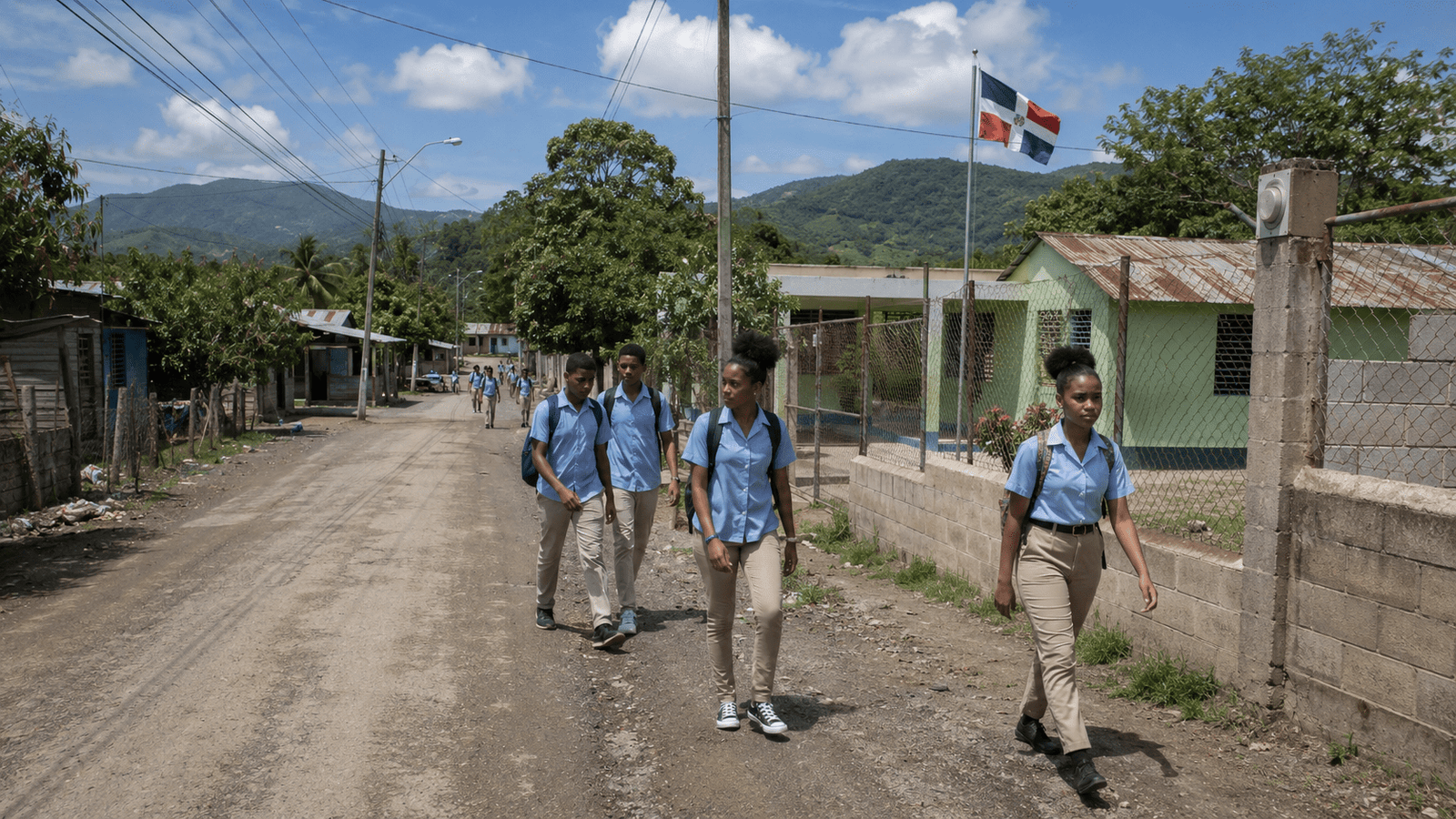
National averages hide considerable differences between provinces. The highest shares of adolescent pregnancies in 2025 were concentrated in several provinces in the northwestern and border regions.
According to data reported from the ONE’s 2025 statistics, Monte Cristi recorded the highest proportion, at 26.45%, followed by Elías Piña at 25.07%, Dajabón at 24.59% and Santiago Rodríguez at 23.95%.
The significance of these figures is that they measure the proportion of pregnancies that involved adolescents within each territory, not the absolute number of adolescent pregnancies. A province with a smaller population can therefore have a higher percentage without having more cases than a heavily populated province.
Earlier data also identified provinces such as Pedernales, Valverde, Independencia and Monte Cristi among those with particularly high shares of adolescent pregnancies.
This geographic concentration suggests that national policy should be complemented by targeted local interventions. The most effective response in a densely populated urban area may not be identical to the response required in a rural or border community with different patterns of poverty, migration, access to healthcare and early unions.
The Economic Cost of Teenage Pregnancy
The consequences extend beyond health and education. Teenage pregnancy has measurable economic effects because early motherhood can reduce educational attainment, employment opportunities and lifetime earnings while increasing public expenditure on healthcare and social services.
A Dominican study using the UNFPA MILENA 1.0 methodology estimated that the socioeconomic impact of adolescent pregnancy and early motherhood reached approximately RD$12.151 billion, or US$245 million, in 2018. That was equivalent to 0.29% of the country’s GDP in that year.
The same analysis estimated at least US$21 million in public health expenditure associated with pregnancy, childbirth, postpartum care and newborn care among adolescents aged 10 to 19. It also estimated substantial lifetime income losses associated with early motherhood.
These estimates are historical rather than a current 2026 price tag. They should therefore not be presented as today’s economic cost. Their importance is methodological: they demonstrate that adolescent pregnancy is not only a social or medical issue but also an economic issue affecting human capital and public resources.
The Health Consequences for Adolescents
Pregnancy during adolescence can involve medical risks that are greater than those faced by adult women. The WHO reports that adolescent mothers have higher risks of eclampsia, puerperal endometritis and systemic infections compared with women aged 20 to 24. Babies born to adolescent mothers have higher risks of premature birth, low birth weight and severe neonatal conditions.
The level of risk varies according to age, health status, access to prenatal care, nutrition and the quality of medical services. A 19-year-old with good healthcare access is not medically equivalent to a 12-year-old who is pregnant in a context of poverty and possible sexual violence.
This is why public-health responses need to be differentiated by age. Prevention strategies for 15-to-19-year-olds should coexist with specialized protection and clinical pathways for girls under 15.

What Happens to Education After Pregnancy?
Pregnancy can interrupt education through a combination of practical and social barriers. A young mother may need to care for an infant, lack childcare, face household pressure to remain at home or encounter stigma when attempting to return to school.
UNICEF has repeatedly identified adolescent pregnancy as one of the factors limiting girls’ educational opportunities in the Dominican Republic. The broader evidence also shows that early unions and motherhood are associated with lower educational attainment and weaker future employment prospects.
However, pregnancy should not be treated as the end of an adolescent’s education. Effective policy needs to support continuation and re-entry into education, provide flexible arrangements where necessary, protect students from discrimination and connect young mothers with childcare and social services.
Prevention therefore needs to be combined with a second principle: an adolescent who becomes pregnant should not lose her opportunity to complete her education and build an independent future.
What Has the Dominican Government Done?
The Dominican response has evolved from isolated programs toward a more coordinated national policy. The PPA brings together prevention, health, education, social protection and child-protection measures, with implementation extending toward 2030.
Key elements of the response include:
- Prevention of early unions through community and school interventions.
- Comprehensive sexuality education and life skills intended to help adolescents make informed decisions.
- Adolescent-friendly health services and specialized care.
- Positive parenting programs aimed at improving communication and protection within families.
- School-based prevention programs designed to address gender norms and early unions.
- Social-protection interventions aimed at vulnerable girls and adolescents.
- Protection mechanisms for children and adolescents exposed to violence or abuse.
The approach is increasingly focused on changing the conditions surrounding pregnancy rather than treating each pregnancy as an isolated event.
Why Preventing Pregnancy Alone Is Not Enough
A narrow strategy focused exclusively on contraception would miss several of the factors that drive adolescent pregnancy. A girl cannot fully control her reproductive choices if she is experiencing sexual violence, is economically dependent on an older partner, has left school, cannot access confidential healthcare or lives in a community where early motherhood is treated as an expected transition into adulthood.
This is why international agencies increasingly emphasize integrated approaches. In 2024, PAHO, UNICEF and UNFPA convened regional stakeholders in the Dominican Republic to accelerate reductions in unplanned adolescent pregnancy among vulnerable populations and improve the use of disaggregated data to identify the groups most affected.
The Dominican experience also illustrates the importance of addressing gender norms. UNICEF research conducted in nine municipalities found persistent social and cultural norms associated with early unions and adolescent fertility, while highlighting the links with violence, educational outcomes and intergenerational poverty.
What Should Effective Prevention Look Like?
The available evidence points toward a layered strategy rather than a single intervention.
1. Keep girls in school
Education is one of the strongest protective factors available to policymakers. Keeping girls in secondary education increases opportunities, delays early unions and expands the range of life choices available to adolescents. Prevention programs should therefore be integrated with measures that reduce school dropout and support students facing economic or family barriers.
2. Make contraception genuinely accessible
Adolescents need accurate information and practical access to effective contraception. Services should be confidential, respectful and appropriate to their age. Availability on paper is not sufficient if adolescents fear stigma or cannot reach a service.
3. Provide comprehensive sexuality education
Sexuality education should address contraception, consent, relationships, sexually transmitted infections, gender equality, decision-making and protection from abuse. The objective is not simply to provide biological information but to equip adolescents with practical skills.
4. Prevent early unions
The prohibition of marriage under 18 is an important legal safeguard, but prevention also has to address informal unions. Community interventions need to challenge the idea that entering a union is an inevitable solution to poverty, family conflict or the desire for independence.
5. Protect girls under 15
Pregnancy among girls under 15 requires a specialized response involving healthcare, psychosocial support and child-protection mechanisms. The possibility of sexual violence or exploitation must be taken seriously and assessed appropriately.
6. Support adolescent mothers
Prevention policies should not stigmatize girls who are already pregnant. They need prenatal care, mental-health and social support, protection from violence, assistance with childcare and a realistic route back into education.
7. Target the highest-risk territories
National averages can conceal local concentrations. Resources should therefore be directed toward communities where adolescent pregnancy, poverty, early unions and school dropout overlap.
What the 2025 Numbers Really Tell Us
The 2025 data provide a more nuanced picture than either a purely negative or purely optimistic interpretation.
On one hand, the Dominican Republic recorded 1,365 fewer adolescent pregnancies than in 2024 and more than 11,000 fewer than in 2021. That is a substantial improvement and suggests that the national prevention effort is producing measurable results.
On the other hand, 16,481 pregnancies in a single year remain a large public-health and development burden. More than 800 involved girls younger than 15, and several provinces recorded adolescent pregnancy shares above 24%.
There is also an important statistical warning. The proportion of pregnancies involving adolescents increased by 1.31 percentage points in 2025 even though the absolute number fell. CONANI explained that this occurred because pregnancies among other age groups declined even more rapidly.
In other words, one indicator can improve while another worsens. Responsible analysis therefore requires looking at both the absolute number of cases and the proportion of all pregnancies, together with fertility rates and longer-term household-survey evidence.
The Role of Families and Communities
Families can play a decisive role in prevention. Open communication about relationships, consent and contraception can reduce misinformation and make it easier for adolescents to seek help before a crisis occurs.
But family responsibility should not become a justification for shifting the entire burden onto parents. Schools, healthcare providers, social-protection programs and child-protection institutions all have roles to play.
Community attitudes matter as well. Where early motherhood or informal unions are treated as normal pathways into adulthood, individual prevention messages have limited power. Changing expectations about girls’ education, economic independence and future opportunities is therefore part of the long-term solution.
Frequently Asked Questions
How many teenage pregnancies were recorded in the Dominican Republic in 2025?
The Dominican Republic recorded 16,481 pregnancies among adolescents under 19 in 2025, according to data analyzed by CONANI from ONE and Ministry of Public Health records. This represented a 7.65% decline from the 17,846 recorded in 2024.
How many girls under 15 became pregnant in 2025?
The ONE recorded 826 pregnancies among girls younger than 15 in 2025, equivalent to 5.01% of the adolescent pregnancies recorded that year.
Is teenage pregnancy decreasing in the Dominican Republic?
Yes. Administrative records show a substantial decline, from 27,476 adolescent pregnancies in 2021 to 16,481 in 2025. The reduction between 2021 and 2025 was approximately 40%.
Does the Dominican Republic still have a high adolescent fertility rate?
Yes. The World Bank’s United Nations-based data put the Dominican Republic’s adolescent fertility rate at 52.8 births per 1,000 women aged 15 to 19 in 2023, above the global rate of 39.1.
Why is teenage pregnancy still common despite the decline?
The remaining cases are associated with multiple factors, including poverty, educational disadvantage, early unions, unequal relationships, gaps in access to contraception and sexuality education, and exposure to violence. The burden is not evenly distributed across the population.
Is teenage pregnancy connected to early marriage or unions?
Yes, although the two are distinct phenomena. Early unions can increase exposure to pregnancy, while pregnancy can also contribute to pressure to enter a union. The Dominican Republic has prohibited marriage for people under 18 through Law 1-21, but informal early unions remain a policy concern.
What are the health risks of adolescent pregnancy?
According to the WHO, adolescent mothers face higher risks of eclampsia, puerperal endometritis and systemic infections than women aged 20 to 24. Their babies also face higher risks of premature birth, low birth weight and severe neonatal conditions.
How much does adolescent pregnancy cost the Dominican economy?
A UNFPA study using 2018 data estimated the socioeconomic impact of adolescent pregnancy and early motherhood at approximately RD$12.151 billion, or US$245 million, equivalent to 0.29% of GDP at the time. This is a historical estimate, not a current 2026 cost.
What is being done to reduce adolescent pregnancy?
The Dominican Republic is implementing a national policy that combines prevention of early unions, sexual and reproductive health services, education, social protection, community interventions and child-protection measures. The government and its partners have also expanded adolescent health services and school-based prevention programs.
Conclusion
The Dominican Republic has made measurable progress against teenage pregnancy. The number of recorded pregnancies among adolescents under 19 fell by roughly 40% between 2021 and 2025, while the adolescent fertility rate has also declined over the longer term. Those improvements should be recognized as significant rather than dismissed because the problem has not disappeared.
The remaining challenge is more concentrated and more complex. Hundreds of pregnancies still occur among girls under 15, some provinces continue to record disproportionately high levels, and the strongest risks remain associated with poverty, limited education, early unions, unequal relationships and gaps in reproductive-health access.
The evidence therefore points toward a long-term strategy centered on keeping girls in school, ensuring confidential access to effective contraception and health services, providing comprehensive sexuality education, preventing early unions and sexual violence, and protecting and supporting adolescents who become pregnant. Progress should be measured not only by the national number of pregnancies but also by whether the most vulnerable girls are gaining greater control over their health, education and future.
The decline recorded through 2025 shows that change is possible. The next stage is to make that progress more equitable, so that the reduction reaches the communities and age groups where adolescent pregnancy remains most persistent and where its consequences are greatest.