 30°C
30°C

Dominican Senate Approves Police Reform and Advances Gambling Bill
The Dominican Republic's Senate has approved sweeping reforms to the National Police law aimed at modernizing the force and strengthening public security, while also advancing legislation to regulate the country's rapidly expanding gambling industry.


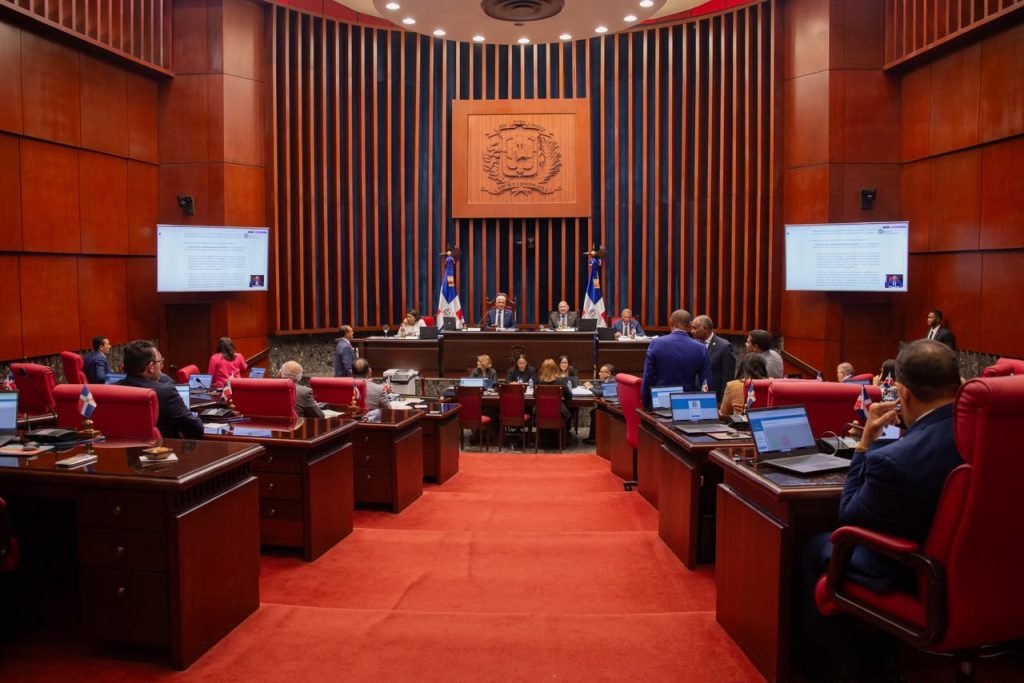
The Senate of the Dominican Republic approved amendments to Law 590-16, the Organic Law of the National Police, during an extraordinary session, marking another step in the government’s ongoing effort to modernize the country’s law enforcement system.
The reform, introduced by the Executive Branch and reviewed by a special Senate committee chaired by Senator Franklin Romero of Duarte Province, incorporates several modifications designed to professionalize the police career, strengthen institutional oversight, and improve public confidence in the National Police.
Police Reform Focuses on Use of Force and Public Safety
One of the most significant changes establishes a more structured framework for the use of force by police officers. Instead of applying the same level of force in every situation, the legislation introduces a clearly defined classification of less-lethal weapons, accompanied by strict regulations governing their possession and use.
The reforms are intended to reduce arbitrary use of force while increasing accountability for officers on active duty. They also establish additional safeguards for citizens by reinforcing rules designed to protect individual rights and personal integrity.
The legislation further authorizes career police personnel to employ specific operational techniques established by law to prevent disturbances or restore public order while carrying out their official duties.
According to the Senate, the updated legal framework also allows security screening measures intended to detect weapons, explosives, or prohibited substances before they pose a threat, helping improve safety at public events and large gatherings.
Having cleared the Senate, the bill will now move to the Chamber of Deputies, the lower house of Congress, for debate and consideration.
Senate Passes Gambling Regulation Bill
Lawmakers also approved on second reading a bill establishing a comprehensive legal framework for gambling activities in the Dominican Republic. The proposal seeks to regulate the authorization, supervision, and oversight of individuals and companies involved in operating or marketing games of chance and betting activities across the country.
The initiative, introduced by Senate Vice President Pedro Catrain and Senator Félix Ramón Bautista Rosario, responds to the rapid expansion of the gambling sector, including casinos, sports betting shops, lottery outlets, and online betting platforms.
According to the bill, official figures from the Ministry of Finance’s Directorate of Casinos and Games of Chance show that more than 71,000 lottery and sports betting outlets are registered nationwide, highlighting the need for stronger government oversight.
The proposed legislation includes measures to prevent minors from accessing online gambling through enhanced identity verification systems. It also establishes stricter advertising rules, regulates betting products, and introduces additional protections for online users and their personal data.
Additional Bills Advance in the Senate
During the same legislative session, senators approved on first reading amendments to Law 60-23, which governs the administration of seized, confiscated, and abandoned assets in criminal proceedings and asset forfeiture cases. The proposal would modify the governance of the National Institute for the Custody and Administration of Seized and Confiscated Assets by integrating its governing board under the leadership of the Ministry of Finance.
Lawmakers also advanced several other initiatives on first reading, including a proposal requiring transfers of distinguished individuals to the Pantheon of the Fatherland to be authorized by law, legislation recognizing the traditional Mangulina dance as part of the Dominican Republic’s intangible cultural heritage, and a bill designating May 16 as National Dominican Suffragists Day.
Resolutions Approved
The Senate additionally approved several resolutions requesting public infrastructure projects, including a new headquarters for the Central Electoral Board (JCE) in El Valle, Hato Mayor Province, road improvement studies in Nizao-Las Auyamas, and the expansion of the Charles Bluhdorn Bridge in La Romana.
During the extraordinary session, senators also voted to recognize physicians Albi Eulogio Morla Báez and Ramón Modesto Tallaj, along with approving several other honorary resolutions.