 26°C


Caribbean Economic History Congress Opens at Dominican Republic’s UASD
The Autonomous University of Santo Domingo (UASD) has opened the 8th International Congress of the Association of Caribbean Economic History, bringing together researchers from more than a dozen countries to examine the economic and social transformations that have shaped the Caribbean over six centuries.


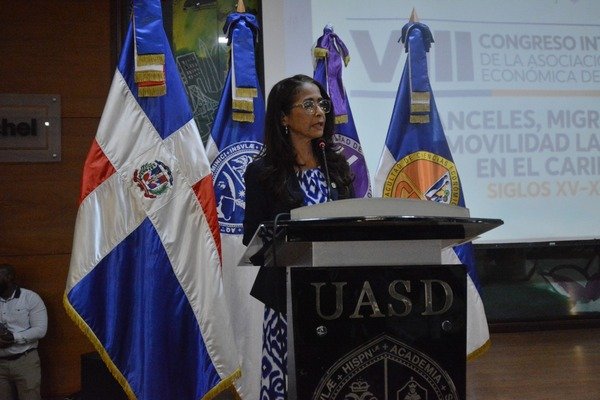
The Dominican Republic is hosting an international academic gathering focused on the historical forces that have shaped Caribbean societies, with researchers examining centuries of trade, migration and labor mobility at the Autonomous University of Santo Domingo (UASD).
The 8th International Congress of the Association of Caribbean Economic History (AHEC) runs through November 5 under the theme “Tariffs, Migration and Labor Mobility in the Caribbean, 15th–21st Centuries.” The event brings together specialists from more than a dozen countries for discussions on the region’s economic development and social transformations.
UASD Brings Together International Economic History Researchers
The opening ceremony was led by UASD Rector Jorge Asjana David, alongside Maribel Lorenzo, dean of the Faculty of Economic and Social Sciences, and Ana Jacqueline Ureña, dean of the Faculty of Humanities. Javier Alemán Iglesias, director of the AHEC, also participated.
Asjana David emphasized the importance of historical economic research in understanding present-day challenges and anticipating future developments. He also highlighted the university’s responsibility in promoting research and generating knowledge.
Lorenzo and Ureña stressed the value of academic exchange and historical research in developing a deeper understanding of Caribbean societies and their evolution.
Migration and Remittances Take Center Stage
The opening session featured a keynote lecture by Wilson E. Genao Núñez, a researcher from the Pontifical Catholic University Mother and Teacher (PUCMM) in the Dominican Republic.
His presentation, titled “Migration and Remittances: An Approach from Dominican Economic Historiography (1987–2023),” examined the relationship between migration and remittance flows through the perspective of the country’s economic historical research.
The subject reflects one of the central themes of the congress: how population movements and labor mobility have influenced economic relationships and social structures across the Caribbean.
19 Academic Sessions Cover Six Centuries of Caribbean History
The congress program includes 19 working sessions spread across three days, addressing a broad range of historical and economic subjects.
Topics include trade, labor mobility, resistance movements, banking, economic development, structural crises, environmental history and migration.
The discussions are designed to encourage exchanges between researchers examining the Caribbean from different national and academic perspectives, connecting historical developments with broader questions about the region’s economic and social evolution.
Researchers From More Than a Dozen Countries Participate
Participants include specialists from the Dominican Republic, Puerto Rico, Cuba, Costa Rica, Mexico, Colombia, Spain, Poland, France and the United States, among other countries.
The international participation reinforces the congress’s regional scope and provides an opportunity for researchers to share findings, compare historical experiences and strengthen academic cooperation.
By bringing together scholars from across the Caribbean, Latin America, Europe and North America, the UASD gathering highlights the importance of understanding the region’s historical connections when examining its contemporary economic and social challenges.