 26°C


Dominican Film ‘La Esquina ‘ta en Candela’ Brings Social Commentary to the Big Screen
Dominican director Frank Perozo's new film, La Esquina 'ta en Candela, opens in theaters on November 5, 2026, combining comedy, drama and social criticism in a story set inside a neighborhood grocery store. Starring Miguel Céspedes, Raymond Pozo and Fausto Mata, the production explores police corruption, financial fraud and community solidarity while giving emerging Dominican performers an opportunity to shine.


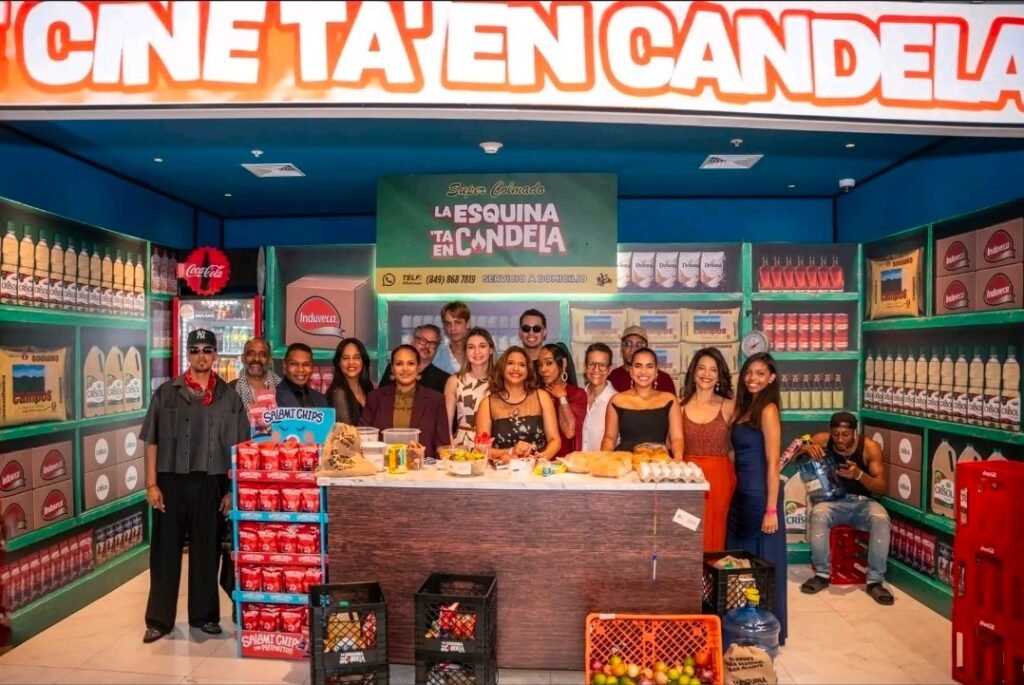
Dominican cinema is preparing for a release that aims to do more than entertain audiences. La Esquina ‘ta en Candela, the latest feature directed by Frank Perozo, combines comedy, social drama and criticism of contemporary problems in Dominican society, offering a different approach to the country’s commercially oriented film productions.
Scheduled to open in Dominican theaters on November 5, 2026, the 89-minute production brings together established comedy stars, experienced dramatic actors and emerging performers in a story that places an ordinary neighborhood grocery store at the center of an extraordinary crisis.
Produced by Caribbean Films, the movie moves beyond the traditional formula of seasonal comedy releases. Its narrative addresses issues including police corruption, financial pyramid schemes and controversial police shootings, commonly referred to in the Dominican Republic as intercambios de disparos (exchanges of gunfire).
A comedy with a stronger social message
Although designed to appeal to a broad commercial audience, La Esquina ‘ta en Candela embraces a social dimension that gives the production a different identity within Dominican popular cinema.
The story follows Rubén, played by Miguel Céspedes, who loses his job and life savings before entering a neighborhood grocery store armed and demanding justice. His intention is to confront Nereida, the owner of the financial company where he previously worked and the former wife of the grocery store owner.
What begins as a personal confrontation quickly develops into a hostage crisis involving an unconventional police officer, concerned neighbors and a situation that spreads across social media.
As the tension increases, secrets, financial disputes and questionable police practices emerge, turning the neighborhood into a public stage for conflicts that extend beyond the characters themselves.
The film’s strongest achievement is its ability to combine entertainment with subjects that carry real social significance. Rather than treating the neighborhood merely as a setting for jokes, it presents the community as a space where solidarity, conflict and shared responsibility coexist.
Director Frank Perozo also demonstrates effective control of cinematic pacing. The action develops continuously, with a growing sense of urgency that maintains audience interest throughout the story.
Miguel Céspedes and Raymond Pozo explore more dramatic roles
One of the production’s most interesting elements is the opportunity it provides for established comedians to explore a more dramatic acting style.
Miguel Céspedes, portraying Rubén, carries much of the film’s emotional weight. His performance requires a different approach from the comedic roles that have defined much of his previous screen career.
Raymond Pozo, who plays Corporal Camacho, provides another important narrative thread. His character combines humor with dramatic elements, allowing the performer to demonstrate a broader acting range.
The two actors have previously appeared together in numerous successful productions, including Cristiano de la secreta, the Lotomán and Tubérculo Gourmet franchises, Colao, Los Leones, Hermanos and La vida de los reyes. Their performances in this film represent a noticeable departure from the predominantly comedic approach associated with many of those projects.
Fausto Mata also delivers a particularly effective performance as Chepe, the neighborhood grocery store owner. His character is driven largely by commercial interests, and Mata uses facial expressions, vocal delivery and carefully controlled gestures to create a distinctive personality.
The supporting cast benefits from the presence of experienced performers such as Gerardo Mercedes, who plays Captain Peinado, and Paula Disla, who portrays Mecho. Both bring dramatic credibility to a production that depends on balancing comedy with emotionally demanding situations.
New performers bring fresh energy to Dominican cinema
Beyond its established stars, La Esquina ‘ta en Candela provides opportunities for performers whose careers are developing across entertainment, social media, theater and other creative fields.
Shanel Marie Valois stands out as Chiqui, a character who plays an important role in the story’s emotional development. Valois is also a playwright who wrote and directed La luz de la última vela, a theatrical production she premiered at the age of 16. Her performance demonstrates considerable maturity and suggests promising possibilities for her future in film.
Enger Luna, who plays Primo, is another pleasant surprise. An architect and media personality, he brings an engaging screen presence and natural delivery to the role of a neighborhood delivery worker.
Candy Flow, playing Tita, successfully brings her personality and charisma to the production. However, her performance also illustrates the difference between having a strong public presence and developing the technical skills required for cinematic acting. Greater interpretive intensity could strengthen her work in future productions.
Excarlet Molina, who portrays Vilma, also contributes to the ensemble, although her performance would benefit from greater emotional depth and a stronger emphasis on character development.
Other supporting performances include those of Aquiles Correa as Obispo, Soraya Pina as Nereida, Yarlenys Vargas as Yulisa and Gabriel Polanco as Jhonny.
Martha Candela, the artistic name of Dominican Christian singer and preacher Marta Garcés Lorenzo, appears as Doña Galería. Her character provides a well-timed humorous contribution, demonstrating how performers from outside traditional acting backgrounds can find a place in commercial cinema.
Special appearances by Reconocidos and Capricornio TV further connect the production with the country’s contemporary entertainment and digital media landscape.
Production design captures the atmosphere of a Dominican neighborhood
The film’s technical work contributes significantly to its sense of authenticity.
Francis Adámez’s cinematography captures the visual character of an urban, lower-middle-income Dominican neighborhood. The main filming location is situated in an area between El Cacique, Avenida Independencia, Cervecería Nacional Dominicana and the Caribbean Sea in Santo Domingo.
The photography recreates the brightness, heat and everyday atmosphere of the neighborhood, helping establish a believable environment for the unfolding events.
Editor José Delio Ares delivers precise work that supports the film’s continuous action, while the musical score composed by Mario Sevigny and the environmental sound design reinforce the credibility of the setting.
Two departments deserve particular recognition: art direction and makeup.
Shaina Cohen’s art direction recreates the appearance of a neighborhood where community life, cultural diversity and everyday interactions shape the environment. The grocery store and surrounding spaces become recognizable expressions of Dominican urban identity.
Makeup artist Sarah Quezada also achieves an important technical result. Rather than drawing attention to the work, the makeup remains largely invisible, allowing the actors’ appearances to feel natural.
The recreation of sweaty faces under the intense heat, particularly during scenes involving the armed occupation of the main location, adds credibility and emotional intensity to the action.
Costume design by Leandra Fañas and the carefully selected props complete the visual construction of the neighborhood, with contributions from the local community helping reinforce the authenticity of the environment.
A promising addition to Dominican commercial cinema
La Esquina ‘ta en Candela arrives with the potential to become one of the major Dominican cinema releases of the 2026 Christmas season. Its commercial ambitions are clear, but the film also demonstrates an interest in expanding the themes and performances traditionally associated with popular local comedies.
The production is not without weaknesses. Some performances could benefit from greater dramatic intensity, and its combination of comedy and social criticism does not necessarily make it a perfect film.
Nevertheless, its willingness to address difficult subjects while creating opportunities for new performers deserves recognition.
By bringing together established acting professionals, popular entertainers and emerging talent, Frank Perozo’s film offers an entertaining experience with a broader social purpose.
For Dominican cinema, the value of La Esquina ‘ta en Candela lies not only in its potential box-office performance but also in its willingness to explore new dramatic possibilities within a commercially accessible format.
The film opens in Dominican theaters on November 5, 2026. Audiences can consult Caribbean Cinemas’ official movie listing for screening information.
La Esquina ‘ta en Candela: Film details
Title: La Esquina ‘ta en Candela
Genre: Comedy-drama
Country: Dominican Republic
Runtime: 89 minutes
Executive Production: Caribbean Films
Director: Frank Perozo
Screenplay: Kendy Yanoreth Calcaño
General Production: Kendy Yanoreth Calcaño
Line Producer: Yuneidys Lachapell
Cinematography: Francis Adámez
Art Direction: Shaina Cohen
Editing: José Delio Ares

Costume Design: Leandra Fañas
Makeup: Sarah Quezada
Original Music: Mario Sevigny
Postproduction: La Nave Post Lab
Release Date: November 5, 2026
Main Cast: Miguel Céspedes, Raymond Pozo, Fausto Mata, Aquiles Correa, Candy Flow, Martha Candela, William Brand, Nelson Miguel Fernández, Nino Freestyle, Enger Luna, Gerardo Mercedes, Excarlet Molina, Gabriel Polanco, Shanel Valois and Paula Disla.