 29°C
29°C

Driving Rules in the Dominican Republic: Complete Guide for Visitors and Residents
Whether you are planning a vacation, relocating, or living in the Dominican Republic, understanding the country's driving rules is essential for staying safe and avoiding fines. While many regulations are similar to those found in North America and Europe, local driving habits, road conditions, and enforcement practices can differ significantly. This guide explains the key rules every driver should know, from licensing requirements and speed limits to right-of-way, road signs, and practical safety advice.


Driving is one of the best ways to experience the Dominican Republic beyond its most popular resort destinations. While organized tours and public transportation connect many major attractions, having your own vehicle provides the flexibility to explore colonial towns, mountain villages, secluded beaches, national parks, and rural communities at your own pace.
However, driving in the Dominican Republic requires more than simply understanding the official traffic laws. Visitors should also become familiar with local driving customs, road conditions, and the practical realities of sharing the road with motorcycles, buses, trucks, pedestrians, and informal public transportation. Understanding these differences before driving will make your journey considerably safer and less stressful.
Can Foreigners Drive in the Dominican Republic?
Yes. Most foreign visitors can legally drive in the Dominican Republic using a valid driver’s license issued by their home country for a limited period after entering the country. This allows tourists to rent and operate a vehicle without immediately obtaining a Dominican driver’s license.
Although Dominican legislation recognizes foreign licenses under certain conditions, rental companies may establish additional requirements. Most major international rental agencies accept licenses from North America, Europe, Latin America, and many other countries, provided the document is valid and written using the Latin alphabet.
If your driver’s license uses a different writing system—such as Cyrillic, Arabic, Japanese, Chinese, or Korean—car rental companies may request an International Driving Permit (IDP) together with your original license. Even when it is not legally required, carrying an IDP can simplify communication if you are involved in a traffic stop or an accident.
Visitors planning an extended stay or establishing legal residency should be aware that different licensing requirements generally apply once they become Dominican residents.
Who Needs a Dominican Driver’s License?
Tourists staying temporarily normally continue driving with their foreign license during the period permitted under Dominican regulations and the conditions established by their immigration status.
Individuals who become legal residents are generally expected to obtain a Dominican driver’s license. The licensing process is administered by the Instituto Nacional de Tránsito y Transporte Terrestre (INTRANT), the government agency responsible for driver licensing, road safety, and transportation policy.
Obtaining a Dominican license typically involves identity verification, medical examinations, vision testing, theoretical knowledge assessments, and practical driving evaluations, although the exact requirements may vary depending on the applicant’s nationality and the type of license requested.
Compared with licensing systems in some European countries, Canada, or Australia, many expatriates consider the Dominican licensing process relatively straightforward. At the same time, road safety specialists have long noted that differences in driver training, combined with inconsistent enforcement of traffic regulations, contribute to significant variations in driving standards among road users.
This does not mean that most drivers ignore the rules. Rather, visitors should understand that road behaviour often reflects a combination of formal regulations, local driving customs, traffic density, and practical adaptation to everyday conditions.
Should You Carry an International Driving Permit?
An International Driving Permit is not always mandatory, but carrying one is strongly recommended, particularly for visitors travelling outside major tourist areas or renting vehicles from international companies.
An IDP is not a replacement for your driver’s license. Instead, it serves as an internationally recognized translation that helps authorities and rental agencies understand the categories of vehicles you are authorized to drive.
Many insurance providers and rental companies also recommend carrying an IDP, especially for visitors arriving from countries whose licenses are not printed in English or Spanish.
Driving on the Right-Hand Side
Like the United States, Canada, Mexico, and most continental European countries, the Dominican Republic drives on the right-hand side of the road.
The steering wheel is located on the left-hand side of the vehicle, and overtaking is generally performed on the left. Drivers from countries such as the United Kingdom, Ireland, Australia, Japan, or South Africa may need a short adjustment period before driving confidently.
Roundabouts, highway entrances, lane positioning, and overtaking procedures all follow right-hand traffic conventions. Visitors unfamiliar with driving on the right should take extra care during their first few days, particularly when leaving parking areas or entering intersections.
Understanding Dominican Traffic Laws
The Dominican Republic’s road traffic system is primarily governed by Law No. 63-17 on Mobility, Land Transportation, Transit and Road Safety. This legislation modernized many aspects of traffic regulation, including licensing, vehicle registration, public transportation, road safety, and penalties for traffic violations.
Many of the country’s basic traffic rules will be familiar to international drivers. Speed limits are posted in kilometres per hour, seat belts are mandatory where installed, traffic lights follow international colour standards, and driving under the influence of alcohol is prohibited.
However, understanding the legal framework is only part of preparing to drive in the country. Equally important is recognising that the practical flow of traffic may differ from what visitors expect. Defensive driving, maintaining safe following distances, and anticipating unexpected manoeuvres are often more valuable than assuming every road user will strictly follow the formal rules of the road.
Basic Rules Every Driver Should Know
Regardless of where you are driving in the Dominican Republic, several basic principles should always guide your driving:
- Always drive on the right-hand side of the road.
- Obey posted speed limits and temporary traffic signs.
- Wear your seat belt whenever one is available.
- Avoid using a handheld mobile phone while driving.
- Never drive after consuming alcohol.
- Use turn signals before changing lanes whenever possible.
- Exercise particular caution at intersections, even when you technically have the right of way.
- Remain attentive to motorcycles, pedestrians, bicycles, and public transport vehicles at all times.
Following these principles will significantly reduce the likelihood of accidents while helping visitors adapt more quickly to local traffic conditions. The following sections of this guide explain specific traffic rules, speed limits, road signs, and the unique characteristics of everyday driving throughout the Dominican Republic.
Speed Limits in the Dominican Republic
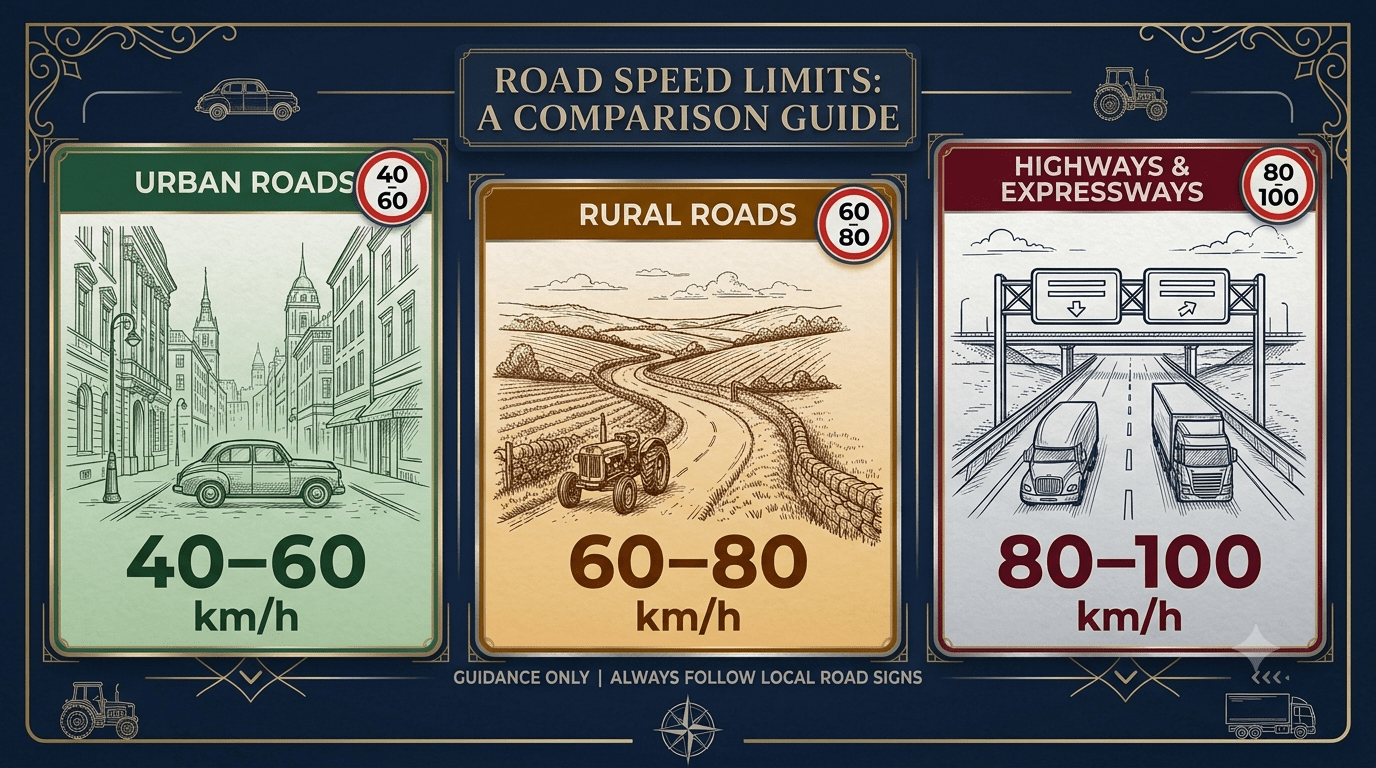
Speed limits in the Dominican Republic are established by law and reinforced through roadside signage. Posted limits always take precedence, as they may vary depending on road conditions, nearby schools, construction work, or urban development.
As a general reference, drivers can expect the following limits:
| Road Type | Typical Speed Limit |
|---|---|
| Urban streets | 40–60 km/h (25–37 mph) |
| Secondary rural roads | 60–80 km/h (37–50 mph) |
| Expressways and toll highways | 80–100 km/h (50–62 mph) |
Many of the country’s modern toll roads, including portions of the Autopista Duarte, Autovía del Este and Coral Highway, are designed for higher-speed travel than ordinary roads. Nevertheless, drivers should always adjust their speed according to weather, visibility and traffic conditions.
Speed cameras and police enforcement may be present on some major routes, but visitors should not assume that every driver around them will respect posted limits. It is common to encounter both slower-moving vehicles and faster traffic sharing the same highway.
Seat Belts and Child Safety
Seat belts are mandatory for drivers and passengers in vehicles equipped with them. Wearing a seat belt is one of the simplest and most effective ways to reduce the severity of injuries in the event of a collision.
Children should travel in age- and size-appropriate child restraint systems whenever possible. Although enforcement of child seat regulations may not always be consistent, international safety recommendations should always take priority over local driving habits.
Families visiting the Dominican Republic with young children should confirm in advance whether their rental company provides certified child seats or consider bringing their own if travelling frequently by car.
Mobile Phone Use While Driving
Using a handheld mobile phone while driving is prohibited and significantly increases the risk of distraction-related accidents.
If navigation is required, drivers should program their GPS before beginning the journey or ask a passenger to operate the device. Hands-free systems reduce distraction but should still be used responsibly, particularly when driving in busy urban areas where traffic conditions can change rapidly.
Alcohol and Driving
Driving after consuming alcohol is strongly discouraged. Alcohol impairs reaction time, judgment and awareness, all of which are particularly important when driving in an environment where unexpected situations may occur more frequently than in some other countries.
Even moderate alcohol consumption can increase the risk of serious accidents. The safest approach is simple: if you plan to drink, do not drive.
Traffic Signs
Road signs throughout the Dominican Republic generally follow international conventions and use Spanish. Most are easily recognizable by their colours and symbols, although understanding a few common Spanish words will make driving considerably easier.
| Spanish Sign | Meaning |
|---|---|
| Alto | Stop |
| Ceda el Paso | Yield / Give Way |
| Velocidad Máxima | Maximum Speed |
| No Estacione | No Parking |
| Desvío | Detour |
| Doble Vía | Two-Way Traffic |
| Peligro | Danger |
| Curva Peligrosa | Dangerous Curve |
Tourist areas and major highways sometimes include bilingual signage, but drivers should generally expect road signs to be written only in Spanish.
Traffic Lights and Right of Way
Traffic lights operate according to internationally recognized standards:
- Red: Stop before the intersection.
- Yellow: Prepare to stop if it is safe to do so.
- Green: Proceed only when the intersection is clear.
Although these rules are straightforward, visitors should never assume that every vehicle will obey them. In some busy intersections, particularly during rush hour, drivers may continue moving after lights change or enter an intersection before it has completely cleared.
For this reason, experienced local drivers often pause briefly before proceeding through a newly green light to ensure cross traffic has stopped. This simple habit can significantly improve safety.
Right-of-way rules exist under Dominican traffic law, but actual traffic flow often depends on driver awareness, eye contact and cautious negotiation between road users. Remaining patient and avoiding aggressive driving is usually the safest approach.
Lane Discipline and Overtaking
Lane markings should generally be respected, but visitors may notice that lane discipline is less consistent than in many Western countries.
Lane changes without signalling are not uncommon, particularly in congested urban traffic. Some drivers may use gaps that appear too small by North American or European standards, while others may overtake slower vehicles whenever an opportunity presents itself.
When driving on multi-lane roads, maintaining a safe following distance and regularly checking mirrors is especially important, as motorcycles and smaller vehicles frequently occupy spaces that larger vehicles may not expect.
Horn Usage
Visitors are often surprised by how frequently drivers use their vehicle horns in the Dominican Republic.
Unlike in some countries, where the horn is mainly reserved for emergencies, it commonly serves as a form of communication between drivers. A short horn blast may simply indicate that another vehicle is approaching, intends to overtake, or wishes to alert another road user of its presence.
Although excessive horn use may seem unusual to visitors, it is generally considered part of everyday traffic communication rather than an expression of aggression.
Pedestrians, Cyclists and Animals
Drivers should remain alert for vulnerable road users at all times.
Pedestrians may cross roads outside designated crossings, particularly in towns and villages. Cyclists often share the roadway with motor vehicles, while horses, cattle, goats and dogs may occasionally appear on rural roads, especially after dark.
Reducing speed when approaching populated areas and remaining attentive to roadside activity can greatly reduce the risk of collisions.
Driving Defensively Is Essential
The official traffic rules in the Dominican Republic are broadly similar to those found in many other countries. The greatest difference for most visitors is not the legislation itself, but the dynamic nature of everyday traffic.

Rather than assuming that every driver will behave predictably, experienced motorists learn to anticipate unexpected situations, maintain generous safety margins and remain patient in heavy traffic. This defensive approach is widely regarded as the safest way to drive anywhere in the country and provides an excellent foundation for understanding the unique characteristics of Dominican driving culture, which are explored in the next section.
Understanding Dominican Driving Culture
For most international visitors, the biggest challenge when driving in the Dominican Republic is not learning the traffic laws but adapting to local driving habits. While the legal framework is broadly comparable to that of many other countries, the way traffic flows in practice can feel noticeably different.
Traffic is often fast-moving, dynamic and highly reactive. Drivers frequently rely on eye contact, vehicle positioning and the use of the horn to communicate their intentions. As a result, defensive driving, patience and constant awareness are far more valuable than assuming every road user will strictly follow the rules.
It is important to understand that these behaviours do not apply to every driver. Many Dominicans drive carefully and respectfully. However, visitors should be prepared to encounter situations that may be uncommon in their home countries.
Motorcycles Are Everywhere
Motorcycles are by far the most common type of vehicle on Dominican roads. They are used for personal transportation, deliveries, ride-hailing services, and commercial activities throughout both cities and rural areas.
Drivers should expect motorcycles to:
- Filter between slow-moving traffic.
- Overtake on either the left or the right.
- Use the shoulder of the road.
- Appear suddenly from side streets.
- Pass stationary traffic at intersections.
- Travel very close to larger vehicles.
Visitors may also notice situations that are uncommon in many countries, such as riders travelling without helmets, two or three people sharing a motorcycle, adults transporting young children or even babies, or passengers sitting sideways rather than facing forward. These practices are prohibited or discouraged under Dominican traffic regulations but are still relatively common in everyday traffic.
For foreign drivers, the safest approach is to assume that motorcycles may appear from almost any direction and to check mirrors frequently before changing lanes or turning.
Traffic Congestion in Santo Domingo and Other Major Cities
Traffic congestion is a normal part of daily life in the Dominican Republic’s largest cities, particularly Santo Domingo, which is the country’s political, economic and commercial centre.
Rush hour generally occurs between approximately 7:00–9:00 a.m. and 4:30–7:30 p.m., although delays may occur throughout the day.
Some of the busiest areas include:
- Avenida 27 de Febrero.
- Avenida Máximo Gómez.
- Avenida John F. Kennedy.
- Avenida Winston Churchill.
- Avenida Abraham Lincoln.
- The bridges crossing the Ozama River, including the Juan Bosch Bridge, Juan Pablo Duarte Bridge and Francisco del Rosario Sánchez Bridge.
At peak times, journeys that normally take 20 minutes may require an hour or more. If possible, visitors should avoid scheduling airport transfers or long-distance journeys during weekday rush hours.
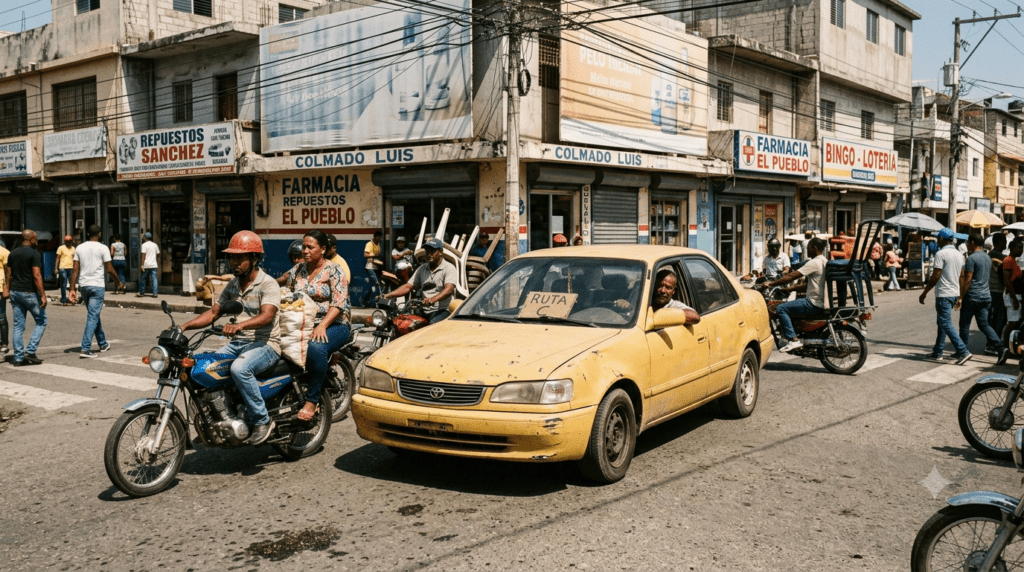
Carros de Concho: A Unique Part of Dominican Transportation
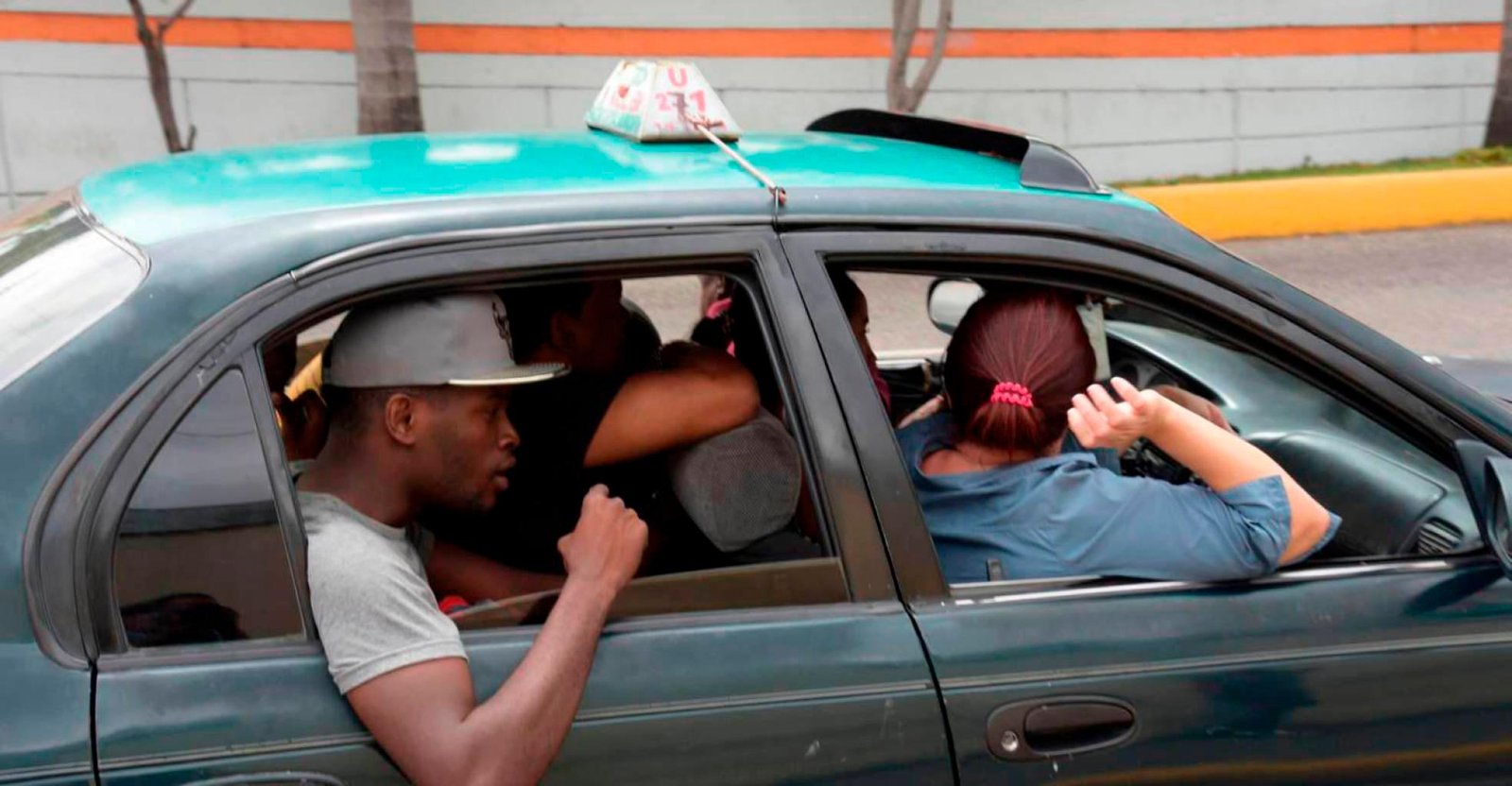
One of the most distinctive features of Dominican urban transport is the carro de concho.
A carro de concho is a shared taxi operating along fixed routes rather than providing private point-to-point transportation. Although privately owned, these vehicles form an important part of public transportation in many cities.
Foreign visitors are often surprised by how many passengers these cars carry. A sedan originally designed for five occupants may transport six or seven passengers, with additional people sharing the front passenger seat or sitting closely together in the rear.
Many carros de concho are older vehicles that have remained in service for years. Their mechanical condition and comfort vary considerably, and frequent stops to pick up or drop off passengers are part of their normal operation.
Drivers should anticipate that these vehicles may stop unexpectedly, pull away from the curb without much warning, or change lanes frequently while looking for passengers.
Buses and Public Transport
Besides carros de concho, drivers will regularly encounter city buses, minibuses and intercity coaches.
Urban buses often stop frequently, while privately operated minibuses may slow suddenly to collect passengers. Maintaining a safe following distance is particularly important when driving behind public transportation vehicles.
Road Conditions
Road quality varies considerably throughout the Dominican Republic.
Modern toll highways connecting Santo Domingo with destinations such as Punta Cana, Santiago, La Romana and Samaná are generally well maintained and among the best roads in the Caribbean.
Secondary highways and rural roads, however, may present additional challenges including:
- Potholes.
- Uneven pavement.
- Limited road markings.
- Sharp curves.
- Steep mountain sections.
- Livestock crossing the road.
- Speed bumps (“policías acostados”) that are not always well marked.
Reducing speed on unfamiliar roads is strongly recommended.
Driving at Night
Many experienced residents advise visitors to avoid unnecessary night driving outside major cities.
Although the country’s principal highways are generally safe, reduced visibility increases the likelihood of encountering unexpected hazards such as:
- Pedestrians walking along the roadside.
- Bicycles without adequate lighting.
- Motorcycles with limited or malfunctioning lights.
- Animals crossing rural roads.
- Poorly illuminated intersections.
If night driving cannot be avoided, reducing speed and remaining particularly alert is advisable.
Driving During Heavy Rain
Tropical downpours can develop quickly, especially during the rainy season and hurricane season.
Heavy rainfall may temporarily reduce visibility, create standing water on roads and increase braking distances. In mountainous areas, isolated landslides are also possible following prolonged rainfall.
If visibility becomes severely limited, drivers should reduce speed, increase following distance and, if necessary, stop safely until conditions improve.
Toll Roads
The Dominican Republic has an extensive network of modern toll highways connecting many of the country’s main cities and tourist destinations.
Some of the principal toll roads include:
- Autopista Duarte.
- Autovía del Este.
- Coral Highway.
- Santo Domingo–Samaná Highway.
Tolls contribute to the maintenance and expansion of the national highway network. Depending on the route, payment may be made in cash or through electronic toll systems.
Drivers should carry sufficient local currency or confirm with their rental company whether electronic toll devices are included with the vehicle.
Fuel Stations
Fuel stations are plentiful in Santo Domingo, Santiago, Punta Cana and other major urban areas, as well as along the country’s principal highways.
Stations typically offer gasoline, diesel and convenience stores, while many also provide air pumps and basic vehicle services.
When travelling into remote regions such as the southwest, mountain areas or parts of the northwest, it is advisable to refuel before leaving larger towns, as service stations become less frequent.
With a good understanding of Dominican driving culture, road conditions and the behaviour of different road users, visitors will be much better prepared to drive safely throughout the country. The final section of this guide covers parking, insurance, vehicle rentals, accidents, emergency procedures and practical advice for everyday driving.