 25°C


Mercedes-AMG GT SUV Brings 1,153 HP and Everyday Practicality
Mercedes-AMG has unveiled its first full-size SUV developed entirely in-house, combining supercar-level acceleration with family-friendly space, advanced chassis technology and ultra-fast charging. The all-electric GT SUV arrives in three versions and targets the Porsche Cayenne Electric in the expanding high-performance luxury SUV market.


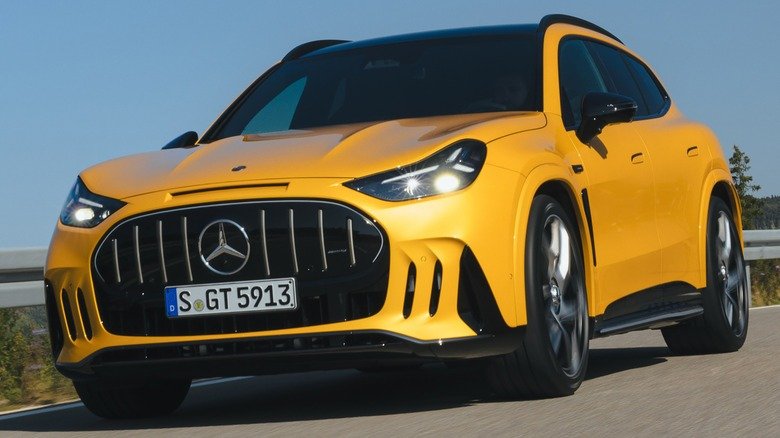
Mercedes-AMG is expanding its electric performance lineup with a vehicle designed to combine the acceleration of a supercar with the space and versatility of a full-size SUV. The new Mercedes-AMG GT SUV, unveiled on October 17, 2026, is the first full-size SUV developed entirely in-house by AMG, Mercedes-Benz’s performance division.
Headlined by a GT 63 version producing 1,153 horsepower, the electric SUV introduces a new competitor for the Porsche Cayenne Electric. Its appeal extends beyond headline performance figures: Mercedes has also focused on sustained power delivery, high-speed charging, sophisticated suspension technology and the everyday usability expected from a premium family vehicle.
The 2028 model-year vehicle is scheduled to reach U.S. dealerships in summer 2027. The initial lineup will consist of the GT 53, GT 55 and GT 63, offering different combinations of performance and battery technology.
Three electric versions, led by the 1,153-hp GT 63
The Mercedes-AMG GT SUV lineup is built around two electric powertrain configurations. The GT 63 and GT 55 use three electric motors, including two compact axial-flux motors at the rear and a third motor at the front. The GT 53 adopts a different arrangement with two synchronous electric motors.
The three models deliver substantially different power outputs:
Mercedes-AMG GT 53 SUV: The entry-level version produces 536 hp from two electric motors. Its configuration includes a two-speed transmission at the rear axle, designed to balance acceleration with efficiency at higher speeds.
Mercedes-AMG GT 55 SUV: This model raises output to 805 hp and adopts the more advanced three-motor architecture shared with the range-topping version.
Mercedes-AMG GT 63 SUV: The flagship produces up to 1,153 hp, making it the performance centerpiece of the range. Mercedes claims a 0–60 mph acceleration time of 2.4 seconds and an electronically limited top speed of 168 mph.
The figures place the GT 63 among the most powerful electric SUVs announced for production. However, the distinction between peak and sustained output matters: Mercedes says the vehicle can maintain up to 711 hp of continuous output, addressing the challenge of managing heat and power delivery during repeated high-performance driving.
Why the new SUV is more than an electric GT 4-Door
The GT SUV shares its AMG.EA high-performance architecture with the new electric Mercedes-AMG GT 4-Door Coupe. Both vehicles use advanced electric-drive technology and an 800-volt electrical system, but the SUV has been developed around a different set of priorities.
Its taller body and full-size proportions provide additional flexibility for passengers and luggage, while the design aims to retain a low-slung, sporty appearance. Mercedes describes the vehicle as a combination of SUV practicality and GT driving character, rather than simply a raised version of the four-door model.
The SUV also benefits from the company’s focus on packaging and lightweight construction. A flat integrated battery helps preserve cabin space, while the low center of gravity is intended to improve stability and handling despite the vehicle’s substantial size.
That distinction is important for buyers who want high performance without giving up the flexibility of a family vehicle. The GT SUV is intended to accommodate daily commuting, longer journeys and spirited driving within the same package.
Advanced suspension and simulated AMG sound
Chassis technology is central to the new model. The GT SUV introduces AMG ACTIVE RIDE CONTROL+, a suspension system with active pitch and roll stabilization designed to limit body movements while balancing comfort and precision.
Mercedes has also developed active aerodynamic components. The AEROKINETICS system includes an electronically controlled air panel that manages airflow according to cooling requirements and an active roof spoiler designed to improve aerodynamic balance and stability at higher speeds.
The GT 63 also features the AMG DYNAMIC PLUS package as standard, with controls that allow drivers to adjust aspects of the vehicle’s response, handling and traction according to driving conditions.
Another notable feature is the sound experience. Although the SUV is fully electric, Mercedes offers simulated engine sounds inspired by AMG V8 and six-cylinder engines, along with simulated gear changes and seat vibrations. The aim is to reproduce some of the sensory feedback associated with combustion-powered performance cars.
These features illustrate AMG’s approach to electric performance: the technology is not limited to delivering maximum power, but also seeks to create a distinctive driving experience through chassis behavior, sound and driver interaction.
800-volt battery technology targets shorter charging stops
The GT SUV uses an 800-volt battery system with directly cooled cylindrical cells and advanced thermal management. Mercedes says the technology is designed to support repeated high-power acceleration while controlling battery temperatures.
The GT 53 uses a 106-kWh battery, while the GT 55 and GT 63 receive a larger 128-kWh battery. The larger pack supports DC charging at up to 710 kW under suitable conditions, while the GT 53 is rated for charging power of up to 600 kW.
For the GT 55 and GT 63, Mercedes claims that charging from 10% to 80% can take approximately 12 minutes under optimal conditions. The company also says the larger battery can add up to 450 kilometers of WLTP-rated driving range in 10 minutes, depending on charging conditions.
Mercedes quotes a maximum range of up to approximately 700 kilometers under the WLTP test cycle for the larger-battery configuration. Actual range will depend on the selected model, equipment, temperature, driving style and road conditions.
The headline charging figures should also be understood in context. Reaching the vehicle’s maximum charging rate requires a compatible high-power charging station and suitable battery conditions; not every public charger can deliver that output.
Porsche Cayenne Electric becomes a direct rival
The Porsche Cayenne Electric provides a useful comparison for the new Mercedes. Porsche’s range-topping Cayenne Turbo Electric delivers up to 1,156 metric horsepower, uses a 113-kWh battery and can accelerate from 0 to 100 km/h in 2.5 seconds, according to the manufacturer’s published specifications.
Porsche quotes a maximum DC charging rate of 390 kW and a 10%–80% charging time of approximately 16 minutes under optimal conditions. Its published WLTP range for the Turbo Electric is between 557 and 622 kilometers, depending on configuration.
The two vehicles therefore approach the high-performance electric SUV segment with similar priorities but different technical solutions. Mercedes emphasizes its three-motor flagship, sustained power delivery and exceptionally high charging capacity. Porsche combines a powerful dual-motor system with its own battery management, chassis technologies and a focus on long-distance versatility.
The power figures are broadly comparable, and the difference between them is small enough that buyers will need to look beyond horsepower alone. Charging access, real-world range, ride comfort, interior space, pricing and driving characteristics will all influence the choice between the two.
Pricing and availability
Mercedes has confirmed that the 2028 GT SUV will reach U.S. dealerships in summer 2027. The GT 53 is the entry point to the lineup, while the more powerful GT 55 and GT 63 are scheduled to follow in spring 2027 in the European rollout.
In Europe, Mercedes has announced a starting price of €113,050 for the GT 53 SUV. Final pricing for the higher-performance versions and the U.S. market has not been fully established in the announcement.
For buyers considering a premium electric SUV, the GT’s positioning is clear: it combines AMG performance engineering with a body style intended to be more versatile than a conventional sports sedan. Its eventual market reception will depend not only on the impressive output figures but also on how effectively the vehicle balances speed, comfort, charging convenience and everyday practicality.
More technical information and the manufacturer’s specifications are available through the official Mercedes-AMG GT SUV website.