 24°C


Diablos Cojuelos of La Vega: Origins, Costumes and Carnival Traditions
The Diablos Cojuelos are the signature characters of La Vega Carnival, one of the Dominican Republic's most distinctive cultural celebrations. Recognized for their elaborate masks, brightly decorated costumes and traditional vejigas, these masked performers bring centuries of carnival influences together with local craftsmanship, folklore and community traditions.


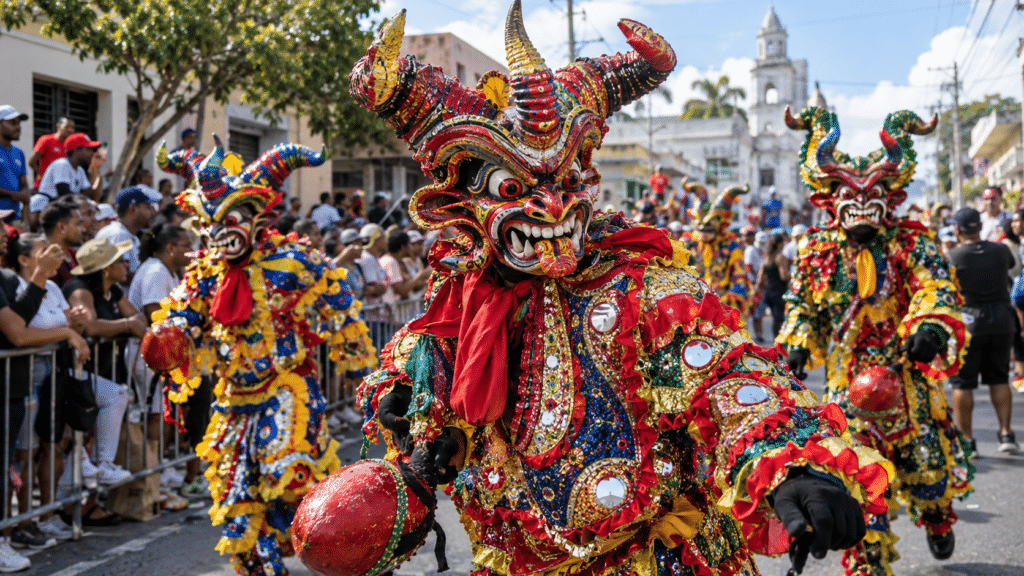
The Diablos Cojuelos of La Vega are among the most recognizable figures in Dominican popular culture. Every February, these masked performers take to the streets of La Vega, a city in the country’s central Cibao region, wearing elaborate costumes and oversized masks that combine devil imagery, animal features and fantastical designs.
Known for their energetic movements, playful interactions with spectators and distinctive carnival accessories, the Diablos Cojuelos are the main attraction of Carnaval Vegano, the city’s traditional carnival. Their appearance reflects a cultural heritage shaped by European carnival customs, Dominican creativity and generations of local artisans.
What Are the Diablos Cojuelos?
Diablos Cojuelos are masked carnival characters whose performances combine dance, humor, theatrical mischief and interaction with the public. Their name is commonly translated as “Limping Devils,” referring to a popular legend about a mischievous demon whose behavior angered the devil so much that he was thrown out of hell and injured his leg when he landed on Earth.
The story provides a folkloric explanation for the character’s name, but the modern Diablo Cojuelo is primarily a festive figure rather than a symbol of religious evil. During carnival, performers use their masks and costumes to adopt exaggerated identities, entertain crowds and participate in a tradition in which humor and theatricality are central.
Although Diablos Cojuelos appear in several Dominican carnival celebrations, their costumes and masks vary by location. The version associated with La Vega is particularly well known for its intricate craftsmanship, extravagant designs and the moving jaws featured in some traditional masks.
The Origins of the Diablos Cojuelos
The character has roots in Spanish popular traditions brought to the Caribbean during the colonial period. Devil figures and masked characters formed part of European festive customs, which evolved in the Americas through local cultural influences and new forms of popular expression.
The Dominican Republic has a long history of carnival celebrations, although the precise chronology of the earliest festivities in La Vega remains a subject of historical discussion. The city’s municipal government identifies February 1520 as a possible date for early carnival manifestations in the area, associated with a visit by the Spanish friar Bartolomé de las Casas. However, researchers have questioned whether there is sufficient documentary evidence to establish that a developed carnival tradition existed in La Vega at that time.
The distinction matters because the history of carnival in the Dominican Republic as a whole is not identical to the documented history of Carnaval Vegano. The modern tradition in La Vega developed over generations, with local residents, performers and artisans shaping its distinctive characters, costumes and forms of street celebration.
Over time, the Diablo Cojuelo became a recognizable expression of local identity. European devil imagery was transformed through Dominican craftsmanship, imagination and performance, producing the colorful and often grotesque figures seen in La Vega today.
The Masks and Costumes of the Diablos Cojuelos
The masks, known as caretas, are among the defining elements of the Diablos Cojuelos. They may feature large horns, exaggerated teeth, bulging eyes, animal characteristics and other fantastical details. Some appear deliberately frightening, while others combine comic and surreal features.
In La Vega, certain masks are distinguished by movable jaws that reveal the teeth when operated. This feature contributes to the expressive character of the disguise and reflects the skill of local mask makers.
The artisans who create these masks are called careteros. Their work involves designing, shaping, reinforcing and painting each piece, often by hand. Traditional techniques and materials have evolved over time, and contemporary designs may incorporate different materials and decorative finishes.
The costumes are equally elaborate. They typically consist of brightly colored shirts and trousers, sometimes accompanied by capes or other decorative elements. Sequins, mirrors, ribbons, bells, embroidery and elaborate patterns create a striking appearance as performers dance and move through the streets.
Costume design also helps distinguish carnival groups. Each group develops its own visual identity, and the preparation of masks and outfits can involve months of work. For participants, wearing a costume represents more than taking part in a parade: it connects them with the artistic traditions and collective identity of their group.
The Vejiga and Its Role in Carnival
Another characteristic element of the Diablos Cojuelos is the vejiga, traditionally made from a prepared and inflated animal bladder. Performers use this accessory to deliver playful taps to spectators as part of the carnival’s interactive atmosphere.
The custom has become one of the most recognizable aspects of Carnaval Vegano. Unlike a conventional parade in which performers remain separate from the audience, the celebration traditionally involves direct encounters between masked characters and spectators.
The practice is subject to safety measures. The La Vega municipal government describes restrictions on excessively hard or modified vejigas, including requirements intended to prevent injuries. Carnival organizers may also designate areas where spectators can watch the performances without being struck by the accessories.
Visitors should therefore understand that the vejiga is part of a specific local carnival custom, not an invitation to ignore safety instructions. Following the designated spectator areas and directions from event staff helps preserve the tradition while reducing risks.
How the Diablos Cojuelos Celebrate Carnival in La Vega
Carnaval Vegano takes place principally on Sundays throughout February. The celebration brings together masked performers, organized carnival groups, musicians, artisans and spectators from across the Dominican Republic and beyond.
Many performers belong to organized groups associated with local gathering places known as cuevas. These serve as social and organizational centers where members prepare for carnival, develop their costumes and maintain their group’s identity.
The groups contribute to the diversity of the celebration. Their masks, costumes and performances differ in style, creating a lively display of artistic competition and community participation. The tradition also depends on people working behind the scenes, including costume makers, mask artisans, organizers and families who support performers throughout the season.
Although the Diablos Cojuelos dominate the visual identity of Carnaval Vegano, they are not its only participants. Comparsas, other traditional characters, musicians and spectators all contribute to the festivities. The interaction between these elements makes the event a broader expression of local culture rather than simply a procession of masked figures.
The carnival has also developed into a major public celebration, with organized performances and entertainment alongside its traditional characters. Its continued popularity reflects the importance of cultural heritage in La Vega and the role of community groups in preserving and adapting local customs.
Why the Diablos Cojuelos Matter to Dominican Culture
The Diablos Cojuelos illustrate how a cultural character introduced through colonial-era traditions can acquire a distinctive local identity. Their European folkloric roots remain visible in the devil imagery, but the costumes, masks and performances associated with La Vega reflect generations of Dominican artistic expression.
The tradition also sustains specialized craftsmanship. Careteros preserve and develop techniques for creating masks, while costume makers contribute to an art form that requires design skills, manual work and considerable preparation. These crafts are essential to the visual identity of the carnival and help transmit cultural knowledge between generations.
For local communities, the Diablos Cojuelos represent participation, creativity and belonging. Carnival groups bring together performers and supporters around shared identities, while the annual celebration provides a public setting in which those traditions can be displayed and renewed.
For international visitors, the Diablos Cojuelos offer a perspective on the Dominican Republic beyond its beaches and resort areas. Their masks, costumes, music and interactions with spectators reveal a lively tradition rooted in local history and community life.
The Diablos Cojuelos of La Vega are therefore more than colorful carnival characters. They are living expressions of Dominican folklore, a distinctive tradition of mask-making and costume design, and a central part of the cultural identity that makes Carnaval Vegano recognizable throughout the country.