 26°C

Dominican Republic Exported $1.2 Billion in Goods to Haiti in 2025
Trade between the Dominican Republic and Haiti remains a significant economic link on the island of Hispaniola. Industrialist Fernando Capellán says Dominican goods exports to Haiti reached approximately $1.2 billion in 2025, with formal trade accounting for the reported figure and additional informal transactions remaining difficult to quantify.


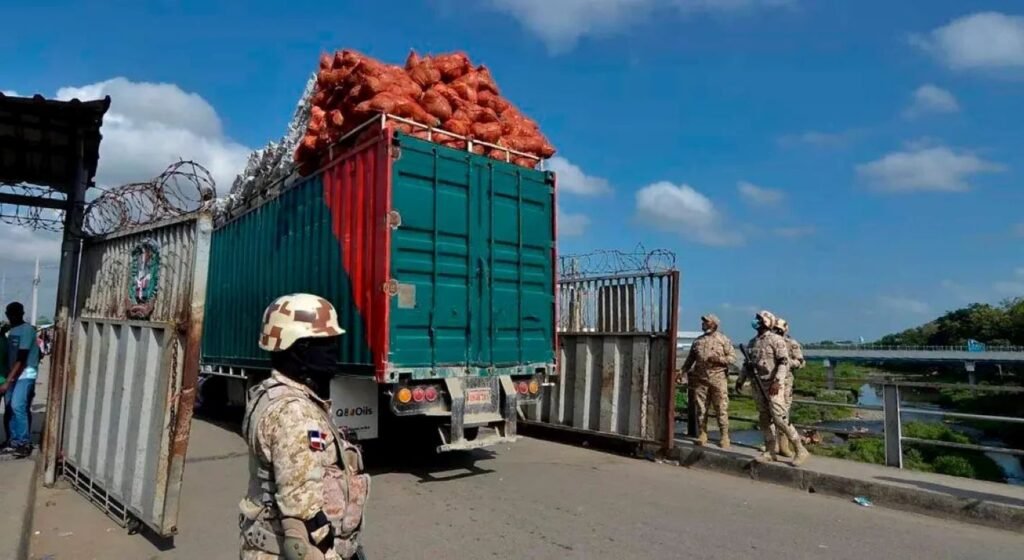
The Dominican Republic exported approximately $1.2 billion in goods to neighboring Haiti in 2025, according to Fernando Capellán, president and chief executive of Grupo M and the Industrial Development Company (Codevi). The business executive says the figure reflects formal trade and that the commercial relationship between the two countries has significant room for expansion.
Capellán cited the estimate during the 41st session of the Economic Commission for Latin America and the Caribbean (ECLAC), held in Santiago de los Caballeros from October 7 to 9, 2026. He argued that the Dominican-Haitian relationship should be viewed as an economic opportunity built around trade, investment and productive cooperation, while respecting both countries’ laws, security requirements and sovereignty.
The $1.2 billion figure is an estimate attributed to Capellán rather than a separately verified full-year total in the official trade data reviewed. He also noted that informal transactions are difficult to measure, meaning the reported amount does not capture the entire flow of goods between the two countries.
Food and construction materials drive demand for Dominican goods
Haiti represents an important neighboring market for Dominican producers, particularly suppliers of food and construction materials. Capellán described the two economies as commercially complementary, with Haitian demand providing an outlet for Dominican merchandise and opportunities for businesses operating on both sides of the island.
The short distance between the countries offers a logistical advantage compared with more distant export markets. That proximity is particularly relevant to border communities, where agricultural products and other goods can move through established local trading networks.
Capellán illustrated the point by describing how agricultural products can be transported across the border in a wheelbarrow, emphasizing the accessibility of certain markets for small producers and traders. The example highlights the difference between large-scale industrial exports and the smaller transactions that support livelihoods in border towns.
Formal trade does not capture the entire bilateral exchange
The distinction between formal and informal commerce is important when assessing the economic relationship between the Dominican Republic and Haiti. The figure cited by Capellán refers to formal exports, while transactions outside recorded channels are harder to quantify consistently.
The Dominican Republic’s General Directorate of Customs publishes export statistics and periodic trade reports that provide a basis for examining recorded merchandise flows. Its official export statistics are a reference point for understanding the country’s trade performance, although comparisons with Capellán’s estimate require matching the same period, destination and measurement methodology.
In a separate report published in 2025, Dominican customs authorities said total bilateral trade with Haiti had reached approximately $882.69 million through September of that year, up 30.2% from $677.88 million over the same period in 2024. That figure covered trade in both directions and therefore should not be directly compared with the $1.2 billion in Dominican exports cited for the full year.
Industrial cooperation could expand business opportunities
Capellán argued that the relationship should extend beyond the exchange of finished goods. He sees potential in productive integration, particularly through supply chains connecting Dominican suppliers with industrial facilities in Haiti.
Such arrangements could create opportunities for Dominican companies to supply materials and other inputs to Haitian manufacturing operations, while allowing businesses to take advantage of the countries’ geographic proximity. For companies operating across the border, coordinated supply chains could also help establish longer-term commercial relationships.
Codevi, the industrial park established by Grupo M in Haiti near the Dominican border, is part of Capellán’s experience in cross-border manufacturing. His business activities in Haiti have focused on industrial production, particularly textiles, providing him with direct experience of the opportunities and operational challenges associated with investment in the neighboring country.
In his remarks on regional integration, Capellán also emphasized employment and private investment as components of a sustainable economic strategy. He argued that commercial activity should be assessed through its potential to generate business opportunities and livelihoods, rather than exclusively through the lens of assistance.
Border communities remain central to trade growth
The Dominican-Haitian border is an important setting for both formal commerce and smaller-scale exchanges. Its proximity to agricultural production areas, markets and industrial facilities creates opportunities that depend on practical cross-border access and functioning commercial channels.
For Dominican producers, a larger and more predictable Haitian market could offer additional outlets for food, building materials and industrial supplies. For Haitian businesses, access to nearby suppliers can support manufacturing and distribution without the same transport distances associated with more remote markets.
However, expanding trade also depends on security, compliance with customs requirements and stable conditions for businesses and traders. Capellán acknowledged the importance of respecting the laws and sovereignty of both countries as part of any long-term approach.
A long-term strategy for Dominican-Haitian commerce
The $1.2 billion export estimate underscores the economic significance of Haiti for Dominican businesses, while the difficulty of measuring informal transactions points to limitations in assessing the full scale of bilateral commerce.
Capellán’s proposal centers on using the existing relationship to develop additional commercial and productive links, including stronger supplier networks, industrial cooperation and opportunities for businesses in border communities.
Turning that potential into sustained growth will depend on reliable trade data, secure border operations, regulatory compliance and conditions that allow private investment to develop over time. The two countries’ geographic proximity provides a practical foundation for trade, but any expansion will require businesses and authorities to address those challenges while respecting their respective national interests.