 25°C
25°C

Pre-Columbian History of the Dominican Republic: The Island Before Columbus
Long before Christopher Columbus reached the island of Hispaniola in 1492, the territory that now forms the Dominican Republic was home to thousands of years of Indigenous history. Successive waves of settlers shaped the island's cultures, technologies, and societies, culminating in the sophisticated Taíno civilization that Europeans encountered at the end of the 15th century. Understanding this pre-Columbian past provides essential context for the country's history, identity, and archaeological heritage.


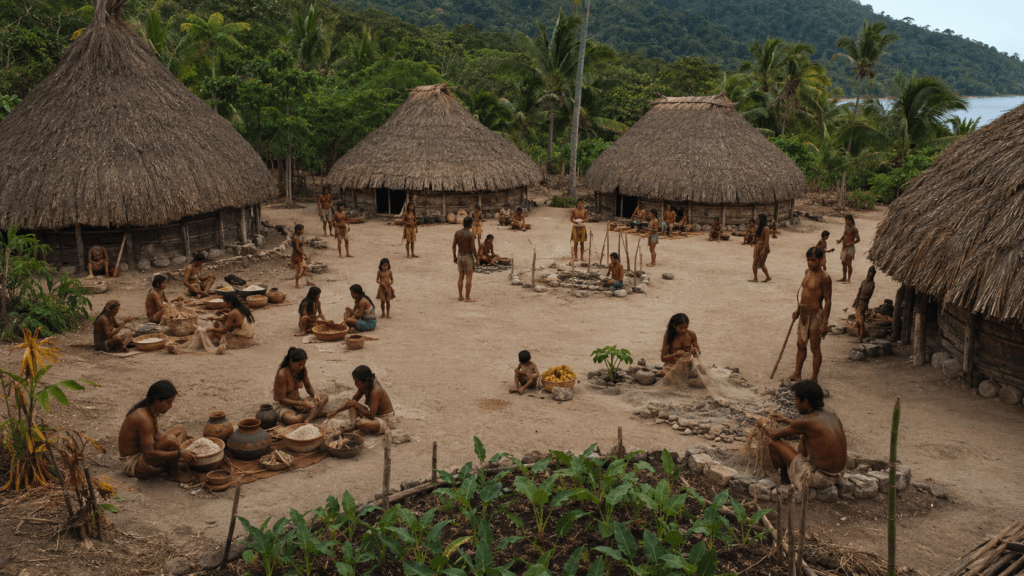
The pre-Columbian history of the Dominican Republic spans several millennia and tells the story of the people who first settled the island of Hispaniola long before European exploration transformed the Caribbean. Archaeological discoveries show that the island experienced multiple waves of migration, cultural development, and technological innovation before becoming home to the Taíno, the Indigenous society encountered by Christopher Columbus in 1492.
Although many details remain subjects of archaeological research and scholarly debate, there is broad agreement that Hispaniola’s pre-Columbian history was far more diverse and dynamic than once believed. Rather than being inhabited by a single people throughout its history, the island witnessed successive cultures that adapted to changing environments, introduced agriculture, developed pottery, and established increasingly complex political systems.
Where Is Hispaniola?
Before examining its earliest inhabitants, it is important to understand the geography of the island itself.
Hispaniola is the second-largest island in the Caribbean after Cuba. Today it is divided between two sovereign nations:
- The Dominican Republic occupies the eastern two-thirds.
- Haiti occupies the western third.
For thousands of years before European arrival, however, there were no modern political borders. Indigenous communities moved, traded, and interacted across the entire island.
The First People to Reach Hispaniola
Archaeological evidence indicates that the first humans reached Hispaniola several thousand years before Christ, likely arriving by canoe from neighboring islands and the northern coast of South America. These early settlers belonged to what archaeologists generally describe as Archaic Age hunter-gatherer societies.
Unlike later agricultural populations, these communities depended primarily on fishing, shellfish gathering, hunting small animals, and collecting wild plants. They produced simple stone and shell tools but did not yet practice large-scale farming or manufacture pottery.
Their settlements were generally located near coastlines, rivers, lagoons, and caves where natural resources were abundant.
Although much remains unknown about these earliest inhabitants, archaeological sites across Hispaniola demonstrate that they successfully adapted to diverse environments ranging from coastal mangroves to interior valleys.
Migration from South America
Centuries later, new waves of migrants reached the Caribbean from the lower Orinoco River basin in present-day Venezuela. These groups brought major technological and cultural innovations that gradually transformed life throughout the Greater Antilles.
Among the most important developments were:
- ceramic production;
- organized agriculture;
- permanent villages;
- improved canoe navigation;
- more complex social organization.
These agricultural communities gradually spread through the Lesser Antilles before reaching Puerto Rico and Hispaniola. Archaeologists associate many of these migrations with Saladoid ceramic traditions originating in northern South America. Over time, local cultures evolved as incoming populations mixed with earlier inhabitants and adapted to island environments.
The Development of Taíno Civilization
Between approximately the 7th and 15th centuries, the societies living on Hispaniola underwent significant cultural development. By the time Europeans arrived, the dominant Indigenous culture on most of the island was the Taíno.
The Taíno belonged to the broader Arawakan language family and shared cultural characteristics with Indigenous peoples living across much of the Greater Antilles. Their society represented the culmination of centuries of local cultural evolution rather than the sudden arrival of an entirely new population.
How the Taíno Lived
The Taíno established permanent villages known as yucayeques, many of which contained dozens or even hundreds of homes. Communities were typically located near fertile land, rivers, or coastal areas that supported agriculture and fishing.
Their economy combined farming with fishing, hunting, and gathering.
The most important crop was cassava (yuca), which was processed into bread that became the staple food throughout much of the Caribbean. Other cultivated crops included:
- maize;
- sweet potatoes;
- beans;
- peppers;
- yams;
- cotton;
- tobacco.
Fishing supplied an important source of protein, while canoes enabled travel between islands and facilitated trade networks extending across much of the Caribbean.
Political Organization
Taíno society was organized into hierarchical chiefdoms governed by hereditary leaders known as caciques. Political authority was supported by kinship, ceremonial leadership, and the management of agricultural production.
By the late 15th century, Hispaniola was divided into five major chiefdoms:
- Marién
- Maguá
- Maguana
- Jaragua
- Higüey
Each chiefdom controlled numerous villages while maintaining its own political leadership, alliances, and regional identity. Although these territories interacted through trade and diplomacy, they also competed for influence and resources.
The Five Great Cacicazgos
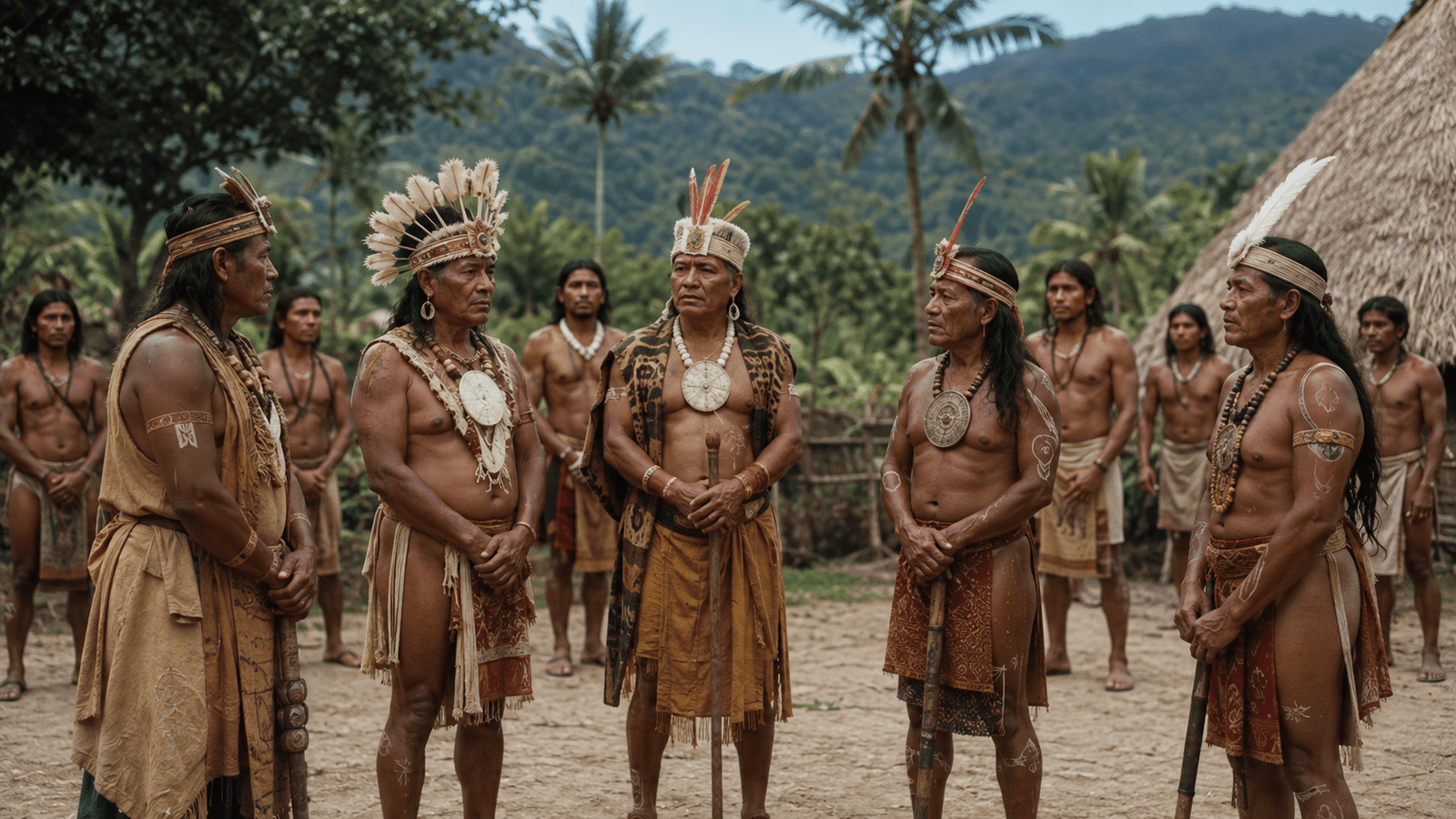
The political landscape encountered by Columbus in 1492 reflected centuries of social development.
Each cacicazgo governed a large territory through networks of local communities under the authority of a principal cacique.
The five chiefdoms were approximately distributed as follows:
| Chiefdom | Approximate Location | Principal Cacique |
|---|---|---|
| Marién | Northwest Hispaniola | Guacanagaríx |
| Maguá | Northeastern interior | Guarionex |
| Maguana | Central mountain valleys | Caonabo |
| Jaragua | Southwest Hispaniola | Bohechío |
| Higüey | Eastern Hispaniola | Cayacoa |
These chiefdoms were not kingdoms in the European sense, but they represented highly organized political territories capable of coordinating agriculture, ceremonial life, and regional governance across large populations.
Social Structure
Taíno society was organized into distinct social groups, each with specific responsibilities that contributed to the stability of village life.
At the top stood the cacique, who exercised political, ceremonial, and economic authority. Supporting the cacique were the nitaínos, a noble class that often served as military leaders, administrators, and advisers. Religious specialists known as bohíques acted as healers, spiritual leaders, and keepers of traditional knowledge.
The majority of the population consisted of common people, sometimes referred to as naborías, who cultivated crops, fished, built homes, crafted tools, and carried out the daily work that sustained their communities.
Leadership was often hereditary, although alliances through marriage and kinship also played an important role in maintaining political stability among neighboring chiefdoms.
Religion and Spiritual Beliefs
Religion was deeply woven into every aspect of Taíno life. Rather than separating the sacred from everyday activities, agriculture, leadership, health, and the natural world were all understood through spiritual relationships.
The Taíno worshipped supernatural beings known as zemís (also spelled cemís). These spiritual entities could represent ancestors, natural forces, or protective deities and were often carved from stone, wood, shell, or bone.
Zemís were kept in homes, ceremonial spaces, and the residences of caciques. They were believed to influence harvests, weather, health, fertility, and the prosperity of the community.
Religious ceremonies frequently included music, dance, ritual fasting, and the ceremonial use of cohoba, a hallucinogenic substance inhaled by religious leaders during important spiritual rituals.
Art, Craftsmanship, and Daily Life
Archaeological discoveries reveal that Taíno artisans produced sophisticated works in stone, wood, shell, cotton, and gold. Although gold held symbolic and decorative value, it was not used as currency or accumulated in the way Europeans later understood wealth.
Pottery was both practical and artistic, with vessels used for cooking, storage, and ceremonial purposes. Intricate carvings depicting animals, human figures, and zemís demonstrate considerable artistic skill and religious symbolism.
Homes were generally circular structures called bohíos, constructed with wooden poles, woven materials, and thatched roofs. Larger rectangular buildings served as residences for caciques and important communal functions.
Trade Across the Caribbean
Hispaniola was not isolated. Extensive maritime networks connected Indigenous communities throughout the Greater Antilles and, in some cases, with regions farther south in the Caribbean.
Large dugout canoes allowed the movement of people and goods between islands. Archaeological evidence indicates that communities exchanged items such as:
- stone tools;
- shell ornaments;
- cotton textiles;
- ceramics;
- food products;
- raw materials unavailable in certain islands.
These exchange networks also facilitated the spread of ideas, technologies, artistic traditions, and religious practices across the Caribbean long before European arrival.
Archaeological Evidence in the Dominican Republic
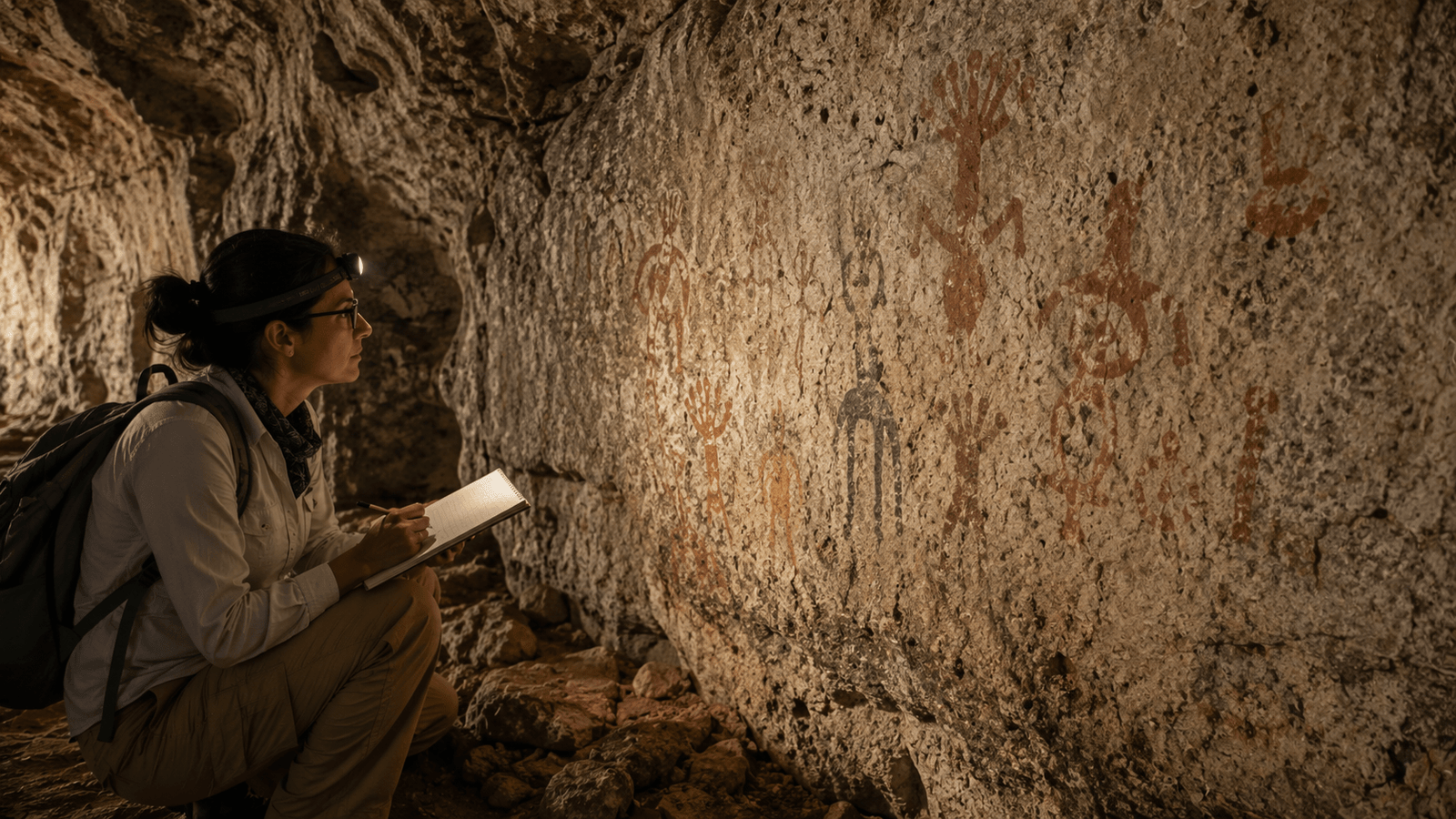
Much of what is known about the island’s pre-Columbian history comes from archaeological excavations conducted throughout the Dominican Republic.
Important evidence has been discovered in caves, burial sites, ceremonial plazas, and ancient settlements. Stone tools, pottery fragments, shell ornaments, petroglyphs, cave paintings, and ceremonial objects have helped researchers reconstruct Indigenous life over thousands of years.
Several archaeological sites are protected today because of their historical significance. The Pomier Caves, southwest of Santo Domingo, preserve one of the Caribbean’s most important collections of prehistoric rock art. Other significant discoveries have been made in areas such as La Caleta, El Atajadizo, and various coastal settlements that document different stages of Indigenous occupation.
The Arrival of Christopher Columbus
On December 5, 1492, Christopher Columbus reached the northern coast of Hispaniola during his first voyage across the Atlantic. His arrival marked the beginning of profound political, demographic, cultural, and environmental changes that transformed the island forever.
Early Spanish accounts described prosperous villages, organized chiefdoms, skilled agriculture, and extensive trade networks. Although these chronicles must be interpreted carefully because they reflect European perspectives, archaeology confirms that Hispaniola supported a substantial Indigenous population with well-developed social and political institutions before colonization.
The Decline of the Indigenous Population
The decades following European contact brought catastrophic consequences for the island’s Indigenous peoples.
Multiple factors contributed to the dramatic decline of the Taíno population, including:
- infectious diseases introduced from Europe;
- forced labor under the encomienda system;
- armed conflict;
- displacement from traditional communities;
- food shortages and social disruption.
Modern historians emphasize that Indigenous culture did not disappear entirely. While the colonial period devastated existing political structures, elements of Taíno language, agriculture, food traditions, place names, and cultural practices continued to influence Dominican society through generations of cultural exchange and population mixing.
The Legacy of the Pre-Columbian Period
The Indigenous history of the Dominican Republic remains visible in many aspects of modern life. Numerous place names—including Higüey, Samaná, and Yaque—derive from Taíno languages, while words such as canoa (canoe), hamaca (hammock), barbacoa (barbecue), and tabaco (tobacco) entered Spanish through Taíno before spreading to many other languages.

Cassava bread continues to be produced in parts of the Dominican Republic using techniques with Indigenous origins, and archaeological museums throughout the country preserve artifacts that illustrate the island’s rich pre-Columbian past.
Research into Hispaniola’s earliest inhabitants continues to evolve as new archaeological discoveries, improved dating techniques, and advances in genetics provide additional insights into the island’s ancient history.
Frequently Asked Questions
Who lived in the Dominican Republic before Columbus?
Before Columbus arrived in 1492, Hispaniola was inhabited primarily by the Taíno, an Indigenous Arawakan-speaking people organized into regional chiefdoms. Earlier hunter-gatherer and ceramic-producing cultures had occupied the island for thousands of years before the emergence of Taíno society.
Were the Taíno the first inhabitants of Hispaniola?
No. Archaeological evidence shows that earlier Archaic Age peoples settled the island thousands of years before the Taíno developed. Over time, successive migrations and cultural changes gave rise to the societies encountered by Europeans.
How many Taíno chiefdoms existed on Hispaniola?
At the time of European contact, Hispaniola was generally divided into five major cacicazgos: Marién, Maguá, Maguana, Jaragua, and Higüey. Each was governed by its own hereditary cacique.
What did the Taíno eat?
The Taíno diet centered on cassava, supplemented by maize, sweet potatoes, beans, peppers, fruits, fish, shellfish, and small game. Agriculture and fishing together formed the basis of their economy.
Can visitors explore Taíno archaeological sites today?
Yes. Several museums and archaeological sites throughout the Dominican Republic preserve artifacts and rock art associated with the island’s Indigenous cultures. Some sites are open to visitors, while others are protected for ongoing research and conservation.
Conclusion
The pre-Columbian history of the Dominican Republic reveals a rich and complex past that extends far beyond the arrival of Europeans. Over thousands of years, Indigenous peoples transformed Hispaniola through migration, innovation, agriculture, trade, and political organization, creating one of the Caribbean’s most sophisticated pre-contact societies. Understanding this history not only provides essential context for the country’s colonial era but also highlights the enduring legacy of the island’s first inhabitants, whose influence remains embedded in Dominican culture, language, and identity today.