 27°C


Best Things to Do in Santo Domingo’s Colonial Zone
Santo Domingo's Colonial Zone is one of the most historically significant districts in the Caribbean, with centuries-old churches, colonial palaces, cobblestone streets and historic squares concentrated within a walkable area along the Ozama River. Recognized as a UNESCO World Heritage Site, this district offers visitors an opportunity to explore the origins of European colonial urban development in the Americas while discovering museums, architectural landmarks, traditional cafés and lively public spaces.


Why Visit Santo Domingo’s Colonial Zone?
The Colonial Zone (Ciudad Colonial) is the historic heart of Santo Domingo, the capital of the Dominican Republic. Located near the mouth of the Ozama River, it preserves the original urban center established by Spanish colonists in the late 15th century.
The settlement was founded in 1498 by Bartholomew Columbus, brother of Christopher Columbus. Initially established on the eastern side of the Ozama River, it was relocated to the western bank in 1502 under the administration of Nicolás de Ovando. The new city developed around a regular street grid, an urban planning model that later influenced settlements throughout the Americas.
Santo Domingo became an important center of Spanish colonial administration and religious activity. Its early institutions included the first cathedral, hospital, customs house and university established by Europeans in the Americas.
In 1990, UNESCO added the Colonial City of Santo Domingo to its World Heritage List, recognizing its historical importance, architectural heritage and influence on urban development across the region.
The protected historic district covers approximately 106 hectares and contains 32 streets and 116 blocks. Its architectural heritage includes Gothic, Renaissance, Baroque and Neoclassical buildings, alongside residential properties that illustrate the evolution of the city over several centuries.
What makes the area particularly interesting is that it is not simply an archaeological site or an open-air museum. It remains an active urban neighborhood where residents, businesses, cultural institutions and visitors share the same streets. Beyond its historic center, Santo Domingo offers plenty of other attractions and experiences worth discovering, making it worthwhile to explore the best things to do in Santo Domingo during your stay.
You can explore much of it on foot, moving between historic monuments, churches, museums, restaurants and public squares without needing a car.
Best Things to Do in Santo Domingo’s Colonial Zone
The most rewarding way to discover the Colonial Zone is to combine its major historical monuments with a walk through its traditional streets and public spaces.
Some attractions deserve only a few minutes from the outside, while others contain museums and architectural interiors that justify a longer visit.
1. Walk Along Calle Las Damas
Recommended time: 20–30 minutes.
Calle Las Damas is one of the most historically important streets in the Dominican Republic and is widely recognized as the oldest paved street in the Americas.
Originally known as Calle de la Fortaleza, it developed during the early years of the Spanish settlement. Its present name is traditionally associated with the noblewomen who accompanied María de Toledo, wife of Diego Columbus, and walked along the street during the colonial period.
The street connects several important historical buildings and monuments, making it one of the most rewarding places to explore on foot.
Among its architectural highlights are the Fortaleza Ozama, the Museum of the Royal Houses, the National Pantheon and several historic residences.
The buildings reflect the political and social importance that Santo Domingo acquired during the early Spanish colonial administration.
What is worth seeing?
The main attraction is the street itself. Pay attention to the stone façades, traditional balconies, colonial courtyards and architectural details that reveal how the city’s elite lived during the 16th and 17th centuries.
You do not need to enter every building to appreciate the street’s historical character. Walking its full length and stopping at the main monuments is enough to understand its importance.
Allow additional time if you plan to visit the museums and historic buildings along the route.
2. Visit Fortaleza Ozama
Recommended time: 30–45 minutes.
Located at the southern end of Calle Las Damas, Fortaleza Ozama is one of the most important military monuments in the Colonial Zone.
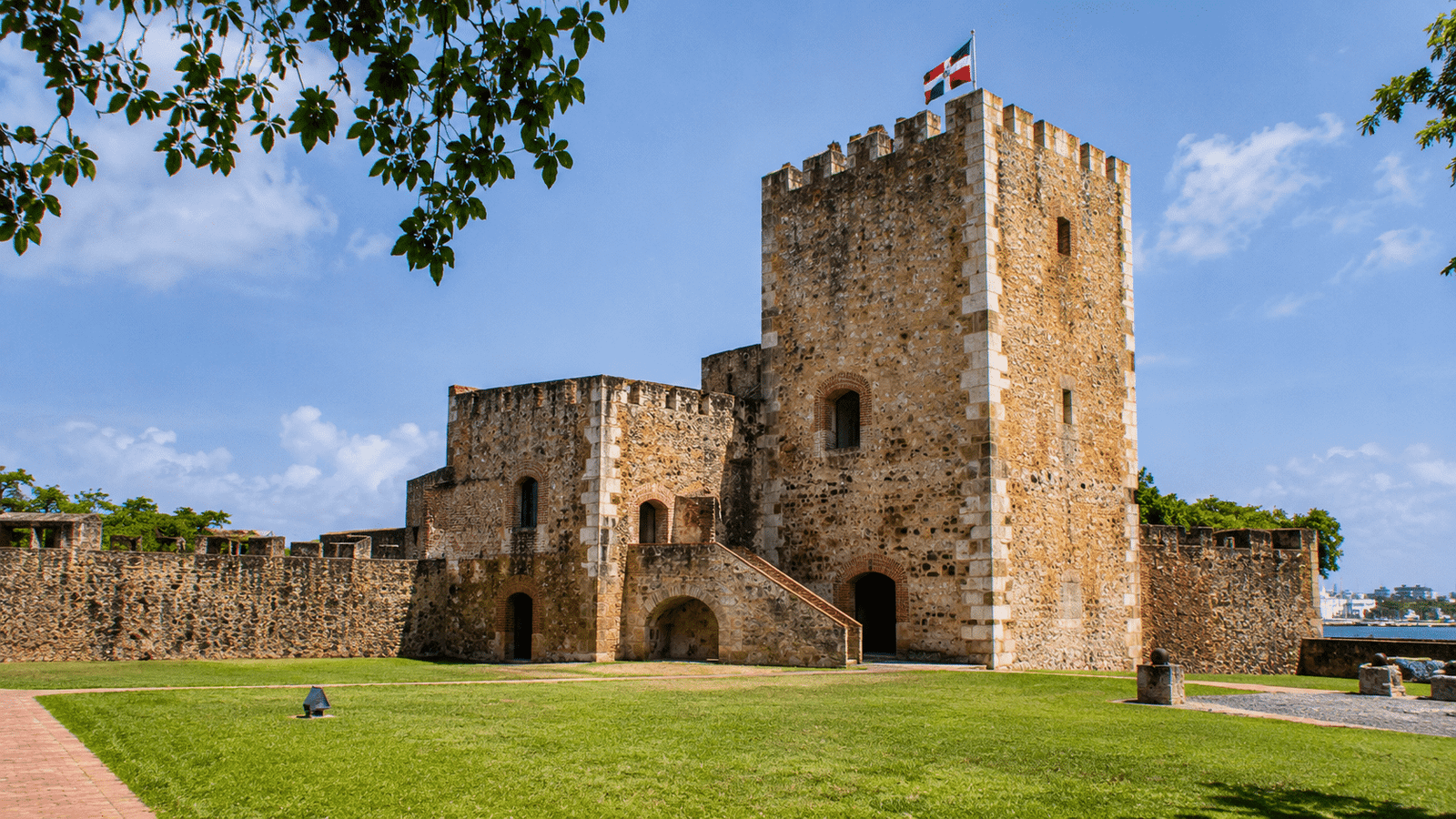
Construction began in 1502 under the administration of Nicolás de Ovando. The fortress was built to protect the settlement and its port from attacks by foreign powers, pirates and other maritime threats.
Its location overlooking the Ozama River made it strategically important for controlling access to the city.
The complex includes the prominent Torre del Homenaje, defensive walls, courtyards and other military structures that illustrate the development of early Spanish colonial fortifications.
Fortaleza Ozama is particularly significant because it is considered the oldest surviving European military fortress in the Americas.
What is worth seeing inside?
The interior is more interesting than a simple walk around the exterior. Visitors can explore the historic defensive structures, courtyards and elevated sections of the fortress.
The Torre del Homenaje is one of the main architectural highlights. Its elevated position offers views over the Ozama River, the port and parts of the historic district.
The fortress is also worth visiting for its military architecture and its relationship with the city’s original defensive system.
Allow approximately 30–45 minutes for a basic visit, or longer if you want to explore the site carefully.
3. Explore the Alcázar de Colón
Recommended time: 45–60 minutes.
The Alcázar de Colón is one of the most recognizable buildings in Santo Domingo’s Colonial Zone.
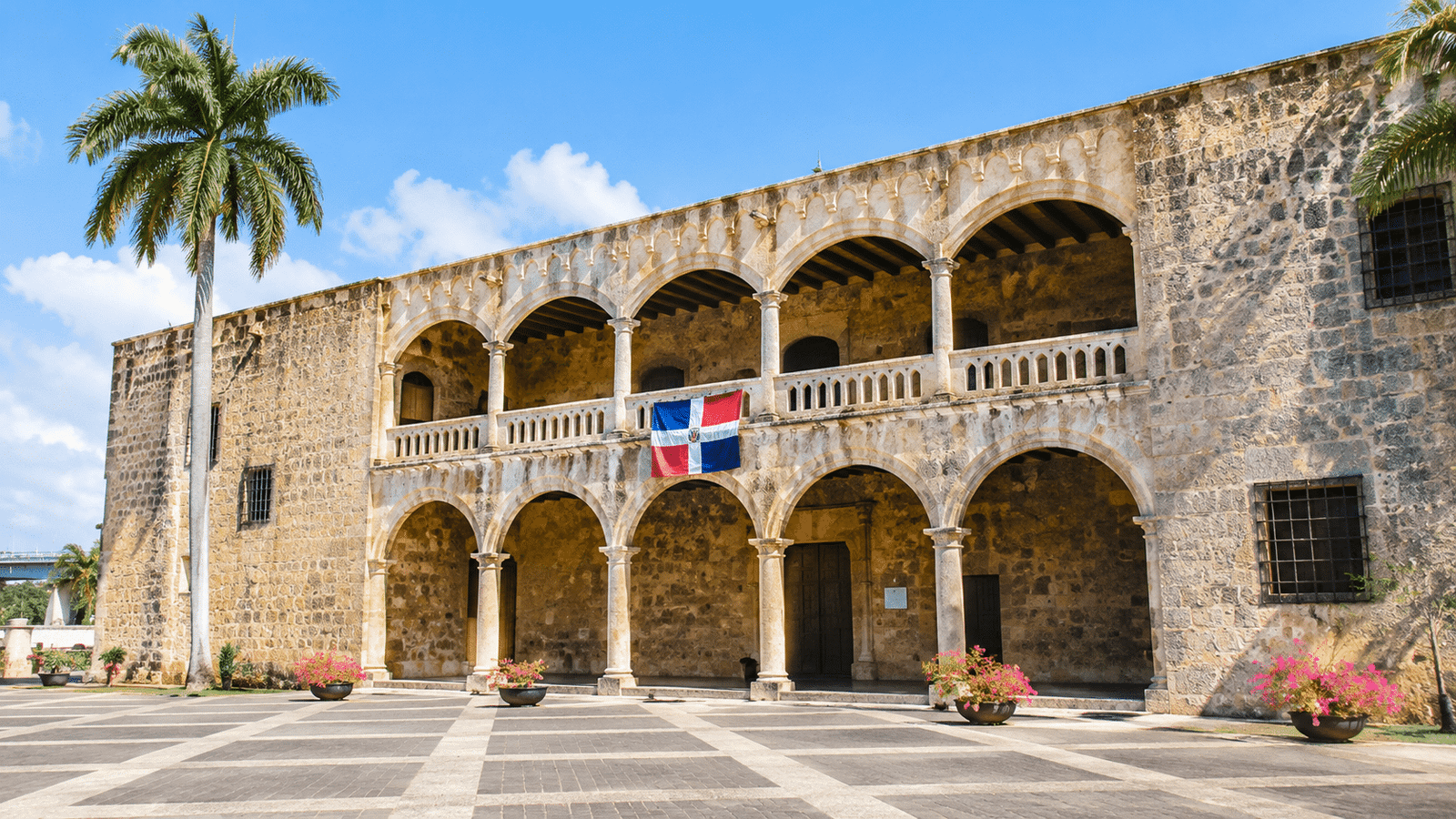
Located beside Plaza de España, this historic palace was built between 1511 and 1514 as the residence of Diego Columbus, son of Christopher Columbus and governor of the Spanish territories in the Americas.
The building became an important center of colonial government and social life. Its location reflected the political influence of the Columbus family during the early period of Spanish expansion.
The palace is an important example of early Spanish colonial architecture, combining European influences with construction techniques and materials adapted to the Caribbean environment.
Today, it operates as a historical museum.
What is worth seeing inside?
The interior is the main reason to visit. Its rooms contain collections of furniture, decorative objects, tapestries, sculptures and other works that illustrate the lifestyle of the colonial elite.
The restored rooms provide an idea of how an important administrative and residential building functioned during the 16th century.
The exterior is equally interesting, particularly its stone architecture, arcades and courtyard areas.
If you have limited time, prioritize the interior museum rather than spending the entire visit photographing the façade.
Practical information: The Dominican Ministry of Tourism lists the museum’s regular hours as Tuesday through Saturday, 9:00 a.m. to 5:00 p.m., and Sunday, 9:00 a.m. to 4:00 p.m. Check the official Alcázar de Colón website before visiting.
4. Discover Plaza de España
Recommended time: 20–30 minutes.
Plaza de España, also known as Plaza de la Hispanidad, is one of the largest and most recognizable public spaces in the Colonial Zone.
Situated directly in front of the Alcázar de Colón, the square provides an excellent view of the historic palace and the surrounding colonial architecture.
Its open layout contrasts with the narrow streets found elsewhere in the district.
The square has developed into an important meeting point for visitors and residents, with restaurants, terraces and cultural activities contributing to its atmosphere.
What is worth seeing?

The main attraction is the overall setting. From the square, you can appreciate the scale of the Alcázar, the surrounding historic buildings and the relationship between the palace and the old city.
It is particularly attractive in the late afternoon and evening, when the light illuminates the stone façades.
Plaza de España is also a convenient place to stop for refreshments or lunch before continuing your walking tour.
You do not need to enter any building to enjoy this location.
5. Visit the Museo de las Casas Reales
Recommended time: 40–60 minutes.
The Museo de las Casas Reales is one of the most important historical museums in the Dominican Republic.
Located on Calle Las Damas, the complex was built during the early 16th century to accommodate important colonial government institutions.
Its buildings housed administrative offices, the Royal Audiencia and the residence of senior colonial officials. The Royal Audiencia functioned as a high judicial institution within the Spanish colonial administration.
Today, the museum presents collections related to the history of Santo Domingo and the Spanish colonial period.
What is worth seeing inside?
The museum’s exhibitions include historical objects, archaeological material, colonial furnishings, weapons and items associated with the political and social development of the island.
The building itself is also worth exploring. Its courtyards, corridors and architectural details provide an idea of how colonial government institutions operated.
This is one of the best places to visit if you want to understand the administrative history of Santo Domingo beyond its churches and palaces.
The exterior is attractive, but the interior provides the real educational value.
6. Enter the National Pantheon
Recommended time: 20–30 minutes.
The National Pantheon (Panteón Nacional) is located on Calle Las Damas, inside a historic building that originally served as a Jesuit church.
Construction began in the early 18th century and was completed in 1746. After the Jesuits left the island, the building was used for different purposes before being converted into a national mausoleum in the 20th century.
The Pantheon is dedicated to honoring distinguished figures in Dominican history.
It is an important national memorial where the remains of recognized military, political and historical personalities are preserved.
What is worth seeing inside?
The interior is particularly impressive because of its monumental architecture, central nave, side chapels and large dome.
The building’s solemn atmosphere distinguishes it from other attractions in the Colonial Zone.
Visitors should also observe the central chandelier and the memorial spaces dedicated to important figures in the country’s history.
A short visit is generally sufficient to appreciate the building and its historical purpose.
7. Visit the Cathedral Primada de América
Recommended time: 30–45 minutes.
The Catedral Primada de América, officially known as the Cathedral Basilica of Santa María la Menor, is one of the most important religious monuments in the Americas.
Located beside Parque Colón, it was commissioned in the early 16th century, with construction beginning in 1514 and the main building completed around 1540.
It is recognized as the first cathedral established in the Americas and represents the introduction of European Christian religious architecture into the region.
Its architecture combines Gothic and Renaissance influences, making it particularly distinctive within the Caribbean.
What is worth seeing inside?
The interior deserves more attention than a quick photograph of the façade.
Visitors can admire its vaulted ceilings, side chapels, religious artwork, altarpieces and stone architectural details.
The combination of different architectural styles reflects the long construction period and the evolution of religious design during the early colonial era.
The exterior is also worth examining, particularly its main entrance and stone façade.
Practical information: The cathedral is an active religious building. Access for visitors may be affected by religious services and special events. Respect dress requirements and restrictions on photography where applicable.
8. Relax at Parque Colón
Recommended time: 15–25 minutes.
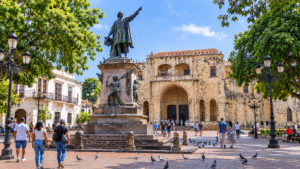
Located directly in front of the Cathedral Primada de América, Parque Colón is one of the most recognizable public spaces in the historic district.
The square occupies the site of the city’s former central plaza and has played an important role in Santo Domingo’s urban life for centuries.
Its central monument is a statue of Christopher Columbus, while the surrounding buildings include the cathedral and historic municipal architecture.
Today, Parque Colón is a popular meeting point with outdoor cafés, restaurants and pedestrian activity.
What is worth seeing?
The main attraction is the relationship between the square and the surrounding architecture.
From the park, you can appreciate the cathedral’s façade, observe the historic buildings around the plaza and enjoy the atmosphere of the district.
It is also a good place to take a break during your walk.
Rather than treating Parque Colón as a conventional sightseeing stop, consider spending some time here observing everyday life in the Colonial Zone.
9. Walk Along Calle El Conde
Recommended time: 30–45 minutes.
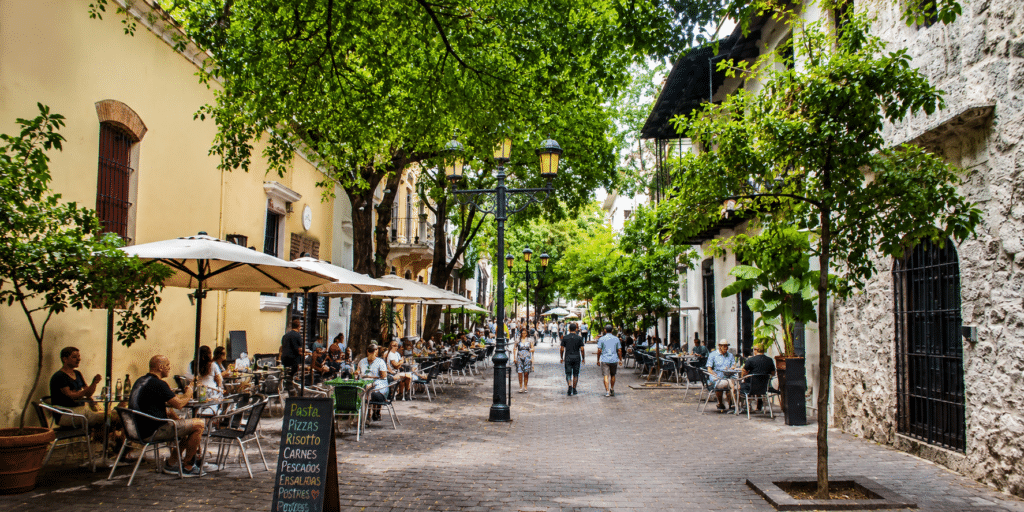
Calle El Conde is the main pedestrian commercial street in the Colonial Zone and one of the best places to experience the district’s everyday character.
The street extends from Parque Independencia toward the historic center, connecting shops, cafés, restaurants, galleries and historic buildings.
Its name refers to Bernardino de Meneses y Bracamonte, Count of Peñalba, who played a role in the defense of Santo Domingo during the British attack of 1655.
Unlike Calle Las Damas, which is primarily associated with colonial institutional architecture, El Conde reflects the commercial and social evolution of the city.
Its buildings display architectural influences from different periods, including colonial, republican and early 20th-century styles.
What is worth seeing?
The most interesting aspect is the street itself and its mixture of historic façades and contemporary commercial activity.
You will find shops selling Dominican souvenirs, amber and larimar jewelry, cafés, small restaurants and local products.
It is a good place to browse, purchase souvenirs or stop for a drink.
Walking its full length also provides a useful connection between the historic center and the Independence Park area.
10. Discover the Ruins of the Monastery of San Francisco
Recommended time: 20–30 minutes.
The Ruins of the Monastery of San Francisco are among the most evocative historical remains in Santo Domingo.
The Franciscan monastery was established during the 16th century and became one of the earliest religious complexes in the Americas.
Its construction and subsequent modifications took place over several decades. The building suffered damage during different conflicts, including the attack led by English privateer Francis Drake in 1586.
Over time, natural deterioration and historical events left much of the complex in ruins.
Despite its damaged condition, the site remains an important reminder of the religious and architectural development of early Santo Domingo.
What is worth seeing?
The remaining stone walls, arches and structural elements provide an impressive visual record of the original monastery.
Unlike the restored interiors of the Alcázar or the cathedral, this site offers a different experience: the opportunity to observe the effects of centuries of history on an important colonial building.
The ruins are also a recognized cultural setting for musical performances and other events.
It is particularly interesting for visitors who enjoy photography and historical architecture.
11. Visit the Convento de los Dominicos
Recommended time: 25–40 minutes.
The Convento de los Dominicos is another major religious and educational landmark in the Colonial Zone.
Construction of the Dominican monastery began in 1510 and was completed around 1530.
The complex became home to the University of Santo Tomás de Aquino in 1538, recognized as the first university established in the Americas.
Its historical importance extends beyond education. In 1511, Dominican friar Antonio de Montesinos delivered a famous sermon denouncing the mistreatment and exploitation of Indigenous people under Spanish colonial rule.
The sermon became an important moment in the early debate over the rights and treatment of Indigenous communities in the Americas.
What is worth seeing inside?
The church and its architectural details deserve attention, particularly the Baroque façade, the religious artwork and the Chapel of Nuestra Señora del Rosario.
The chapel is especially notable for its decorated vaulted ceiling, which includes astronomical and zodiac representations.
Visitors interested in the intellectual and religious history of the early colonial period will find this site particularly significant.
12. See the Capilla de Nuestra Señora de los Remedios
Recommended time: 10–15 minutes.
Located near the intersection of Calle Las Damas and Calle Las Mercedes, this small historic chapel is easy to overlook when walking through the Colonial Zone.
The building dates from the colonial period and is distinguished by its brick façade and compact architectural design.
It was originally associated with prominent families and later served different religious and institutional purposes.
Its scale contrasts with the much larger cathedral and churches found elsewhere in the historic district.
What is worth seeing?
The exterior is the main attraction, particularly its brick construction, triple-arched bell structure and traditional architectural details.
If the chapel is open, take the opportunity to see its interior, although access may be restricted outside cultural or religious activities.
It is a worthwhile short stop when exploring Calle Las Damas.
13. Explore Parque Independencia and Puerta del Conde
Recommended time: 25–40 minutes.
At the western entrance to the Colonial Zone, Parque Independencia is one of the most important national commemorative spaces in the Dominican Republic.
Its central landmark is the Puerta del Conde, a historic defensive gateway incorporated into the city’s former fortifications.
The site has particular significance in Dominican history because the country’s independence was proclaimed here on February 27, 1844.
The monument is closely associated with the birth of the Dominican Republic as an independent nation.
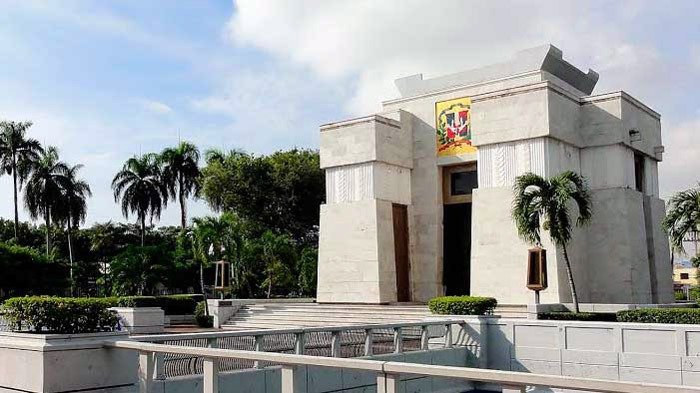
Inside the park stands the Altar de la Patria, a marble mausoleum dedicated to the country’s three founding fathers: Juan Pablo Duarte, Francisco del Rosario Sánchez and Ramón Matías Mella.
What is worth seeing?
The gateway itself is worth examining for its military architecture and historical inscriptions.
The Altar de la Patria is the most important interior feature of the park. Its solemn design and national symbolism make it one of the country’s most significant commemorative monuments.
This stop provides an important historical contrast with the earlier colonial monuments elsewhere in the district, connecting the history of Spanish rule with the Dominican struggle for independence.
14. Admire the Ruins of Hospital San Nicolás de Bari
Recommended time: 10–20 minutes.
The ruins of Hospital San Nicolás de Bari preserve the remains of one of the earliest hospitals established by Europeans in the Americas.
Its construction began in 1503, during the early development of Santo Domingo as a colonial administrative center.
The hospital provided medical assistance to the settlement’s population and became an important institution during the city’s formative years.
The building was damaged during the attack led by Francis Drake in 1586 and subsequently underwent different phases of use and deterioration.
What is worth seeing?
The remaining walls and architectural structures offer an opportunity to understand the scale and organization of early colonial healthcare facilities.
Although the site does not offer the same complete architectural experience as the restored monuments, it is historically important.
It is best treated as a short outdoor stop during a wider walking tour.
15. Visit Iglesia de Nuestra Señora de las Mercedes
Recommended time: 15–25 minutes.
The Church of Nuestra Señora de las Mercedes is one of the important religious landmarks in the historic district.
Construction began in 1527 and was completed in 1555. The church is dedicated to the Virgin of Las Mercedes, regarded as the patron saint of the Dominican Republic.
Its history reflects the difficult conditions faced by colonial buildings. It suffered damage during the attack led by Francis Drake in 1586, as well as from earthquakes and hurricanes.
The church was subsequently repaired and restored, preserving much of its historic character.
What is worth seeing inside?
The interior features Gothic architectural elements, ribbed vaults, side chapels and a Baroque altarpiece.
One of its most distinctive features is its carved wooden pulpit, which is particularly interesting for visitors interested in religious art and craftsmanship.
The church is still an active place of worship, so visiting hours may be affected by religious services.
16. Discover Casa de Tostado
Recommended time: 20–30 minutes.
Casa de Tostado is one of the historic residential buildings that help explain how wealthy families lived in colonial Santo Domingo.
The house takes its name from Francisco Tostado de la Peña, one of its early owners. Its architecture reflects the residential style of the colonial period, with traditional construction techniques and decorative details.
Its most distinctive feature is its unusual Gothic-style double window, a particularly interesting architectural element within the historic district.
The property has been associated with the Museo de la Familia Dominicana, dedicated to aspects of Dominican domestic life and material culture.
What is worth seeing?
The exterior is particularly interesting because of its distinctive window and historic façade.
If the museum is operating and open to visitors, the interior offers additional context through objects, furnishings and decorative pieces associated with Dominican family life.
Allow extra time if you want to explore the building beyond its exterior architecture.
17. Explore the Monument to Fray Antonio de Montesinos
Recommended time: 15–20 minutes.
Located along the coastal avenue near the mouth of the Ozama River, the Monument to Fray Antonio de Montesinos is a significant landmark connected to the early history of human rights debates in the Americas.
The monument commemorates the Dominican friar who delivered a sermon in 1511 denouncing the mistreatment of Indigenous people under Spanish colonial rule.
His intervention challenged the moral justification of colonial exploitation and became an important reference in subsequent debates about Indigenous rights.
The monument was inaugurated in 1983 as a gift from Mexico to the Dominican Republic. It consists of a large sculptural representation of Montesinos, designed by Mexican sculptor Antonio Castellanos Basich.
What is worth seeing?
The monumental sculpture is the main attraction, but its coastal location also provides views of the Caribbean Sea and the surrounding waterfront.
It is a worthwhile addition if you have extra time after exploring the central historic district.
Because it is located outside the main concentration of monuments, it is better treated as an additional stop rather than an essential part of a short walking route.
The Most Important Streets and Squares in the Colonial Zone
The historical monuments are only part of what makes the district interesting. Its streets and public spaces provide the setting that connects the individual attractions.
Calle Isabel la Católica
Calle Isabel la Católica is one of the historic streets that runs through the heart of the Colonial Zone.
It connects several important buildings, including religious institutions, colonial residences and museums.
The street takes its name from Queen Isabella I of Castile, who supported Christopher Columbus’s voyages across the Atlantic.
Walking along it provides an opportunity to appreciate the architectural variety of the district, from early colonial residences to buildings that reflect later periods of Dominican history.
It is particularly useful when moving between the cathedral, historic museums and other attractions in the central area.
Calle Las Mercedes
Calle Las Mercedes is another historic street worth exploring, particularly for its religious buildings and traditional architecture.
It provides access to the Church of Nuestra Señora de las Mercedes and connects several parts of the historic district.
The street is less associated with the major tourist landmarks than Calle Las Damas, but it offers a more detailed view of the neighborhood’s residential and religious character.
Parque Duarte
Parque Duarte is a smaller public square that offers a quieter alternative to the busier Parque Colón.
Located near the Convento de los Dominicos, it is surrounded by historic buildings and provides a useful stopping point during a walk through the southern part of the district.
Its atmosphere reflects the everyday character of the Colonial Zone, where historic architecture remains integrated into ordinary urban life.
Plaza María de Toledo
Plaza María de Toledo is a small public space associated with the history of the colonial settlement.
It forms part of the network of historic streets and squares surrounding Calle Las Damas and the Alcázar area.
Although it is not as prominent as Plaza de España or Parque Colón, it is worth noticing when exploring the district’s architectural and urban layout.
How to Organize a Walking Tour of Santo Domingo’s Colonial Zone
The Colonial Zone is best explored on foot because most of its main attractions are concentrated within a relatively compact area.
A well-planned walking route allows you to visit the major monuments without repeatedly crossing the same streets.
For a first visit, the most practical approach is to start at Parque Independencia and gradually move toward the Ozama River, finishing around Plaza de España.
This route follows the historic center and connects several of its most important landmarks.
Recommended One-Day Walking Route
The following itinerary is designed for visitors who want to see the main attractions while allowing enough time to explore selected buildings from the inside.
Starting point: Parque Independencia
Begin at Parque Independencia and spend approximately 25 minutes exploring Puerta del Conde and the Altar de la Patria.
This is a useful starting point because it introduces the country’s independence history before you move into the older colonial section.
Stop 2: Calle El Conde
Walk east along Calle El Conde toward the central historic district.
Allow 30–40 minutes to explore the pedestrian street, browse its shops and admire the buildings along the route.
Stop 3: Parque Colón and the Cathedral
Continue toward Parque Colón and the Cathedral Primada de América.
Spend approximately 45–60 minutes exploring the square and visiting the cathedral interior, depending on access and religious activities.
Stop 4: Calle Las Damas
From the cathedral, walk toward Calle Las Damas.
Allow 15–20 minutes to explore its historic buildings and architectural details before visiting the nearby museums.
Stop 5: National Pantheon and Museum of the Royal Houses
These two attractions are close to each other and can be visited during the same section of the walk.
Allow approximately 30 minutes for the National Pantheon and another 45 minutes for the Museum of the Royal Houses if you intend to explore their interiors.
Stop 6: Fortaleza Ozama
Continue toward the southern end of Calle Las Damas to reach Fortaleza Ozama.
Allow approximately 30–45 minutes to explore the military complex and its elevated sections.
Stop 7: Alcázar de Colón and Plaza de España
Finish the main historical route at Plaza de España and the Alcázar de Colón.
Allow approximately one hour for the palace museum, followed by time to enjoy the square and its surrounding restaurants.
Optional extension: Ruins of San Francisco
If you have additional time, visit the ruins of the Monastery of San Francisco. They are outside the main route but can be incorporated into a longer walk through the historic neighborhood.
How Long Does It Take to Explore the Colonial Zone?
The time required depends on how many monuments you enter and how much attention you want to give to the museums.
| Type of visit | Recommended time | What to expect |
|---|---|---|
| Short visit | 2–3 hours | Main streets, squares and exterior views |
| Essential walking tour | 4–5 hours | Main monuments and one or two interiors |
| Complete historical visit | 6–8 hours | Several museums, churches, monuments and breaks |
| Extended exploration | 2 days | Main attractions, secondary landmarks, cultural venues and local experiences |
These are practical planning estimates rather than official tour durations. Walking distances are relatively short, but museum visits, photographs, meals and time spent exploring the streets can considerably extend the day.
For visitors particularly interested in architecture and history, dedicating a full day is preferable to rushing through the monuments.
A second day allows you to explore smaller churches, residential streets, museums and cultural spaces at a more relaxed pace.
Practical Tips for Visiting the Colonial Zone
A little preparation can make a significant difference when exploring Santo Domingo’s historic center. Although the district is compact, its tropical climate, historic streets and museum schedules require some planning.
Best Time of Day to Visit
The best time to begin a walking tour is generally in the morning, preferably between 8:00 and 9:00 a.m.
Starting early offers several advantages:
- Temperatures are generally more comfortable for walking.
- You have more time to visit museums and historic buildings.
- Streets and squares are usually less crowded than during the busiest afternoon periods.
- You can complete the main route before the hottest part of the day.
Late afternoon is another good time to explore the streets and squares, particularly Plaza de España and Parque Colón.
The evening is also suitable for enjoying the district’s restaurants, bars and cultural atmosphere, although most museums and monuments have already closed.
What to Wear and Bring
The Colonial Zone is a pedestrian-friendly district, but its historic streets can be uneven in places.
For a comfortable visit, consider bringing:
- Comfortable walking shoes with good grip.
- Lightweight clothing suitable for tropical temperatures.
- Sunscreen and sunglasses.
- A hat or cap for protection from the sun.
- Drinking water.
- A small umbrella or lightweight rain jacket during the rainy season.
If you plan to visit churches, remember that they are religious buildings and visitors should dress respectfully.
Is the Colonial Zone Suitable for Walking?
Yes. Walking is the most practical way to explore the main attractions.
Most of the important monuments are concentrated within a relatively small area, and many are separated by only a few minutes on foot.
However, accessibility is not uniform. Cobblestones, uneven pavements, steps and historic building entrances can make certain sections difficult for wheelchair users or visitors with limited mobility.
If accessibility is a priority, plan the route around the most accessible streets and contact individual museums before visiting.
How to Get to the Colonial Zone
The Colonial Zone is located in central Santo Domingo, close to the Ozama River and the Caribbean coastline.
Visitors staying elsewhere in the capital can reach the district by taxi, ride-hailing services or public transportation.
If you are arriving from Las Américas International Airport, the journey takes approximately 30–45 minutes by car under favorable traffic conditions, although congestion can increase travel time.
Visitors arriving from Punta Cana or other destinations in the Dominican Republic can also reach Santo Domingo by intercity bus or private transfer.
Once inside the historic district, it is generally easier to leave the vehicle parked and continue on foot.
Are Museums and Monuments Open Every Day?
No. Opening schedules vary considerably between attractions.
The Alcázar de Colón and Museo de las Casas Reales, for example, have different operating schedules from churches and outdoor monuments.
Some religious buildings may restrict access during services, while museums can occasionally close for maintenance, restoration or special events.
It is advisable to check the official opening information before organizing your route, particularly if you intend to visit several museums in one day.
Is It Better to Visit Independently or With a Guide?
Both options have advantages.
An independent visit offers flexibility. You can spend more time at the places that interest you, stop whenever you want and organize the route according to your preferences.
A guided tour, however, can provide additional historical context that is not always apparent from the buildings themselves.
A knowledgeable guide can explain the significance of the early colonial institutions, the architectural styles, the development of the city and the historical events associated with individual monuments.
For visitors particularly interested in history, architecture or the colonial period, a guided walking tour can add considerable value.
Other Places Worth Discovering in the Colonial Zone
If you have more than one day available, several additional attractions deserve consideration.
They are not necessarily essential for a first-time visitor, but they provide a broader understanding of the historic district.
Iglesia Regina Angelorum
This historic church is located near the intersection of Calle Padre Billini and Avenida Duarte.
It was associated with one of the earliest convents established for women in the Dominican Republic and is notable for its religious and architectural heritage.
Its Gothic architectural features and historic interior make it an interesting stop for visitors exploring the southern part of the Colonial Zone.
Puerta de la Misericordia
Puerta de la Misericordia is another important remnant of the historic defensive system that once protected Santo Domingo.
Located near Parque Independencia, it is associated with the events surrounding Dominican independence in 1844.
Its name is connected to a small religious structure established nearby during the 19th century.
The gate is worth seeing if you are interested in the city’s defensive architecture and the history of Dominican independence.
Museo de las Atarazanas Reales
The Museum of the Royal Shipyards, known as Museo de las Atarazanas Reales, offers a different perspective on Santo Domingo’s colonial past.
The historic buildings were originally associated with maritime commerce and the activities of the Spanish colonial port.
Today, the museum focuses on underwater archaeology and the recovery of objects from historic shipwrecks around the Dominican Republic.
Its collections provide insight into maritime trade, navigation and the movement of goods across the Caribbean during the colonial period.
It is particularly interesting for visitors who want to understand the relationship between Santo Domingo and the wider Atlantic world.
Frequently Asked Questions About Santo Domingo’s Colonial Zone
What are the best things to do in Santo Domingo’s Colonial Zone?
The main attractions include walking along Calle Las Damas and Calle El Conde, visiting the Alcázar de Colón, exploring Fortaleza Ozama, entering the Cathedral Primada de América and discovering the Museum of the Royal Houses. Parque Colón, Plaza de España and the National Pantheon are also essential stops.
How much time do you need to visit the Colonial Zone?
A basic visit takes approximately two to three hours if you concentrate on the main streets and monuments from the outside. A more complete experience requires four to eight hours, depending on how many museums and historic buildings you enter. Spending two days allows you to explore the district more thoroughly.
Is Santo Domingo’s Colonial Zone a UNESCO World Heritage Site?
Yes. UNESCO included the Colonial City of Santo Domingo on its World Heritage List in 1990. The designation recognizes its historical importance, preserved urban layout and influence on the development of cities throughout the Americas.
Can you explore the Colonial Zone on foot?
Yes. Walking is the best way to explore the historic district because its main attractions are located relatively close to one another. However, some streets have uneven surfaces and cobblestones, so comfortable footwear is recommended.
What is the most famous street in the Colonial Zone?
Calle Las Damas is one of the district’s most famous historic streets and is widely recognized as the oldest paved street in the Americas. Calle El Conde is its best-known pedestrian commercial street.
What is the oldest monument in Santo Domingo’s Colonial Zone?
Several monuments date from the early 16th century. Fortaleza Ozama, whose construction began in 1502, is considered the oldest surviving European military fortress in the Americas. The Cathedral Primada de América and the Alcázar de Colón are also among the district’s earliest and most important surviving structures.
Is the Colonial Zone safe for tourists?
The Colonial Zone is one of Santo Domingo’s principal visitor districts, with hotels, restaurants, museums and regular pedestrian activity. Nevertheless, normal urban precautions are advisable. Keep valuables secure, avoid displaying expensive electronic devices unnecessarily and use established transportation services when traveling outside the district, particularly at night.
Are there free things to do in the Colonial Zone?
Yes. Walking along Calle Las Damas and Calle El Conde, exploring Parque Colón, enjoying Plaza de España and viewing many historic buildings from the outside do not require museum admission. Some churches and cultural spaces may also offer free access, although conditions can vary.
What is the best place to start a walking tour?
Parque Independencia and Puerta del Conde provide a useful starting point. From there, you can follow Calle El Conde toward Parque Colón, continue to Calle Las Damas and finish near Fortaleza Ozama and Plaza de España.
Can you visit the Colonial Zone in one day from Punta Cana?
Yes. A day trip from Punta Cana is possible, although the journey takes several hours each way by road. Visitors should allow sufficient time for transportation and prioritize the main attractions rather than attempting to visit every museum and monument.
What is the best time to visit Plaza de España?
Late afternoon and early evening are particularly suitable for visiting Plaza de España. The light creates attractive views of the Alcázar de Colón, and the surrounding restaurants and terraces provide opportunities to enjoy the historic setting.
Conclusion
Santo Domingo’s Colonial Zone is one of the most rewarding places to explore in the Dominican Republic, particularly for visitors interested in history, architecture and Caribbean culture.
Its importance goes beyond the age of its buildings. The district preserves the urban layout of one of the earliest European settlements in the Americas and provides a tangible connection to the historical events that shaped the region.
From the military structures of Fortaleza Ozama and the residential grandeur of the Alcázar de Colón to the religious architecture of the Cathedral Primada and the everyday atmosphere of Calle El Conde, each part of the neighborhood offers a different perspective on Santo Domingo’s past.
The best way to experience it is to take your time, walk between the main landmarks and enter the buildings that reveal the greatest historical detail. A full day is enough to discover the essential attractions, while a second day allows for a more complete exploration of its museums, churches and lesser-known streets.
The Colonial Zone is not simply a collection of historic monuments. It is a living part of Santo Domingo where the city’s colonial origins, Dominican identity and contemporary urban life remain closely connected.
Official Sources and Further Reading
- UNESCO – Colonial City of Santo Domingo: World Heritage designation, historical significance and architectural heritage.
- Dominican Republic Ministry of Tourism – Santo Domingo: Official destination information and principal attractions.
- Alcázar de Colón: Museum history and visitor information.
- Ministry of Foreign Affairs – A Walk Through the Colonial City: Historical information about streets, churches, monuments and museums.
- Cathedral Museum: Information about the cathedral’s religious, artistic and architectural heritage.
Map of Santo Domingo’s Colonial Zone
Explore Santo Domingo’s Colonial Zone with this interactive map, featuring 24 historic landmarks, monuments, churches, museums, streets and public squares mentioned in this guide. Click on any marker to discover more about each location and its historical significance. Use the map to identify the main attractions, understand how they are distributed throughout the historic district and plan your own walking tour of this UNESCO World Heritage Site.