 23°C
23°C

Foreigners Who Came on Vacation and Built Businesses in the DR
For some foreigners, a vacation in the Dominican Republic became far more than a temporary escape. A stay in Sosúa or Cabarete led to a new business, a hotel, a real estate venture or, in one remarkable case, a decades-long philanthropic operation. Their stories are different, but they share a common turning point: arriving as visitors and seeing possibilities that eventually convinced them to make the country part of their lives.


The Dominican Republic has long attracted foreigners looking for beaches, warm weather and a break from life elsewhere. But for a small number of visitors, the experience produced a very different result. Instead of returning home after a holiday, they began looking at property, tourism, hospitality or community development opportunities and eventually established themselves in the country.
Not every one of these people became a business tycoon, and their ventures vary considerably in size. Some created companies, others built hotels, while others transformed their professional lives through projects in the Dominican Republic. What connects their stories is that the initial attraction was often a visit rather than a formal business plan.
Elio Madonia: From a Vacation in Sosúa to a Life of Community Building
One of the clearest examples is Italian-born Canadian businessman Elio Madonia. By the time he visited the Dominican Republic, Madonia had already established himself as an entrepreneur in Canada. He had founded Brio, a soft-drink bottling company, and Long Life of Canada, a company specializing in dairy and cheese products.
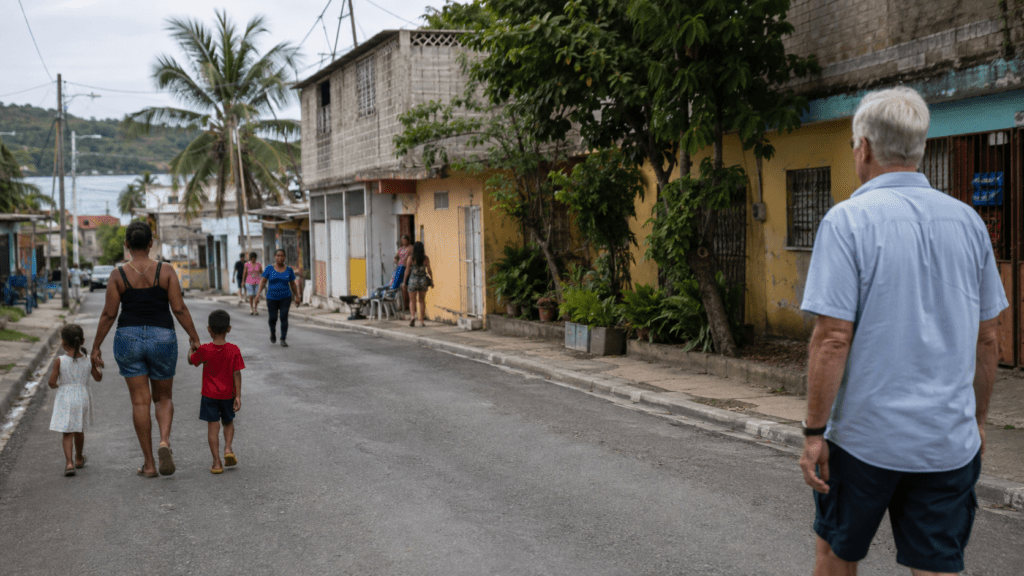
His trip to the Dominican Republic was supposed to be a vacation with his wife, Lena. During a walk outside their resort in Sosúa, however, Madonia encountered families living in severe poverty. The experience changed the purpose of the trip.
Rather than simply returning to Canada, he decided to help. He acquired land and developed Villa Maranatha, initially a community of 25 homes for families living in difficult conditions. The project eventually became the foundation for what would become the Samaritan Foundation.
According to the foundation’s history, the organization was born in 1988 following the Madonias’ first visit to the country. Over subsequent decades, its work expanded from the original housing project into communities that included homes, schools, medical facilities, churches, roads and basic infrastructure.
Dominican newspaper Listín Diario later reported that the organization had built and donated more than 1,000 homes, illustrating how dramatically that original vacation changed the course of Madonia’s life.
Madonia’s story is unusual because his Dominican enterprise was not driven primarily by commercial profit. Yet it demonstrates an important pattern: a foreign visitor can arrive with one purpose and discover a completely different opportunity or responsibility during the trip.
Taïf van der Haar and Estée Princen: A Vacation Became a Boutique Hotel
The story of Dutch couple Taïf van der Haar and Estée Princen is closer to the classic entrepreneur narrative.
The couple vacationed in the Dominican Republic and became interested in Cabarete, a coastal town in Puerto Plata Province known internationally for wind and kite sports. During their visit, they noticed land being offered for sale and eventually decided to purchase property.
Their decision led to Kibayo, a boutique hospitality project in the Cabarete area. Rather than remaining occasional visitors, they moved to the Dominican Republic and built a business around accommodation, hospitality and a nature-oriented visitor experience.
Their story has been documented by palabra. and Stanford University journalism material, which describes van der Haar as a Dutch former recruiting manager who, after vacationing in the Dominican Republic, bought land with his wife to establish the boutique hotel.
Kibayo illustrates how the North Coast can turn a vacation experience into a business idea. The attraction is not limited to the beach itself. Visitors can observe tourism demand, property availability, local services and the lifestyle of communities such as Cabarete. For entrepreneurs, those observations can reveal opportunities that are invisible during a short resort stay.
Ennio Capozza: From First Visit to Dominican Tourism Entrepreneur
Ennio Capozza, an Italian economist and finance professional, offers another example of a foreign visitor whose first experience in the Dominican Republic eventually led to a business career connected to tourism.
According to the history published by Viaggi Caribe, Capozza first traveled to the Dominican Republic in 2011. He developed a strong interest in the country, particularly its golf destinations, and later decided to become involved in tourism.
That interest eventually developed into a professional role as founder and general manager of Caribe Travels, a tour operator focused on travel to the Dominican Republic and other destinations.
The distinction between Capozza’s story and Madonia’s is important. His first trip did not immediately turn into a business. Instead, the visit created familiarity with the country, which was followed by a decision to build a professional activity around tourism.
This is a common feature of international entrepreneurship: the first visit often creates the relationship with a market, while the business comes later.
Foreign Visitors Who Turned Repeated Vacations Into Businesses
Not every successful foreign entrepreneur can be described accurately as someone who arrived for one vacation and immediately founded a major company. In many cases, the process was gradual. Visitors returned repeatedly, became familiar with particular communities and eventually decided to invest.
That pattern can be seen particularly clearly along the Dominican Republic’s North Coast and in Punta Cana, where international tourism has created markets for accommodation, property management, restaurants, excursions and other services.
One example is a Canadian couple who describe taking a vacation to Punta Cana for their 25th wedding anniversary. They subsequently returned to the Dominican Republic several times a year, explored destinations including Las Terrenas and eventually moved toward the Cabarete and Sosúa area.
Their account shows how repeated holidays can change the way a visitor sees the country. What initially appears to be a vacation destination can gradually become a potential place to live, invest and operate a business.
Why Vacationers See Business Opportunities in the Dominican Republic
The transition from tourist to entrepreneur is not unique to the Dominican Republic, but several characteristics of the country can make the transformation particularly visible.
Tourism is the most obvious starting point. A visitor who repeatedly returns to Punta Cana, Puerto Plata, Samaná or the North Coast gains direct exposure to the businesses supporting tourism. Hotels are only one part of that ecosystem. Restaurants, transportation companies, property managers, excursion operators, maintenance businesses, rental agencies and other services all depend on visitor demand.
A foreign visitor may therefore notice opportunities simply by being a customer. A problem with a service, an underserved market or a type of accommodation that is difficult to find can become the starting point for a business idea.
Real estate is another major factor. Foreign visitors who return repeatedly may begin considering a vacation property. That can eventually lead to rental activity, property management or larger real estate investments.
In some cases, the transition is driven less by financial opportunity than by lifestyle. A visitor may fall in love with a particular community, decide to spend more time there and eventually find that operating a local business is a practical way to establish a long-term presence.
Cabarete and Sosúa: Two Communities Where Vacationers Often Stay Longer
The North Coast provides particularly clear examples of this phenomenon.
Sosúa, near Puerto Plata, has a long-established international population. Its combination of beaches, tourism infrastructure and foreign communities has made it a place where visitors can move relatively easily from short stays to longer periods of residence.
Cabarete, east of Sosúa, has developed a different identity around water sports, hospitality and an international lifestyle. Its appeal to surfers, kiteboarders, digital professionals and other long-term visitors has helped create a market for businesses serving both residents and travelers.
The experience of Taïf van der Haar and Estée Princen illustrates how this environment can influence an entrepreneurial decision. They did not simply purchase a vacation home; they converted their relationship with the destination into a hospitality business.
From Tourist to Entrepreneur: The Typical Progression
Although every story is different, the transition often follows a recognizable sequence.
- The first vacation. The visitor experiences the country primarily as a tourist and develops an interest in a particular destination.
- Repeat visits. Returning allows the visitor to understand the area beyond the resort environment.
- Local relationships. The visitor begins meeting residents, business owners, property professionals and other foreigners living in the country.
- Recognition of an opportunity. A gap in accommodation, tourism services, real estate or another sector becomes apparent.
- Investment or relocation. The visitor decides to acquire property, establish a company or spend much more time in the country.
- Business development. The original vacation destination becomes the base for a long-term professional activity.
This progression is important because falling in love with a destination and successfully operating a business there are two very different things. A vacation provides an introduction to a country, but running a company requires knowledge of regulations, taxes, labor, suppliers, customers, financing and local business culture.
The Difference Between Seeing Opportunity and Building a Business
Stories about foreigners who moved to the Dominican Republic can make entrepreneurship abroad sound effortless. The reality is more complicated.
A tourist sees beaches, hotels, restaurants and growing communities. An entrepreneur has to determine whether there is sufficient demand, whether the numbers work and whether the necessary permits and infrastructure are available.
Foreign investors also need to understand that conditions can vary considerably between destinations. The business environment in Punta Cana is not identical to that in Santo Domingo, Puerto Plata, Cabarete or Las Terrenas.
Language and relationships also matter. While English and other languages are widely used in tourist areas, Spanish remains the country’s official language and is essential for many interactions with employees, suppliers, government offices and local partners.
The most durable examples are therefore not simply stories about foreigners discovering paradise. They are stories about people who combined their attraction to the country with capital, professional experience, local relationships and a willingness to adapt.
What These Stories Reveal About the Dominican Republic
These entrepreneurs arrived with very different motivations. Madonia encountered a social problem that transformed his priorities. Van der Haar and Princen saw a lifestyle and hospitality opportunity in Cabarete. Capozza developed a professional interest in Dominican tourism after experiencing the country as a visitor.
Their paths demonstrate that there is no single route from tourism to entrepreneurship. Some people begin with property. Others enter hospitality, tourism services or community development. Still others spend years returning to the country before deciding to establish themselves there.
What they share is a change in perspective. The first visit is experienced through the eyes of a tourist. Later visits are increasingly viewed through the eyes of someone who wants to understand how the place works.
Are Foreigners Really Becoming Major Business Owners After a Vacation?
Yes, but the phrase needs some qualification. There are documented cases of foreigners whose vacations led to businesses or major long-term projects in the Dominican Republic. However, it would be inaccurate to suggest that every foreigner who moves to the country becomes a major entrepreneur.
Many foreign residents operate small businesses, manage vacation properties, work remotely, retire or simply live in the country without establishing a significant commercial enterprise. The highly visible success stories represent only one part of a much larger foreign-resident community.
The strongest lesson from the documented cases is therefore not that a vacation automatically leads to wealth. It is that personal familiarity with a destination can become the foundation for a business decision when combined with experience, resources and a realistic understanding of the market.
Frequently Asked Questions
Which foreign entrepreneur most clearly went from vacation to a Dominican project?
Elio Madonia is one of the clearest documented examples. His 1980s vacation in Sosúa led him to establish the first housing project that eventually became associated with the Samaritan Foundation. His work was philanthropic rather than a conventional commercial business, but the transformation from vacationer to long-term project leader was extraordinary.
Did Taïf van der Haar move to the Dominican Republic after vacationing there?
Yes. Sources describing the history of Kibayo state that van der Haar and his wife, Estée Princen, vacationed in the Dominican Republic, later bought land and established their boutique hotel in the Cabarete area.
Do all foreign entrepreneurs in the Dominican Republic start businesses in tourism?
No. Tourism is an important entry point because foreign visitors encounter the sector directly, but foreigners also invest in real estate, professional services, construction, technology, retail and other industries.
Why do some tourists decide to stay in the Dominican Republic?
The reasons vary. Lifestyle, climate, personal relationships, business opportunities and familiarity with a particular community can all influence the decision. In many cases, the process takes place over several visits rather than during a single holiday.
Is moving to the Dominican Republic enough to become a successful entrepreneur?
No. A successful business requires market knowledge, adequate capital, legal compliance, management skills and an understanding of local customers and suppliers. The stories of successful foreign entrepreneurs should not be interpreted as evidence that business success is automatic.
When a Vacation Becomes a New Life
The most interesting part of these stories is not simply that foreigners discovered the Dominican Republic. It is what happened after the holiday ended. For some, the country became a second home. For others, it became the location of a hotel, tourism company, real estate operation or long-term community project.

Elio Madonia’s experience in Sosúa shows the most dramatic version of this transformation: a short vacation became the beginning of decades of work. Taïf van der Haar and Estée Princen turned a holiday discovery in Cabarete into a hospitality business. Ennio Capozza’s first trip eventually developed into a professional role in Dominican tourism.
These stories offer a more useful perspective than the simple idea of moving to a tropical destination and becoming wealthy. The Dominican Republic can create opportunities for foreign entrepreneurs, but those opportunities become meaningful only when a visitor moves beyond the vacation experience, understands the local market and is prepared to build something that can survive long after the holiday is over.