 25°C


Online Marketplaces in the Dominican Republic: A Guide for Sellers
Online marketplaces in the Dominican Republic offer businesses, independent sellers and private individuals different ways to reach local buyers without building an entire e-commerce operation from scratch. General marketplaces such as Mercado Libre and Corotos cover multiple product categories, while specialized platforms such as Yacarros and SuperCarros focus on vehicle sales. The right choice depends on what you sell, how frequently you publish listings, how buyers contact you and whether you need a simple classified advertisement or a more structured sales channel.


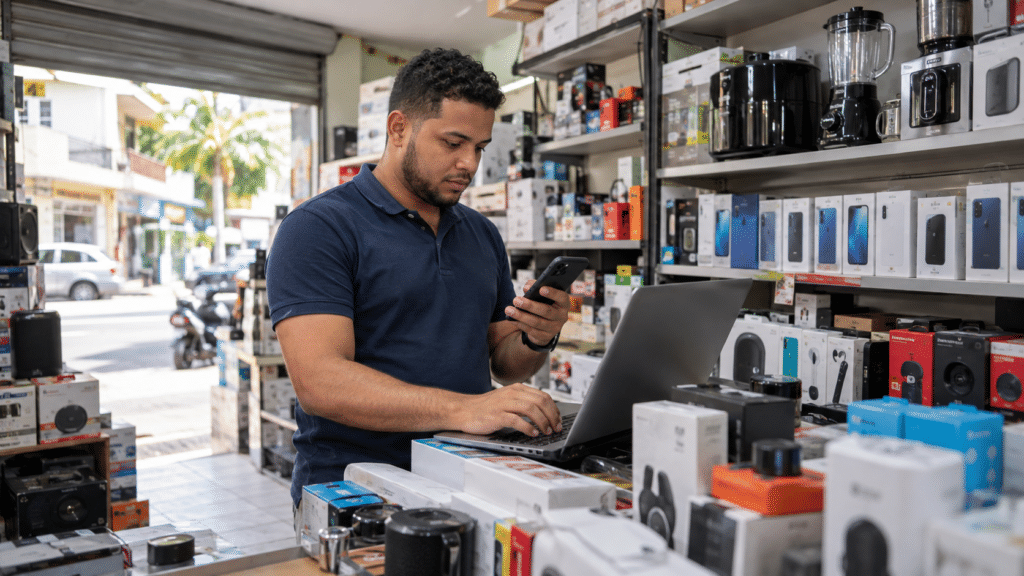
An online marketplace is a website or digital platform where multiple sellers advertise products or services to potential buyers. Unlike an independent online store, a marketplace already brings together listings from different businesses and individuals, allowing shoppers to compare prices, features and sellers in one place.
In the Dominican Republic, the term covers several different business models. Some platforms offer broad classified advertising across categories such as electronics, furniture, clothing and household goods. Others provide more structured product listings, professional seller accounts or specialized services for particular industries. Vehicle marketplaces, for example, allow buyers to filter cars by make, model, year, price and other characteristics.
Not every marketplace processes payments or delivers products directly. Many Dominican platforms primarily connect buyers and sellers, who then negotiate the price, arrange payment and organize collection or delivery themselves. Understanding this distinction is essential when comparing seller fees and deciding how much responsibility the platform assumes for a transaction.
General Online Marketplaces in the Dominican Republic
1. Mercado Libre Dominican Republic
Mercado Libre operates a general marketplace serving the Dominican Republic, with categories covering electronics, mobile phones, clothing, computers, furniture, home appliances, vehicle accessories, books, sports equipment and other products. Its broad category structure makes it relevant to both individual sellers and businesses offering physical goods.
The platform is particularly useful for sellers whose products can be compared through standardized information such as price, condition, brand and specifications. A business selling smartphones, computer accessories or household appliances, for example, can reach shoppers already searching for those products rather than relying exclusively on its own website or social media audience.
Seller requirements and costs: Mercado Libre’s Dominican website advertises free product listings. However, sellers should check the current conditions for their category and account before assuming that every sale is commission-free. The applicable rules for shipping, payment processing, listing exposure and other services should also be verified before calculating margins.
Advantages: Its multiple categories and product-oriented search experience make it a potential channel for businesses selling repeatable products. Buyers can compare competing offers without visiting individual stores.
Limitations: Sellers compete directly with other listings and must maintain competitive prices, accurate product information and reliable fulfillment. The availability and terms of individual marketplace services should be confirmed for the Dominican market rather than inferred from Mercado Libre’s operations in other countries.
2. Corotos
Corotos is a major Dominican classified-advertising platform that covers a wide range of goods and services. Its categories include electronics, home products, fashion and beauty, vehicles, real estate and other consumer and business offerings. It serves private individuals selling used possessions as well as businesses seeking local customers.
Publishing an advertisement involves providing a title, description, photographs, product condition, price and location. The listing is subject to the platform’s moderation rules. Buyers can contact sellers through available channels, including platform chat and, depending on the seller’s settings or plan, telephone and WhatsApp.
Seller requirements and costs: Corotos allows free listings in several product categories, subject to the applicable rules and limits. In December 2025, the company announced that publishing in categories including home, electronics, fashion and beauty, babies and children, and sports and entertainment would become free and unlimited from January 2026. Professional sellers can also purchase paid plans through Corotos Plus.
Paid plans offer additional business features, which can include professional profiles, account verification, greater visibility, advertising tools and directory placement. The precise price depends on the selected plan and should be checked directly with the platform before committing to a recurring subscription.
Advantages: Corotos is relevant to sellers targeting Dominican buyers, especially when products are sold locally and customers want to ask questions or negotiate before purchasing. Its professional options can also help established businesses distinguish themselves from casual sellers.
Limitations: An advertisement does not automatically generate a sale. Sellers must handle inquiries, screen potential buyers and agree on payment and delivery arrangements where these are not provided by a separate service. Free listings also compete for visibility with promoted advertisements.
3. La Pulga Virtual
La Pulga Virtual is another general classified platform serving the Dominican market. It allows users to advertise goods and services, including secondhand products, making it an option for individuals clearing household items and businesses seeking an additional source of local inquiries.
Its publishing process requires basic listing information, including a description, price and photograph. Registration is advertised as free, and the platform’s help information describes free basic publication. Sellers can also purchase optional promotional features to improve the visibility of their advertisements.
Seller requirements and costs: The basic registration and advertising model is free according to the platform’s published help pages. Its help information lists optional promotional PINs at RD$50 each, or US$1 when paying through PayPal. These published details should be confirmed before purchase because optional services and prices can change.
Advantages: It offers an additional classified channel without requiring sellers to establish a standalone store or pay for a basic account.
Limitations: Sellers should evaluate the quality and volume of inquiries they receive rather than assuming that publishing on multiple platforms will automatically increase sales. The platform’s classified-advertising model also means that sellers may need to manage negotiations and fulfillment themselves.
4. Facebook Marketplace and Local Buy-and-Sell Groups
Facebook Marketplace and local Facebook buy-and-sell groups provide another way to reach consumers in the Dominican Republic. They are particularly relevant to transactions involving used furniture, appliances, phones, clothing, household goods and other products that buyers can inspect or collect locally.
Businesses can also use Facebook Pages to present their products, communicate with customers and direct potential buyers to other sales channels. Marketplace listings and group posts, however, should not be confused with a complete online store: the features available for checkout, delivery and payments depend on the location and service configuration.
Seller requirements and costs: Sellers need an eligible account and must comply with Facebook’s commerce policies and listing rules. No universal Dominican Marketplace selling commission can be assumed from the platform’s general help pages. Availability of shipping and other transaction services should be checked for the seller’s location.
Advantages: Local targeting, familiar messaging tools and the ability to circulate listings through relevant communities make Facebook useful for generating direct inquiries. It can be particularly practical for products sold within a city or neighborhood.
Limitations: Conversations can generate many low-intent inquiries, and buyers may fail to complete transactions. Sellers also have limited control over platform rules, account access and how listings are distributed. Payment, delivery and fraud prevention require particular attention when arrangements take place directly between individuals.
Specialized Marketplaces: Selling Cars in the Dominican Republic
Not every seller benefits from a general marketplace. Some products require specialized search filters, detailed technical information and an audience with a specific purchasing intention. Vehicles are a clear example: buyers typically compare make, model, year, mileage, fuel type, transmission, condition and price before contacting a seller.
Automotive marketplaces concentrate this demand in one place. They can therefore be more relevant than a general classified platform for dealerships, independent vehicle traders and private owners selling a car.
5. Yacarros.com
Yacarros is a Dominican vehicle marketplace specializing in cars and other vehicles. Its audience includes people searching for new and used vehicles, individual owners advertising a car and dealerships managing multiple listings.
The platform’s vehicle-focused catalog allows buyers to browse relevant inventory rather than sorting through unrelated product categories. For dealerships, the professional offering includes tools for managing vehicle listings, handling multiple agents and presenting inventory through a dealer profile. The site also promotes listing statistics and direct contact through WhatsApp or email.
Published seller plans: Yacarros advertises the following prices on its registration page:
- Basic plan: RD$595 for one vehicle, with a 30-day listing period.
- Premium plan: RD$2,250 for multiple vehicles, with a stated duration of up to one year and features designed for professional sellers.
The published offer describes a one-time payment rather than a monthly subscription or commission on the sale. The Premium plan includes features such as unlimited vehicle listings, unlimited photographs, highlighted advertisements, dealer inventory management and support. Sellers should verify the precise plan conditions and any applicable restrictions before registering.
6. SuperCarros.com
SuperCarros is an established automotive classified platform in the Dominican Republic. It provides vehicle listings for private owners and dealerships, with an emphasis on helping buyers search inventory and contact sellers. Its specialized format is useful when a buyer wants to compare vehicles by model, price and technical characteristics.
Dealerships can request professional selling plans intended for businesses managing vehicle inventories. The platform provides a dealer-focused registration process and describes tools for managing advertisements. Private sellers can select among several listing packages depending on the exposure they want for an individual vehicle.
Published prices for private sellers: SuperCarros lists the following packages on its vehicle-selling page:
- Regular: RD$2,100 for an advertisement with up to 12 photographs, valid for 30 days.
- Featured: RD$3,250 for an advertisement with up to 12 photographs and enhanced placement for seven days.
- Premium: RD$7,000 for an advertisement with up to 12 photographs, enhanced placement and featured homepage exposure for seven days.
These are published prices for private-owner packages. Professional and dealership plans are offered separately, with options intended for businesses that need to manage multiple vehicles. Their prices and terms should be obtained directly from the platform.
Yacarros vs. SuperCarros: Which Is More Suitable?
Both platforms specialize in vehicle sales, but their published plans differ in price, duration and presentation. The following comparison uses their publicly advertised private-seller offers rather than assuming that dealership packages have the same pricing structure.
| Feature | Yacarros | SuperCarros |
|---|---|---|
| Basic advertised price | RD$595 | RD$2,100 |
| Basic listing duration | 30 days | 30 days |
| Photographs | Unlimited under the advertised plan | Up to 12 under the advertised private-seller plans |
| Multi-vehicle selling | Premium plan advertised for multiple vehicles | Separate professional and dealership plans |
| Enhanced exposure | Premium features include highlighted advertisements | Separate Featured and Premium packages |
| Payment model | Published plans describe one-time payments | Published private-seller packages have fixed listing prices |
For an individual selling a car on a limited budget, Yacarros has a lower advertised entry price. SuperCarros offers distinct paid options for enhanced placement and homepage exposure. For a dealership, the more useful comparison is the cost of maintaining the required inventory, the management features included and the quality of leads generated by each platform.
Neither the number of listings nor promotional claims about visitor traffic establish which marketplace will deliver the most sales for a particular vehicle. Sellers should evaluate actual inquiries, completed transactions and the total advertising cost over time.
Other Specialized Marketplaces and Industry-Specific Platforms
General classified sites are not the only alternative to a dedicated online store. Depending on the product, a specialist marketplace may offer more relevant search filters, a more focused audience or tools designed around the transaction.
Real Estate Platforms
Real estate agencies and private property owners can advertise homes, apartments, land and commercial properties through general classified marketplaces such as Corotos. Specialized real estate portals may also be relevant when the target audience is actively searching for a property to buy or rent.
For this category, the most useful features include location-based searches, property type, asking price, number of bedrooms, floor area and clear contact details. Agencies should compare the cost of listing inventory, lead quality and the ability to manage multiple properties before selecting a platform. Fees and professional account conditions vary by provider and should be verified directly.
Automotive Parts and Accessories
Vehicle parts, tires, accessories and maintenance products can be listed on general marketplaces, including Mercado Libre, where relevant categories exist. These products are different from complete vehicles: buyers often need exact compatibility information, part numbers, dimensions and clear descriptions of the product’s condition.
A general marketplace may be appropriate for standardized accessories sold repeatedly, while a specialized automotive channel may be more effective for a business that depends on vehicle-specific search intent. Sellers should assess whether the platform allows the relevant product category and whether its listing and fulfillment arrangements support the business model.
Local Services and Professional Businesses
Some marketplaces also connect consumers with service providers rather than focusing exclusively on physical products. Corotos, for example, offers a business directory through professional plans, with categories and location filters designed to help buyers find businesses.
For service providers, the value of a listing depends less on product shipping and more on local visibility, the quality of incoming inquiries, the ability to present credentials and the ease with which prospective customers can make contact. A directory listing can complement an independent website, but it does not replace the need to establish trust and communicate the terms of a service clearly.
Marketplace Fees and Seller Requirements: What to Check
There is no single fee structure across Dominican online marketplaces. Some offer free basic advertisements, others charge for listing a vehicle, and professional plans may introduce recurring payments or paid visibility features. A platform that advertises free publication may still charge for optional promotion or other services.
Before choosing a marketplace, sellers should confirm the following commercial conditions:
- Publication cost: Whether a listing is free, paid per item or included in a subscription.
- Listing duration: How long an advertisement remains active and whether renewal requires payment.
- Sales commissions: Whether the platform charges a percentage of completed transactions or only an advertising fee.
- Promotion costs: Whether featured placement, boosted listings or additional exposure require separate payments.
- Seller eligibility: Whether individuals and businesses can both register, and whether professional accounts require additional information or verification.
- Product restrictions: Which categories and products are permitted, including any rules concerning prohibited or regulated goods.
- Payment arrangements: Whether the platform handles payments or whether the buyer and seller must agree on their own method.
- Delivery and collection: Whether shipping is available, who pays for it and who is responsible for fulfillment.
- Cancellation and refunds: Whether advertising payments are refundable and how recurring subscriptions can be canceled.
These distinctions matter because the advertised price of a listing is not necessarily the full cost of making a sale. A free advertisement can still require substantial time to manage, while a paid package can be worthwhile if it generates qualified leads at a reasonable cost.
Marketplace vs. Independent Online Store
A marketplace and an independent e-commerce website serve different purposes. A marketplace gives sellers access to an existing audience and an established listing environment. An independent store gives a business more control over its branding, website structure, customer experience and direct relationship with shoppers.
| Factor | Marketplace | Independent online store |
|---|---|---|
| Initial audience | Access to shoppers already using the platform | Usually requires the business to attract its own visitors |
| Setup | Generally simpler for publishing individual listings | Requires setting up and maintaining a separate sales channel |
| Brand control | Limited by the platform’s design and rules | Greater control over presentation and customer experience |
| Competition | Similar offers appear alongside one another | Competitors are not automatically displayed on the same product page |
| Costs | May include listing fees, commissions, subscriptions or promotions | May include hosting, software, payment processing, maintenance and marketing |
| Customer relationship | Depends on the platform’s contact and transaction features | Greater potential to manage customer data and repeat-purchase communication, subject to applicable law |
| Platform dependence | Visibility and account access depend on marketplace rules | Greater operational control, although the business still depends on its hosting and service providers |
Marketplaces are particularly useful for testing demand, selling occasional items, reaching buyers in a specific category or supplementing an existing sales operation. A private seller disposing of a used appliance, for example, may have little reason to build an independent website.
An independent store becomes more attractive when a business needs its own brand experience, manages a broad product catalog, wants to encourage repeat purchases or needs more control over the sales process. However, a website does not automatically attract visitors: the business must still invest in customer acquisition, operations and customer support.

For many Dominican businesses, the two models can work together. A company may use marketplaces to reach new buyers while directing its broader marketing efforts toward an independent website and other customer acquisition channels. The appropriate balance depends on margins, product type, order volume and the cost of acquiring a customer through each channel.
How to Choose the Right Marketplace for Your Business
The most useful starting point is the product itself. A general marketplace can work well for a seller with varied inventory, while a specialized platform may be more appropriate when buyers rely on industry-specific information to make a decision.
- For used household goods and occasional sales: Compare Corotos, La Pulga Virtual and Facebook Marketplace according to local reach, listing rules and the quality of inquiries.
- For standardized consumer products: Evaluate Mercado Libre and relevant general marketplaces, paying particular attention to category eligibility, total selling costs and fulfillment requirements.
- For a private car sale: Compare the entry-level plans of Yacarros and SuperCarros with the likely value of the vehicle and the expected duration of the sale.
- For a car dealership: Compare professional plans, inventory limits, account management features and lead quality rather than choosing solely on the cheapest advertised package.
- For a real estate business: Prioritize location filters, property-specific search features and the ability to manage multiple listings.
- For a local service provider: Consider business directories and classified platforms that make it easy for nearby customers to find and contact the company.
Where possible, sellers should track the number of qualified inquiries, the number of completed sales and the total cost of each channel. These figures provide a more useful basis for comparing platforms than general claims about audience size or visibility.
Frequently Asked Questions
Which online marketplaces are available in the Dominican Republic?
Options include general marketplaces such as Mercado Libre, Corotos and La Pulga Virtual, as well as Facebook Marketplace and local buy-and-sell groups. Sellers of specific products can also consider specialized platforms such as Yacarros and SuperCarros for vehicles.
Can individuals sell products online without registering a business?
Several classified platforms accept private individuals who want to sell personal belongings. However, eligibility depends on the platform’s terms, the type of product and the nature of the activity. Regular commercial sales may involve additional tax, consumer-protection or business obligations, so sellers should not assume that the rules for occasional private sales automatically apply to a commercial operation.
Which marketplaces allow free listings?
Mercado Libre advertises free publication on its Dominican website, while Corotos and La Pulga Virtual also provide free basic listing options subject to their applicable rules. Facebook Marketplace can provide another route for local listings. Free publication does not necessarily mean that every service is free or that the platform charges no fees under any circumstances.
Which marketplace is best for selling a car?
Yacarros and SuperCarros are both relevant because they specialize in vehicle listings. Yacarros advertises a lower-priced entry-level plan, while SuperCarros offers separate private-seller packages with enhanced visibility. The best option depends on the vehicle, the seller’s budget, the desired exposure and the quality of inquiries generated.
Do marketplaces handle payment and delivery?
Not necessarily. Many classified platforms primarily connect buyers and sellers, who then arrange payment and delivery themselves. The available services differ by platform and location, so sellers should confirm the specific arrangements rather than assume that a marketplace operates as a full-service e-commerce retailer.
Is it better to sell through a marketplace or a personal website?
A marketplace can provide access to an existing audience and simplify the process of publishing products. An independent website offers more control over branding and the customer experience but requires its own traffic acquisition and ongoing management. Businesses with established sales operations may benefit from using both channels rather than relying exclusively on either one.
Conclusion
The Dominican Republic has several online marketplaces that serve different selling needs. General classified platforms provide access to local buyers across multiple categories, while Mercado Libre offers a product-oriented marketplace and automotive portals such as Yacarros and SuperCarros focus on vehicle sales. Each model has different listing conditions, pricing structures and operational requirements.
The best choice is not necessarily the platform with the lowest advertised fee or the largest claimed audience. Sellers should compare the audience they can realistically reach, the cost of maintaining their listings, the quality of customer inquiries and the effort required to complete transactions. For many businesses and private individuals, a marketplace can be a practical sales channel on its own or a useful complement to an independent online store.