 27°C


Dominican Republic Launches First Week of Biosphere Reserves
The Dominican Republic has launched its first national Week of Biosphere Reserves, highlighting the role of its two UNESCO-recognized territories in protecting biodiversity, safeguarding water resources and supporting sustainable livelihoods.


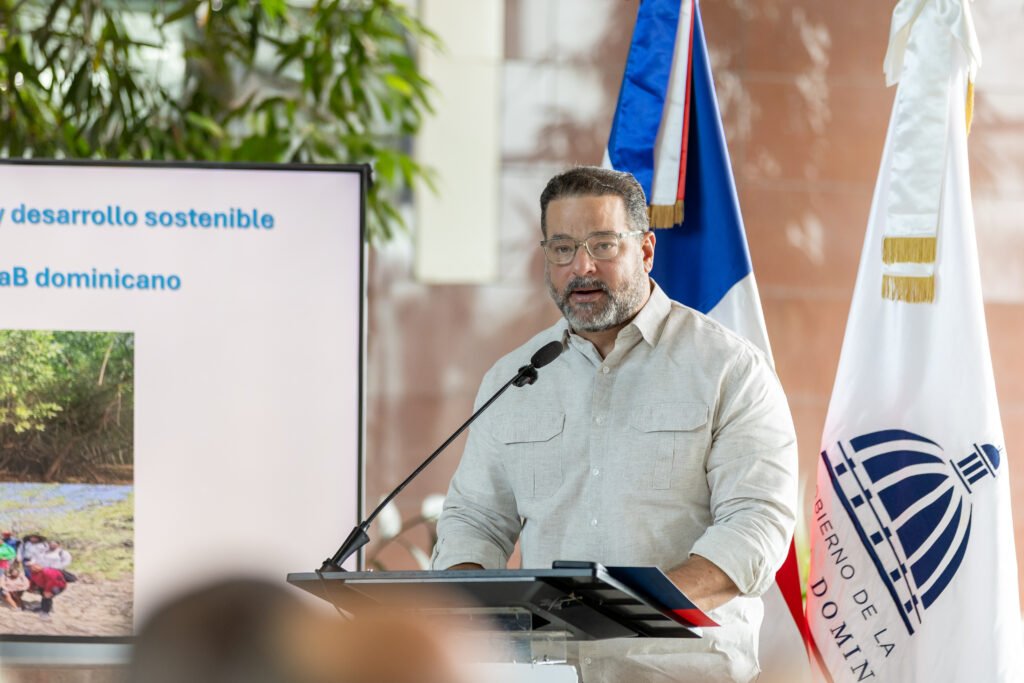
The Dominican Republic has held its first Week of Biosphere Reserves, a national initiative designed to raise public awareness of the country’s internationally recognized conservation territories and strengthen the involvement of local communities in their management.
Organized by the Ministry of Environment and Natural Resources and the Dominican National Committee for UNESCO’s Man and the Biosphere Programme, the event opened in Santo Domingo on November 2. Activities ran through November 5, combining educational initiatives, public outreach and exchanges between community organizations and institutions.
Environment Minister Paíno Henríquez, who also chairs the Dominican MAB Committee, said the protection of natural ecosystems is closely connected to people’s quality of life. Forests, watersheds and other ecosystems support drinking water supplies, food production and the livelihoods of thousands of families.
Two UNESCO biosphere reserves in the Dominican Republic
The country has two territories recognized under UNESCO’s Man and the Biosphere Programme: Jaragua-Bahoruco-Enriquillo, designated in 2002, and Madre de las Aguas, recognized in 2024.
Jaragua-Bahoruco-Enriquillo is located in the southwest and encompasses a landscape of significant ecological diversity. Its core areas include Jaragua National Park, Sierra de Bahoruco National Park and the area around Lake Enriquillo. The territory connects coastal, wetland, lake and mountain ecosystems that support important biodiversity.
Madre de las Aguas, designated by UNESCO in July 2024, covers a mountainous region that plays a major role in protecting the country’s water sources. Its forests and watersheds are important for maintaining river systems and supporting communities that depend on freshwater resources.
The southwestern reserve also forms part of the La Selle-Jaragua-Bahoruco-Enriquillo Transboundary Biosphere Reserve, established in 2017 with Haiti. This international designation links the Dominican reserve with Haiti’s La Selle Biosphere Reserve, recognizing the ecological connections that extend across the border.
Conservation linked to local development
Biosphere reserves are not simply protected areas where human activity is excluded. Under UNESCO’s framework, they are territories intended to reconcile biodiversity conservation with sustainable economic and social development.
The model combines three main functions: conserving natural and cultural diversity, encouraging environmentally sustainable economic activity, and supporting research, education and monitoring. It also relies on different management zones, allowing strict protection in core areas while compatible activities take place in surrounding and transition zones.
UNESCO describes these territories as places where communities and ecosystems can benefit from one another. Local participation is therefore central to decisions about land use, natural resources and development priorities.
During the Dominican event, Henríquez emphasized that communities should play an active role in protecting their natural resources while finding sustainable ways to improve their living conditions. Other speakers included Barahona Governor Oneida Féliz Medina, who chairs the coordination council for Jaragua-Bahoruco-Enriquillo, and Walkiria Estévez, executive director of Fondo Agua.
Organizations and conservation leaders receive recognition
The program also recognized individuals and organizations for contributions to scientific research, biodiversity protection, environmental governance and sustainable production.
For Jaragua-Bahoruco-Enriquillo, the recipients included Grupo Jaragua, recognized for its work in research and sustainable territorial management; Rafael Orlando Ferreras, for leadership in governance and institutional coordination; and Ariel Moreta, for promoting sustainable coffee production and agroforestry systems.
In Madre de las Aguas, the Fondo Agua Yaque del Norte was honored for its work in watershed conservation and restoration. Grupo Ambiental Hábitat received recognition for its biodiversity conservation efforts, while Andrés Peralta Gómez was distinguished for more than 30 years of work in agroecology, environmental education and rural development.
Gloria María Santana Zorrilla, head of the Ministry’s Wildlife Department, also received a special recognition for her career and contribution to strengthening the MAB Programme in the Dominican Republic.
Photography competition highlights the reserves
The initiative included the awards ceremony for Fotografía tu Reserva, a photography competition sponsored by Cooperativa Vega Real. Participants were invited to document the natural and social value of the biosphere reserves through images.
Luis Jorge Santana Sena won first place and received a Samsung Galaxy S26 Ultra smartphone. Francis Anderson de la Cruz D’Oleo took second place, receiving a Raleigh MTB 29 bicycle. Both winners represented Jaragua-Bahoruco-Enriquillo.
A new annual platform for public participation
The first national Week of Biosphere Reserves coincided with the International Day for Biosphere Reserves, observed every November 3. The Dominican initiative seeks to establish a recurring opportunity for institutions, conservation groups, researchers and residents to share knowledge and promote practical involvement in protecting these territories.
For the country, the challenge extends beyond securing international recognition. The long-term value of the two reserves will depend on effective management, sustained cooperation among institutions and the ability to ensure that conservation contributes to the well-being of the communities that live within and around them.
By placing local participation alongside biodiversity protection, the initiative reinforces the principle at the heart of UNESCO’s MAB Programme: sustainable development and nature conservation are most effective when they advance together.