 25°C
25°C

Protected Areas of the Dominican Republic: A Complete Guide
The Dominican Republic protects some of the Caribbean's most diverse ecosystems through an extensive network of national parks, scientific reserves, marine sanctuaries, wildlife refuges, and protected landscapes. From tropical rainforests and cloud-covered mountains to coral reefs, mangrove forests, and remote offshore islands, these protected areas preserve the country's exceptional biodiversity while offering opportunities for recreation, scientific research, and sustainable tourism. This guide explains how the protected area system works, highlights its most important destinations, and helps international readers understand why conservation plays such a vital role in the Dominican Republic's natural heritage.


The Dominican Republic is internationally known for its beaches, but its natural heritage extends far beyond its coastline. Nearly every major ecosystem found in the country is represented within the National System of Protected Areas, known in Spanish as the Sistema Nacional de Áreas Protegidas (SINAP). This network safeguards forests, wetlands, mountain ranges, caves, rivers, islands, marine habitats, and landscapes of exceptional ecological, geological, and cultural value.
Protected areas play several roles simultaneously. They conserve endangered species, protect watersheds that supply drinking water and agriculture, preserve archaeological and historical sites, support scientific research, and create opportunities for responsible tourism. They also help the country respond to climate change by protecting forests that store carbon and coastal ecosystems such as mangroves and coral reefs that reduce the impacts of storms and erosion.
What Are Protected Areas?
A protected area is a clearly defined geographic space managed to conserve nature and, in many cases, the cultural resources associated with it. Depending on the category, human activities may range from strict scientific research to regulated tourism, traditional fishing, environmental education, or sustainable resource management.
In the Dominican Republic, protected areas include both terrestrial and marine environments. Some cover large mountain regions spanning several provinces, while others protect individual caves, offshore islands, lagoons, or coral reefs.
How the Protected Area System Works
The country’s protected areas are managed through the National System of Protected Areas (SINAP), established under environmental legislation that defines different categories of protection according to each area’s conservation objectives.
Management generally seeks to balance three priorities:
- Protect biodiversity and ecological processes.
- Preserve landscapes, geological features, and cultural heritage.
- Allow compatible recreational, educational, and scientific activities.
Many protected areas also serve as important water sources for nearby communities and agricultural regions, making their conservation essential for both environmental and economic reasons.
Main Categories of Protected Areas
National Parks
National parks represent the best-known category within the Dominican Republic’s conservation system. They protect extensive natural landscapes and ecosystems while allowing regulated public access for recreation, hiking, wildlife observation, and environmental education.
Many of the country’s most famous destinations—including mountain peaks, waterfalls, coastal cliffs, and tropical forests—are located inside national parks.
Scientific Reserves
Scientific reserves protect ecosystems or species considered especially sensitive or unique. Human access is generally more restricted than in national parks, and scientific research receives priority over recreational use.
Wildlife Refuges
Wildlife refuges focus on protecting habitats that support important populations of birds, reptiles, marine mammals, turtles, or other wildlife. These areas often include wetlands, estuaries, mangroves, lagoons, and coastal habitats.
Natural Monuments
Natural monuments preserve outstanding geological formations, caves, islands, waterfalls, or other exceptional natural features that possess ecological, scientific, historical, or scenic significance.
Marine Protected Areas
The Dominican Republic also protects extensive marine environments, including coral reefs, seagrass beds, mangrove forests, coastal lagoons, and offshore islands. These ecosystems provide habitat for countless marine species while supporting fisheries and protecting coastlines.
Why Protected Areas Matter
The country’s protected landscapes deliver benefits that extend well beyond conservation.
- They protect the headwaters of major rivers.
- They preserve habitats for hundreds of bird species, including many endemic species found only on Hispaniola.
- They conserve forests that regulate rainfall and reduce soil erosion.
- They protect coral reefs and mangroves that reduce coastal flooding.
- They preserve archaeological and historical sites connected to the island’s Indigenous heritage.
- They support sustainable tourism throughout the country.
The Most Important National Parks
Los Haitises National Park
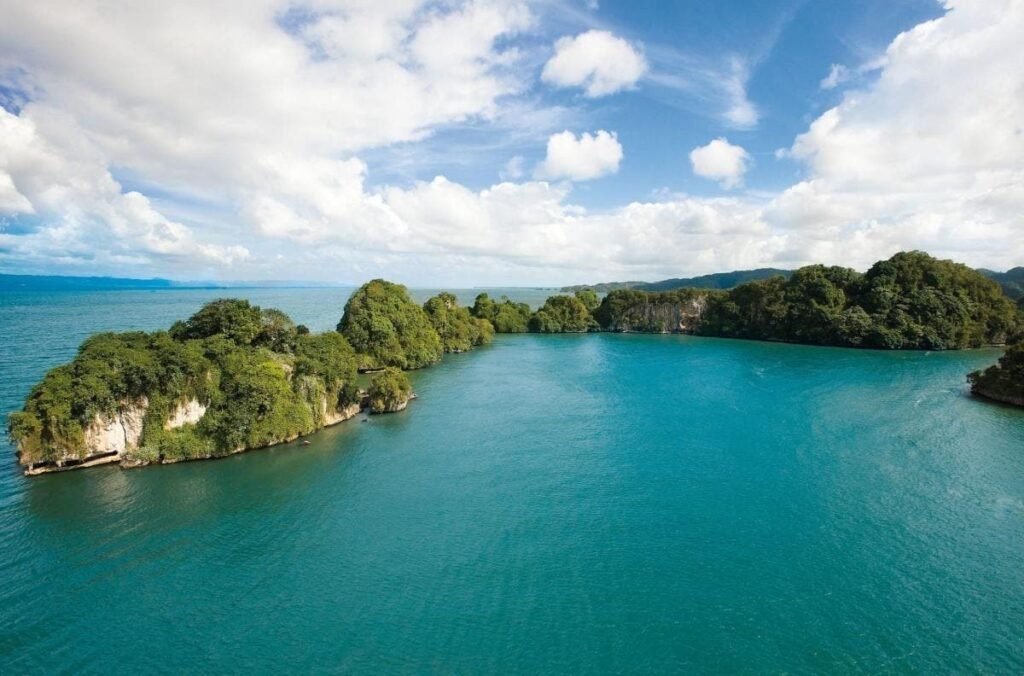
Located on the northeastern coast, Los Haitises National Park is famous for its spectacular limestone karst formations, dense mangrove forests, caves containing Taíno pictographs and petroglyphs, and rich birdlife. Boat excursions through its bays reveal dozens of small rocky islands covered with tropical vegetation.
The park is one of the country’s most important wetlands and supports numerous endemic and migratory bird species.
Jaragua National Park
Occupying the southwestern corner of the country, Jaragua National Park protects one of the Caribbean’s largest dry forest ecosystems. It also includes pristine beaches, offshore islands, lagoons, and marine habitats.
The park provides nesting beaches for several species of sea turtles and serves as an important refuge for flamingos, iguanas, and numerous coastal birds.
Armando Bermúdez National Park
This mountainous park protects much of the Cordillera Central and includes Pico Duarte, the highest mountain in the Caribbean. Pine forests, cloud forests, rivers, and endemic wildlife characterize the landscape.
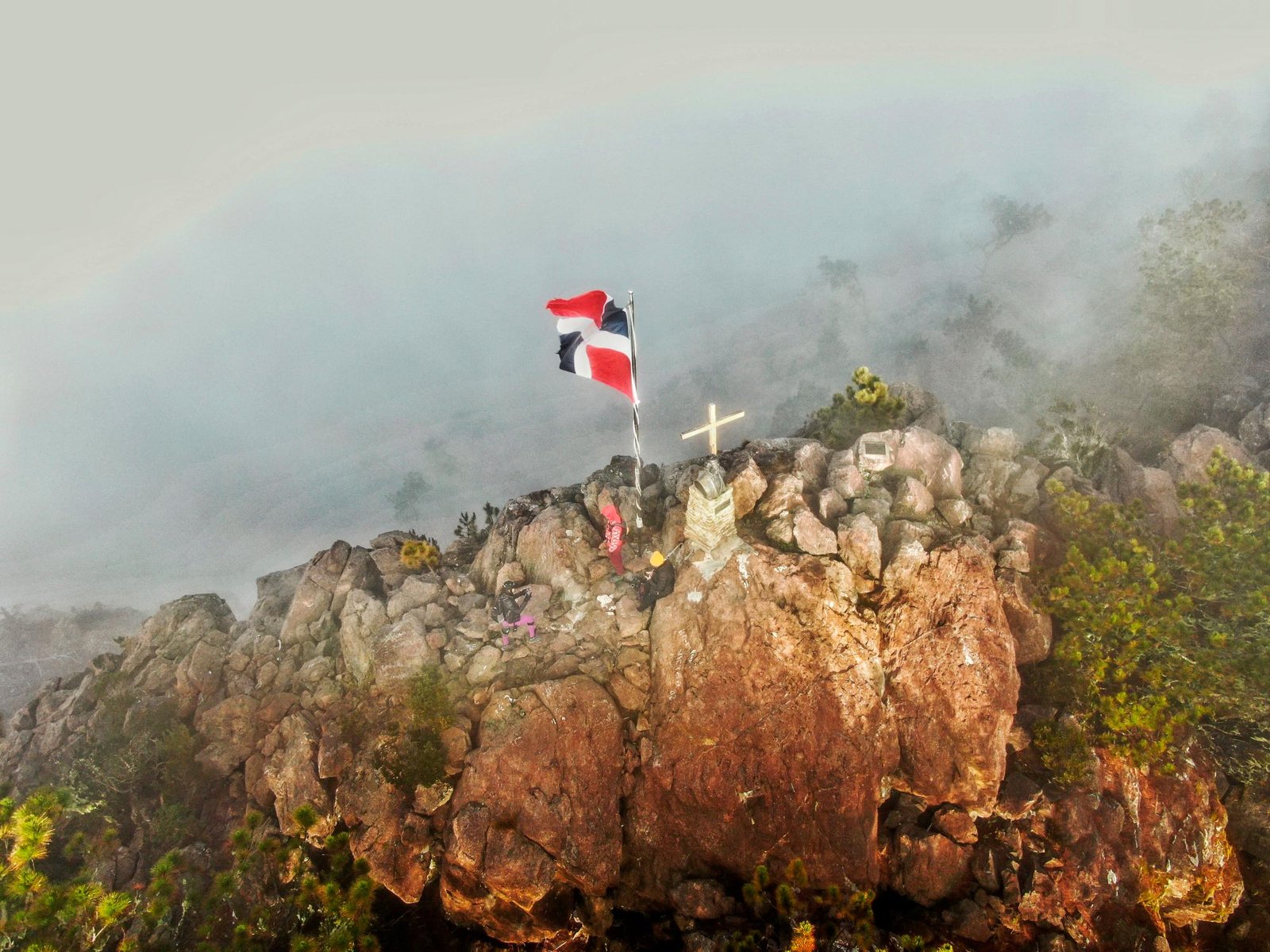
The park is a major destination for hiking and mountaineering while also protecting some of the country’s most important watersheds.
José del Carmen Ramírez National Park
Adjacent to Armando Bermúdez National Park, this protected area conserves additional sections of the Cordillera Central. Together, the two parks form one of the largest continuous forest ecosystems in the Dominican Republic.
Cotubanamá National Park
Formerly known as Parque Nacional del Este, Cotubanamá National Park protects tropical forests, caves, beaches, coral reefs, and islands along the southeastern coast, including Saona Island. The park combines outstanding marine biodiversity with important archaeological sites associated with the Taíno civilization.
Sierra de Bahoruco National Park
Located near the border with Haiti, Sierra de Bahoruco National Park preserves one of the Caribbean’s richest biodiversity hotspots. Its dramatic elevation changes create habitats ranging from dry forests to cloud forests, supporting numerous endemic plants, amphibians, and birds.
Marine Conservation
Marine protected areas play an increasingly important role in conserving the Dominican Republic’s coastal ecosystems. Coral reefs support fisheries, attract divers, and help reduce wave energy during storms. Mangrove forests serve as nurseries for countless marine species while trapping sediments and protecting coastlines from erosion.
Many marine protected areas combine coral reefs, seagrass beds, mangrove forests, beaches, and offshore islands into a single conservation unit, recognizing that these ecosystems depend on one another.
Wildlife Found in Protected Areas
The Dominican Republic’s protected areas provide habitat for a remarkable variety of wildlife, including species found nowhere else on Earth.
- Hispaniolan solenodon
- Hispaniolan hutia
- Rhinoceros iguana
- Ricord’s iguana
- Palmchat, the national bird
- Numerous endemic frogs and reptiles
- Humpback whales in protected marine waters during seasonal migration
- Sea turtles nesting on protected beaches
Many migratory birds traveling between North and South America also depend on the country’s wetlands, coastal lagoons, and mangrove forests during their annual migrations.
Other Notable Protected Areas
Valle Nuevo National Park
Valle Nuevo National Park occupies one of the highest plateaus in the Caribbean, with elevations exceeding 2,000 meters (6,500 feet). The cool climate supports extensive pine forests, high-altitude grasslands, freshwater springs, and unique plant communities rarely found elsewhere in the region.
The park is one of the Dominican Republic’s most important sources of freshwater. Rivers originating here supply communities, agriculture, and hydroelectric facilities across several provinces, making conservation critical for both biodiversity and water security.
Monte Cristi National Park
Located in the country’s northwest, Monte Cristi National Park combines coastal lagoons, mangrove forests, dry tropical forest, offshore keys, and the distinctive limestone formation known as El Morro. The park supports numerous migratory birds and marine species while protecting one of the Dominican Republic’s most distinctive coastal landscapes.
Isla Cabritos National Park
Situated within Lake Enriquillo, Isla Cabritos National Park protects one of the Caribbean’s most unusual ecosystems. Lake Enriquillo is the largest lake in the Caribbean and one of the few hypersaline lakes in the region. It also lies below sea level, creating a unique environment inhabited by American crocodiles, flamingos, iguanas, and other wildlife specially adapted to these conditions.
Ebano Verde Scientific Reserve
Although smaller than many national parks, Ebano Verde Scientific Reserve is internationally recognized for protecting cloud forests rich in endemic plants, amphibians, and freshwater ecosystems. The reserve also safeguards important headwaters that feed rivers supplying nearby communities.
UNESCO Biosphere Reserves
Several protected landscapes in the Dominican Republic form part of UNESCO Biosphere Reserves, which promote the coexistence of biodiversity conservation, scientific research, sustainable development, and local communities.
Unlike strictly protected areas, biosphere reserves include zones with different management objectives. Core conservation areas are surrounded by buffer zones where compatible economic activities, education, and sustainable resource management may occur.
This approach recognizes that long-term conservation often depends on balancing environmental protection with the well-being of nearby populations.
Marine Biodiversity and Coastal Ecosystems
The Dominican Republic’s marine protected areas conserve ecosystems that are among the most biologically productive in the Caribbean. Coral reefs provide habitat for hundreds of fish species, while mangrove forests serve as breeding grounds for juvenile marine life and help stabilize coastlines.
Seagrass meadows, often overlooked by visitors, play an equally important ecological role. They improve water quality, store significant amounts of carbon, and provide feeding grounds for turtles and numerous marine organisms.
Together, coral reefs, mangroves, and seagrass beds form interconnected ecosystems. Damage to one habitat can affect the health of the others, making integrated conservation especially important.
Conservation Challenges
Despite the country’s extensive network of protected areas, conservation remains an ongoing challenge. Population growth, expanding infrastructure, illegal resource extraction, invasive species, forest fires, and climate change all place pressure on sensitive ecosystems.
Marine environments face additional threats from coral bleaching, coastal pollution, overfishing in some regions, and stronger tropical storms linked to changing climatic conditions.
Conservation efforts increasingly combine scientific research, environmental education, community participation, habitat restoration, and improved enforcement to address these pressures.
Ecotourism in Protected Areas
Many protected areas welcome visitors, offering opportunities to experience some of the country’s most spectacular natural landscapes while supporting conservation through responsible tourism.
Popular activities include:
- Hiking and mountain trekking.
- Birdwatching.
- Whale watching during the migration season.
- Kayaking through mangrove forests.
- Boat excursions to offshore islands.
- Cave exploration with authorized guides.
- Snorkeling and scuba diving in marine parks.
- Photography and nature observation.
Access conditions vary by location. Some protected areas are easily reached by road, while others require permits, guided excursions, or boat transportation.
Responsible Visiting Guidelines
Visitors play an important role in protecting the Dominican Republic’s natural heritage. Following basic environmental practices helps reduce impacts on fragile ecosystems.
- Stay on designated trails.
- Do not remove plants, rocks, shells, or wildlife.
- Carry out all trash.
- Avoid feeding wild animals.
- Respect access restrictions and protected zones.
- Use certified guides where required.
- Follow park regulations regarding camping, fires, and recreational activities.
- Choose environmentally responsible tour operators whenever possible.
Simple actions by visitors can help preserve protected landscapes for future generations.
Best Time to Visit Protected Areas
Protected areas can be visited throughout much of the year, although weather conditions vary considerably depending on altitude and location.
Mountain parks are generally cooler than coastal areas and may experience significant temperature changes between day and night. Coastal parks tend to be warm year-round, while the rainy season can temporarily affect trail conditions or boat access in some locations.
Wildlife viewing also varies seasonally. Bird migration, whale watching, and sea turtle nesting occur during specific times of the year, depending on the species.

Protected Areas and Local Communities
Many communities live near protected areas and maintain close relationships with these landscapes. Sustainable tourism, environmental education, scientific research, and conservation projects increasingly provide economic opportunities while encouraging long-term stewardship of natural resources.
Successful conservation often depends on cooperation between government agencies, local residents, universities, non-governmental organizations, and international conservation partners.
Planning Your Visit
Before visiting a protected area, it is advisable to check current access conditions, opening hours, entrance fees where applicable, weather forecasts, and any permit requirements. Some parks have visitor centers with educational exhibits, maps, and interpretive information that enhance the experience.
Visitors planning remote hikes should carry sufficient water, appropriate footwear, sun protection, insect repellent, and emergency supplies. Guided excursions are recommended for more isolated destinations, particularly in mountainous or marine environments.
Frequently Asked Questions
How many protected areas does the Dominican Republic have?
The country maintains an extensive network of protected areas covering a significant portion of both its land and marine territory. The exact number may change over time as legislation is updated or management categories are revised.
Can visitors enter all protected areas?
No. While many national parks are open to visitors, some scientific reserves and highly sensitive conservation areas have restricted access or require special authorization.
Are marine areas protected too?
Yes. Marine protected areas conserve coral reefs, mangrove forests, seagrass beds, coastal lagoons, islands, and important habitats for marine wildlife.
What is the largest national park?
Several national parks cover extensive territories, particularly in the mountainous southwest and central regions, as well as along protected coastal ecosystems. Their boundaries and management objectives differ depending on the ecosystems they protect.
Why are protected areas important for visitors?
Beyond their ecological value, protected areas offer opportunities to experience the Dominican Republic’s landscapes, wildlife, geology, and cultural heritage in ways that extend far beyond traditional beach tourism.
Final Thoughts
The Dominican Republic’s protected areas represent one of the country’s greatest natural assets. Together they safeguard mountain forests that produce freshwater, coastal ecosystems that protect communities from storms, habitats for endemic wildlife found nowhere else, and landscapes that reflect millions of years of geological history.
For travelers, these areas reveal a side of the Dominican Republic that many visitors never experience. For scientists, they preserve ecosystems of exceptional Caribbean importance. For local communities, they provide environmental services that support livelihoods and long-term sustainability.
Whether exploring the mangrove channels of Los Haitises, hiking toward Pico Duarte, observing flamingos near Lake Enriquillo, or snorkeling above coral reefs in protected marine parks, visitors encounter landscapes that demonstrate why conservation remains essential to the country’s future. Responsible tourism, informed management, and continued environmental protection will help ensure these extraordinary places remain part of the Dominican Republic’s natural heritage for generations to come.