 28°C


Global Ecosystem Restoration Must Triple by 2030, UN Warns
Nearly 252 million hectares across 149 countries are now covered by ecosystem restoration initiatives, marking the largest documented global effort to reverse environmental degradation. However, a new United Nations report warns that progress remains insufficient to meet 2030 biodiversity targets, highlighting major funding gaps and the urgent need to restore rivers, wetlands and marine habitats. The findings also carry implications for the Dominican Republic, where ecosystem conservation is closely linked to water security, tourism and economic resilience.


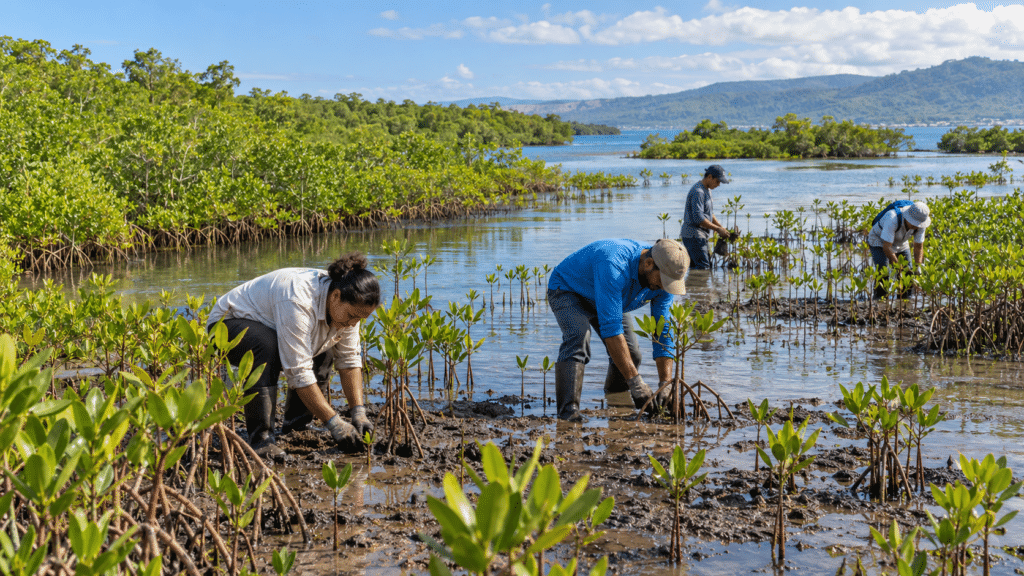
Global efforts to reverse environmental degradation are expanding, but the world remains far behind the pace required to meet its biodiversity commitments for 2030. Approximately 252 million hectares across 149 countries are now covered by ecosystem restoration initiatives, according to a new United Nations assessment. Despite this progress, governments must significantly accelerate implementation and increase investment to restore damaged natural environments on the scale required.
The report, titled Nature’s Comeback: Scaling Ecosystem Restoration for People and Planet, was published by the Food and Agriculture Organization of the United Nations (FAO), the United Nations Environment Programme (UNEP) and the Secretariat of the Convention on Biological Diversity (CBD). Released on October 29, 2026, it provides the first comprehensive global assessment of restoration progress across terrestrial, freshwater, marine and coastal ecosystems.
Its findings highlight a challenge that extends beyond planting trees or rehabilitating damaged landscapes. Governments must also restore natural processes, improve ecological monitoring and secure long-term financing. These priorities are particularly relevant to island and coastal economies such as the Dominican Republic, where healthy ecosystems support water supplies, agriculture, tourism and protection against climate-related risks.
Global Ecosystem Restoration Remains Behind 2030 Commitments
The 252 million hectares currently covered by restoration activities represent the largest documented effort of its kind. Nevertheless, the figure remains considerably below the approximately one billion hectares countries have collectively pledged to restore through international environmental commitments.
A central reference point is the Kunming-Montreal Global Biodiversity Framework, adopted in December 2022. Its Target 2 calls for at least 30% of degraded terrestrial, inland water, coastal and marine ecosystems to be under effective restoration by 2030.
The new assessment estimates that approximately 738 million hectares would need to be under restoration to meet this particular global target, based on the degradation estimates used in the report. This figure is distinct from the broader national commitments covering approximately one billion hectares.
Geographical distribution also reveals considerable differences in documented activity. Asia accounts for approximately 192.2 million hectares, representing 76.3% of the global total. Africa follows with 36.3 million hectares, while Europe accounts for 9.1 million.
North and Central America together report approximately 5.8 million hectares, compared with 5.4 million in South America and 3.2 million in Oceania. China leads individual countries in documented terrestrial restoration, with approximately 127.4 million hectares.
However, the report cautions against interpreting these figures as a ranking of environmental performance. National territory size, reporting capacity and differences in monitoring methods all influence the recorded totals.
Freshwater and Marine Ecosystems Are Falling Behind
One of the most significant findings concerns the imbalance between terrestrial restoration and efforts targeting aquatic environments. Approximately 232 million hectares, or around 92% of the documented area, involve terrestrial ecosystems.
Freshwater restoration covers approximately 11 million hectares, while marine and coastal initiatives account for another 5.7 million hectares. These figures reveal how much more attention is being directed towards land-based projects than towards rivers, wetlands and coastal habitats.
The gap is particularly concerning because aquatic ecosystems face multiple pressures, including pollution, infrastructure development, excessive water extraction and climate change.
Rivers are essential to freshwater supplies, agricultural production and biodiversity. However, dams, artificial channel modifications and pollution can disrupt natural water flows, prevent species from moving between habitats and alter the movement of sediments.
Wetlands also perform important environmental functions. They provide habitats for numerous species, regulate water cycles, store carbon and help reduce the impact of flooding. Their continuing degradation makes restoration an increasingly important component of environmental management.
The report estimates that approximately 384 million hectares of freshwater ecosystems have disappeared since 1970. It also highlights the particularly rapid loss of wetlands compared with forests.
Restoring these environments requires more than removing waste or planting vegetation. Effective projects must recover natural water flows, reconnect fragmented habitats, reduce pollution and protect the species that depend on these ecosystems.
Dominican Republic Faces Similar Restoration Challenges
The findings have particular relevance for the Dominican Republic, where forests, watersheds, mangroves, coral reefs and coastal environments contribute directly to economic activity and community well-being.
A national ecosystem assessment presented by the Dominican Ministry of Environment and Natural Resources in June 2026 estimated that ecosystem services contribute between 4.2% and 7.6% of national GDP. The study also estimated that coastal and marine ecosystems generate approximately US$1.79 billion in annual value.
These figures illustrate why environmental restoration is not simply a conservation issue. The condition of natural habitats has direct implications for the country’s tourism industry, water resources, agricultural production and resilience to extreme weather.
The Dominican Republic has already undertaken several initiatives addressing these challenges. In Miches, El Seibo province, the El Seibo Resiliente project, implemented between 2020 and 2026, supported the rehabilitation of mangroves, wetlands, riverbanks and forest areas in the La Yeguada River basin.
Other initiatives have focused on recovering the Ozama and Isabela rivers, restoring the Haina River basin and strengthening protection of the Yaque del Norte watershed. These projects demonstrate the importance of combining ecological rehabilitation with water management and community participation.
The country is also advancing its national biodiversity reporting and planning processes, including the preparation of its Seventh National Biodiversity Report and the updating of its National Biodiversity Strategy and Action Plan.
For the Dominican Republic, the international assessment reinforces the importance of measuring not only how many hectares are included in restoration projects, but also whether water quality improves, habitats recover and ecosystems regain their natural functions.
Insufficient Monitoring Makes Progress Difficult to Measure
Another major obstacle identified by the UN assessment is the lack of reliable and comparable information. Restoration projects may be taking place without their results being fully reflected in national or international reporting systems.
The report identifies 46 countries that did not provide quantitative restoration progress data under the reporting frameworks assessed. Differences in definitions, monitoring methods and data collection also make international comparisons more difficult.
Counting hectares covered by restoration initiatives does not necessarily demonstrate that an ecosystem has recovered. A project may have completed its initial interventions while the ecological functions of the area remain degraded.
Meaningful assessment requires indicators that measure changes in water quality, vegetation regeneration, species populations, ecological connectivity and the ability of natural systems to sustain themselves over time.
Improved monitoring would also help governments identify successful approaches, direct investment towards priority areas and establish whether restoration programmes are producing lasting environmental benefits.
Annual Restoration Funding Must More Than Quadruple
Financing represents another major challenge. Global investment in ecosystem restoration reached approximately US$64 billion in 2022, but the report estimates that annual funding must rise to approximately US$296 billion by 2030.
This would require more than a fourfold increase in investment within the remainder of the decade. Public institutions currently account for approximately 73% of recorded restoration financing, while private sources provide the remaining 27%.
Closing this gap will require greater participation from businesses, financial institutions and private investors, alongside continued government and multilateral support.
The economic case for investment extends beyond environmental protection. Healthy ecosystems support agricultural productivity, water availability, climate resilience and other services that contribute to economic activity.
For countries such as the Dominican Republic, investment in mangroves, watersheds, forests and coastal habitats can also help protect economic sectors that depend on natural resources. The challenge is to ensure that financing supports long-term ecological recovery rather than isolated activities with limited lasting impact.
Restoration Could Generate Millions of Jobs by 2030
Beyond environmental benefits, ecosystem restoration is emerging as a potential source of employment and economic opportunities.
The report highlights 35 United Nations World Restoration Flagship initiatives that have collectively created more than 1.1 million jobs. These projects cover approximately 18 million hectares and include activities designed to recover degraded landscapes and strengthen local livelihoods.
According to the report’s projections, scaling restoration activities could generate up to 32 million additional jobs worldwide by 2030.
These opportunities include forestry, environmental engineering, water management, biodiversity conservation, sustainable land management and ecological monitoring. Many projects also depend on local knowledge and the participation of rural communities.
The economic benefits are particularly relevant in areas where agriculture, fisheries and other livelihoods depend directly on healthy natural environments. Restoration can support these activities while improving the capacity of communities to respond to environmental changes.
The report also highlights the potential contribution to climate and biodiversity objectives. Restoring 15% of the planet’s priority areas could capture and store carbon equivalent to approximately 30% of the increase in atmospheric carbon dioxide since the Industrial Revolution. Such interventions could also help prevent up to 60% of projected species extinctions under certain degradation scenarios.
Long-Term Environmental Recovery Will Require Stronger Commitments
The UN assessment makes clear that the scale of current restoration initiatives does not yet match international ambitions. Increasing the number of projects will be important, but governments must also address the underlying causes of ecosystem degradation.
That means improving land-use planning, reducing pollution, managing water resources sustainably and involving local communities and Indigenous Peoples in environmental decision-making.
The Dominican Republic’s experience with watershed rehabilitation, mangrove protection and coastal conservation illustrates how these priorities translate into practical environmental policies. Their long-term success will depend on sustained financing, reliable monitoring and coordination between public institutions, businesses and communities.
With the 2030 biodiversity targets approaching, the next few years will be decisive. The central challenge is no longer simply to announce restoration commitments, but to demonstrate that degraded ecosystems are recovering and that the benefits of those improvements can be maintained for future generations.