 25°C
25°C

Puerto Plata Launches Free Rabies Vaccination Drive for Pets
Health authorities in Puerto Plata are offering free rabies vaccinations for dogs and cats through a three-day campaign running October 9-11, with additional outreach planned across municipalities and communities throughout the province.


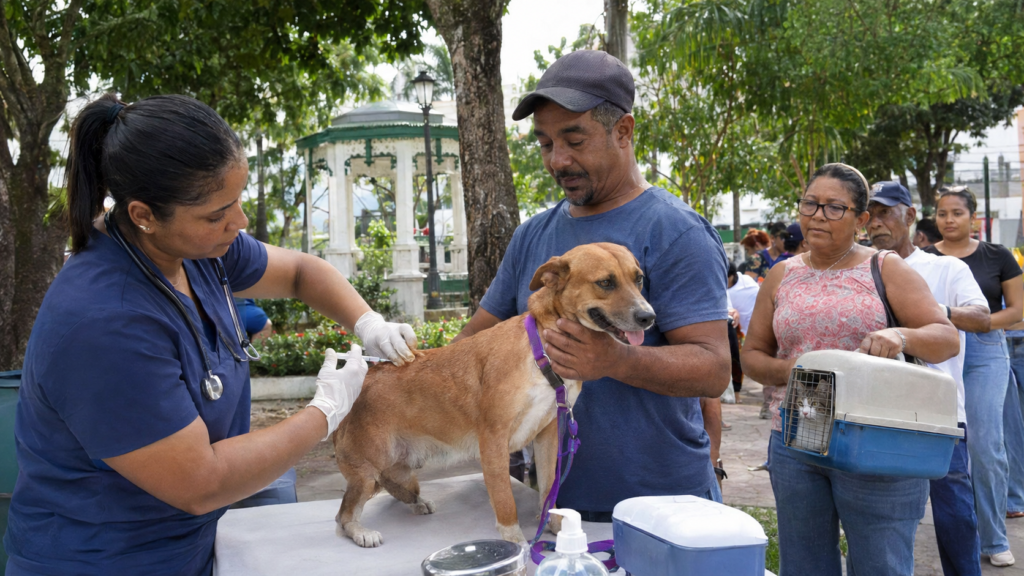
Residents of Puerto Plata, on the northern coast of the Dominican Republic, are participating in a free rabies vaccination campaign aimed at protecting domestic animals, preventing the spread of the disease and reducing the risk of transmission to humans. The initiative highlights the importance of vaccination as a public health measure that extends beyond human immunization to include the protection of animals and the communities in which they live.
Coordinated by the Provincial Directorate of Health (Dirección Provincial de Salud, DPS), the operation forms part of the Dominican Republic’s 2026 National Rabies Vaccination Campaign. The three-day initiative runs from Friday, October 9, through Sunday, October 11, providing free vaccinations for dogs and cats at designated locations throughout Puerto Plata province.
The campaign is designed to encourage responsible pet ownership, expand access to preventive veterinary services and strengthen public awareness of the importance of controlling rabies, a potentially fatal disease that can affect both animals and people.
Free Vaccinations Available in Central Puerto Plata
One of the main vaccination points is located at the gazebo in Parque Regalado, opposite the local health center and the General Fire Department headquarters in Puerto Plata. The site operates daily from 8 a.m. to 3 p.m. throughout the campaign, allowing residents to bring their pets for immunization at no cost.
Provincial Director of Public Health Héctor Hernández confirmed that the vaccinations are completely free and encouraged residents to take advantage of the initiative.
The campaign has drawn pet owners bringing their dogs and cats to receive the vaccine, demonstrating community participation in efforts to prevent rabies and protect public health. By eliminating the cost of vaccination, the initiative also seeks to make preventive services more accessible to households across the province.
Vaccination Teams Extend Their Reach Across the Province
Beyond the central vaccination point, health teams are carrying out simultaneous operations in municipalities and communities throughout Puerto Plata province. These efforts include house-to-house visits and vaccination services at Primary Care Centers, known locally as Centros de Primer Nivel (CPNs).
The decentralized approach is intended to expand coverage and reach animals whose owners may face difficulties traveling to the main vaccination site. By bringing services closer to residents, health authorities aim to increase participation and ensure that more dogs and cats receive protection against rabies.
Hernández urged residents to bring their pets to authorized vaccination points and cooperate with the teams conducting the campaign. Public participation is essential to the effectiveness of these initiatives, as sustained vaccination coverage helps reduce the circulation of the virus and the risk of exposure within communities.
Why Animal Vaccination Is Essential to Human Health
Vaccination is one of the most effective tools available for preventing infectious diseases in humans. However, protecting public health also requires attention to diseases that circulate among animals and can be transmitted to people. Rabies is a clear example of why prevention efforts must address both sides of this relationship.
Vaccination also plays a vital role in protecting people against preventable infectious diseases. Understanding which vaccines are recommended for different circumstances can help individuals make informed decisions about their health and strengthen preventive care.
Rabies is a viral disease that affects the central nervous system of mammals, including dogs, cats and humans. It is transmitted primarily through the saliva of infected animals, most commonly through bites or scratches that break the skin. Once clinical symptoms develop, the disease is almost invariably fatal, making prevention and timely medical intervention critical.
Vaccinating dogs and cats helps reduce the risk that these animals will become infected and transmit the virus to people. In this way, animal immunization serves as an important component of broader public health protection, complementing human vaccination programs and other preventive measures.
The campaign in Puerto Plata reflects this connection between animal health and human well-being. While routine vaccination protects pets against a serious disease, it also helps safeguard families, particularly people who have frequent contact with animals.
A Public Health Effort Based on Prevention
The 2026 National Rabies Vaccination Campaign forms part of the Dominican Ministry of Public Health’s efforts to strengthen rabies prevention and control. Its implementation in Puerto Plata combines free access to vaccination, community outreach and public awareness to encourage broader participation.
Residents are encouraged to keep their pets’ vaccinations up to date and seek medical attention promptly after a bite or other potentially risky exposure to an animal. Washing the wound thoroughly with soap and water and obtaining urgent medical assessment are essential steps, as post-exposure treatment may be necessary even when the animal appears healthy.
The initiative reinforces a central principle of disease prevention: protecting human health also means reducing risks at their source. Through the vaccination of dogs and cats, the authorities seek not only to protect individual animals but also to reduce the risk of rabies transmission and strengthen health security across Puerto Plata province.
With free services available at designated sites and through outreach teams, the campaign provides residents with an opportunity to contribute directly to the prevention of a serious but preventable disease. Its broader message is that vaccination, whether directed at humans or animals, remains a cornerstone of public health and collective protection.