 22°C
22°C
Danilo Medina Says PRM Government Is Costly To Dominicans
Former President Danilo Medina accused the government of the ruling Modern Revolutionary Party (PRM) of imposing higher costs on Dominicans, citing electricity losses, debt interest, public payroll and pension spending during remarks in Duvergé.


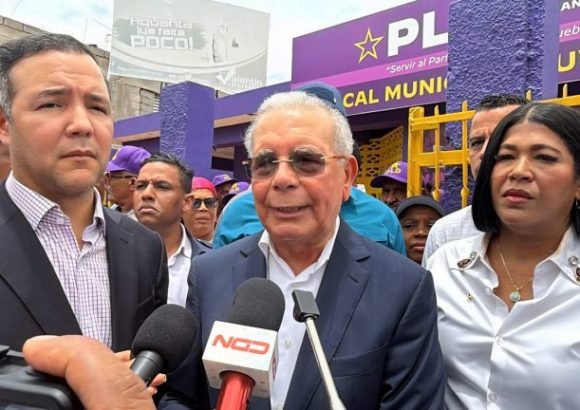
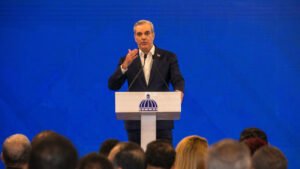
Former President Danilo Medina criticized the administration of President Luis Abinader on Sunday, arguing that the government of the Modern Revolutionary Party (PRM) is becoming increasingly costly for the Dominican population because of what he described as inefficiency, insufficient investment and rising public expenses.
Medina, who now leads the opposition Dominican Liberation Party (PLD), made the remarks after attending a party assembly in Duvergé, a municipality in Independencia province in southwestern Dominican Republic. He was responding to questions from journalists about the country’s current economic and public-service challenges.
“This is a government that is turning out to be costly for the Dominican people,” Medina said, according to reports from the event.
Medina Focuses On The Electricity Sector
The former president placed the electricity sector at the center of his criticism, arguing that current difficulties stem from a lack of timely investment during the first four years of the PRM administration.
“Electricity has become more expensive because of inefficiency and abandonment,” Medina said. He argued that investments needed during the administration’s first term were not made and that addressing the problems has now become more difficult.
Medina also cited what he described as approximately RD$105 billion in electricity-sector losses. That figure reflects his characterization of the cost of the sector; official reporting has also distinguished between electricity subsidies and technical or commercial losses within the distribution companies.
The electricity sector remains one of the government’s major fiscal and operational challenges, with distribution losses continuing to place pressure on public finances and the performance of the country’s power system.
Debt Interest And Public Spending
Medina also questioned the cost of servicing the country’s public debt. He cited approximately RD$362 billion in debt-interest payments, describing the amount as equivalent to roughly RD$1 billion per day.
The figure is broadly consistent with the amount budgeted for debt interest and commissions in the Dominican Republic’s 2026 national budget, although an annual budget allocation should not be interpreted as the amount already spent by the date of Medina’s remarks.
The former president also pointed to what he described as an increase in the public payroll, from approximately RD$304 billion to RD$377 billion. He further said spending on pensions had risen from around RD$34 billion to nearly RD$60 billion.
Medina argued that these expenses ultimately affect citizens because the state must finance them through public resources. He characterized the combined increases as evidence that the current administration is placing a heavier financial burden on the population.
Opposition Leader Calls For Political Change
The comments come as the PLD prepares for the next electoral cycle. Medina argued that the government’s record should lead voters to seek a political change in the 2028 elections.
He also used his appearance in Duvergé to address supporters and participate in a party assembly where new members were formally incorporated into the PLD. The event formed part of the opposition party’s organizational activities ahead of the next national elections.
Medina’s statements represent the position of the country’s main opposition party rather than an independent assessment of government performance. His criticism centered on the cost of electricity, debt service and public spending, while the administration’s handling of these areas remains a central issue in the political debate ahead of 2028.