 22°C
22°C
Dominican Food Security Takes Center Stage At Regional Meeting
President Luis Abinader opened a four-day regional meeting in Santo Domingo focused on strengthening public food supply and marketing systems as Latin American countries confront inflation, climate risks and geopolitical disruptions.


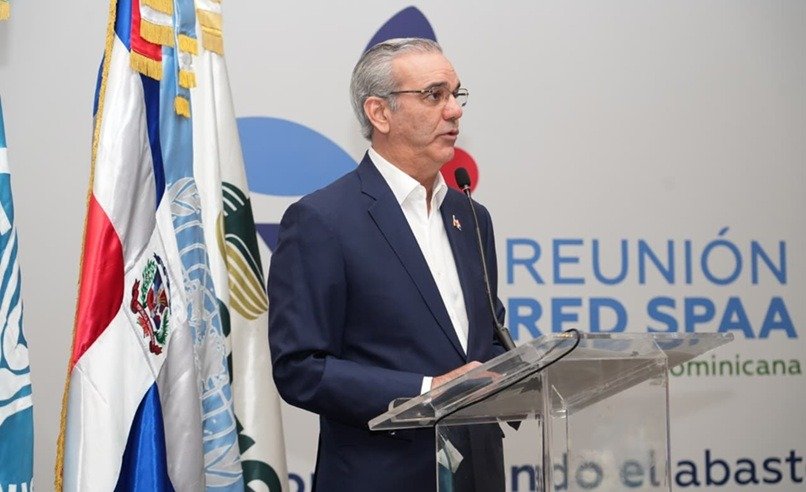
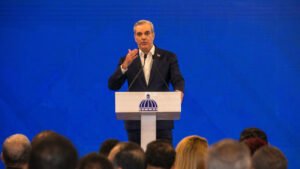
President Luis Abinader opened the 11th Meeting of the Network of Public Food Supply and Marketing Systems in the Dominican Republic on Tuesday, bringing together government delegations from across Latin America and the Caribbean to discuss food security, price stability and stronger public distribution systems.
The four-day meeting, organized by the Dominican Institute for Price Stabilization (INESPRE) with support from the Food and Agriculture Organization of the United Nations (FAO) and the governments of the Dominican Republic and Brazil, is taking place from August 11 to 14.
Dominican Republic Presents Its Food Security Experience
Dominican officials are using the meeting to present policies and programs implemented to advance the country’s Zero Hunger goal, an achievement recognized by the FAO. Abinader attributed the progress to coordinated work among several government institutions and highlighted the role of INESPRE and domestic producers in maintaining food supplies.
The president said the achievement should not be viewed as an endpoint. He stressed that the country’s food supply system must remain capable of absorbing economic shocks, extreme weather events and disruptions in international markets without reversing gains in food access.
Francisco Oliverio Espaillat, the Dominican Republic’s minister of Agriculture, likewise emphasized government support for domestic production and said coordination across the agricultural sector has helped make food available to consumers throughout the country.
Regional Food Systems Face Multiple Risks
Rodrigo Castañeda, the FAO representative in the Dominican Republic, said the meeting is taking place amid a combination of climate-related risks, logistical disruptions, geopolitical tensions and persistent food inflation affecting food systems across Latin America and the Caribbean.
He argued that public food supply and marketing systems can play a broader role than simply distributing products. According to Castañeda, these systems can help address market failures, reduce price volatility, support family farming through public procurement and strengthen food security when market forces alone cannot guarantee stable access.
Arnoldo Campos, director of Operations and Supply at Brazil’s National Supply Company (CONAB), also pointed to the growing importance of public food systems as governments respond to climate and geopolitical uncertainty.
Eric Moura, head of the Special Advisory Office of Brazil’s Ministry of Agrarian Development and Family Agriculture, called for the regional network to become a permanent platform for cooperation, shared learning and coordinated action against hunger and in favor of food and nutrition security.
Countries Seek Stronger Supply And Price Stability
Delegations from Brazil, Bolivia, Chile, Colombia, Costa Rica, Cuba, El Salvador, Guatemala, Honduras, Mexico, Panama, Paraguay, Peru and Uruguay, along with the Dominican Republic, are participating in the meeting.
The representatives are examining public policies, operational practices and new approaches that could improve food supply systems while supporting local producers and maintaining access to food in urban and peri-urban areas.
The agenda also seeks to identify practical measures for improving price stability and food availability. For governments, strengthening these systems has become increasingly relevant as international disruptions can affect transportation, production costs and the availability of essential products.
INESPRE Seeks Greater Regional Cooperation
David Herrera Díaz, executive director of INESPRE, described the meeting as an opportunity to exchange experiences and strengthen public food supply and marketing systems across Latin America and the Caribbean.
He said the regional dialogue is particularly relevant amid international uncertainty, armed conflicts and economic pressures that can affect food security. The discussions are intended to encourage cooperation among governments, international organizations, the private sector and civil society.
The meeting ultimately places the Dominican Republic at the center of a regional discussion about how governments can build food systems that are more inclusive, resilient and sustainable. The focus on domestic production, public supply networks and price stability reflects the growing need for countries to prepare their food systems for disruptions that can originate well beyond their borders.