 29°C


How the Congress of the Dominican Republic Works
The Congress of the Dominican Republic is the country's national legislative institution and one of the three branches of government. Made up of the Senate and the Chamber of Deputies, it represents citizens and the country's territorial divisions, debates and approves legislation, and oversees the actions of public institutions. Understanding how these two chambers work together provides a clearer picture of how the Dominican political system operates and how national decisions are made.


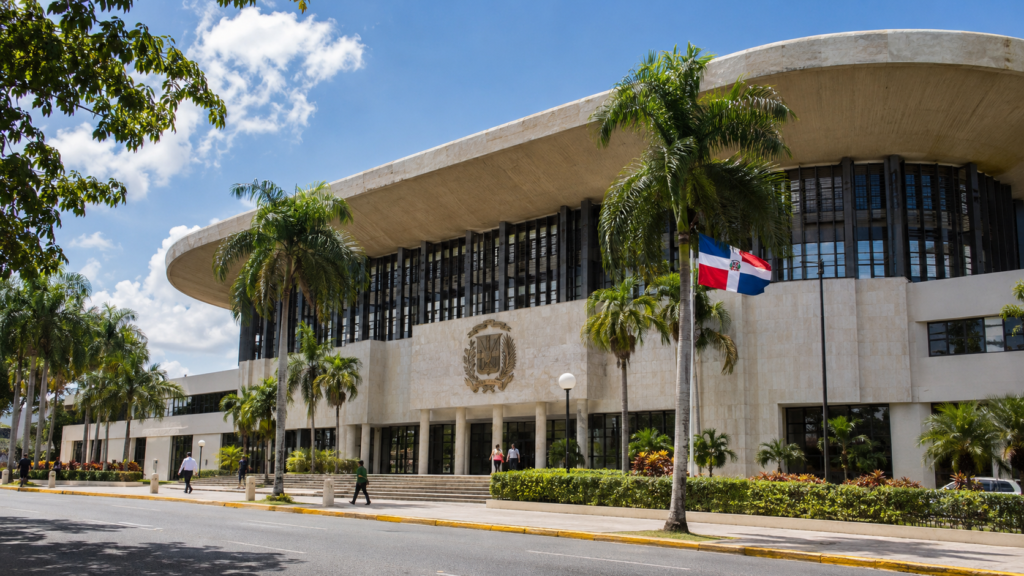
The Congress of the Dominican Republic is the country’s national legislative institution and one of the three branches of government. Made up of the Senate and the Chamber of Deputies, it represents citizens and the country’s territorial divisions, debates and approves legislation, and oversees the actions of public institutions. Understanding how these two chambers work together provides a clearer picture of how the Dominican political system operates and how national decisions are made.
Understanding the National Congress
The National Congress of the Dominican Republic (Congreso Nacional) is the institution responsible for exercising legislative power on behalf of the Dominican people. It operates within the constitutional framework established by the Constitution of the Dominican Republic and forms part of the country’s system of separation of powers.
The Dominican government is organized around three independent branches:
- The Executive Branch: Headed by the President of the Republic, it directs government administration and implements public policy.
- The Legislative Branch: Exercised by the National Congress, it debates and adopts laws, represents the population and exercises institutional oversight.
- The Judicial Branch: Responsible for administering justice through the country’s courts and judicial institutions.
This division establishes a system in which government authority is distributed among different institutions rather than concentrated in a single body.
The Congress is bicameral, meaning that it consists of two separate legislative chambers:
- The Senate of the Republic (Senado de la República).
- The Chamber of Deputies (Cámara de Diputados).
Both chambers participate in the country’s legislative activity, although they have different representative structures and certain constitutionally assigned responsibilities.
The bicameral system is not simply an administrative arrangement. It establishes two institutional perspectives within the national legislature, requiring cooperation and agreement between them on matters that must receive approval from both chambers.
The current constitutional framework, promulgated on October 27, 2024, maintains this structure.
The Two Chambers That Make Up Congress
The Senate and the Chamber of Deputies are independent legislative bodies that together form the National Congress. Each has its own members, internal leadership, administrative structure and parliamentary procedures.
They operate separately during ordinary legislative activity but cooperate when constitutional responsibilities require joint action.
The Senate of the Republic
The Senate represents the country’s territorial divisions at the national legislative level.
It consists of 32 senators, with one senator elected from each of the Dominican Republic’s 31 provinces and one from the National District, which contains the capital city of Santo Domingo.
This arrangement gives every province and the National District an equal number of representatives in the upper chamber, regardless of population size.
Senators are elected through direct universal suffrage for four-year terms. Their role is to participate in national legislative decisions while representing the interests and perspectives of their respective territories.
The Senate also has its own institutional leadership, headed by a president elected by the senators themselves.
The Chamber of Deputies
The Chamber of Deputies represents the population through a system that combines territorial and other forms of electoral representation.
According to its institutional composition, it has 190 members, distributed as follows:
- 178 deputies elected through territorial constituencies in the National District and the provinces.
- Five deputies elected nationally through the accumulation of votes, under the electoral system established by law.
- Seven deputies representing Dominican communities living abroad.
Like senators, deputies are elected by direct universal suffrage for four-year terms.
The number of territorial representatives reflects population distribution, subject to constitutional and electoral rules designed to ensure that provinces receive a minimum level of representation.
The Chamber also elects its own president and governing board, which direct its internal parliamentary activities.
How Both Chambers Work Together
The defining characteristic of the Dominican Congress is that legislative power is exercised through two chambers rather than a single parliamentary assembly.
The Senate and Chamber of Deputies have separate institutional identities, but neither operates as an entirely independent legislature. Their decisions are connected by the constitutional requirement that legislative initiatives requiring approval from both chambers must pass through both institutions.
This arrangement creates a system of mutual review.
A legislative proposal considered by one chamber may be examined by the other, allowing representatives to evaluate its content from different political and territorial perspectives.
The purpose is to provide an additional level of deliberation before legislation becomes part of the country’s legal system.
Separate Sessions and Independent Organization
Under the Dominican Constitution, the Senate and Chamber of Deputies generally meet separately.
Each chamber manages its own parliamentary agenda, debates, voting sessions and internal administration.
Their presidents are responsible for directing plenary sessions, maintaining order and representing their respective institutions in official matters.
Both chambers also have their own internal regulations, which establish how parliamentary business is organized and how members participate in institutional proceedings.
Although their organizational structures are similar, their internal decisions are not automatically interchangeable. Each chamber must act according to its own constitutional responsibilities and parliamentary rules.
Coordination Between the Two Chambers
Cooperation becomes particularly important when both chambers must examine the same legislative matter.
The Congress can establish bicameral committees composed of senators and deputies to study issues that involve both institutions.
These committees provide a mechanism for coordination, discussion and the consideration of differences between the chambers.
They can also help evaluate matters requiring joint institutional attention, including aspects of government oversight.
This cooperation allows the National Congress to function as a unified legislative institution without eliminating the autonomy of its two constituent chambers.
Internal Organization of the National Congress
Although the Senate and Chamber of Deputies have separate structures, both follow a comparable organizational model. Their activities are coordinated through elected parliamentary leaders, plenary sessions, committees and administrative departments.
This structure allows the chambers to manage a large volume of legislative and institutional responsibilities.
The Governing Boards of Each Chamber
Each chamber has a governing board, known in Spanish as the Bufete Directivo, responsible for directing its parliamentary activities.
The governing board consists of:
- A president.
- A vice president.
- Two secretaries.
These officers are elected by the members of their respective chambers.
The president plays a central role in the institution. Responsibilities include presiding over plenary sessions, organizing parliamentary proceedings, maintaining order during debates and representing the chamber in official activities.
The vice president assumes relevant responsibilities when the president is absent, while the secretaries support the formal administration of parliamentary proceedings.
The governing boards are renewed annually on August 16, allowing the members of each chamber to elect their internal leadership for the next legislative year.
Political Party Groups
Political parties play an important role in the organization of Congress.
Senators and deputies generally participate in parliamentary activities through political party groups, commonly known as bloques parlamentarios.
These groups help coordinate political positions, organize legislative priorities and establish common approaches to parliamentary debates.
Their influence is particularly important when a legislative initiative requires negotiations among different political organizations to secure sufficient support.
However, membership in a political party group does not eliminate the constitutional responsibilities of individual legislators. Each senator and deputy retains the right and responsibility to participate in debates and exercise their vote.
The distribution of seats among political parties also influences the balance of power within Congress. A party with a legislative majority may have greater capacity to advance its proposals, while opposition groups can challenge government initiatives, introduce alternatives and demand explanations from public authorities.
Plenary Sessions
The plenary, or Pleno, is the main decision-making body within each chamber.

It brings together the senators or deputies who participate in the institution’s formal parliamentary sessions.
During plenary meetings, legislators can:
- Debate legislative proposals.
- Present motions and amendments.
- Discuss matters of national interest.
- Examine reports submitted by parliamentary committees.
- Participate in institutional oversight.
- Vote on legislative and other parliamentary matters.
The plenary is where the collective decisions of each chamber are formally expressed.
Its work is governed by constitutional provisions and the internal regulations of the relevant institution.
The Role of Parliamentary Committees
Not every legislative issue can be examined in detail by the entire chamber. For this reason, both the Senate and the Chamber of Deputies rely on parliamentary committees.
These committees are smaller groups of legislators assigned to study specific subjects and prepare information that helps the plenary make informed decisions.
They are an important part of the legislative system because they allow more detailed examination of complex matters before they reach a final decision.
Permanent Committees
Permanent committees focus on particular areas of public policy and government activity.
Their responsibilities generally correspond to major sectors of national administration and public affairs, such as:
- Finance and public spending.
- Education.
- Health.
- Foreign relations.
- Justice and constitutional affairs.
- Public works and infrastructure.
- Agriculture and the environment.
The specific organization and number of committees may differ between the two chambers.
Their work includes reviewing legislative proposals, examining relevant documentation, consulting experts and preparing reports for consideration by the plenary.
Special Committees
Special committees are established to examine particular issues that require focused attention.
Unlike permanent committees, which maintain ongoing responsibilities within defined policy areas, special committees are generally created to address specific matters or assignments.
Their composition and mandate depend on the subject being examined and the applicable parliamentary regulations.
Bicameral Committees
Bicameral committees bring together members of both legislative chambers.
They are especially relevant when the Senate and Chamber of Deputies need to coordinate their positions or examine matters involving both institutions.
These committees can help reconcile differences concerning legislative initiatives and provide a framework for joint examination of public affairs.
Their existence reflects an important characteristic of the Dominican system: although the chambers operate independently, certain responsibilities require institutional cooperation.
How the Congress Exercises Political Representation
One of the fundamental purposes of the National Congress is to represent the Dominican population within the national decision-making system.
Its bicameral structure provides two complementary forms of representation.
The Senate gives each province and the National District an equal voice through its elected representative. This territorial arrangement ensures that smaller provinces have the same number of senators as more populated areas.
The Chamber of Deputies, by contrast, places greater emphasis on population-based representation through territorial constituencies, while also incorporating national and overseas representation.
Together, these systems seek to balance territorial interests with the demographic composition of the country.
Representation of Dominicans Living Abroad
The Dominican diaspora is also represented within the National Congress.
The seven overseas deputies provide a formal channel through which Dominicans residing outside the country can participate in national legislative representation.
This is particularly relevant because a significant part of Dominican society lives abroad while maintaining economic, family and social connections with the country.
Their representation allows issues affecting overseas Dominican communities to enter parliamentary discussions through elected representatives.
Representation Beyond Elections
Political representation does not end when citizens cast their ballots.
Legislators are expected to maintain connections with the people and territories they represent, listen to public concerns and bring relevant issues into parliamentary discussions.
Congressional activity can therefore involve consultations, public hearings, meetings with community organizations and other forms of interaction with citizens.
These mechanisms help connect institutional decision-making with the needs and expectations of society.
The Congress as an Institution of Government Oversight
The National Congress does more than debate and approve legislation. It also has a constitutional responsibility to monitor government activity and ensure that public institutions operate within the limits established by law.
This function is commonly described as fiscalización or legislative oversight.
It forms part of the system of checks and balances that governs relations between the branches of government.
Oversight of the Executive Branch
The Congress can examine the actions of the Executive Branch and request explanations concerning government decisions, administrative activities and the implementation of public policies.
Legislative oversight helps ensure that government authorities remain accountable for their actions.
It also provides a formal institutional channel for questioning public officials and examining matters of national importance.
Examination of Public Spending
Public finances are another important area of congressional oversight.
The legislative system includes mechanisms for examining how public resources are collected, managed and spent.
The work of the Chamber of Accounts (Cámara de Cuentas), the Dominican Republic’s external public auditing institution, is relevant to this process because its reports provide information that supports congressional scrutiny of public administration.
Through these mechanisms, legislators can examine whether public funds have been managed in accordance with applicable laws and institutional responsibilities.
Interpellations and Institutional Accountability
Congressional oversight may also involve formal questioning of public officials.
Interpellations allow legislators to request explanations about matters within the responsibilities of government authorities.
These proceedings help bring administrative decisions and public policies into the parliamentary arena, where they can be examined and discussed.
The purpose is not to replace the Executive Branch in managing government operations, but to ensure that its actions remain subject to constitutional and democratic accountability.
The Constitution also establishes specific procedures through which Congress can address serious misconduct by certain public officials.
These mechanisms demonstrate that legislative oversight is an institutional responsibility rather than simply a political activity carried out by opposition parties.
The National Congress and the Other Branches of Government
The relationship between Congress, the Executive Branch and the Judicial Branch is central to understanding the Dominican political system.
Although these institutions have different responsibilities, their activities are interconnected through constitutional mechanisms designed to prevent excessive concentration of power.
Relationship With the President and Executive Branch
The President of the Dominican Republic heads the Executive Branch and is responsible for directing government administration.
Congress and the President interact through several institutional mechanisms.
The Executive Branch can submit legislative initiatives, participate in the constitutional process of approving or observing legislation and present information concerning government activities.
Congress, in turn, examines government proposals, exercises legislative oversight and participates in decisions that the Constitution assigns to the legislature.
This relationship is not based on the subordination of one branch to the other. Both operate within their respective constitutional powers.
Relationship With the Judicial Branch
The Judicial Branch is institutionally separate from Congress.
Its primary responsibility is to administer justice through the country’s judicial system, while Congress exercises legislative and oversight functions.
Nevertheless, constitutional arrangements establish certain points of interaction between these institutions.
For example, the Constitution provides for congressional participation in the institutional mechanisms involved in appointing or selecting certain public officials and judicial authorities.
These arrangements are intended to support the constitutional organization of the state while preserving the separation of powers.
When Both Chambers Meet as the National Assembly
Although the Senate and Chamber of Deputies normally meet separately, the Constitution provides for circumstances in which their members come together as the National Assembly (Asamblea Nacional).
This joint institutional arrangement is different from an ordinary meeting of either chamber.
The National Assembly brings together all 32 senators and 190 deputies to exercise specific constitutional responsibilities.
Its functions include:
- Considering and deciding on constitutional amendments, acting as the National Revisory Assembly.
- Examining the official records of the presidential and vice-presidential elections.
- Formally proclaiming the President and Vice President of the Republic.
- Receiving their constitutional oaths of office.
- Accepting or rejecting their resignations.
The National Assembly therefore performs responsibilities that require the participation of both chambers acting together.
How the National Assembly Is Organized
The Constitution establishes specific arrangements for directing joint sessions.
The president of the Senate presides over the National Assembly, while the president of the Chamber of Deputies serves as vice president.
The secretaries of both chambers also participate in its institutional leadership.
The assembly has its own rules governing organization, proceedings and decision-making.
Under the constitutional provisions on its composition and quorum, more than half of the members of each chamber must be present for the National Assembly to meet.
Its decisions generally require an absolute majority of votes, except where different requirements apply to constitutional revision.
These arrangements ensure that joint decisions are made through a formally established constitutional process rather than through an informal agreement between the two chambers.
Legislative Sessions and the Congressional Calendar
The work of the National Congress follows a constitutional calendar that determines when ordinary legislative sessions take place.
The Dominican Constitution establishes two ordinary legislative periods each year:
- August 16 to January 12.
- February 27 to July 26.
These periods establish the regular framework for congressional activity.
During ordinary sessions, the Senate and Chamber of Deputies meet to consider legislative proposals, conduct parliamentary debates, examine reports and carry out their other constitutional responsibilities.
The Constitution also allows extraordinary sessions to be convened under specified circumstances.
These sessions provide a mechanism for addressing legislative or institutional matters outside the regular calendar.
The congressional calendar is important because it establishes the periods during which the legislature is formally expected to conduct its ordinary work.
However, the existence of a legislative calendar does not mean that all congressional activity is limited to plenary meetings. Committees and administrative departments also carry out work that supports the institution’s responsibilities.
Transparency and Public Access to Congressional Activity
The National Congress is a public institution whose activities are subject to constitutional principles of transparency and accountability.
Citizens can follow legislative activity through the official websites of the Senate and Chamber of Deputies.
These platforms provide access to institutional information, including:
- Legislative proposals and documents.
- Parliamentary agendas and session information.
- Committee activities and reports.
- Approved legislation.
- Institutional regulations.
- Public information and accountability documents.
The publication of this material allows citizens, journalists, researchers and other interested parties to understand how their representatives exercise legislative authority.
It also provides a way to monitor the progress of legislative initiatives and examine the positions adopted by different political groups.
The availability of public information is particularly important in a bicameral system, where a legislative proposal may be considered separately by two institutions before reaching its final status.
Official information can be consulted through the Senate of the Dominican Republic and the Chamber of Deputies.
Why the Bicameral System Matters
Having two legislative chambers creates a system of representation and institutional review that influences how national decisions are made.
The Senate and Chamber of Deputies represent different dimensions of Dominican society. One emphasizes territorial equality, while the other reflects population distribution and includes representation for Dominicans living abroad.
Their separate institutional structures also mean that legislative decisions can receive consideration from two groups of elected representatives.
This arrangement offers several institutional advantages:
Broader political representation. Different territories, population groups and political interests have channels through which to participate in national legislative decisions.
Additional legislative scrutiny. The participation of two chambers creates opportunities to examine proposals from different perspectives.
Institutional cooperation. Bicameral committees and joint sessions provide mechanisms for coordinating decisions and resolving differences.
Government accountability. Congressional oversight provides a constitutional mechanism for examining government actions and public administration.
However, bicameralism also requires coordination. Differences between the chambers can complicate legislative discussions and delay decisions. The effectiveness of Congress therefore depends not only on its constitutional structure but also on the willingness of legislators to negotiate, cooperate and reach agreements.
Conclusion
The Congress of the Dominican Republic is more than the institution responsible for approving national laws. It is a central component of the country’s democratic system, combining political representation, legislative activity and institutional oversight.
Its two chambers perform complementary roles within a shared constitutional framework. The Senate represents the country’s territorial divisions, while the Chamber of Deputies provides representation based primarily on population, alongside national and overseas constituencies.
Although they operate independently in their ordinary activities, both institutions contribute to the same national legislature and cooperate whenever constitutional responsibilities require joint action.
Understanding this relationship is essential to understanding how political power is organized in the Dominican Republic and how elected representatives participate in the country’s government.
Frequently Asked Questions About the Congress of the Dominican Republic
How many members does the Dominican Congress have?
The National Congress has 222 members: 32 senators and 190 deputies. Both chambers are composed of representatives elected for four-year terms.
What are the two chambers of the Dominican Congress?
The two chambers are the Senate of the Republic (Senado de la República) and the Chamber of Deputies (Cámara de Diputados).
What is the difference between the Senate and the Chamber of Deputies?
The Senate represents the country’s 31 provinces and the National District, with one senator for each territorial division. The Chamber of Deputies represents the population through territorial constituencies and includes national and overseas representatives.
Who leads the Dominican Congress?
The Senate and Chamber of Deputies have separate presidents. Each president directs the activities of their respective chamber. When both chambers meet as the National Assembly, the president of the Senate presides over the joint institution.
How often are senators and deputies elected?
Both senators and deputies are elected every four years through direct universal suffrage.
Do both chambers have to approve legislation?
Legislative initiatives subject to bicameral approval must receive the required approval from both chambers. This ensures that the Senate and Chamber of Deputies participate in the legislative decision-making process.
What is the National Assembly of the Dominican Republic?
The National Assembly is the joint meeting of the Senate and Chamber of Deputies. It exercises specific constitutional responsibilities, including considering constitutional amendments and formally proclaiming the President and Vice President of the Republic.
Where is the Dominican Congress located?
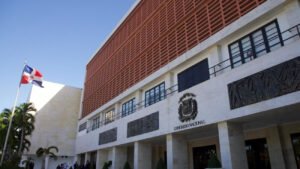
The National Congress is headquartered at the Palacio del Congreso Nacional, located in the Centro de los Héroes de Constanza, Maimón y Estero Hondo, in Santo Domingo, the capital of the Dominican Republic.
What is the main purpose of the National Congress?
Its principal constitutional functions are to represent the Dominican people, exercise legislative power and oversee government activity. These responsibilities are shared between the Senate and Chamber of Deputies, alongside specific powers assigned exclusively to each chamber.
Official Sources and Further Reading
- Senate of the Dominican Republic – Institutional structure, constitutional responsibilities and parliamentary activities.
- Chamber of Deputies of the Dominican Republic – Composition, organization, committees and legislative information.
- Constitution of the Dominican Republic – Constitutional framework governing the National Congress and the separation of powers.