 22°C
22°C

Abinader Set to Take Over as PRM President
Dominican President Luis Abinader is set to become president of the Modern Revolutionary Party (PRM), the country’s governing political organization, during a delegates’ assembly Sunday that will also introduce a new leadership structure designed to separate party operations from the president’s government duties.


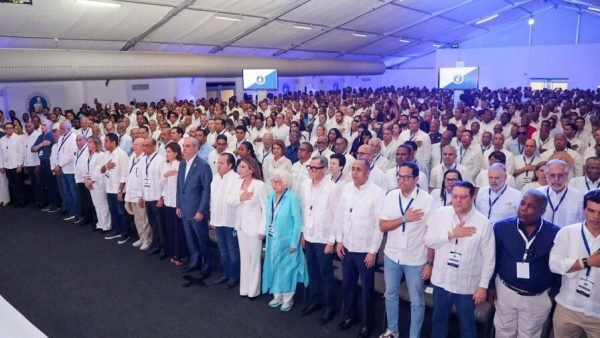
Luis Abinader is expected to become the new president of the Modern Revolutionary Party (PRM) on Sunday, replacing José Ignacio Paliza as the governing party prepares to renew its principal leadership positions at a delegates’ assembly in Santo Domingo.
The meeting is scheduled for 9 a.m. at the Sheraton Hotel, where members of the PRM’s National Committee will act as delegates. The proposed leadership slate is expected to be approved by acclamation, rather than through a contested internal vote.
Abinader’s expected election would place the Dominican president at the head of the party while he continues to serve as head of state. Paliza has led the PRM since 2018, when he succeeded Andrés Bautista as party president.
A New Operational Role for Deligne Ascención
The proposed leadership arrangement gives Deligne Ascención a central role in the party’s day-to-day operations. He is expected to become the first executive vice president, a position that would assume responsibilities previously assigned to the executive coordinator of the party presidency.
The change follows a partial reform of the PRM’s statutes that eliminates the executive coordinator position. Under the new structure, the first executive vice president would coordinate the party’s operational functions and become the first in line to succeed the party president.
The arrangement is intended to allow Abinader to maintain the party leadership while focusing primarily on his responsibilities as president of the Dominican Republic. The division of duties gives the party a designated senior official to handle its internal operations while Abinader remains responsible for the government.
Party Leadership Terms Reduced to Two Years
The statutory reform also changes the length of the mandate for the authorities being selected Sunday. Their terms will last two years, rather than the four-year period normally associated with the party’s leadership.
Beginning in 2028, after the next national elections, party leadership terms are scheduled to return to four years. The temporary two-year period therefore establishes a transition between the current internal cycle and the party structure that will follow the 2028 elections.
Juan Garrigó Mejía Emerges as Secretary General Candidate
The position of secretary general will also change. The post is currently held by Carolina Mejía, mayor of the National District, but she is expected to leave the role as part of the leadership reshuffle.
Several names had been discussed as possible successors, including Jean Luis Rodríguez and lawmaker Eugenio Cedeño. In recent days, however, Juan Garrigó Mejía has emerged as the leading possibility for the position. Garrigó Mejía is the son of former President Hipólito Mejía and serves as deputy administrative minister of the Presidency.
Gloria Reyes is also being considered for the party’s national organization secretary position, according to the proposed leadership arrangement.
PRM to Approve Leadership by Acclamation
The internal election process will differ from a conventional contested party election. The National Committee members serving as delegates are expected to approve the proposed president, vice presidents, secretary general and deputy secretaries general by acclamation.
The statutory changes also increase the maximum size of the PRM’s Executive Directorate from 60 to 65 members. In addition, the method for selecting vice presidents has been modified so that the positions will be distributed proportionally according to the valid votes obtained by the winning presidential slate.
The changes come as the PRM reorganizes its internal leadership while remaining the governing political force in the Dominican Republic. Abinader’s expected move from party leader candidate to president of the organization would give the party a structure in which the head of government also holds its top internal position, while operational responsibilities are assigned to senior party officials.