 22°C
22°C
Separation of Powers in the Dominican Republic
The Dominican Republic organizes state power among three main branches: the Executive, Legislative and Judicial branches. Each has distinct constitutional responsibilities, while their interaction creates a system of institutional checks designed to prevent excessive concentration of power.


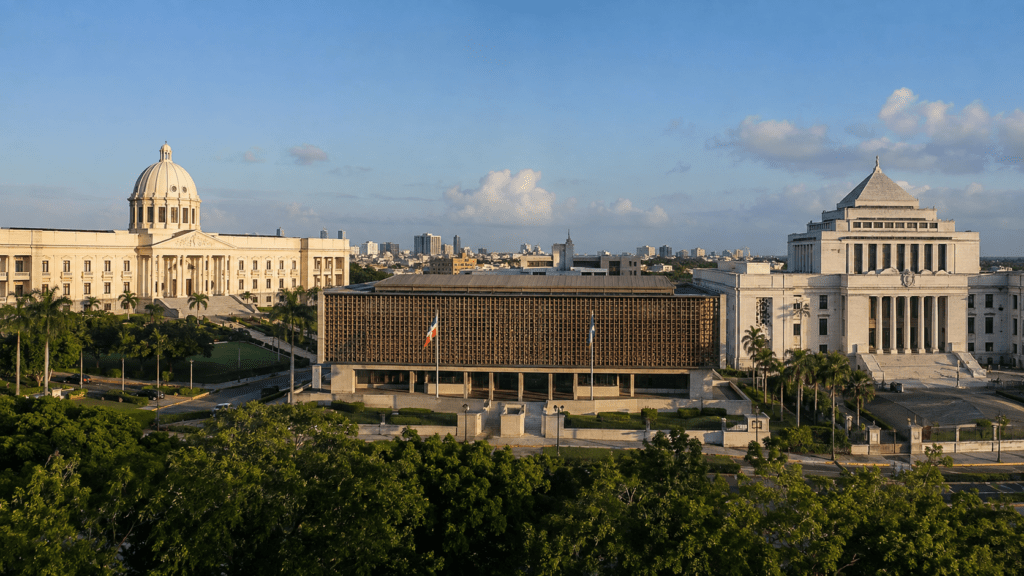
The separation of powers in the Dominican Republic is based on the division of government responsibilities among the Executive, Legislative and Judicial branches. This structure is intended to ensure that public authority is exercised within constitutional limits and that the different branches can perform their respective functions independently.
The Three Branches of Government
1. The Executive Branch
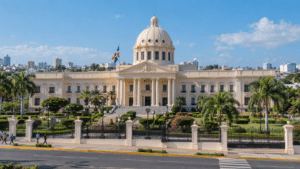
The Executive Branch is headed by the President of the Republic, who is responsible for directing the administration of the state and carrying out executive functions established by the Constitution. The president also has constitutional responsibilities involving the appointment of public officials, promulgation of laws and national administration.
2. The Legislative Branch
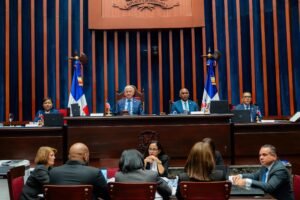
The Legislative Branch is represented by the National Congress, which consists of the Senate and the Chamber of Deputies. Its principal responsibility is to debate and approve legislation. Congress also exercises other constitutional functions, including approving certain international agreements and participating in the appointment of members of specific state institutions.
3. The Judicial Branch
The Judicial Branch administers justice through the country’s courts. Its role is to interpret and apply the law, resolve legal disputes and protect rights recognized by the Constitution and legislation. The Dominican government’s official description emphasizes that the Judicial Branch is independent from the other branches and has administrative and budgetary autonomy.
How the Powers Check One Another
Separation of powers does not mean that the three branches operate completely independently of one another. The constitutional system gives each branch specific responsibilities that can limit or influence the actions of the others. For example, Congress approves legislation, while the Executive promulgates laws and administers government. Courts, in turn, exercise judicial authority and provide a mechanism for applying constitutional and legal protections.
This system is intended to reduce the concentration of political power and strengthen the rule of law. Recent institutional reforms have also emphasized judicial independence and clearer boundaries between government functions.
Why Separation of Powers Matters
For citizens, separation of powers provides an institutional framework in which government authority is divided rather than concentrated in a single institution. It is particularly important for protecting constitutional rights, maintaining accountability and supporting the independence of the justice system.
Understanding the three branches also makes it easier to understand Dominican politics: the President leads the Executive Branch, Congress exercises legislative authority, and the courts administer justice. Together, they form the core structure through which state power is organized under the Dominican constitutional system.
Frequently Asked Questions
What are the three branches of government in the Dominican Republic?
They are the Executive Branch, Legislative Branch and Judicial Branch.
Who leads the Executive Branch?
The Executive Branch is headed by the President of the Dominican Republic.
What is the role of Congress?
The National Congress, composed of the Senate and Chamber of Deputies, is responsible primarily for creating and approving laws and exercising other constitutional powers.
Is the Dominican Judicial Branch independent?
The Dominican government’s official institutional description states that the Judicial Branch is independent from the other branches of government and has administrative and budgetary autonomy.