 22°C
22°C

Trujillo-Era Banreservas Deposit Remains With Dominican State
A 76-year legal dispute over a $2.3 million deposit made by Rafael Leónidas Trujillo at the Dominican Republic’s Banreservas has ended with the funds remaining subject to state ownership, after the Supreme Court ruled that they were covered by the post-dictatorship confiscation framework.


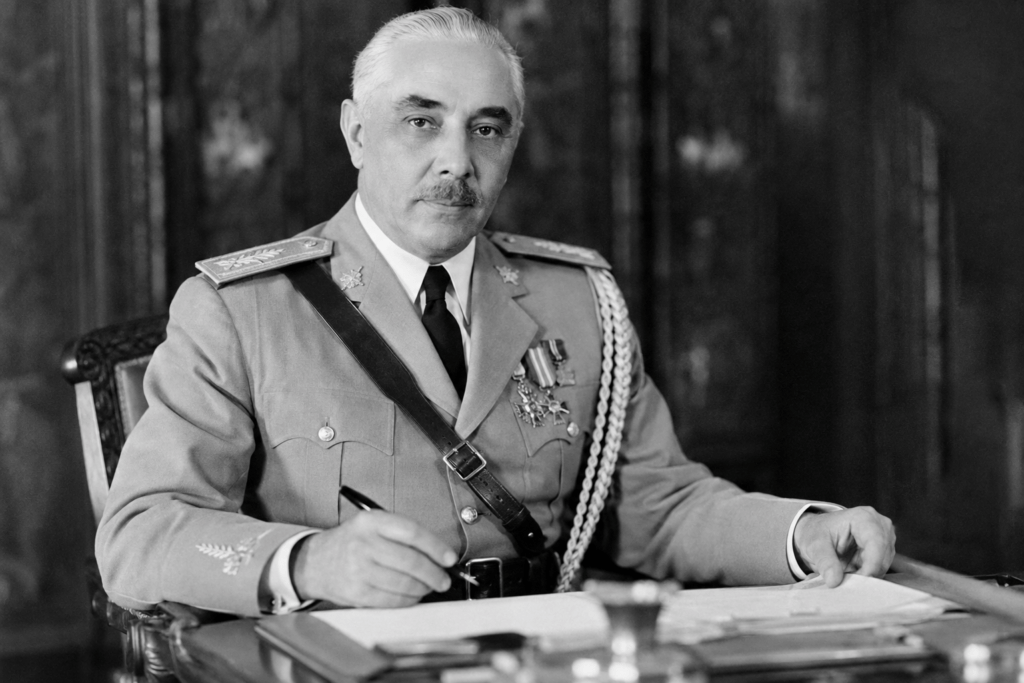
A bank deposit dating back to 1950 has brought a decades-long legal dispute involving the family of former Dominican dictator Rafael Leónidas Trujillo to a decisive point. The case centered on $2.3 million placed at Banco de Reservas, or Banreservas, for the benefit of Lina Altagracia Lovatón Pittaluga, with whom Trujillo had two children.
The First Chamber of the Supreme Court of Justice, in ruling SCJ-PS-25-0816 dated April 30, 2025, determined that the funds fell within the assets subject to confiscation under Dominican law following Trujillo’s death. The decision rejected the heirs’ effort to recover the money through the original banking arrangement.
A $2.3 Million Deposit From 1950
The dispute began with a transaction recorded by Banreservas in 1950. Documents presented during the litigation identified the operation as deposit certificate No. 2117 and referred to a letter instructing the bank to deliver the money to Lina Lovatón if Trujillo died.
Lovatón was Trujillo’s longtime partner and the mother of Rafael José Ramón Trujillo Lovatón and Yolanda Altagracia Trujillo Lovatón. After her death, her children sought to recover the funds as her heirs.
The claim became particularly significant because of the interest allegedly accumulated over decades. By 2013, the plaintiffs estimated that the original $2.3 million had grown to more than $103 million, a figure that at the time exceeded RD$4 billion.
The Supreme Court’s Ruling
The central issue was whether the private banking arrangement could be separated from the origin of the money and from the legislation adopted after Trujillo’s 1961 assassination.
The Supreme Court concluded that it could not. The ruling applied the confiscation framework established by Law 5785 of 1962, which declared certain assets associated with Trujillo and members of his family to be national property. The law specifically included the Trujillo Lovatón children among the individuals covered by its provisions.
The court also determined that the funds at issue were connected to wealth accumulated through the exercise of political power during the dictatorship and therefore could not be treated simply as an ordinary private banking asset.
That reasoning placed the dispute beyond a conventional inheritance claim. The question was not only whether Trujillo had created a valid arrangement in favor of Lovatón, but whether the money itself remained legally recoverable after the post-dictatorship confiscation measures.
The Heirs’ Argument
The Trujillo Lovatón heirs argued that the agreement between their father and Banreservas was legally valid and that the bank had accepted an obligation to transfer the funds to their mother upon Trujillo’s death.
Their position relied on the legal effect of the original stipulation in favor of Lovatón and on their status as her successors. The dispute therefore continued for decades through the Dominican court system.
The Supreme Court ultimately rejected that approach, finding that the contractual arrangement could not override the legal consequences attached to the origin and subsequent confiscation of the assets.
A Case That Spanned Generations
The litigation had already reached the Supreme Court after years of proceedings. A 2021 Supreme Court ruling in the same dispute rejected the heirs’ principal appeal and upheld the dismissal of their action against Banreservas at that stage of the case.
The matter later returned to the courts as the heirs continued pursuing the funds. The Tribunal Constitucional, the Dominican Republic’s constitutional court, recorded a constitutional review case filed by Rafael José Ramón Trujillo Lovatón and Yolanda Altagracia Trujillo Lovatón in December 2025, challenging the April 2025 Supreme Court ruling.
The public record confirms the filing of constitutional case TC-04-2025-1112 and identifies Banreservas and other parties as respondents. The available record establishes the existence of the constitutional proceeding but does not provide a subsequent ruling in the material reviewed for this report.
The case illustrates the lasting legal consequences of the Dominican Republic’s effort to recover wealth accumulated during the Trujillo dictatorship. What began as a private banking transaction in 1950 ultimately became a dispute over whether assets linked to the former regime could pass to descendants through inheritance.
More than seven decades after the original deposit, the Supreme Court’s ruling leaves the $2.3 million funds within the state’s ownership framework rather than recognizing the heirs’ claim to the money as a private inheritance.