 26°C
26°C

Scientists Study Azua Basin to Assess Dominican Republic’s Hydrocarbon Potential
A team of researchers from the University of Texas at Austin and the Dominican Republic's Ministry of Energy and Mines has begun geological fieldwork in Azua to evaluate the region's hydrocarbon potential and expand scientific knowledge of the country's sedimentary basins.


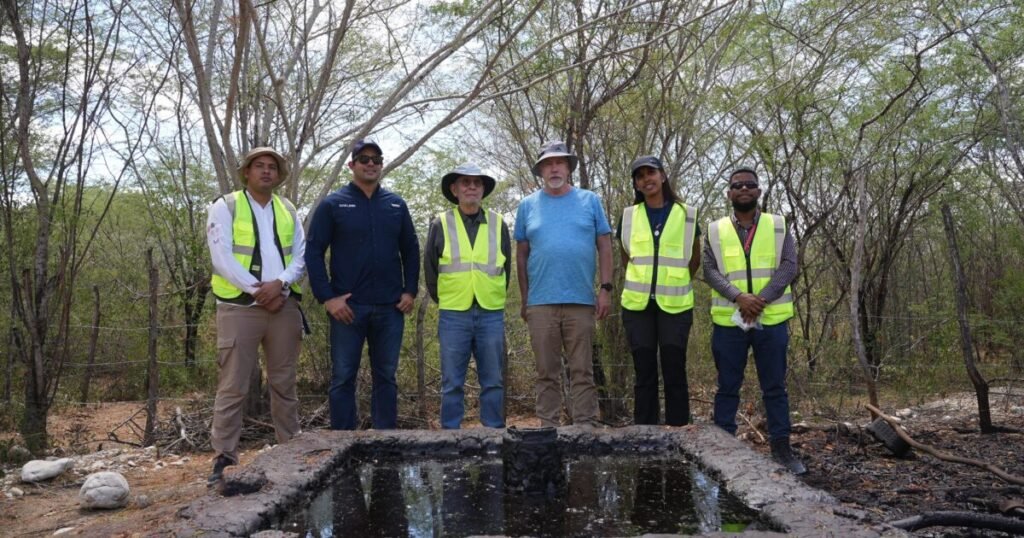
Natural oil seeps and the complex geological history of the Azua Basin have once again drawn attention to the southern Dominican Republic as scientists launch a new effort to better understand the area’s energy resources.
A research team from the University of Texas at Austin (UT), working alongside specialists from the Ministry of Energy and Mines (MEM), has started field investigations aimed at evaluating the hydrocarbon potential of the basin. The project forms part of a broader initiative to improve scientific knowledge of both the Dominican Republic’s onshore and offshore sedimentary basins, as well as those in the adjacent Caribbean.
Fieldwork Focuses on Key Geological Formations
The academic delegation is led by Mark Shuster, head of the Energy Research Division, and Emilio Núñez of the Department of Petroleum and Geosystems Engineering at the University of Texas at Austin. Their visit marks the first stage of a regional geological assessment designed to generate updated technical information for future energy planning.
During the expedition, researchers visited the quarry operated by Cementos Santo Domingo and examined 14 geological sites, including the Trinchera, Sombrerito, Jura, Ventura and Ocoa formations. These locations were selected because of their diverse rock formations and the valuable geological record they preserve.
The team collected rock samples to analyze characteristics such as porosity, grain size and other physical properties that help determine whether specific formations could generate or store hydrocarbons. These studies will also provide new insights into the geological evolution of the Azua Basin over millions of years.
Historic Oil Seeps Continue to Attract Interest
One of the most significant stops during the field campaign was the area surrounding the Maleno wells, originally drilled by the Dominican Petroleum Company in the late 1930s. Natural oil seepages remain visible there and have long attracted scientific attention as researchers seek to determine whether commercially viable hydrocarbon resources may exist beneath the basin.
The fieldwork was guided by technical specialists from the Ministry of Energy and Mines, led by geologist Gelsa Pérez, head of the ministry’s Hydrocarbon Promotion Department. Experts from the National Geological Institute (IGN) also participated, sharing information from previous exploration campaigns conducted by both Dominican and international companies.
Supporting Long-Term Energy Planning
The geological survey follows a meeting between the University of Texas delegation and Energy and Mines Minister Joel Santos, during which the researchers presented the objectives of the project titled “Regional Assessment of Energy Potential in Onshore and Offshore Sedimentary Basins of the Dominican Republic and the Adjacent Caribbean Sea.”
The study will be carried out by the Bureau of Economic Geology (BEG) at the University of Texas at Austin under a cooperation agreement with the Dominican government through the Ministry of Energy and Mines. The initiative aims to strengthen the country’s hydrocarbon database and provide reliable scientific information to support long-term energy policy, resource management and future investment decisions.
Recognized as one of the leading geological research institutions in the United States, the BEG brings decades of expertise in evaluating energy and mineral resources. Its participation adds scientific credibility to a project that seeks to answer a longstanding question in Dominican geology: how much untapped energy potential may still lie beneath the country’s subsurface.