 23°C
23°C

Corporate Credit Lines Give Dominican Businesses Flexible Access
Corporate credit and lines of credit give companies in the Dominican Republic access to funds without taking a new traditional loan every time cash is needed. Instead of receiving the entire amount upfront, a business receives an approved limit and can draw, repay and, where the facility is revolving, reuse available funds during its term. This structure is particularly useful for working capital, recurring expenses and temporary cash-flow gaps.


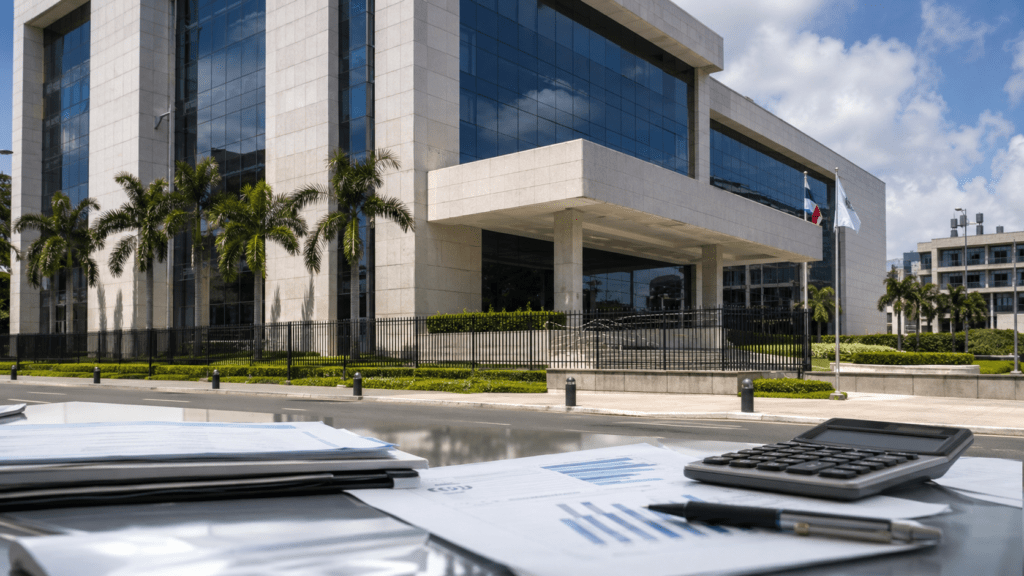
A corporate line of credit is essentially a pre-approved pool of borrowing capacity that a company can access when required. The business does not necessarily have to use the entire approved amount. Under a revolving structure, repayments restore available credit, allowing the company to draw funds again without submitting a new loan application each time.
How a Corporate Line of Credit Works
The bank first establishes a maximum credit limit after evaluating the company’s financial position, cash flow, credit history, existing obligations and, where applicable, guarantees. Once approved, the company can use part or all of the available amount according to the conditions of the facility.
For example, if a company has a revolving credit limit of RD$10 million and draws RD$3 million, approximately RD$7 million remains available, subject to the specific terms. If the company repays the RD$3 million, that amount can become available again under a revolving facility. This is the fundamental difference between reusable credit and a traditional loan disbursed once.
Banreservas describes its business line of credit as a source of revolving funds for recurring or unexpected corporate expenses. Its product allows multiple disbursements from a pre-approved amount without submitting a new application for each draw.
Credit Lines for Working Capital
Working capital is one of the most common uses for flexible corporate credit. A company may need additional liquidity because customers pay invoices later than expected, inventory purchases increase, or operating expenses temporarily rise.
A credit line can cover these short-term gaps without requiring the company to borrow the full amount permanently. This can be particularly useful for businesses with seasonal sales or recurring fluctuations in cash flow.
The key is to distinguish a temporary liquidity need from a permanent financing requirement. If a company remains continuously dependent on its credit line, it may indicate that a longer-term financing structure is more appropriate.
Credit Limits and Availability
The approved limit represents the maximum amount the bank is willing to make available under the facility. It does not necessarily represent an amount the company should use in full.
Banks determine limits individually. They can consider the company’s revenues, cash generation, financial statements, existing debt, banking relationship, credit history and the purpose of the facility. The quality and amount of collateral can also influence the structure.
Some business credit lines are established for a defined period and may be renewable following a new credit assessment. Banreservas, for example, states that its SME line of credit is renewable depending on its analysis and credit policy, and that the facility can be available in Dominican pesos or U.S. dollars.
How Interest Is Charged
One of the principal advantages of a revolving credit facility is that interest can be linked to the amount actually drawn rather than the entire approved limit, although the precise calculation depends on the contract.
Banreservas states that its corporate line of credit calculates interest daily. Its published terms also describe a structure in which the customer pays interest monthly while principal is payable at maturity.
This means that a company with a RD$10 million limit that normally uses only RD$2 million does not necessarily incur the same interest cost as a company continuously using the full limit. Businesses should nevertheless check the specific rate, commissions, renewal charges and other costs before comparing facilities.
Guarantees and Collateral
A corporate credit line may be secured or unsecured depending on the borrower’s profile and the bank’s credit policy. Where guarantees are required, they can include mortgages, pledges over movable assets or solidarity guarantees.
For its SME credit line, Banreservas lists solidarity, mortgage and pledge-based guarantees, depending on the case. It also requires corporate documentation, recent financial statements and commercial or banking references.
Guarantees are important because they affect both the bank’s risk assessment and the company’s exposure if it fails to meet its obligations. A business should therefore understand which assets or parties are securing the facility before signing the agreement.
Corporate Credit Versus a Traditional Business Loan
| Feature | Credit line | Traditional business loan |
|---|---|---|
| Access to funds | Draw as needed within an approved limit | Usually disbursed as a defined amount |
| Reuse of repaid principal | Yes, when the facility is revolving | Generally no |
| Interest basis | Often linked to the amount actually used | Based on the outstanding loan balance |
| Main use | Recurring working capital and liquidity gaps | Defined financing requirement or investment |
| Flexibility | High | Lower once the loan has been disbursed |
| Credit limit | Maximum amount available to draw | Defined loan principal |
A traditional business loan is generally more appropriate when a company knows the exact amount it needs for a specific investment. A credit line is more useful when the amount and timing of short-term funding needs vary.
What Banks Look At Before Approving Corporate Credit
The bank’s objective is to determine whether the company can responsibly use and repay the facility. Financial statements, cash flow and existing debt are therefore central to the assessment.
The bank may also examine the company’s legal structure, shareholders, management, operating history, banking activity and credit record. Banreservas, for example, requests corporate formation documents, shareholder information, management appointments and audited financial information for its corporate line of credit.
The requested limit should also make economic sense. A company seeking a substantially larger facility than its normal operating cash flow can support may face greater scrutiny or require additional collateral.
Using a Credit Line Responsibly
The flexibility of a revolving facility is valuable only when the company maintains control over its borrowing. Management should monitor the amount drawn, available limit, interest accruing and expected repayment date.
A useful practice is to establish an internal purpose for the facility, such as covering receivables timing or seasonal inventory purchases, rather than treating the entire limit as permanent operating cash.
Companies should also monitor the facility’s renewal conditions. A revolving line may be available for a defined period, but continued access can depend on the bank’s reassessment of the company’s financial and credit position.
When a Credit Line Makes More Sense Than a Loan
A corporate credit line is generally better suited to a company whose financing needs are recurrent but variable. Examples include businesses with seasonal inventory purchases, uneven customer collections or regular short-term cash-flow fluctuations.
A traditional business loan can be more appropriate when the company knows the exact amount required and is financing a defined long-term investment. The distinction is therefore not simply between two banking products: it is a question of matching the structure of the debt to the company’s cash-flow pattern.
For Dominican companies, the availability of both traditional commercial loans and revolving facilities allows businesses to structure borrowing around different operating needs. The most important considerations are the approved limit, amount actually used, interest calculation, repayment terms, guarantees, renewal conditions and the company’s ability to repay without relying permanently on additional borrowing.