 23°C
23°C

Rising Copper Prices Put Dominican Mining Assets in Focus
Copper prices around $6.60 a pound are drawing renewed attention to the Dominican Republic's copper resources, from the Pueblo Viejo operation in Sánchez Ramírez province to Cerro Maimón and the Candelones project near Restauración.


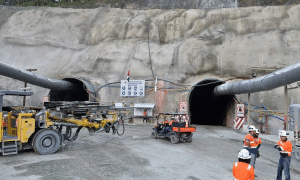
The sharp rise in copper prices is putting a new spotlight on the Dominican Republic’s mining sector, where copper occurs alongside gold, silver and zinc in several important mineral deposits. With copper trading around $6.60 a pound, the economics of recovering the metal have changed significantly from the levels that prevailed when some of the country’s major mining projects were originally developed.
The most important case is Pueblo Viejo, the large gold mine in Sánchez Ramírez province operated by Barrick Gold in partnership with Newmont. The operation is one of the Dominican Republic’s largest mining assets, and copper is already recovered as a byproduct of the processing of sulfide ore.
Pueblo Viejo’s Copper Potential
Pueblo Viejo was originally identified as a mineral system containing copper sulfides as well as significant quantities of gold and silver. The economic focus ultimately shifted toward the precious metals because their value made gold and silver the principal drivers of the project.
That calculation is now taking place against a very different copper market. Recent price gains have been linked to tight global supply, rising demand from electricity infrastructure and data centers, and expectations that electrification will require substantially more copper over the coming years.
The mine’s processing infrastructure already handles mineralized material containing copper, while copper sulfide concentrate is produced as a byproduct. This means the current copper-price environment could increase the economic importance of material that previously had a secondary role in the operation.
Pueblo Viejo’s tailings infrastructure is also relevant to the long-term resource picture. The existing El Llagal tailings storage facility is scheduled to continue receiving tailings until around 2030, after which the proposed Naranjo facility is expected to take over. Any future assessment of additional mineral recovery would have to consider the technical, economic and environmental characteristics of those materials rather than treating stored tailings simply as conventional ore.
Cerro Maimón Already Produces Copper and Zinc
The Dominican Republic also has an established copper-producing operation at Cerro Maimón in Monseñor Nouel province. Corporación Minera Dominicana, known as CORMIDOM, extracts mainly copper and zinc concentrates from the mine and has developed both surface and underground mining activities.
The operation demonstrates that copper is not merely a geological possibility for the country. Dominican mining already participates in the international copper market, with concentrates supplying industrial buyers outside the country.
Government geological information has also documented significant copper resources associated with mineralization at Cerro Maimón, together with gold, silver and zinc. The combination illustrates the polymetallic character of several Dominican deposits and the potential importance of processing decisions when commodity prices change.
Candelones Adds a New Exploration Dimension
Exploration in the northwestern Dominican Republic provides another reason for the renewed interest in copper. Canadian company Unigold is developing its Candelones project within the Neita concession in Dajabón province, about 20 kilometers south of Restauración.
Unigold’s concession covers rocks of the Tireo Formation, a geological environment considered prospective for several deposit types, including copper and copper-gold porphyry systems. The company has been expanding its understanding of mineralization at depth while advancing its plans for the Candelones project.
The distinction between an established mine and an exploration target is important. Cerro Maimón is an operating mining asset, while Pueblo Viejo is a large producing operation in which copper is already recovered as a byproduct. Candelones remains a project undergoing development and exploration, meaning any future copper production would depend on further technical work, permitting and economic evaluation.
A Changing Global Copper Market
Copper has become increasingly important to global investment in electricity networks, renewable-energy infrastructure, electric vehicles and data centers. At the same time, bringing large new mines into production can take many years, while declining ore grades and operational disruptions can constrain existing supply.
That combination has strengthened the strategic importance of deposits capable of producing copper, particularly where the metal occurs alongside other commercially valuable minerals. For the Dominican Republic, the effect is potentially significant because the country already has mining infrastructure, experienced operators and a geological setting that contains several polymetallic systems.
The immediate question is therefore not simply whether higher copper prices make Dominican deposits more valuable. It is whether companies can economically recover additional copper from existing operations and whether exploration projects can demonstrate resources large enough to justify new investment.
For Pueblo Viejo, the answer will depend on the economics and technical requirements of any expansion of copper recovery. For CORMIDOM, higher prices could alter the value of future copper and zinc production. For projects such as Candelones, the market provides a stronger incentive to investigate the full range of metals contained in the underlying geological systems.
As copper prices remain elevated, the Dominican mining industry is consequently facing a market in which copper may play a larger role alongside the gold and silver that have historically dominated the country’s international mining profile.