 30°C
30°C

Dominican Republic Economy Expands 4.2% as Public Investment Drives Growth
The Dominican Republic's economy grew 4.2% during the first five months of 2026, outperforming the previous year despite global uncertainty, according to Minister of Finance and Economy Magín Díaz, who highlighted increased public investment, job creation, and macroeconomic stability.


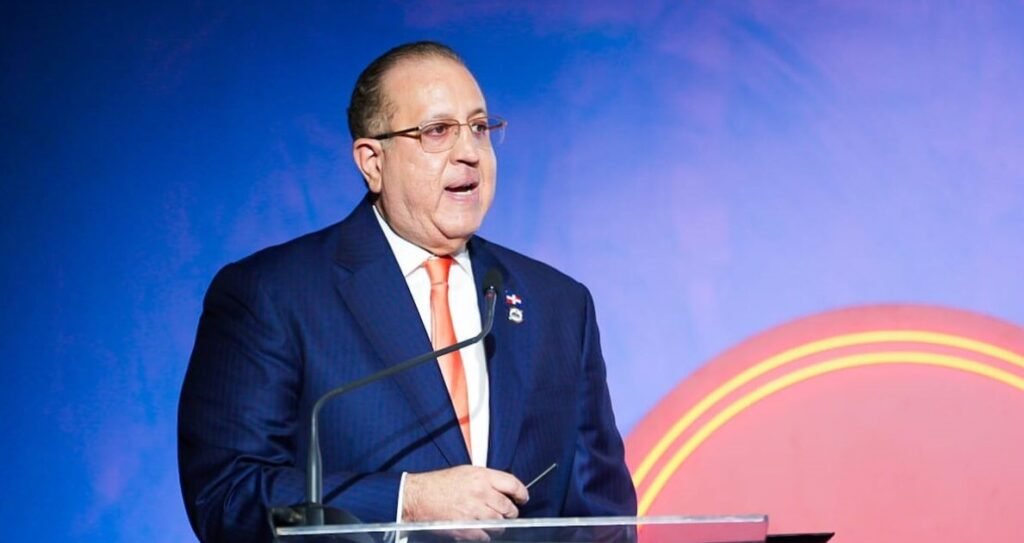
The Dominican Republic recorded 4.2% economic growth during the first five months of 2026, doubling the pace registered during the same period in 2025, according to Magín Díaz, the country’s Minister of Finance and Economy. Speaking at a luncheon organized by the American Chamber of Commerce of the Dominican Republic (AMCHAMDR), Díaz said the economy has remained resilient despite global uncertainty and rising oil prices.
The minister attributed the stronger performance largely to higher public investment and a fiscal policy focused on preserving macroeconomic stability while sustaining economic activity in a challenging international environment.
Public Investment Fuels Economic Expansion
Díaz reported that government capital spending increased 29.7% during the first half of 2026 compared with the same period a year earlier, while current spending rose 6.9%. According to the minister, the figures demonstrate that a greater share of public resources has been directed toward investment projects rather than expanding government bureaucracy.
He also pointed to favorable international forecasts. The International Monetary Fund (IMF) recently raised its growth projection for the Dominican economy to 4%, while JP Morgan estimates growth of 4.3%, both above the expected average for Latin America and the Caribbean.
Inflation, Employment, and External Accounts Remain Stable
The government also highlighted several macroeconomic indicators that it says reflect the country’s economic strength. Headline inflation stood at 5.67%, while core inflation reached 4.96%, remaining within the target range established by the Central Bank of the Dominican Republic.
International reserves climbed to US$15.8 billion, and the Dominican peso appreciated during the recent period. The unemployment rate remained at 5%, with the creation of 118,631 net new jobs during the first quarter of 2026. Meanwhile, monetary poverty declined to 15.4%, representing a reduction of 2.6 percentage points compared with 2025.
Financial Sector Shows Continued Strength
Díaz said the banking system continues to post healthy results. Bank lending expanded by 9%, the non-performing loan ratio remained low at 1.89%, and the banking system’s capital adequacy ratio reached 18.56%, nearly double the regulatory minimum.
External sector indicators also remained positive. Monthly remittances averaged more than US$1 billion, exports increased by 14.4%, tourist arrivals rose 10.8%, and foreign direct investment advanced 6.4% during the first quarter. The minister also noted that the country’s sovereign risk, measured by the Emerging Markets Bond Index (EMBI), remains at historically low levels.
Government Responds to Higher Oil Prices
Díaz acknowledged that recent international conflict has pushed global oil prices higher, prompting the government to prioritize macroeconomic stability, protect consumers from sharp fuel price increases, and maintain public investment.
According to the minister, gasoline prices increased by approximately 17% between January and July 2026. He said this was below the Latin American average increase of 28.8% and lower than the rises recorded in countries including Venezuela, Cuba, and Panama.
Structural Reforms Aim to Strengthen Competitiveness
The minister outlined several reforms under development to reinforce fiscal sustainability and improve competitiveness. These include revising the country’s fiscal rule to make it more adaptable to changing economic conditions, creating an automatic and transparent mechanism to smooth fuel price fluctuations, and improving the targeting of social assistance through updated poverty maps prepared by the Technical Poverty Committee.
Díaz said the government’s economic strategy continues to focus on fiscal responsibility, stronger institutions, the technical independence of the Central Bank, support for private enterprise, and greater market competition.
During the event, Francesca Rainieri, president of AMCHAMDR, said the Dominican economy remains strong but stressed that sustaining long-term prosperity will require higher productivity, stronger institutions, and a long-term development strategy. William Malamud, the chamber’s executive vice president, added that ongoing geopolitical tensions make it increasingly important to assess risks to energy markets and their potential impact on the Dominican economy.