 23°C
23°C

Why Companies Choose Free Trade Zones in the Dominican Republic
Free trade zones in the Dominican Republic give companies a combination of fiscal incentives, customs advantages, export infrastructure, logistics connectivity, and access to international markets. The regime, established principally under Law 8-90, is designed to make export-oriented manufacturing and services more competitive by reducing certain operating costs and simplifying the movement of inputs and finished goods. For a company evaluating where to manufacture, assemble, process, or provide export services, the main attraction is not a single tax benefit but the combination of incentives and an established industrial ecosystem.


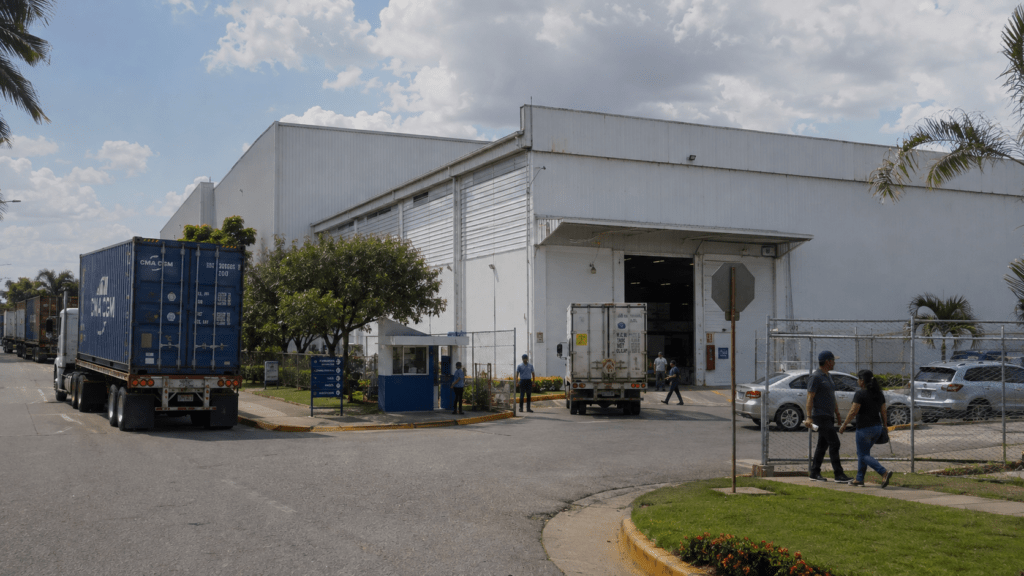
For an international company considering a production or export base in the Caribbean, the Dominican Republic’s free trade zones offer a business model built around several advantages working together. Companies can operate within a special customs and fiscal regime while benefiting from industrial parks, transportation infrastructure, a developed supplier and labor ecosystem, and the country’s trade relationships with major international markets.
The regime is governed principally by Law 8-90 on the Promotion of Free Zones, which provides the legal framework for companies operating under the free zone system. The National Council of Free Zones for Exportation (CNZFE), the government body responsible for the sector, authorizes companies and parks to operate under the applicable regime.
Why Would a Company Choose a Free Trade Zone?
The strongest reason is the ability to combine lower trade-related costs with an established operating environment for export activities. A manufacturer importing raw materials, components, machinery, packaging, or equipment can potentially benefit from exemptions that would otherwise increase the cost of establishing and operating a production facility.
That advantage becomes more significant when a company’s business model depends on importing inputs, transforming them in the Dominican Republic, and exporting finished or processed products. Instead of evaluating taxes, customs procedures, industrial infrastructure, transportation, labor, and market access separately, a free zone can bring many of these elements together within one specialized framework.
The Dominican Republic’s free zone sector is also substantial enough to support a broad industrial ecosystem. CNZFE reported 858 operating companies and exports of approximately US$8.6 billion for 2025, illustrating the scale of the sector rather than a small or experimental industrial program.
Tax and Fiscal Incentives
One of the most important benefits is the fiscal treatment established under Law 8-90. Article 24 provides qualifying free zone operators and companies with exemptions on a range of taxes and charges, subject to the conditions of the regime.
Among the exemptions established by the law are income tax, certain construction-related taxes, company formation and capital-increase taxes, applicable municipal taxes, import duties and related charges on qualifying inputs and equipment, certain export and re-export taxes, taxes on patents and assets, ITBIS, and consular fees associated with qualifying imports.
For an export manufacturer, the practical importance is straightforward: taxes and duties that could otherwise be incorporated into the cost of establishing a facility or bringing production inputs into the country may be reduced or eliminated under the free zone regime.
However, companies should not interpret the incentives as a blanket exemption from every Dominican tax or commercial obligation. The applicable treatment depends on the company’s activity, authorization, goods involved, destination of products, and the specific provisions of the law and related regulations.
Customs Advantages for Production and Export
Free zones operate under a special customs regime designed for export-oriented activities. This is particularly relevant to companies whose production depends on imported raw materials, machinery, components, packaging, or other inputs.
Law 8-90 provides exemptions from import taxes, tariffs, customs duties, and related charges for qualifying materials and equipment destined to establish, equip, or operate free zone businesses. This can reduce the customs cost associated with bringing production inputs into the country.
The advantage is especially relevant for industries with international supply chains. A medical-device manufacturer, electronics producer, apparel company, or other export manufacturer may need to source components from several countries before completing production in the Dominican Republic. The free zone regime is structured to accommodate that type of operation.
Companies must nevertheless maintain the required customs controls and documentation. The existence of an exemption does not eliminate the need to comply with customs procedures or the conditions attached to the free zone authorization.
Access to International Markets
Location is another major reason companies consider the Dominican Republic. The country sits in the Caribbean between North America, Europe, and Latin America, providing a geographic position suited to companies serving several regional markets.
According to ProDominicana, the Dominican Republic has preferential access to more than 1.2 billion consumers through trade agreements and arrangements that include DR-CAFTA with the United States and Central America and the Economic Partnership Agreement with the European Union, alongside other agreements.
This does not mean that every product manufactured in a free zone automatically receives preferential treatment in every destination. Trade preferences depend on the applicable agreement, product classification, rules of origin, and other requirements. For companies planning an export operation, those conditions should be evaluated before selecting the location and production model.
For qualifying products, however, the combination of Dominican production and preferential trade access can be strategically important. A company may be able to manufacture closer to its principal customers while using the country’s trade framework to compete in external markets.
Strategic Location and Logistics
The Dominican Republic’s geography gives free zone companies access to both maritime and air transportation networks. The country has modern port and airport infrastructure, an extensive road network, and connectivity between major industrial areas and commercial destinations.
For manufacturers, logistics can have as much impact on competitiveness as taxes. A facility that can receive components efficiently, move them into production, and ship finished products to customers with predictable transportation times can reduce inventory requirements and improve supply-chain planning.
The country’s position is particularly relevant for companies serving North American markets. Geographic proximity can support shorter supply chains than production models based on distant manufacturing locations, although the actual advantage depends on the origin and destination of goods, transportation mode, product characteristics, and customer requirements.
ProDominicana identifies the country’s ports, airports, road network, and telecommunications infrastructure as important components of its investment proposition. CNZFE also describes the growth of free zones as part of the development of the Dominican Republic as a regional logistics hub.
Industrial Parks and Ready-Made Infrastructure
A company does not necessarily have to develop an industrial site from the ground up. Many free zone companies operate inside established industrial parks, where the operator provides an environment specifically designed for manufacturing or services.
This can reduce the complexity and time associated with establishing a new operation. Instead of independently developing every element of an industrial location, a company can evaluate available facilities within an existing park and select a location that fits its production, workforce, logistics, and expansion requirements.
The Dominican Republic had 94 free zone parks in operation at the end of 2024, according to CNZFE’s statistical report. The parks were distributed across the country’s main regions, giving companies alternatives when evaluating labor availability, transportation connections, proximity to ports and airports, and other operational considerations.
Infrastructure varies between parks, so companies should assess each location individually. Important considerations include available industrial space, electricity reliability, water, wastewater management, telecommunications, security, transportation access, warehouse capacity, and the possibility of future expansion.
A Developed Manufacturing Ecosystem
Another advantage is the presence of companies operating across multiple industries. The free zone sector includes medical devices and pharmaceuticals, textiles and apparel, electrical and electronic products, tobacco and cigars, footwear, jewelry, logistics, data processing, software, and call-center services.
This diversity can create an environment in which companies have access to workers with relevant industrial experience and to suppliers and service providers familiar with export-oriented operations.
For a new investor, that existing ecosystem can be valuable because the company is not entering an industrial market with no comparable activity. Instead, it is joining a sector with established production practices, regulatory experience, logistics providers, and a workforce accustomed to serving international businesses.
Access to a Competitive Labor Pool
Labor availability is another consideration when selecting a production location. The scale of the free zone sector means that a significant workforce is already engaged in export-oriented manufacturing and services.
CNZFE reported more than 200,000 direct jobs in the sector during 2025. The range of industries represented also means that labor requirements vary considerably, from manufacturing and quality control to logistics, technical services, administration, customer support, and specialized production.
For companies considering a new facility, the relevant question is not simply whether workers are available nationally. It is whether the selected location offers the specific skills, labor availability, wage structure, training capacity, and commuting conditions required for the company’s operation.
Support for Different Types of Export Businesses
Free zones are not limited to traditional apparel factories. The Dominican Republic has developed a broader range of activities within the regime, including manufacturing, services, logistics-related operations, and technology-oriented businesses.
This flexibility allows the regime to serve different business models. A company producing physical goods may require industrial space and supply-chain infrastructure, while a service company may place greater importance on telecommunications, office facilities, skilled personnel, and international connectivity.
CNZFE maintains separate authorization processes for companies operating in parks, free zone service companies, special free zones, and other categories established under Dominican law. The appropriate category therefore depends on the nature of the proposed activity.
Operational and Administrative Facilitation
The free zone system also provides an institutional framework specifically designed for companies operating under the regime. CNZFE is responsible for authorizing free zone companies and parks and provides procedures related to installation, changes of status, relocation, exports, local-market sales, certifications, and other operational matters.
For a company entering the Dominican market, having a specialized government institution responsible for the sector can simplify the process of identifying the applicable regime and completing the required authorization steps.
Companies seeking to establish operations in a park generally need to submit an application to CNZFE together with the required documentation, including information about the proposed activity and the agreement or intention to lease space in the selected park. The exact requirements depend on the type of free zone operation.
Foreign Investment and Currency Flexibility
The free zone regime is also designed to accommodate foreign investors. CNZFE states that companies operating under the free zone regime are not subject to restrictions on foreign currency exchange, apart from applicable reporting and operational requirements.
CNZFE also states that it is not necessary to establish a Dominican company solely to operate a company within a free zone. Nevertheless, the appropriate legal structure, registration, licensing, tax treatment, labor obligations, and corporate requirements should be assessed according to the proposed investment.
For an international company, this can make the Dominican Republic more flexible as a regional manufacturing or service location. The decision can be based on the operational needs of the business rather than requiring a one-size-fits-all corporate structure.
Potential Advantages for Supply-Chain Planning
The benefits of a free zone become particularly relevant when viewed from a supply-chain perspective. An export company may need to coordinate raw-material sourcing, production, quality control, warehousing, transportation, customs procedures, and final delivery.
A free zone can help align these activities within a specialized export environment. Imported inputs can enter under the applicable customs regime, production can take place within the authorized facility, and finished goods can then be prepared for export to the company’s target markets.
This model can be particularly attractive for companies seeking to diversify manufacturing away from a single country or region. The Dominican Republic can function as one production node within a wider international supply chain rather than necessarily serving as the company’s entire manufacturing base.
Free Zones Are Not the Right Choice for Every Company
The incentives are significant, but a free zone is not automatically the best structure for every business. The regime is particularly relevant to companies whose activities and commercial model fit its requirements.
A company primarily focused on selling goods or services in the Dominican domestic market may need to examine the rules governing local-market sales and compare the free zone regime with other investment structures. Products entering the local market can be subject to applicable duties and taxes and may require authorization under the relevant rules.
Similarly, a company should not choose a park simply because it offers tax incentives. Labor availability, electricity, transportation, facility costs, proximity to suppliers and ports, environmental requirements, expansion capacity, and compliance obligations can materially affect the economics of an operation.
What Companies Should Evaluate Before Choosing a Free Zone
The most effective way to evaluate the regime is to calculate the complete operating model rather than focusing on tax savings alone. A company considering the Dominican Republic should assess at least the following factors:
- Eligibility: Confirm that the proposed activity qualifies for the applicable free zone regime.
- Tax treatment: Identify which exemptions apply to the company, its inputs, equipment, and operations.
- Rules of origin: Determine whether the planned production process will satisfy the requirements for preferential treatment in target markets.
- Location: Compare parks according to transportation access, workforce availability, infrastructure, facility costs, and expansion potential.
- Logistics: Model the cost and transit time for importing inputs and exporting finished goods.
- Labor: Evaluate the availability of the skills required for the production or service model.
- Compliance: Understand customs controls, reporting obligations, operational requirements, and the conditions attached to the company’s authorization.
- Domestic sales: If the company plans to sell locally, determine the applicable authorization, tax, and customs treatment before making the investment.
These factors help distinguish between the nominal benefits of the regime and the actual economic benefit for a particular company.
How the Benefits Work Together
The central advantage of Dominican free trade zones is the combination of several factors rather than any single incentive. Fiscal exemptions can reduce certain costs; customs treatment can facilitate the importation of production inputs; industrial parks can provide an established operating environment; ports, airports, and roads support distribution; and trade agreements can create opportunities to serve international markets.
That combination is especially relevant for companies whose competitiveness depends on controlling the total landed cost of their products. A location with low manufacturing costs but expensive logistics may not be attractive, just as a location with excellent infrastructure may become less competitive if import duties and other operating costs are high.

The Dominican free zone model attempts to address several of these variables simultaneously. The result is an export-oriented environment that can support manufacturing and services at a scale already demonstrated by the country’s established free zone sector.
The Business Case for Choosing a Dominican Free Zone
A company chooses a Dominican free zone when the combined advantages of the regime fit its commercial model. For an export-oriented manufacturer or service provider, the attraction can include substantial fiscal and customs incentives, established industrial infrastructure, access to transportation networks, an experienced labor pool, institutional support, and proximity to important international markets.
The strongest business case emerges when these benefits reinforce one another. A company importing components, manufacturing in the Dominican Republic, and exporting finished products may gain from the customs regime and industrial infrastructure while using the country’s geographic position and trade agreements to serve foreign customers.
At the same time, free zone status should be evaluated as an operating strategy rather than simply a tax incentive. The company’s products, supply chain, target markets, rules of origin, workforce requirements, logistics costs, facility needs, and plans for domestic sales all determine whether the regime provides a meaningful competitive advantage.
For companies whose priorities align with the model, Dominican free trade zones offer a mature platform for establishing export-oriented operations in the Caribbean. The combination of incentives, infrastructure, logistics, and international market access explains why the regime remains an important part of the Dominican Republic’s investment and export landscape.