 30°C
30°C

Dominican Republic Attracts US$3.28 Billion in Foreign Direct Investment During First Half of 2026
Foreign direct investment (FDI) in the Dominican Republic totaled US$3.28 billion during the first six months of 2026, a 7.7% increase from the same period last year, reinforcing the country's position as one of the Caribbean's leading destinations for international investment.


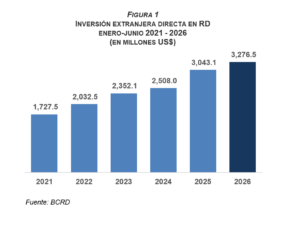
The Central Bank of the Dominican Republic (BCRD) reported that preliminary figures show foreign direct investment (FDI) reached US$3.2765 billion between January and June 2026, an increase of US$233.4 million, or 7.7%, compared with the first half of 2025.
According to the central bank, approximately US$2.1946 billion—roughly two-thirds of total FDI inflows—came from new equity contributions by foreign investors. During the second quarter alone, from April through June, the country received US$1.6046 billion in new capital.
Energy and Tourism Lead Investment Inflows
The BCRD said the Dominican Republic continues to demonstrate resilience in attracting foreign investment despite a challenging global environment marked by uneven investment recovery and increasing competition among countries for strategic projects. The institution cited the United Nations Conference on Trade and Development (UNCTAD) and its World Investment Report 2026: International Investment in a Turbulent Era as highlighting these international conditions.
The central bank attributed the country’s continued appeal to investors to factors including sustained social stability, macroeconomic and political stability, legal certainty, tax incentives, modern infrastructure, advanced telecommunications, and government support for foreign investment.
By sector, energy attracted 27.8% of total FDI during the first half of the year, followed by tourism with 20.1%. Real estate development accounted for 12.4% of inflows, reflecting its close relationship with the country’s expanding tourism industry. Mining also represented 12.4% of total investment, supported by increased production and favorable international commodity prices.
Strong External Sector Performance
The BCRD reported that other key external-sector indicators also posted positive results during the first half of 2026. In addition to the rise in FDI, remittances increased by 6.7%, while total exports reached US$8.7457 billion, representing a 16.6% increase compared with the same period in 2025.
Gold exports were a major contributor to that growth, totaling US$1.5919 billion, an increase of US$648.8 million, or 68.8%, driven by higher production levels and strong international gold prices.
Meanwhile, exports from the country’s free trade zones climbed to US$4.3597 billion, up 3.2% year over year. Tourism also continued to strengthen, generating US$6.716 billion in revenue during the first six months of the year, a 15.3% increase from the same period in 2025. The improvement was supported by a 7.9% increase in visitor arrivals, with more than 6.5 million travelers visiting the country.
Foreign Currency Inflows Support Economic Stability
According to the central bank, foreign currency generated from FDI, remittances, tourism, merchandise exports, and other services exceeded US$26.5 billion during the January–June period, an increase of approximately US$2.8 billion compared with the first half of 2025. The institution said these inflows have helped support exchange rate stability and the accumulation of international reserves.
Looking ahead, the BCRD expects foreign direct investment to exceed US$5.3 billion for the full year 2026, despite persistent global competition for investment and the challenges identified by UNCTAD.