 27°C

Entrepreneurship in the Dominican Republic: How It Works and What Shapes Business Success
Entrepreneurship in the Dominican Republic is shaped by a combination of economic opportunities, consumer demand, access to finance, administrative requirements and the ability to sustain a business beyond its initial launch. From independent professionals and family-run ventures to new commercial services and export-oriented businesses, entrepreneurs operate in a market with opportunities for growth but also practical barriers to entry and expansion. Understanding these conditions helps explain why people start businesses, how new ventures develop and what determines whether they survive.


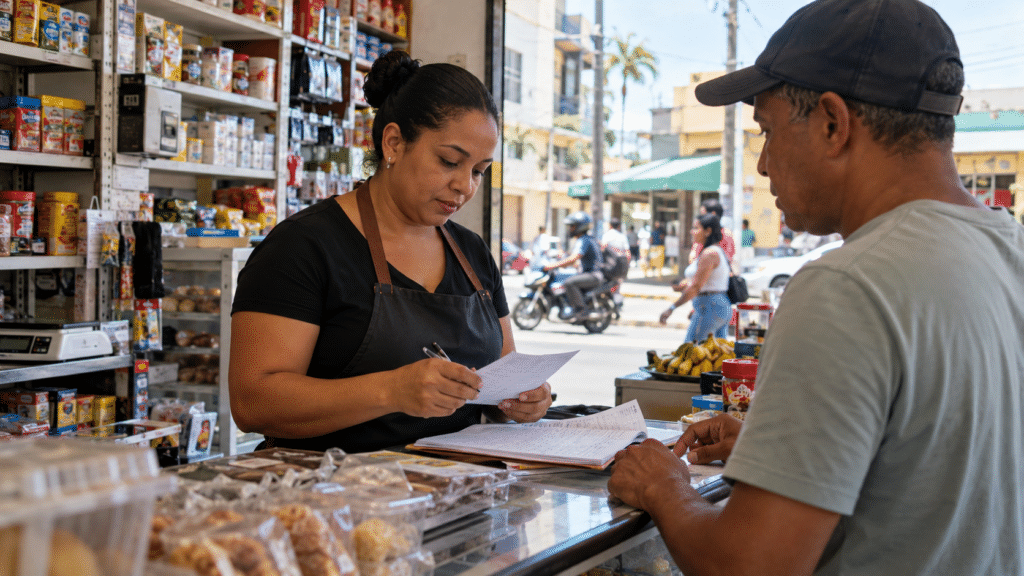
Entrepreneurship is an important mechanism through which an economy creates businesses, develops new products and services, generates employment and responds to changing consumer needs. In the Dominican Republic, the process involves more than identifying a profitable idea. Entrepreneurs must determine whether a market exists, obtain the resources needed to operate, navigate the applicable legal and tax requirements, and build a business capable of generating enough income to remain viable.
The country’s business environment combines opportunities arising from domestic consumption, tourism, construction, professional services, commerce and international trade with challenges involving financing, productivity, competition and business formalization. These conditions affect both the number of people who attempt to start businesses and the proportion of new ventures that develop into sustainable enterprises.
What Entrepreneurship Means in the Dominican Republic
Entrepreneurship refers to the process of identifying an economic opportunity, organizing resources and assuming the risks involved in creating or developing a business. It can take place in an established industry or an entirely new market, and it does not necessarily require advanced technology, substantial investment or a large workforce.
In the Dominican Republic, entrepreneurial activity can include opening a neighborhood retail business, establishing a repair service, producing food for local customers, providing professional services, developing a tourism-related venture or creating a company that supplies goods to larger businesses. These activities differ considerably in their initial investment requirements, regulatory obligations, growth potential and exposure to competition.
Entrepreneurship should also be distinguished from the broader category of micro, small and medium-sized enterprises (MSMEs). An MSME is generally classified according to characteristics such as employment, sales or assets, depending on the applicable definition. Entrepreneurship, by contrast, describes the process of creating, organizing or developing an economic activity. A newly established business may eventually become an established enterprise, while an existing company may continue to pursue entrepreneurial opportunities through new products, services or markets.
Another important distinction concerns necessity-driven and opportunity-driven entrepreneurship. Necessity-driven entrepreneurs establish businesses because suitable employment or other sources of income are unavailable or insufficient. Opportunity-driven entrepreneurs start ventures because they identify a market need, an underserved group of customers or a way to deliver a product or service more effectively. The two motivations can overlap, and neither category alone determines whether a business will succeed.
Why People Start Businesses
The decision to become an entrepreneur is influenced by personal circumstances, employment opportunities, household finances, professional experience and expectations about future demand. Some people want greater independence over their working lives, while others see an opportunity to earn additional income or develop a business around a skill they already possess.
Income generation and limited employment alternatives
Self-employment can provide an income source for people who cannot find suitable salaried work or who need to supplement earnings from another job. A small service business, retail operation or home-based commercial activity may allow someone to begin generating revenue without immediately establishing a large organization.
However, starting a business out of financial necessity is not the same as establishing a commercially sustainable enterprise. A person may have limited time, savings or access to credit, making it difficult to invest in equipment, professional advice, marketing or working capital. Under these circumstances, the business may remain small because the owner’s immediate income needs take priority over longer-term investment.
Recognizing unmet market demand
Opportunity-driven entrepreneurship begins with a problem that customers are willing to pay to solve. Entrepreneurs may identify demand for convenient delivery, specialized maintenance, reliable professional services, locally produced goods or products adapted to a particular customer group.
Tourism-related demand can also create opportunities for businesses that serve visitors, accommodation providers, restaurants and other companies connected to the travel industry. Construction activity, household consumption and business services can generate additional demand for suppliers and independent professionals. These possibilities depend on the location, the customers being targeted and the competitive conditions in each market.
Family experience, professional skills and independence
Previous employment, technical training and family business experience can reduce some of the uncertainty associated with starting a company. Someone who understands an industry’s customers, suppliers and operating requirements may be better prepared to estimate costs and identify realistic opportunities.
Family networks can provide practical support, contacts, labor or initial capital. At the same time, relying heavily on relatives without clear agreements about ownership, responsibilities and financial contributions can create difficulties as a business grows. Personal relationships may help a venture get started, but sound management remains necessary for its long-term development.
The Entrepreneurial Culture and Business Attitudes
Entrepreneurial culture encompasses the attitudes, skills, social expectations and institutional conditions that influence how people perceive business ownership. It includes confidence in one’s abilities, willingness to accept uncertainty, attitudes toward failure and the extent to which people can obtain guidance from experienced business owners or professional networks.
The Global Entrepreneurship Monitor (GEM), an international research initiative that studies entrepreneurial attitudes, activity and framework conditions, provides a useful basis for examining these issues. Its Dominican Republic country profile includes indicators on perceived opportunities, perceived capabilities, fear of failure and entrepreneurial intentions. Its framework conditions also examine the availability of finance, business regulation and other factors that affect the creation of new ventures.
GEM’s published assessment of the Dominican Republic’s entrepreneurial framework conditions in 2021 identified weaknesses in entrepreneurial finance and the ease of accessing finance. It also highlighted concerns about regulatory burdens and market entry conditions. These findings provide historical context rather than a complete description of the current environment, but they illustrate why entrepreneurial enthusiasm does not automatically translate into successful business creation.
A supportive entrepreneurial culture requires more than encouraging people to become their own bosses. It also depends on practical business education, access to reliable information, opportunities to learn from experienced entrepreneurs and an environment in which business owners can respond to setbacks without immediately exhausting their resources.
Where New Business Opportunities Emerge
Entrepreneurial opportunities develop where customers have unmet needs, existing suppliers deliver an unsatisfactory service or new economic activity creates demand for additional products and services. The Dominican Republic’s economic structure offers several potential sources of demand, although the attractiveness of each opportunity depends on the particular market and its operating costs.
Commerce and consumer services
Retail, food sales, personal services, repairs and other activities that serve households can offer relatively accessible entry points for entrepreneurs. Some businesses can begin with limited equipment or a small operating space, while others require substantial inventory, suitable premises or specialized facilities.
Accessible entry does not necessarily mean low commercial risk. When many businesses offer similar products, competition may limit prices and profit margins. Entrepreneurs must therefore consider the size of the customer base, purchasing habits, supplier costs and the amount of revenue needed to cover fixed expenses before committing substantial resources.
Tourism and related services
Tourism creates demand for accommodation, food services, transportation, maintenance, excursions, specialized retail and a range of business-to-business services. Entrepreneurs may serve visitors directly or supply established tourism operators.
These opportunities are not confined to businesses located in major resort areas. Suppliers, independent professionals and service providers may participate in the wider chain of economic activity associated with tourism. Nevertheless, a venture that depends heavily on visitor spending may be exposed to seasonality, changes in travel demand, transportation costs and competition from established operators.
Construction, property and maintenance
Construction and property-related activity can generate opportunities for tradespeople, equipment suppliers, repair specialists, cleaning services, maintenance companies and professional contractors. Demand may come from households, property owners, developers and businesses.
Entrepreneurs in these fields must pay particular attention to cash flow, contractual obligations and payment schedules. A business can have a substantial volume of work but still experience financial pressure if it must pay workers and suppliers before receiving payment from customers.
Professional and business services
Accounting, design, marketing, consulting, translation, technical support and other professional services can often be developed around existing skills rather than large physical investments. Their initial capital requirements may be lower than those of inventory-intensive businesses, although training, equipment, insurance, professional standards and client acquisition can still involve meaningful costs.
Businesses that serve other companies may benefit from recurring contracts and longer-term client relationships. However, winning commercial clients often requires credibility, reliable delivery, documented procedures and the ability to meet formal purchasing requirements. A technically capable entrepreneur may therefore need to develop sales and administrative skills alongside professional expertise.
Agriculture, manufacturing and productive activities
Agriculture, food processing, manufacturing and other productive activities can create opportunities for entrepreneurs who identify ways to improve production, quality, packaging, distribution or access to buyers. These ventures may contribute to domestic supply chains and, where the necessary conditions are met, reach export markets.
Compared with some service businesses, productive enterprises can require more equipment, working capital, storage, transport and quality control. Agricultural activities may also face weather-related risks, biological hazards and fluctuations in market prices. Their viability depends on production costs, access to buyers and the ability to manage operational risks rather than simply on the existence of demand.
How the Business Creation Process Works
Launching a business involves a sequence of commercial and administrative decisions. Although the exact process varies according to the activity and legal structure, entrepreneurs generally need to establish that a viable opportunity exists, determine how the business will operate, secure resources and meet the obligations applicable to their activities.
1. Identifying and validating the opportunity
The first step is to define the customer problem, the product or service being offered and the reason customers would choose it over existing alternatives. Entrepreneurs should examine potential demand, competing businesses, expected prices and the practical difficulties involved in delivering the offer.
Market validation can begin with conversations with prospective customers, small-scale trials, quotations from suppliers and a review of competing products or services. The objective is to obtain evidence before committing to substantial spending. Positive reactions to an idea are not sufficient on their own; customers must also be willing and able to pay a price that supports the business.
2. Estimating startup costs and operating requirements
Startup costs may include equipment, initial inventory, premises, deposits, transportation, professional services, registration expenses and any permits or technical requirements applicable to the activity. The entrepreneur must also estimate recurring expenses such as rent, utilities, payroll, insurance, maintenance, taxes and loan repayments where relevant.
Working capital is particularly important. A business needs enough liquidity to purchase supplies, pay expenses and continue operating while waiting for customers to pay. Even a venture with a credible commercial opportunity can fail if its available cash is insufficient to cover the period between expenditure and revenue collection.
3. Choosing the legal structure
The appropriate legal structure depends on the number of owners, the intended scale of the activity, liability considerations, tax treatment and administrative requirements. Dominican entrepreneurs can consider structures that include an individual business registration, an Empresa Individual de Responsabilidad Limitada (EIRL), or a Sociedad de Responsabilidad Limitada (SRL), subject to the requirements applicable to each form.
These options are not interchangeable. A business operating as an individual and a limited-liability company have different legal characteristics and obligations. Entrepreneurs should understand how ownership, liability, accounting and taxation apply to their circumstances before selecting a structure.
4. Completing the relevant registration and compliance requirements
Business formalization in the Dominican Republic may involve obtaining or registering a commercial name, completing the appropriate commercial registration, registering with the Dirección General de Impuestos Internos (DGII), the country’s internal revenue authority, and fulfilling employer-related requirements when staff are hired. Additional permits or authorizations may apply depending on the sector, location and nature of the activity.
The official Formalízate portal provides information and services intended to simplify business creation and formalization. Entrepreneurs should consult the relevant official authorities to confirm current procedures, fees, documentation and any sector-specific obligations.
Formalization is more than a registration exercise. It establishes the legal and administrative basis for operating a business, employing workers where applicable, entering certain commercial relationships and meeting tax obligations. The requirements that apply to a specific venture depend on its legal structure and activities.
5. Securing suppliers, customers and operating capacity
Before opening, entrepreneurs need to establish how they will obtain inputs, deliver their products or services, collect payments and handle customer complaints. These arrangements influence both operating costs and the quality of the customer experience.
A business may begin with a small customer base and a limited range of services, then expand as demand becomes more predictable. Starting at a manageable scale can reduce the amount of capital exposed to uncertainty, provided that the initial operating model is commercially viable and can meet customer expectations.
Business Formalization and Administrative Barriers
Formalization can create opportunities, but the time, cost and effort required to complete administrative procedures can influence when and how entrepreneurs establish a business. Requirements may be particularly difficult for people who lack experience with legal structures, tax registration, accounting and employer obligations.
Administrative complexity can also affect businesses after registration. Entrepreneurs may need to maintain records, submit tax declarations, comply with employment rules, renew authorizations and demonstrate compliance with sector-specific requirements. These responsibilities create recurring costs in addition to the initial expense of establishing the business.
The Dominican Republic has introduced initiatives intended to simplify these procedures. The government announced the Empresas en 24 Horas initiative in September 2026, presenting it as a unified digital process for business constitution and formalization. The announcement also referred to the elimination of the company-formation tax under Law 30-26. The availability of particular procedures and their application to individual cases should be checked through the official Presidency announcement and the relevant registration authorities.
Simplifying registration can reduce the initial barriers to entrepreneurship, but it does not eliminate the other costs of operating a business. Entrepreneurs must still determine whether their activity requires specific permits, whether their premises meet applicable requirements and how they will manage ongoing tax, accounting and employment obligations.
Why some businesses remain informal
Some entrepreneurs begin operating without completing all the formalization steps because they have limited resources, uncertain demand or little knowledge of the procedures. Others perceive the costs of compliance as disproportionate to the revenue generated by a very small activity.
Informality can reduce immediate administrative expenses, but it may also restrict access to formal credit, certain support programs, public procurement opportunities and commercial relationships that require documented registration. It can also create legal and tax risks. The balance between short-term savings and long-term limitations is therefore an important consideration when assessing the sustainability of a business.
Access to Finance and Startup Capital
Financing is one of the central factors influencing whether a business can move from an idea to an operating enterprise and whether it can subsequently expand. Entrepreneurs need capital to acquire equipment, purchase inventory, secure premises, develop products, pay workers and cover operating expenses before revenue becomes sufficient.
The type and amount of financing required depend on the business model. A professional service provider may be able to start with existing equipment and a small reserve of cash, whereas a manufacturer, restaurant or transport operator may need substantial investment before the first sale. Businesses that sell on credit or operate with long payment cycles also require additional working capital.
Personal savings and family resources
Personal savings are a common starting point for entrepreneurs who want to avoid immediate debt obligations. Family contributions and loans from personal contacts can provide additional resources, particularly when a new business lacks a documented trading history.
These sources of capital have limitations. Using household savings exposes the owner’s personal finances to business risk, while relying on family support may strain relationships if the business performs poorly. Any shared investment or private loan should have clear terms covering repayment, ownership and decision-making.

Commercial bank loans
Formal financial institutions can provide credit for working capital, equipment and business expansion. However, approval depends on the lender’s assessment of repayment capacity, credit history, documentation, collateral requirements and other relevant criteria.
New businesses may struggle to obtain conventional loans because they have no established record of revenue or profitability. Even when credit is available, interest payments and repayment schedules can place pressure on cash flow, particularly during periods of weak sales. Entrepreneurs should compare the total cost of borrowing with the expected financial return from the investment.
Public financing and entrepreneurship support
The Dominican government has institutions and programs intended to improve access to finance for smaller businesses and entrepreneurs. One example is the Consejo Nacional de Promoción y Apoyo a la Micro, Pequeña y Mediana Empresa, commonly known as PROMIPYME, which offers financing services for eligible micro and small businesses.
Its published entrepreneurship loan program is designed to support the establishment of new microenterprises. The institution also describes Tu Firma es tu Garantía, an initiative aimed at improving access to microcredit, particularly for entrepreneurs who are not well served by conventional banking arrangements.
Eligibility, documentation, loan amounts, interest rates and repayment conditions vary by program and can change. Entrepreneurs should consult the institution directly before relying on a particular financing option. Public financing can help address capital constraints, but it does not replace the need for a realistic business plan and sufficient cash flow to repay the debt.
Other sources of funding
Depending on the venture, entrepreneurs may also consider investment from business partners, supplier credit, leasing arrangements or reinvested profits. Each option has different implications for ownership, financial risk and future obligations.
Equity investment can reduce the need for scheduled loan repayments but may require sharing ownership and control. Supplier credit can help manage inventory costs, although payment deadlines still have to be met. Reinvesting profits avoids some external financing costs but may slow expansion when the business generates only modest surpluses.
Skills, Management and Business Survival
Creating a business and sustaining it are different achievements. Opening a company demonstrates that an entrepreneur has mobilized the resources and completed the steps needed to begin operating. Survival requires the business to continue attracting customers, covering expenses, managing risks and adapting to changing market conditions.
There is no single factor that guarantees survival. A strong product can fail because of poor financial management, while a well-organized business may struggle if demand is insufficient or competitors offer better value. Long-term performance usually depends on several interconnected commercial and managerial capabilities.
Financial management and cash flow
Entrepreneurs need to distinguish sales revenue from profit and profit from available cash. A business can generate substantial sales but remain financially vulnerable if its expenses are too high, customers pay late or too much capital is tied up in inventory.
Maintaining accurate records, monitoring expenses, preparing cash-flow forecasts and separating business finances from personal spending help owners identify problems before they become critical. These practices also improve the quality of information available when applying for credit or evaluating an expansion decision.
Pricing and profitability
Pricing decisions must reflect customer demand, competitors’ offers, input costs and the value provided. Setting prices too low can create the appearance of competitiveness while leaving insufficient income to cover expenses. Setting them too high without a clear advantage may prevent the business from attracting enough customers.
Entrepreneurs should calculate the direct costs of delivering a product or service and account for overhead expenses such as rent, utilities, administration and equipment maintenance. Understanding the contribution each sale makes toward fixed costs is essential for estimating how much the business needs to sell to break even.
Customer acquisition and retention
New businesses must find customers while building trust in a market where established competitors may already have strong relationships. Personal recommendations, local visibility, digital communication, partnerships and direct sales can all contribute to customer acquisition, depending on the type of business.
Customer retention is equally important. Reliable delivery, transparent pricing, consistent quality and effective complaint handling can encourage repeat purchases and referrals. A business that depends entirely on continually finding new customers may face higher marketing costs and less predictable revenue than one that develops a stable base of repeat buyers.
Adaptability and operational discipline
Market conditions change, customer preferences evolve and operating costs fluctuate. Entrepreneurs must be willing to adjust their product range, delivery methods, suppliers or pricing when evidence shows that the original model is not working.
Adaptability does not mean making frequent changes without a clear rationale. It means monitoring performance, testing improvements and using customer feedback and financial information to guide decisions. Consistent operating procedures and realistic growth plans help businesses adapt without losing control of their finances or service quality.
Competition, Market Access and Growth
The ability to reach customers determines how far a new business can develop. A venture may offer a useful product but remain small if it operates in a limited market, lacks distribution channels or cannot compete on price, convenience or quality. Access to suppliers, transport, digital tools and business networks can therefore influence growth as much as the original idea.
Competing with established businesses
New entrants often face competitors with greater purchasing power, established brands, larger customer bases and more developed distribution systems. These advantages can make it difficult for a new business to attract customers or negotiate favorable supplier terms.
Smaller entrants can sometimes compete by specializing in a particular customer group, offering more responsive service, improving convenience or addressing needs that larger businesses overlook. The objective is not necessarily to become the lowest-cost provider but to offer a combination of price, reliability and value that customers consider worthwhile.
Geography and customer access
Business opportunities vary between Santo Domingo, other urban centers, tourism destinations and rural communities. Customer density, transport links, purchasing power, supplier access and the presence of competing businesses influence the economics of operating in each location.
A location with a large potential customer base may also have higher rent and stronger competition. A smaller market may offer lower operating costs but insufficient demand to support a specialized business. Entrepreneurs must therefore assess both the commercial advantages and the limitations of the location they intend to serve.
Digital channels and wider markets
Digital tools can help entrepreneurs communicate with customers, display products, receive inquiries, coordinate orders and manage some business processes. Depending on the activity, online channels may reduce the need for a prominent physical location or allow a business to reach customers beyond its immediate neighborhood.
Digital access does not automatically produce profitable sales. Businesses still need appropriate products, reliable fulfillment, secure payment processes and a way to manage customer service. Delivery costs, competition, advertising expenses and customer trust can all influence whether online sales contribute meaningfully to profitability.
Supplying larger companies and public institutions
Business-to-business contracts and public procurement can offer access to customers beyond the general consumer market. Formal registration, documented financial records, consistent delivery and compliance with purchasing requirements may be essential to qualify for these opportunities.
The Dominican Republic’s Dirección General de Contrataciones Públicas, the public procurement authority, provides information for micro, small and medium-sized enterprises interested in supplying government institutions. Such contracts can create opportunities, but entrepreneurs must evaluate tender requirements, delivery obligations, payment terms and the working capital needed to fulfill an order.
Economic Conditions That Influence Entrepreneurship
Entrepreneurship is shaped not only by individual decisions but also by the wider economic environment. Economic growth, household income, inflation, interest rates, employment conditions and access to infrastructure can influence both the supply of entrepreneurs and the demand for their products or services.
When household spending and business investment are strong, customers may be more willing to purchase nonessential goods, use specialized services or invest in improvements. When economic conditions weaken, households and companies may reduce spending, delay purchases or negotiate lower prices. Businesses with high fixed costs or narrow profit margins can be particularly vulnerable to these changes.
Interest rates affect the cost of borrowing, while changes in the prices of imported goods, fuel, equipment and other inputs can alter operating costs. Businesses that rely on imported supplies or earn revenue in a different currency from the one in which they incur expenses may also face exchange-rate exposure.
Infrastructure and access to reliable services influence productivity. Electricity, telecommunications, transportation and logistics affect how efficiently a business can operate, store goods, serve customers and deliver orders. Their importance varies by industry, but interruptions and inefficiencies can increase costs across a wide range of activities.
The country’s links to international trade and tourism can create opportunities while also exposing businesses to external shocks. A venture that supplies hotels may benefit from increased visitor demand but face a downturn if travel weakens. An importer may benefit from access to international products but experience higher costs when freight or exchange rates change. Understanding these dependencies helps entrepreneurs assess risk and avoid relying on a single source of revenue.
Common Reasons New Businesses Struggle
New ventures can encounter difficulties at every stage, from validating the original idea to managing the business after sales begin. Some problems reflect weaknesses in planning or execution, while others arise from conditions that individual entrepreneurs cannot fully control.
- Insufficient market research: The entrepreneur launches a product without confirming that enough customers are willing to pay for it.
- Underestimated startup costs: The initial budget covers equipment and registration but overlooks working capital, recurring expenses or unexpected costs.
- Poor cash-flow management: Payments to suppliers and employees fall due before customers settle their invoices.
- Unsustainable pricing: Prices fail to cover the full cost of providing the product or service.
- Excessive borrowing: Debt repayments become difficult to meet when sales are lower than expected.
- Administrative noncompliance: Missing registrations, tax obligations or required permits create financial or legal exposure.
- Dependence on a small number of customers: Losing one major buyer causes a substantial drop in revenue.
- Weak management systems: Inaccurate records, unclear responsibilities and inconsistent procedures make it difficult to identify problems or scale operations.
- Premature expansion: The business commits to additional premises, staff or inventory before demand and cash flow can support the investment.
These difficulties are not inevitable, and they do not mean that entrepreneurs should avoid taking risks. They demonstrate the importance of distinguishing calculated risk from uncertainty that could have been reduced through research, planning or better financial controls.
How Entrepreneurship Contributes to the Economy
Entrepreneurship can contribute to economic development by creating new sources of income, expanding consumer choice, generating employment and introducing new ways of producing or delivering goods and services. New businesses can also create demand for suppliers, transport operators, professional services and other companies within the wider economy.
The economic effect depends on the quality and sustainability of the activity being created. A business that develops a productive service, improves efficiency or reaches new markets may generate more lasting value than one that merely replicates an existing offer in an already saturated market. Business creation alone is therefore not a complete measure of entrepreneurial success.
Entrepreneurship can also encourage competition. New entrants may pressure established businesses to improve customer service, adjust prices, develop products or operate more efficiently. These benefits depend on whether new firms can enter markets and compete on reasonable terms, rather than facing disproportionate barriers or being unable to obtain the resources needed to operate.
Employment effects vary between ventures. Some entrepreneurs work alone, while others hire employees as demand grows. Businesses that expand sustainably can create more stable jobs and opportunities for skills development, but the quality of those jobs depends on productivity, working conditions and the ability of the enterprise to maintain sufficient revenue.
For the Dominican Republic, the broader challenge is to encourage entrepreneurship that improves productivity and creates durable economic value, rather than focusing exclusively on the number of people who register a business. Access to finance, business skills, fair competition, administrative efficiency and opportunities to reach larger markets all influence whether entrepreneurial activity translates into sustained economic gains.
Government Support and the Institutional Environment
Public policy can influence entrepreneurship by reducing unnecessary administrative costs, improving access to finance, supporting business training and making it easier for new firms to compete. The effectiveness of these measures depends on whether entrepreneurs can access them in practice and whether they address the constraints that prevent viable businesses from starting or growing.
Several Dominican institutions provide resources relevant to business creation and development. The Ministry of Industry, Commerce and MSMEs (MICM) is involved in policies affecting the business environment and formalization. The DGII provides tax registration and compliance information, while PROMIPYME offers financing services for eligible smaller businesses. The DGCP provides information on public procurement and participation by smaller suppliers.
Entrepreneurs can begin by consulting the following official resources:
- Formalízate: information on business structures, registration and formalization procedures.
- Dirección General de Impuestos Internos: tax registration and information about formal business operations.
- PROMIPYME: financing services and support for eligible micro and small businesses.
- Dirección General de Contrataciones Públicas: information on supplying goods and services to public institutions.
- Global Entrepreneurship Monitor: research on entrepreneurial attitudes, activity and framework conditions in the Dominican Republic.
These resources serve different purposes and do not guarantee access to credit, public contracts or other forms of assistance. Eligibility and requirements should be verified with the relevant institution. Entrepreneurs should also distinguish between support for establishing a business and the continuing commercial work required to make it sustainable.
Frequently Asked Questions About Entrepreneurship in the Dominican Republic
Is the Dominican Republic a good place to start a business?
The Dominican Republic offers potential opportunities in consumer services, commerce, tourism-related activities, construction, professional services and productive industries. Whether it is a suitable location for a particular venture depends on customer demand, competition, startup costs, financing, applicable regulations and the entrepreneur’s ability to manage operations. There is no single answer that applies to every industry or business model.
What are the main challenges for entrepreneurs in the Dominican Republic?
Common challenges include obtaining sufficient startup capital, validating market demand, managing cash flow, competing with established businesses and understanding registration, tax and other administrative requirements. The importance of each challenge depends on the type of activity, the resources available to the entrepreneur and the stage of business development.
Can a person start a business with limited capital?
Some businesses, particularly certain professional and personal services, can begin with relatively limited investment when the owner already has the necessary skills and equipment. Other activities require substantial spending on inventory, premises, machinery or permits. Even a low-investment business needs enough working capital to cover its expenses until revenue becomes reliable.
Does every new business need to be formally registered?
Businesses must comply with the legal, tax and administrative obligations applicable to their activities. The specific registration requirements depend on the legal structure and nature of the operation. The DGII explains that individuals and businesses carrying out economic activities that generate tax obligations or responsibilities in the Dominican Republic must register appropriately as taxpayers. Entrepreneurs should consult the relevant authorities to establish which requirements apply to their circumstances.
What financing options are available to new entrepreneurs?
Potential sources include personal savings, contributions from family or business partners, commercial bank loans, supplier credit and eligible public financing programs. PROMIPYME offers services intended to support micro and small businesses, including a loan program for establishing new microenterprises. The availability and conditions of financing depend on the program, the applicant’s eligibility and the business’s financial circumstances.
How long does it take to establish a business?
The time required depends on the legal structure, the completeness of the documentation, the registration procedures involved and any additional permits required by the activity. The Dominican Republic has introduced initiatives to simplify business constitution, including the Empresas en 24 Horas initiative announced in 2026. Entrepreneurs should verify the current process and applicable timelines through official channels rather than assume that every type of business can be fully operational within the same period.
What determines whether a new business survives?
Survival depends on a combination of market demand, competitive positioning, adequate working capital, realistic pricing, financial management, regulatory compliance and the ability to adapt to changing conditions. Businesses are more likely to remain viable when they understand their customers, monitor costs, maintain reliable records and avoid commitments that exceed their financial capacity.
Does entrepreneurship always create economic growth?
No. Business creation can support employment, competition and productivity, but these outcomes are not automatic. Ventures that cannot attract enough customers or operate efficiently may close, while businesses that survive without improving productivity may generate limited broader economic benefits. The quality, sustainability and productive contribution of entrepreneurial activity matter alongside the number of new businesses created.
The Outlook for Entrepreneurship in the Dominican Republic
The future of entrepreneurship in the Dominican Republic will depend partly on the ability of new businesses to turn market opportunities into sustainable commercial activity. Simplifying formalization can reduce the cost of entry, while suitable financing, practical business skills and access to customers can help viable ventures develop beyond their initial stages.
For individual entrepreneurs, the central task is to establish whether a business can solve a real customer problem at a price that covers its costs and generates sufficient cash to continue operating. Careful market research, realistic financial planning and a clear understanding of legal obligations can reduce avoidable risks, although they cannot eliminate uncertainty.
For the wider economy, the objective is not simply to encourage more people to start businesses. It is to create conditions in which entrepreneurs can enter markets, compete fairly, obtain appropriate resources and build productive enterprises capable of generating lasting value. When those conditions improve, entrepreneurship can become a stronger contributor to employment, innovation and economic development in the Dominican Republic.