 24°C
24°C

Business Opportunities In The Dominican Republic
Business opportunities in the Dominican Republic extend well beyond tourism and real estate. The country combines a strategic Caribbean location, access to major international markets, established export industries, a growing services economy, and investment incentives that support sectors ranging from manufacturing and technology to renewable energy, agriculture, healthcare, and film. For entrepreneurs and investors evaluating the country, the most important question is not simply where growth exists, but which opportunities match their capital, expertise, risk tolerance, and intended market.


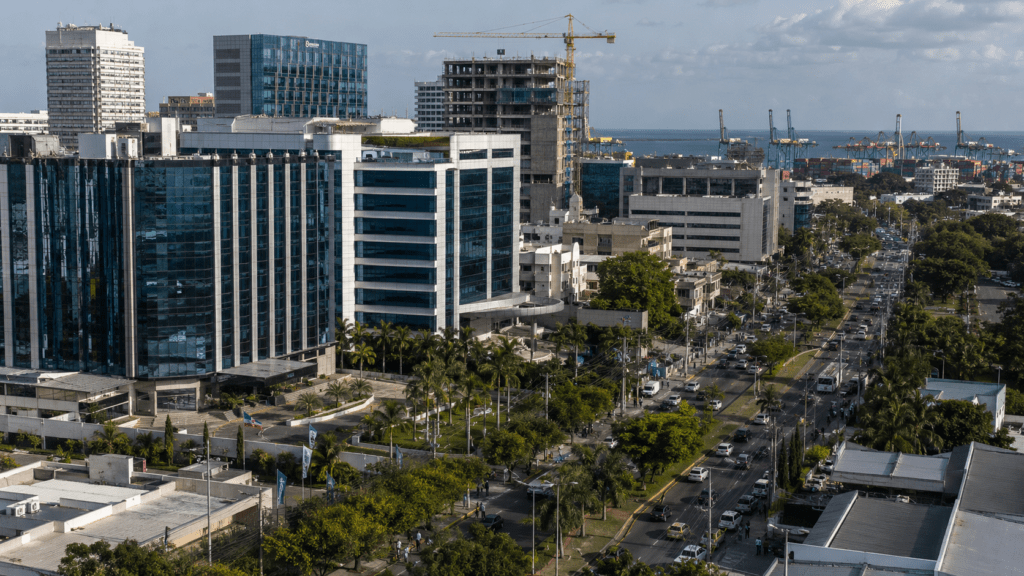
The Dominican Republic has developed into one of the Caribbean’s most diversified business economies, creating opportunities for both local entrepreneurs and international investors. Tourism remains a major economic pillar, but the country’s investment landscape also includes manufacturing, free trade zones, technology, renewable energy, agriculture, real estate, medical devices, semiconductors, and creative industries. The World Bank says the economy grew by 2.1% in 2025 and projects expansion of 3.6% in 2026, while identifying private investment, construction, tourism, exports, and foreign direct investment as important drivers of medium-term activity.
Why The Dominican Republic Attracts Business Investment
The country’s location is one of its principal commercial advantages. The Dominican Republic sits between North America, Central America, South America, and Europe, giving companies a practical base for serving regional and international markets. ProDominicana, the government agency responsible for promoting exports and investment, highlights the country’s preferential access to markets through the Dominican Republic-Central America Free Trade Agreement and the Economic Partnership Agreement with the European Union.
The investment framework also gives foreign investors important protections. Under Law 16-95 on Foreign Investment, foreign and Dominican investors generally receive national treatment, while the framework provides for the registration of foreign investment and the transfer of capital and dividends. Sector-specific permits, registrations, licenses, and tax rules can still apply, so national treatment does not mean that every business can operate without regulatory requirements.
The country’s economic structure is another important factor. The Dominican Republic has a large tourism industry, established industrial parks, expanding export manufacturing, agricultural production, financial services, telecommunications, construction, and a growing digital economy. This diversity creates opportunities for businesses that serve existing industries as well as companies that want to build export-oriented operations.
1. Tourism And Hospitality
Tourism is one of the most established areas for business opportunities in the Dominican Republic. The country’s international visitor economy supports hotels, restaurants, transportation, entertainment, excursions, construction, property development, and a wide range of professional and consumer services.
Opportunities are not limited to conventional all-inclusive resorts. ProDominicana identifies boutique hotels, ecotourism, adventure tourism, cultural tourism, sports tourism, and health tourism among areas of interest. This creates room for businesses designed around specific visitor segments rather than the mass-market resort model.
Where Opportunities Exist
- Boutique accommodation: Smaller hotels and lodging concepts aimed at travelers seeking differentiated experiences.
- Ecotourism: Nature-based activities and accommodation designed around environmental and community considerations.
- Adventure tourism: Businesses offering outdoor activities and guided experiences.
- Cultural tourism: Experiences connected with Dominican history, food, music, art, and local communities.
- Health and wellness tourism: Services designed for international visitors combining travel with medical or wellness treatments.
- Tourism infrastructure: Businesses supplying hotels, resorts, restaurants, transportation operators, and other tourism companies.
The strongest opportunities are not necessarily the businesses closest to the tourist. Suppliers can also benefit from tourism growth. Construction companies, technology providers, maintenance businesses, food suppliers, logistics operators, professional services, and specialized hospitality contractors can participate without owning a hotel.
2. Manufacturing And Nearshoring
Manufacturing is one of the Dominican Republic’s most important opportunities for companies seeking an export-oriented Caribbean base. ProDominicana highlights textiles, pharmaceuticals, medical devices, electronics, food and beverages, light manufacturing, and nearshoring as areas with investment potential.
The country’s free trade zone system is particularly important. The National Council of Export Free Trade Zones (CNZFE) reported 858 operating companies, more than 200,000 jobs, and US$8.6046 billion in exports for 2025. During January-April 2026, free-zone exports reached US$2.8033 billion, with medical and pharmaceutical products, tobacco, and electrical and electronic products among the leading categories.
This matters because nearshoring is not simply about relocating a factory. It can involve contract manufacturing, assembly, packaging, quality control, component supply, logistics, maintenance, engineering, software, and other services that support an industrial supply chain.
Why Nearshoring Can Be Attractive
Companies serving North American or European customers may benefit from locating part of their production closer to those markets than traditional Asian manufacturing bases. The decision, however, depends on the product, labor requirements, logistics, rules of origin, customs treatment, energy costs, infrastructure, and the specific trade agreement applicable to the business.
For investors, the practical opportunity is therefore to identify a product or supply-chain function for which the Dominican Republic provides a genuine operational advantage rather than assuming that every manufacturing activity will benefit from relocation.
3. Free Trade Zones And Export Businesses
Free trade zones deserve separate consideration because they provide an established platform for companies producing goods or services for international markets. The sector has diversified beyond traditional apparel into medical devices, pharmaceuticals, electrical and electronic products, tobacco, logistics, business services, and other activities.
CNZFE’s recent data illustrates the scale of the sector. Its 2025 figures show more than US$8.6 billion in exports and more than 200,000 direct jobs. The organization also reported continued export growth during the first four months of 2026.
For a new investor, the opportunity may be to establish a new export operation, supply an existing free-zone company, provide specialized industrial services, or develop infrastructure for manufacturers. The appropriate structure depends on the activity and the applicable free-zone regime.
4. Technology And Digital Services
Technology is another emerging area of business opportunity. ProDominicana identifies software development, mobile applications, data centers, artificial intelligence solutions, financial technology, customer-service operations, and other digital services as potential areas for investment.
The most interesting opportunities may be businesses that combine Dominican talent with international demand. Software development, outsourced services, cybersecurity, business-process outsourcing, digital marketing, financial technology, and specialized technical support can potentially serve customers outside the country while using the Dominican Republic as an operating base.
Technology businesses also have an advantage that traditional physical businesses do not always possess: they may be able to sell internationally without exporting a physical product. That does not eliminate regulatory, tax, labor, data-protection, or cybersecurity considerations, but it can reduce dependence on physical logistics.
Technology Opportunities To Consider
- Software development and engineering services.
- Business-process and customer-support services.
- Financial technology.
- Artificial intelligence applications.
- Cloud and data infrastructure.
- Cybersecurity services.
- Digital products for tourism, finance, commerce, and logistics.
5. Renewable Energy
Energy is both a challenge and a business opportunity in the Dominican Republic. The country is working to diversify its energy matrix, while the World Bank identifies electricity-sector reform and the development of cleaner energy sources as important priorities.
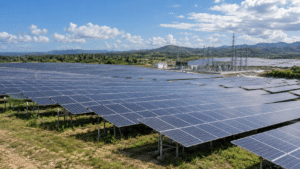
ProDominicana identifies solar, wind, hydroelectric power, biomass, and other clean-energy technologies as investment areas. Opportunities can therefore exist in power generation as well as in equipment, engineering, storage, efficiency, maintenance, and other services supporting the transition toward a more diversified energy system.
Renewable-energy projects can require substantial capital and careful regulatory planning. Investors must assess land, grid connection, environmental requirements, permitting, financing, electricity-market rules, technology performance, and long-term revenue arrangements before committing capital.
The opportunity is therefore broader than simply building a solar farm. Businesses that reduce energy consumption, improve efficiency, provide distributed generation solutions, or supply specialized equipment and services may also participate in the sector.
6. Agriculture And Food Production
Agriculture remains an important part of the Dominican economy and offers opportunities for investors willing to combine production with technology, processing, and export development. ProDominicana highlights technified agriculture, sustainable livestock farming, organic food production, greenhouses, tropical crops, and aquaculture.
The greatest potential may often lie beyond primary production. Processing, packaging, cold-chain logistics, quality control, agricultural technology, irrigation, greenhouse systems, and export-oriented food manufacturing can increase the value captured from agricultural products.
For example, a business that produces a crop and sells it as an undifferentiated commodity faces a different competitive environment from a company that combines controlled production, processing, packaging, certification, branding, and international distribution.
Potential Agricultural Business Models
- Modern greenhouse production.
- High-value tropical crops.
- Aquaculture.
- Food processing and packaging.
- Cold-chain and agricultural logistics.
- Agricultural technology and irrigation.
- Organic and specialty food production.
- Export-oriented agricultural supply chains.
7. Medical Devices And Biomedicine
Healthcare-related manufacturing is another area where the Dominican Republic has developed an increasingly relevant industrial base. ProDominicana identifies medical-device manufacturing, drug development, biotechnology, medical research, and health tourism as investment opportunities.
The connection between healthcare and manufacturing is particularly important because medical devices can be part of an international export supply chain rather than a business dependent exclusively on domestic demand. This can make the country relevant to companies seeking a Caribbean manufacturing location for regulated products.
Businesses in this field must, however, account for stringent quality systems, product standards, regulatory approvals, supply-chain controls, and skilled labor requirements. The incentives available to an investment project should never be treated as a substitute for technical and regulatory compliance.
8. Semiconductor And Electronics Opportunities
Semiconductors represent a newer and more specialized opportunity. ProDominicana identifies chip assembly, integrated-circuit design, research and development, and semiconductor-material manufacturing as areas for investment.
This is a fundamentally different proposition from traditional manufacturing. Semiconductor-related businesses depend heavily on engineering talent, reliable infrastructure, quality control, specialized equipment, international supply chains, and technical ecosystems. The opportunity is therefore most relevant to companies with specialized expertise and a clear international market rather than general investors looking for a conventional small business.
Electronics more broadly may offer a wider range of entry points, including component assembly, cable harnesses, testing, contract manufacturing, repair, industrial electronics, and supply-chain services.
9. Real Estate And Construction
Real estate remains closely connected to the country’s tourism growth, population expansion, commercial activity, and infrastructure needs. ProDominicana identifies residential, commercial, industrial, and tourism-oriented real estate as investment categories.
Potential opportunities include apartments, villas, hotels, resorts, commercial properties, shopping centers, industrial facilities, and properties serving tourism-related demand. Construction and real estate services can also create opportunities without requiring an investor to own a large property portfolio.
Real estate requires particular caution because location can dramatically affect the economics of a project. Investors should evaluate title, zoning, land-use restrictions, environmental requirements, construction permissions, infrastructure, access, insurance, financing, demand, and the legal structure of the transaction before purchasing property or beginning development.
It is also important to distinguish a real-estate investment from an operating business. A property may appreciate in value while producing weak cash flow, while a hospitality or rental operation may generate revenue but involve substantial management and regulatory obligations.
10. Film And Creative Industries
The Dominican film industry provides another specialized opportunity. ProDominicana identifies film production, distribution, film services, recording studios, post-production, and talent development as areas with investment potential.
The opportunity extends beyond producing movies. Studios, equipment rental, production services, location management, post-production, visual effects, transportation, catering, accommodation, and other specialized suppliers can participate in the wider production ecosystem.
Film projects also require careful attention to applicable tax incentives, eligibility conditions, production requirements, and regulatory procedures. Investors should verify the current rules for a specific project rather than assuming that every production automatically receives the same treatment.
How To Choose The Right Business Opportunity
The best business opportunity in the Dominican Republic depends on the investor’s objective. A tourism entrepreneur, an international manufacturer, a technology company, and a real-estate investor face very different economics and regulatory requirements.
| Business Area | Best Suited For | Main Opportunity | Key Considerations |
|---|---|---|---|
| Tourism | Hospitality and service operators | Accommodation, experiences, tourism services | Location, seasonality, demand, permits |
| Manufacturing | Industrial and export companies | Nearshoring and regional production | Labor, logistics, quality, supply chains |
| Technology | Digital companies | Software and outsourced services | Talent, infrastructure, international sales |
| Renewable Energy | Infrastructure investors | Generation and energy services | Grid, regulation, financing, environmental approvals |
| Agriculture | Producers and food companies | Modern production and value-added processing | Climate, water, logistics, export markets |
| Medical Devices | Specialized manufacturers | Export-oriented healthcare manufacturing | Quality systems and regulatory compliance |
| Real Estate | Property investors and developers | Residential, commercial, industrial and tourism projects | Title, zoning, demand, construction costs |
| Film | Creative and production companies | Production and specialized services | Project eligibility, incentives, production logistics |
A useful first step is to identify whether the business will primarily serve the Dominican domestic market, international visitors, or overseas customers. A domestic-service company may prioritize population centers and consumer demand, while an export manufacturer will place greater weight on logistics, trade rules, industrial infrastructure, and supply-chain integration.
What Foreign Investors Need To Know
Foreign investors generally do not face a separate investment regime simply because they are foreigners. ProDominicana states that Law 16-95 establishes national treatment for foreign and domestic investors, with limited statutory exceptions. That does not remove the need to comply with the normal legal requirements associated with operating a business.
Depending on the structure and activity, a company may need commercial registration, tax registration, sector-specific licenses, environmental approvals, construction permits, land-use authorization, employment registration, or other permissions. The exact requirements depend on the project.
The Directorate General of Internal Revenue (DGII) administers the National Taxpayer Registry, or RNC. Foreign companies and individuals with Dominican tax responsibilities may need to register, and the documentation required can vary according to whether the investor is establishing a Dominican company, registering a foreign entity, acquiring property, or carrying out another type of transaction.
ProDominicana also provides an investment guide and sector-specific information for investors. Using official guidance before structuring a project is particularly important because incentives and procedures can depend on the precise activity, location, investment structure, and applicable law.
Tax Incentives And Special Regimes
Tax incentives are an important feature of the Dominican investment landscape, but they should be evaluated project by project. ProDominicana lists significant incentives for several priority sectors, while specific regimes may have their own eligibility requirements and approval procedures.
Tourism projects, renewable-energy developments, free-zone companies, manufacturing operations, technology projects, real estate developments, and other activities can fall under different legal frameworks. Some incentives may cover income tax, import duties, construction-related costs, or equipment, while others have specific conditions and approval mechanisms.
The key lesson for investors is that an advertised incentive is not automatically available to every project in a sector. Investors should establish eligibility before incorporating the expected tax benefit into a financial model.
Risks And Challenges To Consider
The Dominican Republic offers substantial opportunities, but no market is without risk. Investors should assess operational realities rather than basing a decision solely on economic growth, incentives, or favorable market narratives.
Infrastructure And Energy
Energy reliability and infrastructure quality can influence operating costs depending on the location and business model. The World Bank identifies continued work in the electricity sector as important to improving efficiency, reliability, and affordability.
Regulation
Businesses operating in regulated sectors may need multiple approvals. Construction, tourism, energy, healthcare, environmental activities, financial services, and industrial operations can involve specialized authorities and procedures.

Labor And Skills
Labor availability is an advantage for many businesses, but specialized industries may require skills that are not equally available in every location. Technology, engineering, advanced manufacturing, healthcare, and semiconductor-related projects should evaluate the local talent pipeline before committing to a site.
Location
The Dominican Republic is not a single homogeneous business market. Santo Domingo, Santiago, Punta Cana, Puerto Plata, San Pedro de Macorís, and other locations have different combinations of infrastructure, labor, tourism demand, industrial activity, and real-estate costs.
Climate And Environmental Risk
As a Caribbean country, the Dominican Republic is exposed to climate-related hazards. The World Bank notes that increasing extreme-weather events make resilience and adaptation increasingly important. Businesses with physical assets should therefore consider drainage, storm exposure, insurance, water availability, building standards, and business continuity.
Common Mistakes Foreign Entrepreneurs Make
One common mistake is treating the Dominican Republic primarily as a low-cost destination. Labor costs matter, but a sustainable business depends on productivity, infrastructure, logistics, management, compliance, and access to customers.
Another mistake is choosing a location before defining the business model. The right location for a beach-oriented hospitality business may be completely unsuitable for an export manufacturer or technology operation.
Investors can also underestimate the importance of local professional advice. Lawyers, accountants, engineers, architects, customs specialists, and other qualified professionals can help identify requirements that are difficult to evaluate from abroad.
Finally, investors should avoid building a financial model around incentives before confirming eligibility. Incentives can materially affect a project’s economics, but they should be treated as a legally defined benefit rather than an assumption.
A Practical Approach To Starting A Business
- Define the target market. Decide whether the business will serve Dominican consumers, international visitors, export customers, or a combination.
- Select the sector. Compare the opportunity with the company’s expertise, available capital, and operational capabilities.
- Choose the location. Evaluate labor, infrastructure, logistics, customers, utilities, land, and operating costs.
- Map the legal requirements. Identify company-registration, tax, licensing, environmental, construction, labor, and sector-specific obligations.
- Verify incentives. Confirm which tax or customs benefits actually apply and what approvals are required.
- Build a conservative financial model. Include taxes, labor, utilities, financing, insurance, logistics, professional fees, and compliance costs.
- Test the market. Where possible, validate demand before making a large fixed investment.
- Establish local operating capacity. Determine which functions can be managed remotely and which require local staff or partners.
This process is especially important for international entrepreneurs because the most attractive business opportunity on paper may not be the most suitable one operationally. A smaller business with validated demand and manageable compliance can be a stronger starting point than a large project built around optimistic assumptions.
Frequently Asked Questions
What are the main business opportunities in the Dominican Republic?
The principal opportunity areas identified by ProDominicana include tourism, renewable energy, technology, manufacturing, semiconductors, agriculture, biomedicine, film, and real estate. The most suitable sector depends on the investor’s market, capital, expertise, and risk profile.
Can foreigners start a business in the Dominican Republic?
Foreign investors generally receive national treatment under the country’s foreign-investment framework. However, establishing and operating a business can require registrations, licenses, permits, and tax compliance depending on the activity and legal structure.
Is tourism still a good business sector?
Tourism remains one of the Dominican Republic’s most important economic sectors and supports opportunities ranging from hotels and restaurants to transportation, experiences, construction, technology, and specialized suppliers. Investors should nevertheless assess the specific destination, customer segment, competition, and operating model.
What is nearshoring in the Dominican Republic?
Nearshoring refers to locating production or business functions closer to the target market. In the Dominican Republic, the concept is particularly relevant to export manufacturing, free trade zones, logistics, business services, and supply-chain operations serving international customers.
Are there tax incentives for investors?
Yes. The Dominican Republic has several incentive regimes, including sector-specific and free-zone programs. The applicable benefit depends on the activity and legal framework, so investors should verify eligibility and approval requirements before including incentives in their financial projections.
What is the RNC?
The RNC, or Registro Nacional de Contribuyentes, is the Dominican Republic’s National Taxpayer Registry administered by the DGII. It provides the tax identification number used to identify individuals and legal entities with Dominican tax responsibilities.
Which businesses are best for foreign entrepreneurs?
There is no single best business for every foreign entrepreneur. Export-oriented manufacturing, technology services, tourism, specialized professional services, agriculture, renewable energy, healthcare-related businesses, and real estate can all present opportunities, but their capital requirements and regulatory complexity differ substantially.
Where To Research An Investment In The Dominican Republic
Investors should begin with official sources rather than relying solely on commercial listings or informal advice. ProDominicana’s investment resources provide sector information and an official investment guide. The World Bank’s Dominican Republic country resources provide economic and development context, while the CNZFE provides information on the free-zone sector. For tax registration, investors can consult the DGII’s RNC resources.
These sources should be combined with project-specific legal, accounting, engineering, environmental, and market advice. Official information can establish the regulatory framework, but a serious investment decision also requires due diligence on the particular property, company, customer base, supply chain, financing structure, and operating assumptions.
The Business Outlook
The Dominican Republic’s business opportunity is increasingly defined by diversification. Tourism and real estate remain important, but the country’s export manufacturing base, free trade zones, digital economy, renewable-energy transition, agricultural modernization, healthcare manufacturing, and emerging semiconductor ambitions create additional paths for investment.
The strongest opportunities are likely to be those where the country’s structural advantages match a clearly defined business need. For one company, that may mean producing goods for international markets; for another, serving the tourism economy; for another, providing digital services or energy solutions. The common requirement is disciplined due diligence.
For entrepreneurs and investors evaluating the country, the most useful approach is therefore to start with the business model rather than the incentive. Identify the customer, establish the competitive advantage, test the economics, understand the regulatory requirements, and then determine whether the Dominican Republic provides a compelling base for the operation. That sequence offers a more durable foundation for business decisions than choosing a sector simply because it appears to be growing.