 25°C

SMEs in the Dominican Republic: Economic Importance, Employment, and Challenges
Small and medium-sized enterprises play a central role in the Dominican Republic's economy, contributing to national output, supporting millions of jobs, and sustaining commercial activity across the country. Official data from the National Survey of Micro, Small, and Medium-Sized Enterprises (2022–2023) show that these businesses account for a substantial share of economic activity, although the sector is characterized by the predominance of microenterprises, widespread informality, and persistent constraints on productivity, financing, and business development.


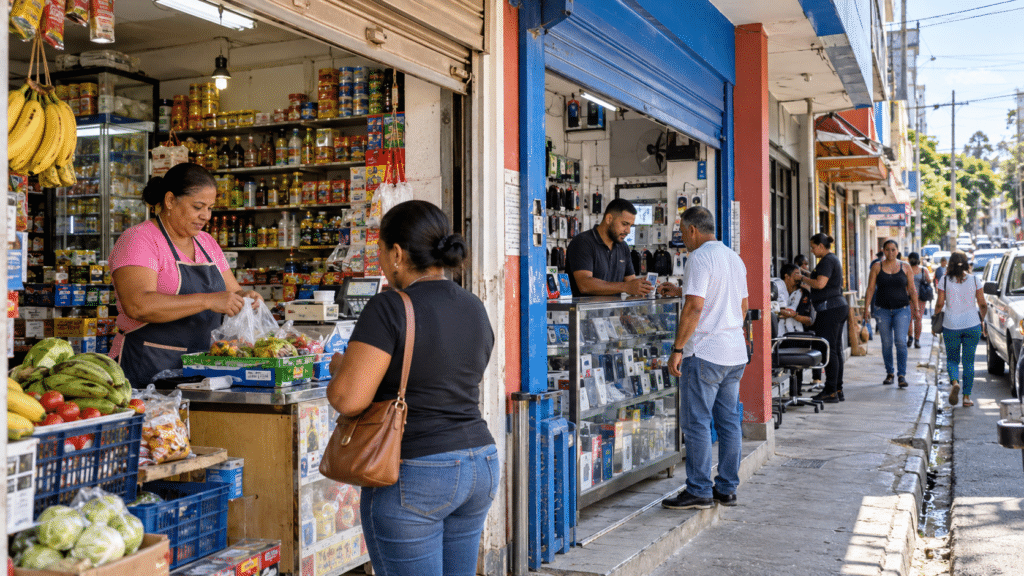
Micro, small, and medium-sized enterprises are a fundamental part of the Dominican Republic’s productive structure. They operate across local markets, supply goods and services, support household incomes, and provide employment in urban and rural communities. Their importance extends beyond the number of businesses they represent: they influence how economic activity is distributed across regions and how effectively economic growth translates into jobs and income.
Understanding this sector requires distinguishing between microenterprises, small businesses, and medium-sized firms, as well as between registered companies and informal economic units. These distinctions matter because the Dominican Republic’s official statistics use different methods to measure business populations, employment, tax registration, and economic output.
The Economic Importance of SMEs in the Dominican Republic
The Dominican Republic’s National Survey of Micro, Small, and Medium-Sized Enterprises for 2022–2023, conducted by the Central Bank of the Dominican Republic (BCRD) and the Ministry of Industry, Commerce and MSMEs (MICM), provides a key reference for understanding the sector’s scale. The survey identified 404,034 micro, small, and medium-sized enterprises after reviewing 470,527 economic units initially recorded in the nationwide identification exercise.
According to the official results announced in June 2024, these enterprises represented 32% of the country’s gross domestic product (GDP) and accounted for approximately 3,052,449 employed people, equivalent to 61.6% of total employment. The figures establish the sector as a major component of both national production and the labor market.
These indicators should be interpreted according to their respective measurement methods. The number of enterprises refers to identified business units, the employment figure refers to people employed, and the GDP contribution measures the sector’s value added. They are related indicators, but they do not measure the same thing and should not be combined as though they described an identical population.
The findings are available through the Dominican government’s announcement of the 2022–2023 National MSME Survey.
How Much Do SMEs Contribute to GDP?
The reported 32% contribution to GDP means that micro, small, and medium-sized enterprises collectively generate almost one-third of the Dominican economy’s measured value added. Value added represents the value a business or sector creates after accounting for the intermediate goods and services used in production. It is therefore a more meaningful measure of economic contribution than simply adding up business sales, which can count the same value multiple times along a supply chain.
The contribution also illustrates why the economic importance of smaller businesses cannot be assessed solely by comparing their individual revenues with those of large corporations. A single microenterprise may account for a small amount of national output, but the combined activity of hundreds of thousands of enterprises can have a substantial macroeconomic effect.
The 32% figure is an aggregate estimate associated with the 2022–2023 survey, rather than a fixed annual share. Changes in the number of operating businesses, their productivity, prices, and the performance of larger companies can all affect the relative contribution of SMEs over time.
SMEs and National Employment
Employment is one of the sector’s most significant contributions. The survey estimated that SMEs accounted for approximately 3.05 million employed people, or 61.6% of total employment. This includes the combined contribution of microenterprises, small businesses, and medium-sized firms rather than only companies that meet the definition of a small or medium-sized enterprise in the narrow sense.
The distinction matters because microenterprises dominate the business population. Their combined employment contribution is therefore substantial even though most operate on a much smaller scale than established medium-sized companies. Small businesses and medium-sized firms also support employment through more developed operating structures, supplier relationships, and demand for specialized services.
Employment associated with SMEs should not automatically be equated with formal salaried jobs. Depending on the statistical source, employment may include workers in registered companies, informal businesses, self-employment, and other working arrangements. The survey’s total employment estimate therefore describes the sector’s broad contribution to work, not exclusively its contribution to registered payroll employment.
What Qualifies as an SME in the Dominican Republic?
In the Dominican Republic, the Spanish term micro, pequeñas y medianas empresas, commonly abbreviated as MIPYMES, corresponds to micro, small, and medium-sized enterprises. The English abbreviation MSMEs is often used when microenterprises are explicitly included, while SMEs can refer more narrowly to small and medium-sized enterprises.
For this article, MSMEs is the preferred term when discussing statistics that include microenterprises. This is important because the official survey’s business count and employment estimates cover all three categories. Using SMEs as a general label without clarifying the inclusion of microenterprises could give readers an inaccurate impression of the businesses represented in the figures.
Official Business Size Categories
The Dominican tax authority, the Dirección General de Impuestos Internos (DGII), publishes the national classification criteria based on Article 4 of Law No. 187-17, as modified by Resolution No. 05-2021. The framework considers both the number of workers and annual gross sales. The published thresholds distinguish the three business categories as follows.
| Business category | Number of workers | Annual gross sales ceiling |
|---|---|---|
| Microenterprise | Up to 10 | RD$9,118,990.74 |
| Small enterprise | 11–50 | RD$61,553,187.51 |
| Medium-sized enterprise | 51–150 | RD$230,254,516.23 |
These are the thresholds published by the DGII under the cited classification framework. Because the sales ceilings are subject to regulatory updates, they should be checked against the latest applicable resolution before being used for a current legal, tax, or administrative determination. The official criteria are available on the DGII’s MSME information page.
The classification combines employment and sales rather than relying on a company’s name, ownership structure, or general description of its activities. A business that calls itself a small company is not necessarily classified as a small enterprise under the applicable rules. The formal category depends on the relevant legal criteria and the circumstances of the business.
Why Microenterprises Must Be Counted Separately
Microenterprises account for the overwhelming majority of businesses in the Dominican MSME population. In the 2022–2023 national survey, they represented 94.2% of identified MSMEs, compared with 4.5% for small enterprises and 1.3% for medium-sized enterprises.
This distribution demonstrates that the sector is not made up primarily of medium-sized companies or businesses with large workforces. Instead, it is dominated by very small economic units, many of which operate with limited staff and relatively modest sales. As a result, aggregate statistics can conceal substantial differences in operating capacity, access to finance, productivity, and resilience.
Microenterprises, small firms, and medium-sized businesses therefore need to be distinguished when evaluating the sector. A challenge affecting a self-employed trader or a business with two employees may differ considerably from one affecting a company with dozens of workers, established suppliers, and more complex administrative requirements.
How Many SMEs Operate in the Dominican Republic?
The 2022–2023 national survey identified 404,034 MSMEs from an initial nationwide count of 470,527 economic units. The resulting MSME figure represented 85.9% of the units recorded in the original identification exercise after the authorities excluded specified categories, including productive units belonging to large corporate groups, fuel stations, private clinics, and betting shops.
The distinction between the original count and the final MSME total is important. The 404,034 figure should not be interpreted as a count of every economic activity in the country, nor as a complete count of all registered companies in a tax database. It represents the MSME population identified through that particular statistical exercise and its selection criteria.
Different sources may report different totals because they measure different populations. A business directory, a household survey, a tax registry, and a survey of establishments do not necessarily identify the same economic units. Some count registered legal entities, others include individual business owners or informal operations, and some focus on specific industries or minimum employment levels.
For this reason, the national survey provides an important benchmark for understanding the broad MSME population, while the DGII’s MSME Statistical Bulletin offers a different perspective through tax-related indicators, including enterprise classifications, tax collections, salaried workers, and participation in the Simplified Tax Regime.
Where Are SMEs Located in the Dominican Republic?
MSMEs operate throughout the Dominican Republic, but their distribution is not uniform. The 2022–2023 national survey identified the northern region, commonly associated with the Cibao, as the area containing the largest share of the sector’s businesses. The Greater Santo Domingo area also accounts for a substantial concentration of enterprises.
According to the survey results announced by the government, 36.7% of identified MSMEs were located in the North, 33.2% in Greater Santo Domingo, 17.6% in the South, and 12.5% in the East. Together, the North and Greater Santo Domingo represented 69.9% of the identified business population.
| Region | Share of identified MSMEs |
|---|---|
| North | 36.7% |
| Greater Santo Domingo | 33.2% |
| South | 17.6% |
| East | 12.5% |
These figures describe the geographic distribution of businesses identified by the survey, not the percentage of national GDP generated by each region. They also do not establish that every province or municipality within a region has the same concentration of businesses. Regional totals can mask considerable differences between major urban centers, smaller towns, and rural communities.
Greater Santo Domingo and the Northern Region
Greater Santo Domingo is the country’s principal metropolitan area and an important center of commerce, professional services, distribution, and other business activities. Its large population and concentration of economic activity create demand for a broad range of goods and services supplied by businesses of different sizes.
The northern region also has a substantial business base, with economic activity extending across commercial centers, manufacturing, agriculture-related activities, tourism, logistics, and services. The survey’s finding that the North contains the largest share of identified MSMEs highlights the importance of looking beyond the capital when assessing the country’s business structure.
The figures indicate where enterprises are located, but they should not be used alone to compare regional productivity, average company size, business survival, or profitability. Those questions require additional data on output, employment, sales, and the characteristics of firms in each location.
Which Sectors Do Dominican SMEs Operate In?
MSMEs are active across a wide range of economic activities, including commerce, personal and professional services, food-related businesses, manufacturing, construction, transportation, tourism-related services, and agriculture-related operations. Their diversity reflects the different ways smaller businesses participate in the country’s economy, from supplying local consumers to serving other businesses.
Retail and wholesale trade are important parts of the broader Dominican business environment, while services cover a wide variety of activities, including repair work, personal care, hospitality, professional services, and other activities delivered directly to individuals or organizations. Smaller businesses can also participate in manufacturing and distribution as independent producers, contractors, or suppliers to larger firms.
However, the overall distribution of employment across the Dominican economy should not be confused with the sectoral distribution of MSMEs. National employment statistics identify which industries employ workers across businesses of all sizes, whereas an MSME survey focuses on the business segment defined by its methodology. Without a directly comparable breakdown, national industry employment shares cannot reliably establish the percentage of MSMEs operating in each sector.
Commerce and Retail Trade
Commercial activities connect producers, wholesalers, distributors, and consumers. Smaller enterprises participate in this process through neighborhood shops, specialized retailers, wholesalers, and other trading businesses. These firms can provide access to goods in communities where large retail chains or specialized distribution networks have a more limited presence.
Trade businesses also illustrate the differences within the MSME sector. Some operate with minimal staffing and limited inventories, while others manage multiple employees, larger product ranges, and more complex supplier relationships. Their financial needs and productivity levels can consequently differ even when they operate within the same broad industry.
Services and Tourism-Related Activities
Services encompass numerous activities that vary considerably in scale and specialization. Hair salons, repair businesses, food-service operators, transport providers, and professional service firms can all fall within the MSME category when they meet the relevant classification criteria. Some serve local residents, while others supply businesses or visitors.
Tourism-related activity creates connections between smaller businesses and the wider visitor economy. Restaurants, transport providers, local service companies, and other operators may participate directly in visitor spending or indirectly through supply chains. However, not every tourism-related business is an MSME, and the economic contribution of tourism as a whole should not be attributed exclusively to smaller firms.
Manufacturing, Construction, and Agriculture-Related Businesses
Smaller enterprises also participate in production and construction. They may manufacture goods, process materials, undertake specialized contracting, or provide maintenance and other services to larger companies. In these activities, business performance can depend on access to equipment, reliable inputs, working capital, technical skills, and predictable demand.
Agriculture-related MSMEs can operate in production, processing, transport, distribution, and other stages of the food supply chain. Their characteristics vary according to the type of activity, seasonality, location, and relationship with buyers. Some are closely integrated into established commercial networks, while others operate on a smaller scale with more limited access to formal markets.
These examples describe the breadth of the sector rather than a quantified ranking of industries by the number of MSMEs. A precise sectoral ranking requires a comparable official breakdown that identifies the relevant business population, classification system, and reference period.
Business Characteristics: A Sector Dominated by Microenterprises
The most important structural characteristic of Dominican MSMEs is their concentration in the smallest business category. With microenterprises accounting for 94.2% of the identified population in the 2022–2023 survey, the sector’s overall profile is shaped primarily by businesses with limited staffing and comparatively modest sales.
Microenterprises may depend heavily on their owners for daily operations, customer relationships, purchasing, recordkeeping, and financial decisions. In some cases, ownership and management are closely connected to household income. This can make the business flexible, but it may also limit the time and resources available for specialized management, technology adoption, or longer-term planning.
Small and medium-sized enterprises can have more developed organizational structures, although their circumstances vary. Some employ specialized staff and maintain established supplier networks, while others remain dependent on a small group of managers or customers. The formal size category alone does not determine a firm’s productivity, profitability, or capacity to expand.
Owner-Managed Operations and Limited Administrative Capacity
In many very small businesses, owners perform several functions simultaneously. The same person may manage sales, purchase inventory, supervise workers, maintain financial records, and handle customer service. This arrangement can reduce administrative overhead, but it can also create operational dependence on one individual.
When essential business knowledge remains concentrated with the owner, illness, family responsibilities, or other disruptions can affect continuity. Limited administrative capacity can also make it more difficult to separate personal and business finances, assess costs accurately, or determine whether apparent sales growth is translating into sustainable profitability.
Technology and Digitalization
Digital tools can influence how MSMEs communicate with customers, process transactions, maintain records, and manage inventory. Their adoption, however, varies according to the business’s resources, industry, customer base, and operating requirements. Having access to a smartphone or social media account does not necessarily mean a business has integrated digital tools into its accounting, stock management, or financial reporting.
The Ministry of Industry, Commerce and MSMEs has examined operational characteristics such as financial efficiency, financing sources, business sustainability, innovation in payment methods, and operating profitability in its analysis of the national survey. These dimensions are relevant because they help distinguish the mere presence of a business from its capacity to operate efficiently and withstand changes in market conditions.
Formal and Informal SMEs in the Dominican Republic
Informality is one of the defining features of the Dominican MSME sector. According to the results announced for the 2022–2023 national survey, 14.8% of identified MSMEs were classified as formal based on possession of a National Taxpayer Registry number, known as the Registro Nacional de Contribuyentes (RNC). The remaining 85.2% were classified as informal under that survey’s criterion.
This finding requires a precise interpretation. The reported percentages use RNC registration as the stated distinction between formal and informal businesses in the survey results. They should not automatically be interpreted as a complete assessment of every legal, labor, municipal, social security, or regulatory obligation applicable to each enterprise.
Formalization can involve several dimensions, including tax registration, appropriate legal organization, business permits where required, labor obligations, and social security compliance when applicable. A business’s status in one dimension does not necessarily establish its status in all the others.

Why Formalization Matters
Formal registration can help establish a documented relationship between a business and the tax administration. It can also support access to formal financial services, participation in public procurement where eligibility requirements are met, and the ability to issue tax invoices under the applicable rules.
For businesses seeking relationships with larger corporate customers, documented operations and appropriate invoices may be important commercial requirements. Formal records can also improve the availability of information about sales, expenses, and financial performance, making it easier for owners and external institutions to assess the business’s activities.
The DGII’s official MSME guidance explains the tax registration framework and identifies several functions associated with formal taxpayer status. These administrative benefits do not mean that formalization automatically guarantees access to credit, higher profits, or business growth.
Why Informality Persists
The high proportion of businesses classified as informal indicates that a large share of the identified MSME population operates outside the particular formal registration criterion used by the survey. The figure alone, however, does not identify the reasons for each business’s status or demonstrate that all informal businesses face the same circumstances.
Potential barriers to formalization can include the administrative demands of registration and ongoing compliance, limited familiarity with regulatory requirements, low business revenues, and the costs associated with maintaining formal operations. For some owners, the immediate scale of activity may also influence whether they establish more developed business structures. These are possible explanations, not a breakdown of causes measured by the reported 85.2% figure.
Informality also creates measurement challenges. Businesses that are difficult to identify through administrative records may be captured differently by household surveys or establishment-based exercises. Consequently, statistics based on registered taxpayers cannot be assumed to describe the entire population of small economic activities in the country.
Access to Finance and Business Funding
Financing is a structural issue for many MSMEs because business operations require resources before revenue is collected. Inventory purchases, equipment, rent, wages, transport, and supplier payments can all create working-capital needs. A business may be economically viable but still experience cash-flow pressure when payments arrive later than expenses fall due.
Access to financing depends on several factors, including the business’s financial records, repayment capacity, available collateral, credit history, and the terms offered by financial institutions. Smaller and less formal businesses may have difficulty demonstrating their financial position in the standardized ways lenders commonly require.
Dependence on Limited Funding Sources
MICM analysis of the 2022–2023 national survey reported that 86.6% of microenterprises depended on a single source of financing. The finding highlights the limited diversification of funding sources among microenterprises in the surveyed population. It does not mean that 86.6% had no access to financing, nor does it identify one funding source as universal across the category.
Dependence on a single source can leave a business exposed when that source becomes unavailable or insufficient. The implications differ according to whether the funding comes from the owner’s resources, retained business income, suppliers, family networks, or formal credit. Without a breakdown of the source and its terms, the percentage should not be interpreted as a direct measure of debt, credit exclusion, or financial distress.
Working Capital and Investment
Working capital supports routine operations, while longer-term investment can finance equipment, premises, technology, or productive capacity. These needs should be distinguished because the appropriate financing structure depends on the purpose and timing of expenditure. A short-term cash-flow problem is not necessarily evidence that a company lacks a viable business model, just as access to a loan does not establish that an investment will generate an adequate return.
For MSMEs with limited financial reserves, unexpected expenses or changes in sales can affect their ability to meet obligations. Businesses with more developed accounting systems may be better positioned to identify cash-flow gaps and evaluate investment decisions, although management quality and market conditions remain important regardless of size.
Productivity, Competitiveness, and Business Resilience
Productivity is a central issue in understanding the long-term economic contribution of MSMEs. The number of enterprises and people employed describes the sector’s scale, but it does not reveal how much value each worker or business generates. Two enterprises with similar staffing levels may have very different outputs, technology, profit margins, and capacity to pay wages.
Differences in equipment, skills, management practices, digital systems, access to reliable inputs, and the organization of production can affect business performance. Smaller firms may have fewer resources available to make these investments, while their limited scale can also make it difficult to spread fixed costs across a larger volume of sales.
Competition and Market Access
MSMEs compete with other small businesses, larger domestic companies, and imported products or services, depending on their industry. Competitive conditions can be especially demanding when customers are sensitive to price or when larger firms benefit from purchasing power, established distribution systems, or economies of scale.
At the same time, smaller enterprises can serve specialized markets, respond to local customer preferences, and provide services that depend on proximity or direct relationships. Their performance therefore cannot be assessed using size alone. Industry conditions, product quality, customer demand, cost structure, and the ability to maintain reliable operations all influence competitiveness.
Exposure to Economic and Environmental Shocks
Smaller businesses can be vulnerable to sudden reductions in sales, rising operating expenses, interruptions in supply, and damage to premises or equipment. Their ability to absorb a shock often depends on available cash reserves, insurance coverage where applicable, access to replacement supplies, and the diversity of their customers and revenue sources.
The Dominican Republic’s exposure to hurricanes and other severe weather events makes business continuity relevant to the wider economic discussion. The effects of a disruption vary according to location and industry: damage to physical premises may directly affect one business, while another may experience indirect losses through interrupted transport, fewer customers, or supply-chain problems.
Such vulnerability is not exclusive to MSMEs, but a business with limited reserves may have less room to absorb prolonged interruptions. The implications are particularly important when a business provides the main source of income for its owner or household.
SMEs and the Dominican Labor Market
The sector’s estimated 61.6% share of total employment demonstrates its significance for the labor market. Its contribution extends across businesses of different sizes and operating models, including formal companies, informal enterprises, and microbusinesses. This broad employment role means that changes in MSME activity can affect household income and local demand.
However, the employment figure does not establish the quality or stability of every job associated with the sector. Working arrangements, wages, benefits, working hours, and social security coverage vary. A complete assessment of employment conditions requires labor-market indicators in addition to the number of people employed by MSMEs.
Formal Employment and Informal Work
Formal employment generally involves a recognized employment relationship and the applicable labor and social security obligations. Informal work can take several forms, including work in unregistered businesses and other arrangements that do not meet the relevant criteria for formal employment. These categories should not be treated as interchangeable with the legal or tax status of a business.
A registered company may engage workers under different arrangements, while informal economic activity can include self-employment as well as work performed by others. The percentage of MSMEs classified as informal by RNC status is therefore not the same indicator as the national rate of informal employment.
The Dominican Republic’s National Statistics Office (ONE) publishes labor-market data covering employment, occupational categories, economic activities, and informality. These statistics provide a complementary perspective on labor conditions, but their definitions and reference periods must be checked before they are compared with the MSME survey’s business-level results.
Employment Beyond the Major Urban Centers
The geographic distribution of MSMEs shows that the sector is not confined to Greater Santo Domingo. Businesses throughout the North, South, and East contribute to local economic activity and provide goods and services in communities of different sizes. Their presence can support local commercial networks and create links between producers, service providers, and consumers.
Nevertheless, a region’s share of the business population does not directly measure its share of employment, wages, or output. A region containing fewer enterprises could still have a significant economic contribution if its businesses are larger or more productive on average. Regional comparisons require indicators that measure these dimensions separately.
Why Official SME Statistics Differ
One of the most important considerations when interpreting MSME data in the Dominican Republic is that different official sources serve different purposes. The Central Bank and MICM national survey provides a broad view of the identified MSME population and its economic contribution. The DGII’s statistical bulletins focus on tax-related information, while labor-market surveys measure employment and working conditions across the economy.
These sources are complementary rather than interchangeable. A tax database is designed to record registered taxpayers and related administrative information; it cannot automatically capture every informal business. A labor-force survey measures people and jobs rather than simply counting business units. An economic activity survey may also impose industry or minimum-employment criteria that exclude many microenterprises.
Even when two sources use the same general label, differences in coverage, reference periods, definitions, and statistical methods can produce different totals. This does not necessarily mean one source is incorrect. It means that the population being measured must be understood before figures are compared.
How to Interpret the Main Indicators
- Number of enterprises: Measures identified business units under the source’s coverage and classification rules.
- Employment: Measures people employed or jobs associated with the population being studied; the precise definition depends on the source.
- GDP contribution: Measures the sector’s contribution to national value added rather than simply its total sales.
- Formalization: Depends on the indicator used, such as tax registration, legal registration, labor compliance, or social security coverage.
- Sector distribution: Requires a consistent industry classification and a clearly defined business population.
These distinctions are essential when evaluating the sector’s development over time. A change in the number of registered businesses may reflect new economic activity, improved registration, changes in administrative coverage, or business closures. Similarly, a change in employment does not necessarily indicate a corresponding change in the number of enterprises.
The Main Structural Challenges Facing Dominican MSMEs
The official evidence points to a sector that is economically significant but highly concentrated in microenterprises and characterized by substantial informality. These characteristics help explain why the challenges facing smaller businesses cannot be reduced to a single issue. Their operating conditions are influenced by financing, management capacity, productivity, market access, regulatory compliance, and exposure to economic disruptions.
1. High Informality
The 85.2% informal share reported by the 2022–2023 survey, using the stated RNC-based classification, indicates a major gap in formal tax registration within the identified MSME population. Informality can limit access to certain formal commercial relationships and make it more difficult to establish a consistent administrative and financial record. Its implications vary according to the nature and scale of the business.
2. Limited Access to Diversified Financing
The reported dependence on a single financing source among 86.6% of microenterprises points to a concentrated funding structure. This can restrict flexibility when operating expenses rise or investment needs increase. Financing constraints should nevertheless be assessed alongside business demand, repayment capacity, the cost of credit, and the suitability of available financial products.
3. Low or Uneven Productivity
Businesses with limited access to equipment, technology, specialized skills, or management systems may struggle to improve output per worker or reduce operating costs. Productivity also differs by industry, so meaningful comparisons must account for the type of economic activity and the resources required to produce goods or deliver services.
4. Administrative and Compliance Demands
Maintaining tax records, meeting applicable regulatory obligations, managing employees, and documenting transactions can require time and expertise. For a very small business with limited administrative capacity, these demands can be proportionally more significant than they are for a larger organization. The exact obligations depend on the business’s legal form, activities, employment arrangements, and applicable rules.
5. Uneven Digital and Technical Capabilities
Access to digital tools does not guarantee that businesses can use them effectively for inventory control, financial management, payment processing, or customer analysis. The resources needed to adopt and maintain such systems can vary substantially across enterprises. Differences in technical skills and management capacity may consequently affect how much value businesses obtain from digitalization.
6. Exposure to Market and Environmental Disruptions
Businesses with limited cash reserves or concentrated customer bases may have less capacity to absorb a sudden fall in demand or a disruption to operations. Weather-related damage, supply interruptions, and unexpected increases in expenses can affect both business continuity and household income. The degree of exposure depends on location, industry, resources, and the availability of alternatives.
Understanding the Role of MSMEs in the Dominican Economy
The Dominican Republic’s MSME sector is best understood as a broad and diverse population of businesses rather than a uniform group of small companies. It includes a large majority of microenterprises, a smaller proportion of small firms, and a relatively limited number of medium-sized enterprises. Their activities extend across regions and industries, connecting household consumption, local services, production, and commercial supply chains.
The national survey’s principal findings provide a clear measure of the sector’s economic importance: 404,034 identified MSMEs, a reported contribution of 32% of GDP, and approximately 3.05 million employed people, equivalent to 61.6% of total employment. At the same time, the predominance of microenterprises and the high proportion classified as informal under the survey’s RNC criterion reveal important structural characteristics that aggregate figures alone cannot fully explain.
The long-term economic significance of MSMEs depends not only on how many businesses operate or how many people they employ, but also on their capacity to generate value, sustain employment, comply with applicable requirements, and withstand changing market conditions. Distinguishing between business size, registration status, employment, and productivity is therefore essential to understanding the sector’s contribution to the Dominican economy.