 22°C
22°C

Sustainable Finance Is Reshaping Access to Capital in Dominican Republic
Sustainability is increasingly influencing financing decisions, debt costs and corporate risk assessment in the Dominican Republic, as investors and financial institutions place greater weight on reliable environmental, social and governance information.


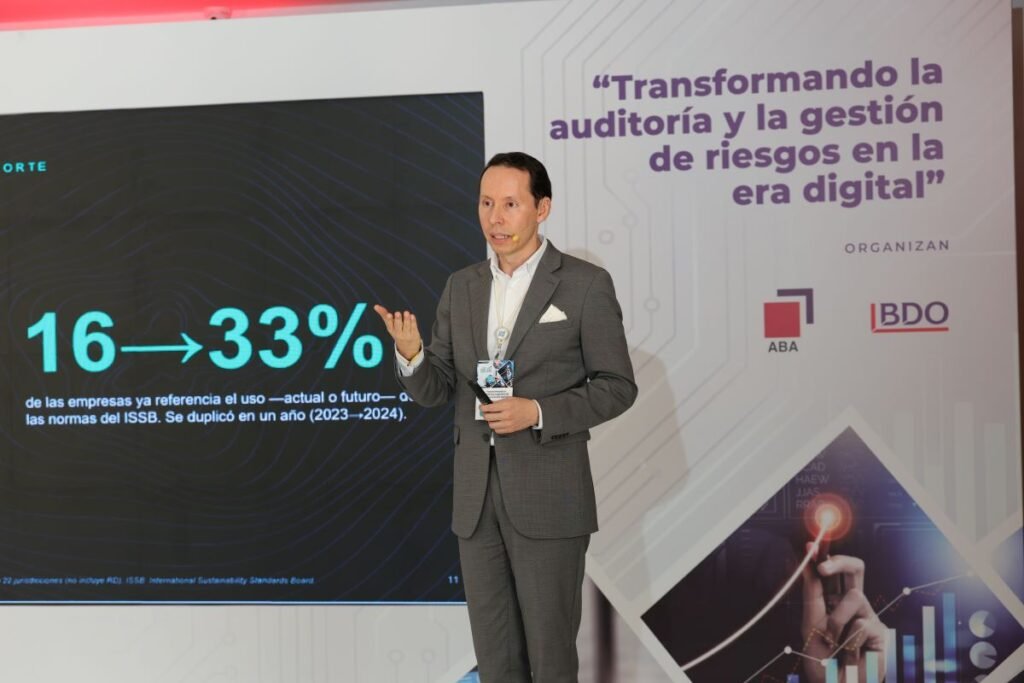
Sustainable finance is becoming an increasingly important factor in how companies and governments access capital, with sustainability information now influencing financing decisions, debt costs and risk assessments, according to Alejandro Wilches, a specialist in sustainability and ESG strategy, reporting and performance.
Wilches made the remarks during the XXIX International Congress on Finance and Auditing (CIFA) and the XXIV Latin American Seminar of Accountants and Auditors (Selatca) in Boca Chica, where he discussed the growing connection between sustainability reporting and financial decision-making.
Investors, banks, insurers and other stakeholders are increasingly using sustainability information to assess risks and opportunities. In that environment, Wilches argued, companies must provide information that can be trusted and independently verified rather than relying on broad sustainability commitments.
Dominican Republic’s Green Bond Illustrates Financing Impact
The Dominican Republic’s first sovereign green bond provides a local example of how sustainability can affect financing conditions. The government issued the US$750 million bond on June 25, 2024, with proceeds allocated to eligible green expenditures. The World Bank reported that the transaction carried a financing cost 15 basis points below comparable conventional bonds.
Wilches cited the transaction as evidence that environmental considerations can have a direct financial dimension. For companies and governments, the shift means sustainability is no longer limited to corporate communications or disclosure requirements; it can also influence how capital providers evaluate risk and determine financing terms.
Financial and Sustainability Reporting Are Converging
The international reporting framework is also moving toward closer integration between financial information and sustainability disclosures. Investors increasingly want to understand not only a company’s environmental or social indicators, but also how related risks and opportunities could affect financial performance, cash flow and business strategy.
This approach is reflected in the sustainability standards developed under the IFRS Foundation, which focus on sustainability-related risks and opportunities that could reasonably be expected to affect an organization’s financial prospects over the short, medium and long term.
For companies, the shift places greater emphasis on connecting sustainability data with finance, risk management and corporate strategy. It also raises the importance of consistent metrics, reliable internal processes and evidence capable of supporting reported claims.
Auditors Face a Larger Role in Sustainability Reporting
Wilches also highlighted the growing role of auditors and other assurance professionals as sustainability disclosures become more closely linked to financial decision-making. The International Standard on Sustainability Assurance (ISSA 5000), issued by the International Auditing and Assurance Standards Board, establishes a comprehensive framework for assurance engagements covering sustainability information across different topics and reporting frameworks.
ISSA 5000 is designed to strengthen confidence in sustainability disclosures and can be used for both limited and reasonable assurance engagements. The standard applies to sustainability information regardless of the reporting framework used, broadening the role of assurance beyond traditional financial reporting.
The standard is effective for assurance engagements covering sustainability information reported for periods beginning on or after December 15, 2026, although early application is permitted.
That evolution is expected to require closer coordination among finance, risk, strategy and sustainability teams. For businesses seeking investment or financing, the quality and credibility of sustainability information are increasingly becoming part of the broader assessment of financial risk and long-term performance.