 24°C
24°C

When Did the US Dollar Become Widespread in the Dominican Republic?
The US dollar has been present in the Dominican Republic for well over a century, but its role has changed significantly over time. It was already widely circulating before the Dominican peso became the country's exclusive legal currency framework after the creation of the Central Bank in 1947. The dollar's modern economic importance grew particularly during the 1990s and accelerated sharply during the 2003 banking and currency crisis, when confidence in the peso deteriorated and dollarization increased. Today, the dollar's prominence is closely connected to tourism, remittances, international trade, foreign investment, and the desire of households and businesses to protect savings and contracts from exchange-rate risk.


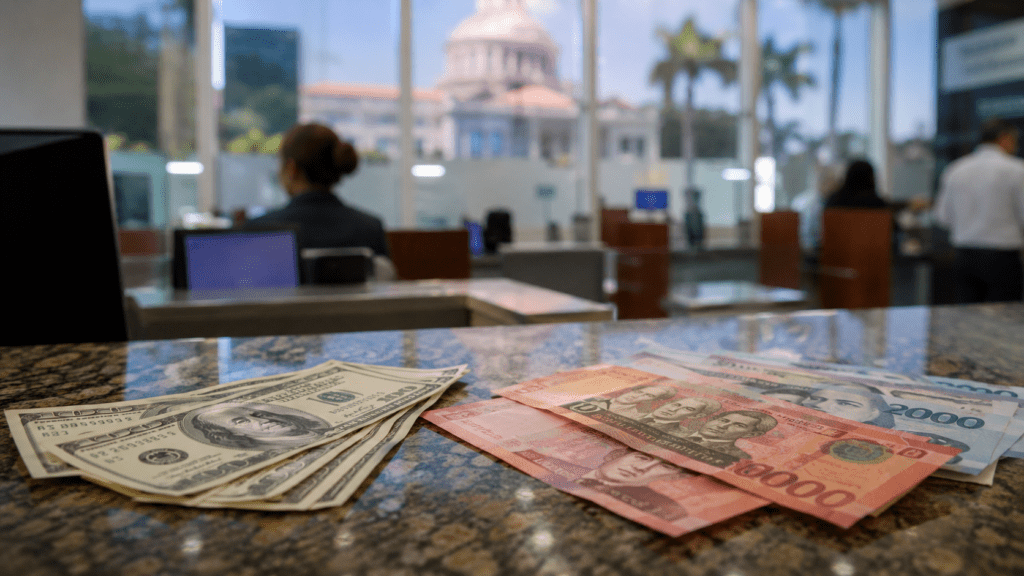
The short answer is that there is no single year when the US dollar suddenly became important in the Dominican Republic. Its history in the country is much older than modern dollarization. The dollar was already circulating extensively before the Dominican monetary system was consolidated around the Dominican peso in the mid-20th century. Much later, the dollar acquired a new and more visible role in banking, savings, property transactions, tourism and international business.
The Dollar Was Already Circulating Before 1947
The presence of the US dollar in the Dominican Republic predates the creation of the modern central banking system. According to historical material published by the Banco Central de la República Dominicana, the institution was created in 1947 partly to establish a national monetary system in a country where several forms of money were circulating. The Central Bank specifically notes that the US dollar was particularly important among the currencies circulating in the country at that time.
This point is important because it changes the way the history of the dollar in the Dominican Republic should be understood. The dollar did not first become important because of tourism, remittances or the banking crisis of 2003. Those factors explain its modern economic prominence, but the currency already had a substantial presence decades earlier.
When the Central Bank began operations on October 23, 1947, it became the institution authorized to issue Dominican banknotes and coins with legal-tender status throughout the country. The creation of a national monetary authority therefore represented a major step toward establishing the Dominican peso as the country’s domestic currency.
So When Did Modern Dollarization Become Widespread?
If by “massive use” we mean the modern phenomenon in which people and companies hold significant amounts of dollars in bank accounts, use dollars as a store of value, borrow in dollars or price important assets in dollars, the most useful period to examine is the 1990s and, especially, the early 2000s.
IMF data show that foreign-currency deposits represented about 23.9% of total bank deposits in the Dominican Republic in 2001. The share rose to 26.1% in 2002 and 27.5% in 2003 before declining to 25.1% in 2004. Foreign-currency loans also became significant: they represented 27.6% of total loans in 2001, 30.9% in 2002 and 37.0% in 2003.
Those figures do not mean that one-quarter of all everyday purchases were being made in dollars. “Dollarization” in financial statistics includes foreign-currency deposits and loans, which is different from the use of dollar cash in ordinary retail transactions. Nevertheless, the figures demonstrate that the dollar had become deeply embedded in the financial system by the beginning of the 21st century.
The 2003 Banking Crisis Was a Major Turning Point
The most important acceleration in modern dollarization came during the banking and currency crisis of 2003. The collapse of confidence in parts of the banking system generated strong demand for foreign currency, while pressure on the peso produced a sharp depreciation.
The IMF reported that the 2003 banking crisis was accompanied by a major depreciation of the peso and a significant deterioration in economic confidence. ECLAC likewise described the crisis as producing a wave of uncertainty and lack of confidence that resulted in increased dollarization and capital flight.
This is a classic mechanism behind informal dollarization. When people fear that their local currency will lose purchasing power, they may prefer to keep part of their savings in a currency they perceive as more stable. The same logic can apply to businesses that have revenues, debts or purchases linked to international markets.
The IMF’s broader research on dollarization identifies exchange-rate risk, inflation, economic instability and the desire to diversify assets as important reasons why residents of developing economies hold foreign currencies. In other words, dollarization is not necessarily the result of a government deciding to replace its currency. It can emerge gradually from millions of individual financial decisions.
Why Does the Dollar Have So Much Presence in the Dominican Economy?
1. The United States Is Central to the Dominican Economy
The most fundamental reason is the Dominican Republic’s close economic relationship with the United States. The US is a major market for Dominican exports and, more importantly for households, the principal source of remittances sent by Dominicans living abroad.
According to the IMF, the United States accounted for close to 85% of Dominican remittance inflows in 2024. Total remittances were equivalent to 8.6% of Dominican GDP in that year.
Remittances create a natural connection between Dominican households and the dollar. A Dominican family receiving money from a relative in New York, New Jersey, Florida or another US location is receiving income generated in a dollar economy. Even when the money is ultimately converted into pesos for local spending, the dollar remains an important reference currency.
2. Tourism Brings Dollars Into the Country
Tourism is another major reason for the dollar’s visibility. International visitors commonly arrive with dollars or use payment systems connected to dollar-denominated accounts. Hotels, airlines, tour operators and other businesses serving international customers operate in an environment in which foreign-currency revenues are economically important.
The connection is broader than tourists simply carrying cash. Tourism generates a continuous flow of foreign exchange into the Dominican economy. The IMF has identified tourism, remittances and export-related activities as important sources of foreign-exchange flows in the Dominican Republic.
This gives the dollar an important role even when a transaction is ultimately settled in pesos. A hotel may charge a guest in dollars, a Dominican employee may receive a salary in pesos, and the hotel may convert part of its foreign-currency revenue through the banking system. The dollar therefore participates in the economic chain even when it is not the final means of payment.
3. International Trade Is Closely Linked to the Dollar
The dollar is also the dominant international reference currency for a large share of global trade. Dominican companies importing fuel, machinery, equipment, technology and other goods may face costs that are ultimately linked to dollar prices. Exporters may likewise receive revenues in dollars or in currencies whose value is compared with the dollar.
This creates a practical reason for businesses to maintain access to dollars. A company that must pay a foreign supplier in US dollars has an obvious reason to monitor the peso-dollar exchange rate and, in some circumstances, to hold foreign currency.
4. The Dollar Offers Protection Against Peso Depreciation
Another important factor is the dollar’s role as a store of value. When people expect the peso to lose value against the dollar, holding dollars can appear to reduce currency risk.
This does not mean that holding dollars is always more profitable. Exchange rates move in both directions, and keeping savings in a foreign currency can also involve costs and risks. But the basic incentive is straightforward: someone whose future expenses include dollar-denominated payments may prefer to keep at least part of their assets in dollars rather than convert everything into pesos.
The experience of 2003 reinforced this behavior. The banking crisis generated uncertainty, the peso depreciated sharply, and dollarization increased. The IMF documented the connection between the crisis, currency depreciation and the financial system’s exposure to foreign-currency liabilities.
5. Real Estate and Other High-Value Transactions
The dollar is particularly visible in sectors involving high-value assets and international buyers, including parts of the real-estate market. A property can be physically located in the Dominican Republic while its seller, buyer, financing arrangements or expected resale value may be connected to international markets.
Using dollars as a reference in these situations can reduce the perceived difficulty of comparing prices across countries. It can also make it easier for foreign buyers to understand the value of an asset without first converting every figure into pesos.
This does not mean that every property transaction in the Dominican Republic is legally required to use dollars or that the peso has ceased to be the country’s currency. Rather, the dollar can function as a pricing and contractual reference in parts of the economy where international capital is particularly important.
The Difference Between Dollar Use and Official Dollarization
One of the most common misunderstandings is to assume that a country with extensive dollar use has officially adopted the dollar. The Dominican Republic has not done so. The Dominican peso remains the national currency, and the Banco Central is the country’s monetary authority.
This distinction matters. Economists generally use the term “dollarization” broadly to describe the use of a foreign currency, but there is a major difference between informal or partial dollarization and full official dollarization. Under full dollarization, a country adopts a foreign currency as its official monetary system. Under informal dollarization, residents and businesses continue to use the national currency while also holding or using foreign currency.
The Dominican Republic belongs to the latter category. The peso remains fundamental to domestic monetary policy, while the dollar plays a substantial parallel role in foreign exchange, banking, savings, trade and sectors connected to international activity.
Why the Dollar Did Not Replace the Peso
The dollar’s strong presence should not be confused with the disappearance of the peso. Most everyday economic activity in the Dominican Republic remains organized around the national currency, particularly wages, domestic retail prices, taxes and ordinary household expenses.
The Central Bank continues to publish official exchange-rate information for the US dollar and maintains historical exchange-rate series going back decades. Its exchange-rate system therefore treats the dollar as the country’s most important foreign currency without making it the domestic currency.
This arrangement has practical advantages. The Dominican Republic retains its own monetary policy and can adjust interest rates and liquidity conditions through its central bank, while households and businesses can still access dollars when they need to conduct international transactions or protect themselves against exchange-rate exposure.
How the Dollar’s Role Changed Over Time
| Period | What Happened | Importance of the Dollar |
|---|---|---|
| Before 1947 | Several forms of money circulated in the country, including the US dollar. | The dollar already had a significant physical presence. |
| 1947 onward | The Central Bank began operations and established a national monetary framework. | The Dominican peso became firmly established as the domestic currency. |
| 1990s | The economy expanded rapidly, with tourism, remittances and international trade becoming increasingly important. | The dollar became increasingly relevant to international economic activity. |
| 2001–2003 | Foreign-currency deposits and loans became a substantial part of the banking system. | Financial dollarization became clearly significant. |
| 2003 crisis | A banking crisis caused a sharp loss of confidence, peso depreciation and increased dollarization. | The dollar’s role as a store of value became particularly important. |
| Since then | The Dominican economy continued to expand its links with tourism, remittances, trade and foreign investment. | The dollar remained deeply integrated into international and financial activity without replacing the peso. |
Why the Dollar Remains Strong Even When the Economy Is Stable
Dollarization is not driven exclusively by crises. Once foreign currency becomes deeply integrated into an economy, it can persist because people and companies have developed habits, contracts and financial relationships around it.
A business that earns dollars from international customers may naturally keep a dollar account. A family receiving regular remittances may already be accustomed to receiving and exchanging dollars. An investor comparing a Dominican asset with opportunities elsewhere may think in dollars. A company importing equipment may budget in dollars because its supplier does.
These behaviors reinforce one another. The more important international transactions become, the more useful the dollar becomes as a common financial reference. This is one reason why dollar use can persist even after the economic instability that originally encouraged people to seek protection in foreign currency has passed.
Does the Dominican Republic Have a Dollar Economy?
It is more accurate to describe the Dominican Republic as a peso economy with significant dollarization than as a dollar economy.
The distinction is especially important for visitors and foreign residents. A person may encounter prices quoted in dollars in tourism, real estate or other internationally oriented sectors, but that does not mean the entire domestic economy operates in dollars. The peso remains the basic monetary unit for the country’s domestic economic system.
The presence of dollar prices can nevertheless make the country feel more dollarized than official monetary statistics suggest. Financial dollarization, cash circulation, foreign-currency contracts and the use of dollars as a pricing reference are different phenomena, and they should not be treated as identical measures.
What the History of the Dollar Says About the Dominican Economy
The long history of the dollar’s presence reflects the Dominican Republic’s unusually strong integration with the international economy. The country is not an isolated domestic market: tourism brings foreign visitors, millions of Dominicans live abroad and send money home, exporters sell into international markets, businesses import goods and services, and foreign investors participate in the economy.
The dollar is therefore important because it connects the Dominican economy to the wider financial system. Its role expanded for different reasons at different moments: historical circulation before the modern peso system, growing international economic integration, financial dollarization, and the search for protection during periods of monetary and banking instability.
The 2003 crisis is particularly important because it demonstrated how quickly confidence in the local currency can influence demand for foreign currency. IMF data show that foreign-currency deposits had already become significant before the crisis, while ECLAC explicitly linked the crisis to increased dollarization and capital flight.
Frequently Asked Questions
When did the US dollar first become important in the Dominican Republic?
The dollar was already an important circulating currency before the establishment of the Banco Central in 1947. Historical material from the Central Bank states that the US dollar was among the currencies circulating in the country at that time and describes it as particularly prominent.
When did modern financial dollarization become significant?
Modern financial dollarization was already significant by the early 2000s. Foreign-currency deposits accounted for 23.9% of total deposits in 2001 and 27.5% in 2003, according to IMF data. Foreign-currency loans reached 37.0% of total loans in 2003.
Did the 2003 banking crisis increase dollar use?
Yes. The 2003 banking crisis triggered a loss of confidence, strong pressure on the peso and increased dollarization. ECLAC specifically described increased dollarization and capital flight as consequences of the crisis.
Is the US dollar the official currency of the Dominican Republic?
No. The Dominican peso is the national currency. The US dollar is a widely used foreign currency and an important reference in international and financial transactions, but the Dominican Republic has not officially replaced the peso with the dollar.
Why do Dominicans receive so many dollars?
The principal reason is remittances from Dominicans living abroad. The United States is by far the largest source of remittance inflows, accounting for close to 85% of total remittances received in 2024, according to the IMF.
Why are some prices in the Dominican Republic quoted in dollars?
Dollar quotations are particularly common where prices are influenced by international markets, foreign buyers or foreign-currency revenues. Real estate, tourism and certain business transactions are examples. The use of a dollar price in these sectors does not mean that the peso has ceased to be the national currency.
Does widespread dollar use mean that the Dominican peso is weak?
Not necessarily. Dollarization can reflect international economic integration as well as concerns about currency risk. A country can have a stable monetary system while still maintaining substantial foreign-currency holdings because its trade, tourism, investment and remittance flows are strongly connected to the United States and other international markets.