 24°C
24°C

The Time the Dominican Republic Nearly Had a Different Name
The Dominican Republic has been known by its present name since the independence movement led by Juan Pablo Duarte, but the country’s path to that name was far less straightforward than it may seem. In 1821, more than two decades before the Dominican Republic was proclaimed, the eastern part of Hispaniola briefly became an independent state called the Independent State of Spanish Haiti. That experiment lasted only a few weeks before Haitian forces occupied the territory, but it created one of the most unusual chapters in Dominican history—and one of the clearest reminders that the country we know today could have emerged under a very different political name.


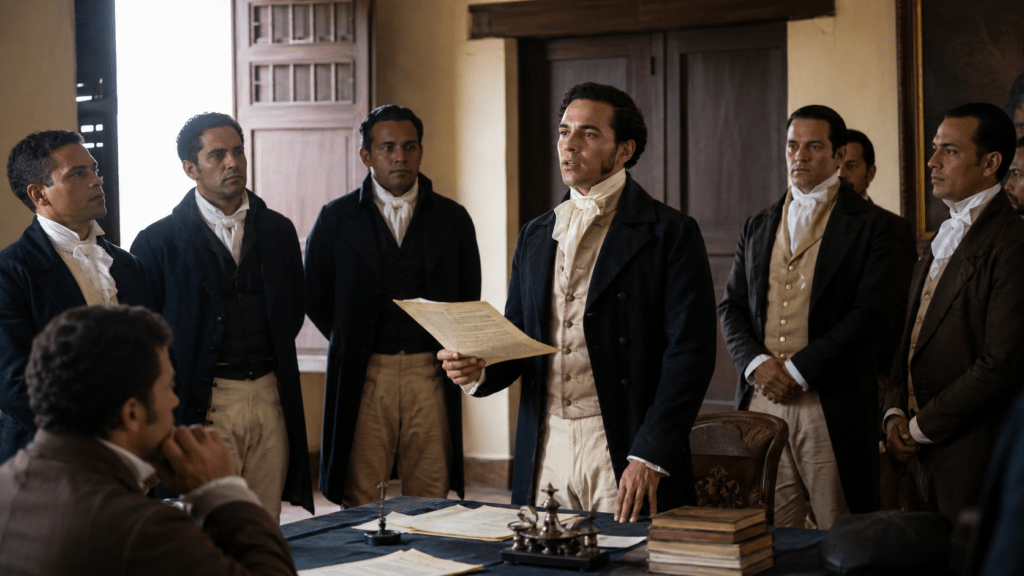
The name Dominican Republic feels inseparable from the country itself. It appears on passports, treaties, government buildings, international maps and the national coat of arms. Yet the name was not inevitable. Before the Dominican state took its modern form, the eastern part of Hispaniola went through a short-lived independence in 1821 under a name that sounds strikingly different: the Independent State of Spanish Haiti.
The episode is sometimes overshadowed by the much better-known independence of February 27, 1844. That is understandable: the 1844 movement created the Dominican Republic that survived as an independent state, while the 1821 experiment lasted only about two months before Haitian forces established control over the eastern part of the island. But the earlier episode matters because it shows that Dominican independence was not a single event. It was a longer political process in which the territory, its institutions and even its official identity were repeatedly contested.
The Name That Existed Before the Dominican Republic
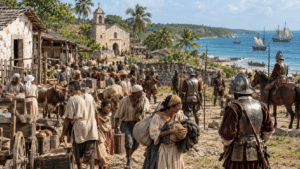
To understand the story, it is necessary to go back to the beginning of the 19th century. The eastern part of Hispaniola had returned to Spanish rule in 1809 after several years under French control. The period that followed became known as the España Boba, a period in which Spain exercised relatively limited attention over its colony while economic and political problems accumulated.
In this environment, a growing group of local political figures became influenced by the liberal and independence movements spreading across Spanish America. The success of independence movements in South America, particularly those associated with Simón Bolívar, helped create an intellectual environment in which political separation from Spain could be considered seriously.
One of the most important figures in this first independence attempt was José Núñez de Cáceres, a lawyer, intellectual and political leader in Santo Domingo. On December 1, 1821, he and his supporters proclaimed the independence of the eastern part of the island from Spain.
The new political entity was called the Independent State of Spanish Haiti. Contemporary documents also used variations of the name, including references to the independent state of Spanish Haiti. The name reflected the political geography and terminology of the period: the eastern territory was commonly described as the Spanish part of the island, while Haiti was a well-established name associated with the island and its western side.
For a modern reader, the name can sound almost contradictory. How could an independent state created by Spanish-speaking inhabitants be called “Spanish Haiti”? The answer lies in the terminology inherited from the colonial period rather than in the modern meaning of national identities. The leaders of the 1821 movement were separating themselves from Spain, but they were still operating within a political vocabulary shaped by centuries of colonial administration.
It Was an Independent State, But Not Yet the Dominican Republic
This distinction is important. The 1821 independence should not simply be described as the creation of the Dominican Republic. The modern Dominican state emerged in 1844 under a different political project and a different official name.
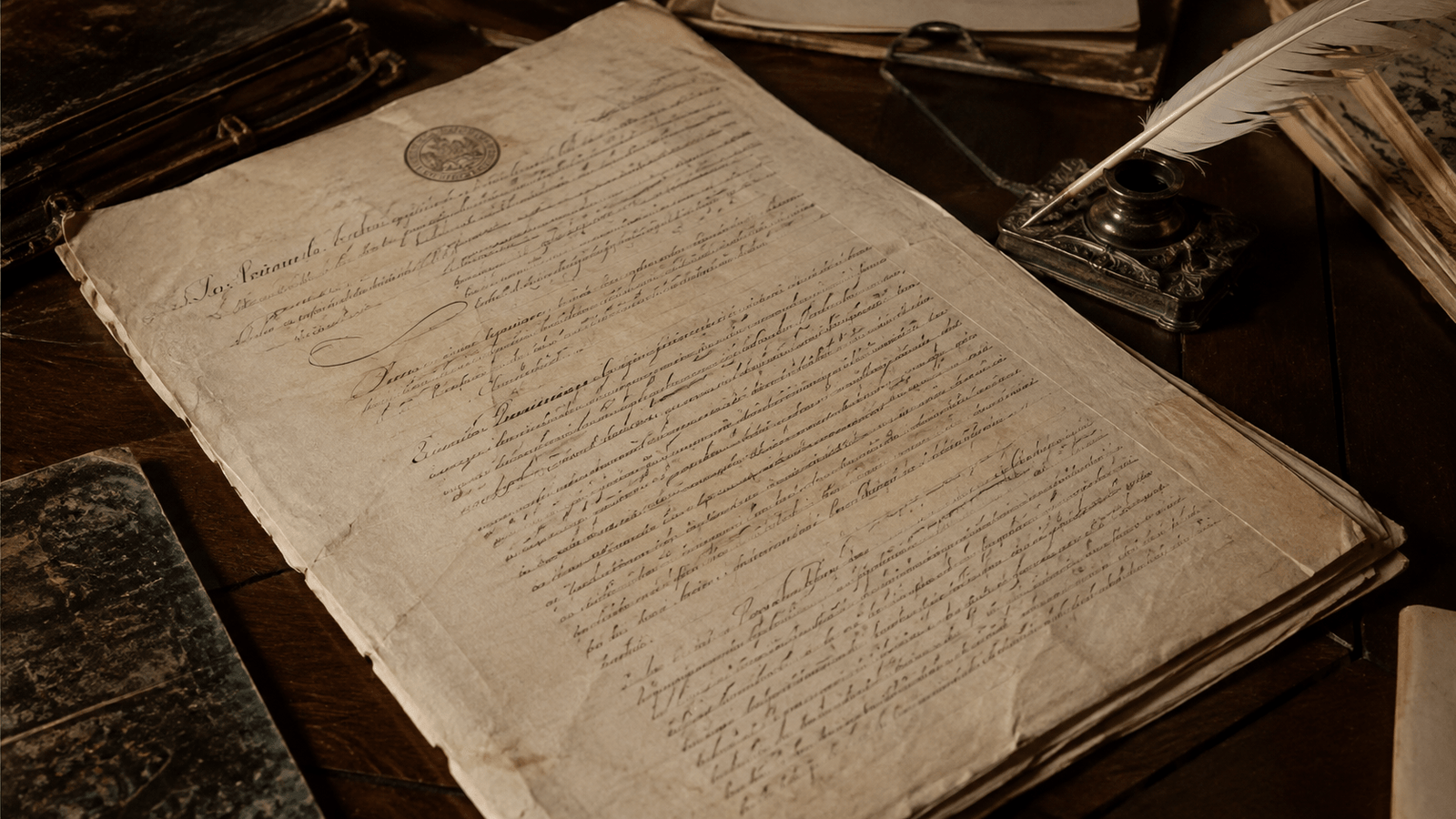
The 1821 government was organized as a republican state. Its leaders created a provisional government and adopted an institutional framework intended to establish representative government. The Biblioteca Nacional Pedro Henríquez Ureña preserves historical works documenting the episode, including the Acta Constitutiva del Gobierno Provisional del Estado Independiente de la parte española de Haití and studies devoted specifically to the short-lived state.
There was also another major complication. Núñez de Cáceres did not simply imagine the new state existing in isolation. His government sought a connection with the broader independence movement associated with Bolívar and the emerging Gran Colombia. Historical scholarship records the project to incorporate the Independent State of Spanish Haiti into Gran Colombia, although the political arrangement was never successfully established.
That means the political future of the territory was genuinely uncertain. It could have followed a path toward independent statehood under its unusual 1821 name, or toward incorporation into a larger Spanish American political project. Instead, events moved in a completely different direction.
Why the First Independence Lasted Only Weeks
The new government faced a fundamental problem: it did not have the military and political strength required to secure its independence.
On the western side of the island, the Republic of Haiti had already established itself as an independent state. Its government under President Jean-Pierre Boyer was seeking to consolidate control over the entire island. The eastern government’s limited resources and weak international position made it extremely vulnerable.
On February 9, 1822, Haitian forces entered Santo Domingo and established control over the eastern part of the island. The brief existence of the Independent State of Spanish Haiti therefore came to an end.
The episode is sometimes described as an “ephemeral independence” because its independent government existed for such a short period. Dominican historical scholarship, however, has treated the event as more than a failed political experiment. The Clío journal of the Academia Dominicana de la Historia has described the 1821 declaration as part of a longer process of Dominican independence, noting that the first nationality disappeared and later “was reborn” in 1844.
The Archivo General de la Nación likewise records December 1, 1821 as the establishment of the first liberal government in Santo Domingo under Núñez de Cáceres and identifies the state by its historical name, the Independent State of Spanish Haiti.
The 22 Years That Changed the Question of National Identity
From 1822 until 1844, the eastern part of Hispaniola was governed by Haiti. This period lasted 22 years and became one of the central experiences behind the Dominican independence movement of 1844.
During these decades, the political question changed. The objective was no longer simply to separate the territory from Spain. Spain was no longer the immediate political power. Instead, a new generation of Dominican nationalists developed a project for an independent state separate from Haiti.
Among the most important figures of this generation was Juan Pablo Duarte. Born in Santo Domingo in 1813, Duarte became the leading intellectual force behind the movement that eventually produced the Dominican Republic. The Instituto Duartiano identifies him as the founder of La Trinitaria, the secret society established in 1838 to organize the struggle for Dominican independence.
This is where the story of the country’s name takes a decisive turn.
Duarte Had Already Chosen the Name “República Dominicana”
One of the most revealing facts about Dominican independence is that the name República Dominicana was not improvised on the night of February 27, 1844.
The name was already part of Duarte’s political project years before independence was proclaimed.
The oath associated with La Trinitaria described the objective of creating a free and sovereign republic and identified the future state as the República Dominicana. The same political project also established the basic concept of a national flag using red and blue fields separated by a white cross. This demonstrates that Duarte and the Trinitarian movement were not merely planning an uprising. They were imagining the institutional identity of a new country before they had achieved control of the territory.
The significance of this is easy to underestimate. When independence was finally proclaimed in 1844, the revolutionary movement already had a name for the state it intended to create. The Dominican Republic therefore emerged from a political project that had been developing for years rather than from a name selected spontaneously during the final uprising.
Why “Dominican” Was Not a Completely New Identity
The word “Dominican” itself did not suddenly appear in 1844.
The territory had long been associated with Santo Domingo, the name of the Spanish colonial center and its principal city. Over time, the name Santo Domingo was also used in broader geographic and political contexts. Historical scholarship published by the Academia Dominicana de la Historia notes that the name of the principal city eventually extended to the island and that the term “Dominican” had a much older history than the creation of the republic in 1844.
That helps explain why República Dominicana was politically meaningful. It connected the new republic to the historical identity associated with Santo Domingo while giving the independent state a distinct republican name.
It also avoided simply reviving the name used by Núñez de Cáceres in 1821. The political generation of Duarte was creating a different state under different circumstances.
The Manifiesto of January 1844 Used a Different Kind of Language
Another document helps show how fluid the terminology was immediately before independence.
On January 16, 1844, revolutionaries issued what became known as the Manifiesto de los pueblos de la parte este de la isla antes Española o de Santo Domingo, a declaration explaining the reasons for separation from the Republic of Haiti. The Tribunal Constitucional of the Dominican Republic describes the document as a kind of “pre-Constitution” because it combined a statement of grievances, declarations of rights and provisions for the provisional government that would lead the country toward a formal constitution.
Notice the terminology: “the eastern part of the island, formerly Española or Santo Domingo.” The authors were working with several overlapping geographic names while simultaneously defining a new political identity.
This is one reason historical discussions about the name of the country can become confusing. Santo Domingo, Hispaniola, Spanish Haiti and Dominican Republic could refer to different things depending on the period and context.
February 27, 1844: The Name Becomes Political Reality
On the night of February 27, 1844, the independence movement moved from political planning to open action.
Matías Ramón Mella fired the famous trabuco shot at the Puerta de la Misericordia in Santo Domingo, signaling the beginning of the armed phase of the revolution. Francisco del Rosario Sánchez and other leaders then took control of strategic positions in the capital.
Juan Pablo Duarte was not in Santo Domingo that night. He had been in exile because of persecution by the Haitian authorities. Nevertheless, the political movement he had organized and the name he had associated with its future state were central to the project.
The official history published by the Dominican government identifies February 27, 1844 as the night when the República Dominicana was proclaimed, with Sánchez, Mella, Tomás Bobadilla and other patriots participating in the establishment of the new political order.
From that moment, the name República Dominicana became attached to a sovereign political project rather than merely an aspiration.
The Constitution Settled the State’s Identity
Independence alone did not immediately settle every institutional question. The new government still needed a constitutional framework.
That process culminated on November 6, 1844, when the first Dominican Constitution was promulgated in San Cristóbal, a city located just west of Santo Domingo. The Biblioteca Nacional Pedro Henríquez Ureña preserves historical editions of the Constitution of San Cristóbal, while the Senate of the Dominican Republic maintains a historical collection documenting the country’s constitutional development.
By this stage, the name was no longer an uncertain label attached to a revolutionary movement. It was the name of a constitutional state.
The national coat of arms also preserved the name prominently. The lower ribbon of the Dominican coat of arms bears the words “República Dominicana”, while the upper ribbon carries the national motto, “Dios, Patria y Libertad.” The official description of the coat of arms maintained by the Comisión Permanente de Efemérides Patrias confirms the wording.
So Was the Dominican Republic Really “About to Change Its Name”?
Strictly speaking, the popular version of the story needs an important qualification.
There is no strong historical evidence that the established Dominican Republic in 1844 was on the verge of formally replacing República Dominicana with another name through a serious constitutional process. The more accurate story is that the territory that later became the Dominican Republic had already existed briefly under another official name before the Dominican Republic was created.
That name was the Independent State of Spanish Haiti.
In other words, the country did not narrowly avoid becoming a renamed Dominican Republic. Rather, its political predecessor in 1821 had a different name, disappeared, and was followed more than two decades later by a new independence movement that deliberately chose República Dominicana.
This distinction matters because it separates documented history from a tempting but misleading historical legend. The surviving evidence shows a sequence of different political projects rather than a single country repeatedly deciding whether to change its name.
The Other Great Fork in the Road: Gran Colombia
The 1821 episode becomes even more remarkable when the proposed connection with Gran Colombia is considered.
Núñez de Cáceres sought support from Bolívar’s wider independence movement. Historical studies preserved by the Biblioteca Nacional Pedro Henríquez Ureña specifically document the project to incorporate the Independent State of Spanish Haiti into Gran Colombia.
Had that project succeeded, the political history of the eastern part of Hispaniola could have been dramatically different. Instead of eventually developing into the Dominican Republic as an independent Caribbean state, the territory might have entered a much larger Spanish American political framework.

That possibility is important not because it should be treated as an alternative history, but because it shows how uncertain the political future of Santo Domingo was in the early 1820s. Independence did not automatically lead to the state that exists today.
There Was Another Major Break in 1861
The story did not end with the establishment of the Dominican Republic in 1844.
In 1861, President Pedro Santana arranged the annexation of the Dominican Republic to Spain. The young republic therefore ceased to function as an independent sovereign state under its existing republican system.
The annexation triggered the Dominican Restoration War, which began in 1863. Spain eventually withdrew, and Dominican sovereignty was restored in 1865. Historical accounts emphasize that the restoration returned the country to independent republican life after the period of Spanish rule.
This episode adds another layer to the question of the country’s name. For a period, the Dominican Republic was not an independent republic at all. The state had been absorbed into the Spanish monarchy, meaning that the political entity created in 1844 was temporarily interrupted.
When sovereignty was restored in 1865, the name República Dominicana returned with it. The continuity of the name therefore became part of the restoration of the republican state itself.
Why “Santo Domingo” Still Causes Confusion
One reason the history of the country’s name remains confusing is that Santo Domingo never disappeared from everyday language.
Santo Domingo is the name of the capital, but historically the term was also used much more broadly for the territory and its colonial political institutions. Even after the creation of the Dominican Republic, references to Santo Domingo continued to appear in geographical and historical contexts.
For international readers, this explains an otherwise common source of confusion: a historical document referring to “Santo Domingo” does not necessarily mean that it is referring only to the modern capital.
The distinction is especially important when reading documents from the colonial period, the 1821 independence, the Haitian occupation and the first Dominican Republic. The same geographic expression could carry different political meanings depending on the date.
What About “Quisqueya”?
Another name frequently associated with the Dominican Republic is Quisqueya. It is widely used as a poetic name for the country, most famously in the opening of the national anthem, which addresses “Quisqueyanos.”
But it should not be confused with the documented official name of the state in 1844.
The evidence for the political project led by Duarte points clearly to República Dominicana as the name selected for the new state. Historical research has also questioned the traditional claim that “Quisqueya” was an authentic Taíno name for the entire island, demonstrating why the subject requires caution rather than repetition of popular explanations as established fact.
What can be said confidently is that Quisqueya became deeply embedded in Dominican patriotic language, while República Dominicana became the constitutional name of the state.
A Short Timeline of the Names
| Period | Political Context | Name or Terminology |
|---|---|---|
| Colonial period | Spanish rule over the eastern part of Hispaniola | Santo Domingo and related colonial designations |
| 1821 | Independence from Spain under José Núñez de Cáceres | Independent State of Spanish Haiti |
| 1822–1844 | Haitian rule over the eastern part of the island | Eastern part of Hispaniola/Santo Domingo within the Haitian state |
| January 1844 | Separatist movement preparing independence | Eastern part of the island, formerly Española or Santo Domingo |
| February 1844 | Independence from Haiti | República Dominicana |
| November 1844 | First Constitution | República Dominicana as the constitutional state |
| 1861–1865 | Annexation to Spain | Dominican republican sovereignty suspended |
| From 1865 | Restoration of Dominican sovereignty | República Dominicana |
The timeline shows why the name question is more complicated than it first appears. There was not simply one uninterrupted state whose name was almost changed. Instead, the territory experienced several different political regimes before the Dominican Republic established the institutional continuity that ultimately survived.
Why This Forgotten Episode Matters
The 1821 independence is important because it challenges the idea that Dominican independence began suddenly on February 27, 1844.
The 1844 independence was unquestionably the event that produced the Dominican Republic as the enduring independent state, but it emerged from a longer history of political experimentation. Núñez de Cáceres had already attempted to establish an independent government in 1821. That government failed because it lacked the strength to withstand the geopolitical realities of the island, but the episode demonstrated that the desire for political separation from Spain already existed before Duarte’s generation organized its own independence movement.
It also demonstrates how much the meaning of national identity can depend on political circumstances. In 1821, the leaders of the first independence could use the term “Spanish Haiti.” In 1838, Duarte’s Trinitarians were preparing a state called República Dominicana. In 1844, that name became the banner of a successful independence movement. In 1861, the republic was absorbed into Spain. Four years later, the republican state was restored.
Few national names carry such a complicated political history behind what now appears to be a straightforward phrase.
The Name Was a Political Choice, Not an Accident
The most revealing lesson is perhaps the simplest: República Dominicana was a deliberate political choice.
Duarte’s movement had already identified the future state by that name before independence was achieved. The name was therefore part of the political architecture of the revolution, alongside the concept of sovereignty, the republican form of government and the symbols that would become associated with the new country.
That is why the story of the earlier “Spanish Haiti” matters. It shows that the Dominican Republic was not merely the eastern half of Hispaniola after Haiti withdrew. It was the result of a distinct political project that deliberately defined itself through a new state name and constitutional identity.