 25°C
25°C

Dominican Republic Blackouts: Why They Happen and the Longest Crisis
Power outages have been part of the Dominican Republic’s history for decades, but their causes have changed over time. From chronic generation shortages in the 1980s to the financial crisis and extreme rationing of the early 2000s, and more recent failures involving transmission and distribution infrastructure, the country’s blackouts reflect a combination of technical, financial and institutional problems rather than a single cause. The most severe documented period came in 2002, when large parts of the country were experiencing electricity cuts of more than 20 hours a day; however, there is no reliable official record establishing one uninterrupted blackout as the longest in the country’s history.


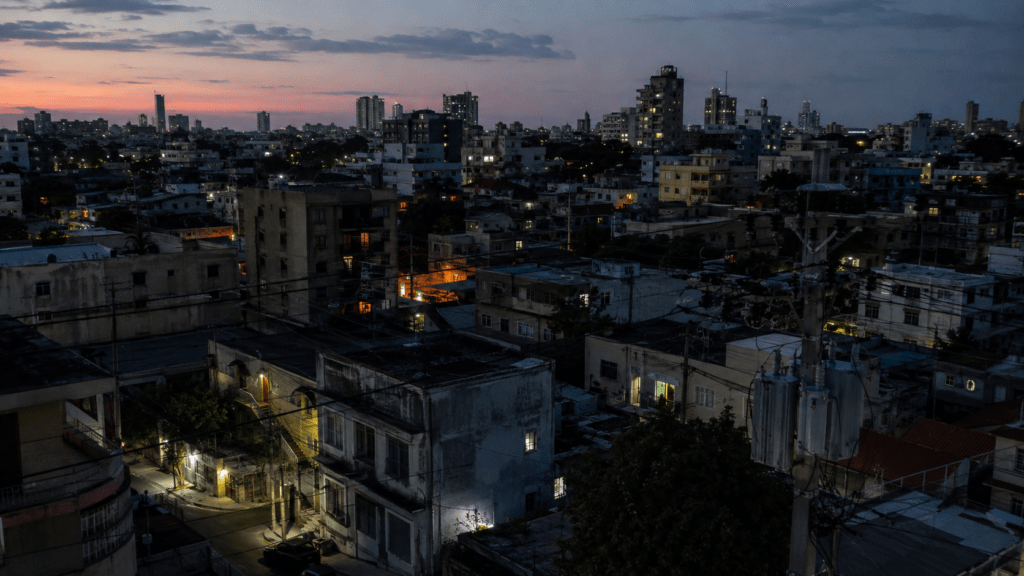
Blackouts are one of the most familiar problems associated with the electricity system of the Dominican Republic. For decades, households and businesses have dealt with interruptions ranging from short local failures to prolonged periods of rationing. Yet the reasons behind those outages have not always been the same. Understanding the history of Dominican Republic blackouts requires looking at generation capacity, electricity demand, electricity distribution, financial losses, illegal connections, tariffs, government subsidies and the vulnerability of the national grid.
A Long History of Electricity Problems
The roots of the problem go back at least to the 1980s, when the Dominican electricity system was dominated by the state-owned Dominican Electricity Corporation, known as CDE. The system suffered from insufficient generation capacity, financial deficits and limited investment. A World Bank study notes that electricity shortages were already severe during that decade and that widespread blackouts could last for up to 20 hours a day.
The situation was particularly difficult because electricity generation depended heavily on imported petroleum products. A World Bank analysis of the period found that oil products represented about 95 percent of the fuel used for electricity generation in 1989. The same study estimated that electricity outages between 1984 and 1988 imposed economic costs equivalent to roughly 4 percent of gross domestic product per year.
The electricity sector began to change during the 1990s. The government opened electricity generation to private investment and new generating capacity was added. The reform helped address the physical shortage of generating capacity, but it did not eliminate the deeper financial and distribution problems that would later contribute to another major electricity crisis.
Why Were Blackouts So Severe in the Early 2000s?
The electricity crisis reached an extreme point in 2002. The problem was not simply that the country lacked power plants. The sector had developed a financial imbalance in which generators, distributors, consumers and the government were increasingly unable to sustain the cost of the system.
Electricity tariffs had been kept below the level required to recover the full cost of service, while the government provided subsidies to compensate for the difference. At the same time, distribution companies faced major difficulties collecting payments and reducing electricity losses. According to World Bank research, the government eventually began falling behind on payments to generators, creating what became known as “financial blackouts.”
When generators were not paid adequately, some were unable or unwilling to continue supplying electricity at the required level. Distribution companies then had to ration electricity. In large parts of the country, particularly poorer communities, the result was extremely long daily power cuts.
Contemporary reporting from September 2002 described blackouts lasting up to 20 hours a day. Government officials said electricity supply had at one point fallen to roughly half of national demand. The crisis triggered protests in Santo Domingo and other communities and forced the government to announce emergency measures involving electricity tariffs and targeted subsidies.
Was the 2002 Crisis the Longest Blackout in Dominican History?
It is important to distinguish between the longest period of electricity rationing and the longest single uninterrupted blackout.
The available historical evidence strongly supports 2002 as one of the most severe periods in the history of the Dominican electricity system. World Bank research says that from the middle of 2002, electricity cuts in large parts of the country reduced supply by more than 20 hours per day. Contemporary reports also documented outages lasting as much as 20 hours per day.
That does not establish that the entire Dominican Republic remained continuously without electricity for 20 hours in one single event. Rather, it means that some communities could receive electricity for only a few hours during a 24-hour period, with the remaining hours affected by rationing.
For that reason, there is no sufficiently reliable national historical record that allows one specific uninterrupted outage to be identified with certainty as the longest blackout ever recorded in the Dominican Republic. Claims that a particular event holds that title should therefore be treated cautiously unless they are supported by official system records.
The Financial Problem Behind the Blackouts
The Dominican electricity crisis cannot be explained solely by a shortage of generating plants. Financial sustainability has repeatedly been one of the central problems.
Electricity distributors have historically suffered from a combination of technical and nontechnical losses. Technical losses occur when electricity is lost as it moves through the network. Nontechnical losses include electricity that is consumed but not properly measured, billed or collected, including unauthorized connections.
World Bank studies have repeatedly identified unusually high distribution losses as a structural weakness of the Dominican electricity sector. Historical estimates placed total losses at around 40 percent of electricity purchased by distribution companies, with illegal consumption accounting for a substantial share of the nontechnical component.
These losses create a difficult cycle. When electricity is supplied but not paid for, distributors collect less revenue. Lower revenue makes it harder to maintain and upgrade the network and pay for purchased electricity. Poor service can then encourage more customers to avoid paying, while the government is required to provide additional financial support to keep the system operating.
Why Are There Still So Many Blackouts?
The Dominican Republic has made substantial progress since the worst crises of the 1980s and early 2000s, but outages have not disappeared. Several factors can still contribute to interruptions.
1. Distribution losses
The distribution network remains one of the sector’s most important weaknesses. The World Bank reported in 2023 that losses in the electricity sector were associated with old and overloaded distribution lines, illegal connections, problems with meters, consumption estimates and incorrect billing.
The World Bank estimated that these losses averaged about US$1.2 billion per year between 2017 and 2021, equivalent to approximately 1.4 percent of the country’s gross domestic product. The institution subsequently approved a US$225 million project intended to improve distribution infrastructure, modernize utility management and reduce outages.
2. Aging and overloaded infrastructure
A power system can have sufficient generation capacity and still experience blackouts if electricity cannot be transmitted or distributed reliably. Lines, substations, transformers and other equipment can fail because of age, overload, inadequate maintenance or physical damage.
This distinction is particularly important when interpreting a blackout. A failure at a distribution circuit may affect one neighborhood, while a transmission failure can potentially destabilize a much larger part of the national interconnected system.
3. Financial sustainability
Financial problems can indirectly produce technical problems. If utilities cannot recover enough revenue, investment in maintenance, modernization and network expansion becomes more difficult. The history of the early 2000s demonstrated how financial stress among generators and distributors could translate directly into electricity rationing.
4. Electricity theft and weak collection
Illegal connections and electricity consumption that is not properly measured or paid for have been persistent challenges. These practices reduce the revenue available to distribution companies while increasing the amount of electricity that must be purchased to serve customers.
The problem is therefore larger than the individual act of connecting illegally. At system level, high commercial losses undermine the financial model needed to maintain reliable electricity service.
5. Weather and physical damage
Storms, hurricanes, strong winds, flooding and falling trees can damage electricity infrastructure. These events are different from the structural causes of chronic blackouts, but they can produce prolonged local outages and, in severe cases, place significant pressure on the national system.
Research published in 2026 using outage data from 2021 through 2024 found that vegetation-related incidents were among the most frequent causes of long-duration outages. The study also documented significant outage durations associated with major weather events, including Hurricane Fiona in 2022.
The Difference Between a Local Blackout and a National Blackout
Not every blackout in the Dominican Republic indicates a national electricity shortage. The country has a large interconnected power system, but electricity is delivered through different transmission and distribution components. A fault in one circuit can therefore leave one community without power while neighboring areas continue to receive service.
A national blackout is fundamentally different. It occurs when a major failure causes the interconnected system to lose power across a very large portion of the country. Restoring such a system requires a coordinated process known as system restoration, in which generating units and transmission components are progressively brought back online.
This distinction became particularly visible in the nationwide outages of 2025 and 2026. In November 2025, a failure in the transmission system triggered a cascade that shut down generation facilities and left the country broadly without electricity. In February 2026, another nationwide outage occurred after a transmission-line switch tripped and protection mechanisms shut down other parts of the system.
The 2025 and 2026 National Blackouts
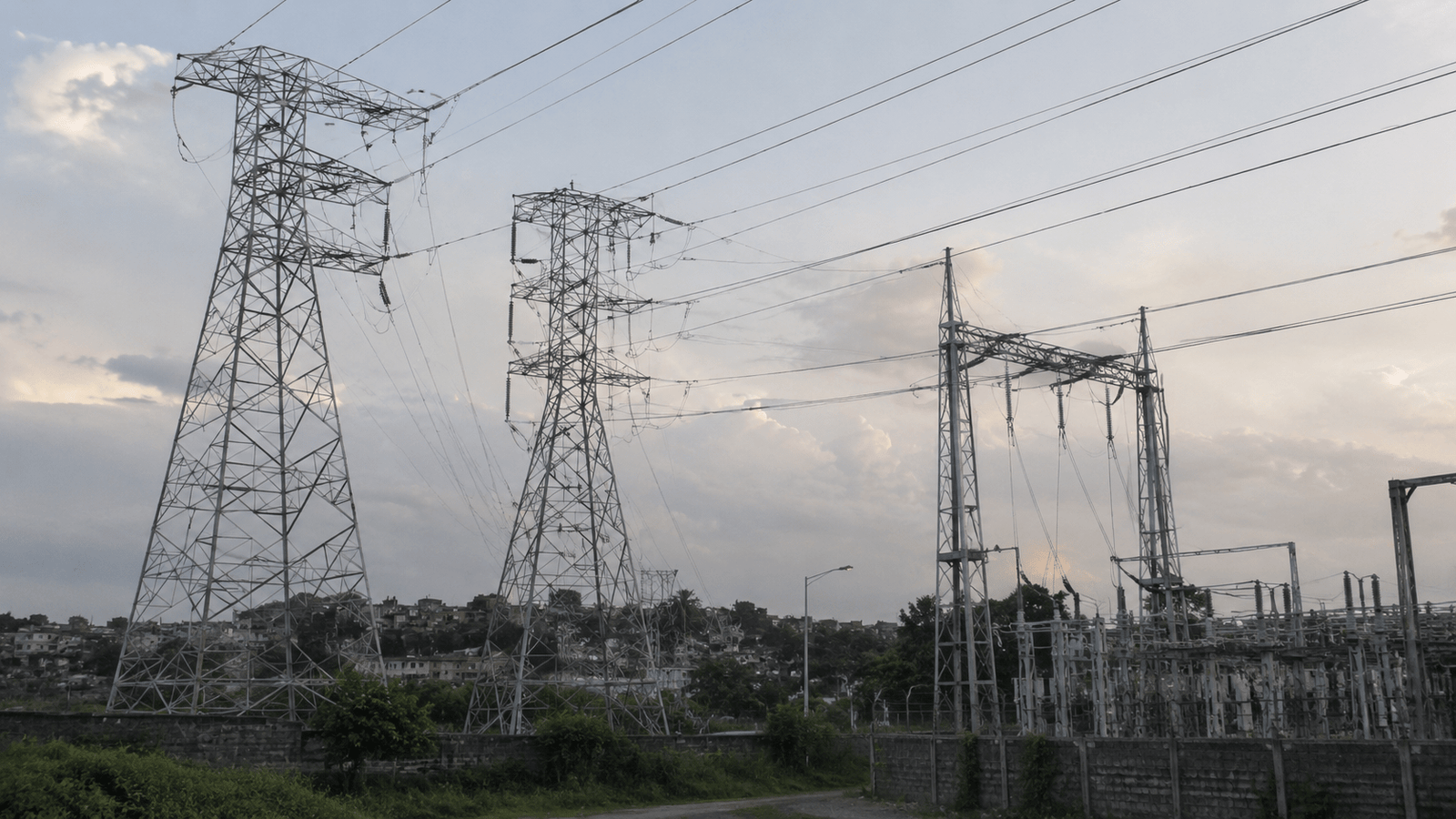
The nationwide blackout of November 2025 was unusual because of its scale. The Dominican Electricity Transmission Company attributed the event to a failure in the transmission system that caused generating units in San Pedro de Macorís and the Quisqueya Power Plant to shut down, triggering further failures elsewhere in the system. Authorities were still investigating the precise origin of the failure when the blackout was reported.
Essential services such as hospitals, airports, water systems and major institutions relied on backup generation. Public transportation in Santo Domingo was also disrupted, including the city’s metro and cable-car systems.
A second nationwide blackout occurred in February 2026. According to the Dominican authorities, a transmission-line switch tripped and activated protection mechanisms, causing the main generating facilities to stop supplying electricity. By the middle of the afternoon, only about 30 percent of system capacity had been restored.
These events demonstrate why national blackouts should not automatically be compared with the prolonged rationing of 2002. The 2002 crisis was principally a prolonged sector-wide financial and supply crisis that produced daily rationing. The 2025 and 2026 incidents were large-scale system failures involving the transmission network and cascading shutdowns.
How Much Better Is the System Today?
The Dominican Republic’s electricity system is considerably different from the one that existed during the worst crises of the 1980s and early 2000s. Investment in generation, distribution rehabilitation, metering and network management has improved service in many communities.
World Bank projects have specifically targeted neighborhoods that historically received only a few hours of electricity per day. One project reported that some communities had previously received only two to six hours of power daily, often without knowing when service would return.
Another World Bank-supported program rehabilitated distribution circuits and helped provide 24-hour electricity service to more than 100,000 households. A later program expanded efforts to improve reliable electricity access for more than one million Dominicans.
However, the existence of modern generating capacity does not by itself guarantee uninterrupted service. Distribution losses, infrastructure failures, weather events, maintenance problems and financial pressures can still produce outages even when the country has enough generation available under normal conditions.
How Frequent Are Blackouts in the Dominican Republic?
The frequency varies substantially by location, distribution company and type of outage. A customer connected to a well-maintained circuit may experience relatively few interruptions, while another customer in an area with overloaded infrastructure or high distribution losses may experience much more frequent service disruptions.
A World Bank assessment of Caribbean infrastructure found that businesses in the Dominican Republic reported particularly frequent electricity disruptions. In the study, Dominican businesses experienced an average of 81 power disruptions per year, although the figures varied considerably between companies and locations.
More recent research based on distribution-level outage records also shows that duration can vary widely. A 2026 study covering 2021 through 2024 recorded more than 118,000 outage events in 2024, including more than 10,000 lasting at least two hours. Because these figures count distribution events rather than nationwide blackouts, they should not be interpreted as the number of times the entire country lost electricity.
What Was the Worst Electricity Crisis?
If “worst” means the greatest combination of duration, geographic reach and social disruption, the 2002 electricity crisis is the clearest historical candidate among the periods for which reliable documentation is available.
During that crisis, large parts of the country were experiencing electricity cuts of more than 20 hours per day. The shortages were severe enough to provoke protests, emergency government measures and a major debate over the financial structure of the electricity sector.
If “worst” means the longest single uninterrupted blackout affecting the entire country, the evidence is less conclusive. The available sources do not establish a definitive all-time national record measured in continuous hours. The distinction matters because a community receiving only four hours of electricity per day during a prolonged rationing period is experiencing an extremely severe electricity crisis, but that is not the same event as one uninterrupted nationwide blackout lasting 20 hours.
Why the Blackout Problem Is Difficult to Solve
The history of Dominican electricity shows why there is no single technical fix. Building more generating plants can increase available electricity, but it does not eliminate distribution losses. Replacing distribution lines can improve reliability, but it does not solve unpaid electricity consumption. Improving collections can strengthen utility finances, but it does not automatically prevent transmission failures.
The problem is therefore systemic. Reliable electricity requires sufficient generation, a stable transmission network, effective distribution, accurate metering, reasonable collection rates, adequate maintenance and financially sustainable utilities.
The experience of the early 2000s illustrates the consequences of ignoring those connections. Financial weaknesses contributed to reduced generation, reduced service undermined customer confidence, and poor service and weak payment discipline further damaged the financial position of the sector.
What the History of Dominican Blackouts Shows
The history of electricity outages in the Dominican Republic can be divided broadly into different phases. The 1980s were characterized by insufficient generation and a chronically constrained system. The 1990s brought structural reform and additional private generation capacity. The early 2000s produced an exceptionally severe financial and electricity crisis, with rationing reaching more than 20 hours per day in parts of the country. Later reforms improved service in many areas, while distribution losses and infrastructure weaknesses remained significant challenges.
The nationwide blackouts of 2025 and 2026 added another dimension: even after decades of investment and reform, a complex interconnected grid remains vulnerable to transmission failures and cascading shutdowns.
For international visitors, investors, residents and businesses, the most useful conclusion is that the phrase “Dominican blackout” can describe very different situations. A short neighborhood interruption, a scheduled distribution outage, a prolonged local failure and a nationwide system collapse do not have the same causes or implications.

Frequently Asked Questions
Why are blackouts common in the Dominican Republic?
Blackouts have historically resulted from a combination of inadequate infrastructure, electricity distribution losses, illegal connections, weak collection, financial problems in the electricity sector, equipment failures and severe weather. The relative importance of each factor depends on the period and location.
What year had the worst blackouts in the Dominican Republic?
2002 stands out as one of the country’s most severe electricity crises. During that period, large parts of the country experienced power cuts of more than 20 hours per day as financial problems among generators and distributors contributed to severe rationing.
What was the longest blackout in Dominican Republic history?
There is no sufficiently authoritative national record establishing one uninterrupted outage as the all-time longest. Historical sources document extremely severe rationing in 2002, including cuts exceeding 20 hours per day in large parts of the country, but that should not be described as a single nationwide blackout lasting more than 20 continuous hours.
Are Dominican blackouts caused by a lack of electricity generation?
Not always. Generation shortages have been important at different points in the country’s history, but many outages originate in transmission or distribution failures and financial or commercial weaknesses. A system can have enough generation capacity and still experience blackouts if electricity cannot be delivered reliably to customers.
Do all parts of the Dominican Republic experience the same blackouts?
No. Electricity reliability varies by location, distribution network and local infrastructure. A failure affecting one distribution circuit can leave a neighborhood without electricity while other areas remain connected to the grid.
Have blackouts improved compared with the 1980s and 2000s?
Yes, the electricity system has undergone substantial investment and reform, and many communities now receive much more reliable service than during the worst historical crises. Nevertheless, distribution losses, infrastructure weaknesses, weather events and occasional major system failures mean that outages remain part of the country’s electricity landscape.
The Long-Term Lesson
The Dominican Republic’s blackout history is not simply a story about power plants or broken wires. It is a history of how generation, infrastructure, public policy, utility finances and consumer behavior interact. The extreme rationing of 2002 showed how financial instability could become an electricity crisis, while the nationwide failures of 2025 and 2026 demonstrated that even a more developed system can remain vulnerable to major transmission disturbances.
The strongest historical evidence therefore points to 2002 as the defining period of extreme blackout conditions, with documented cuts of more than 20 hours a day in large parts of the country. But there is not enough reliable evidence to name one uninterrupted event as the longest blackout in Dominican history. That distinction is essential for understanding the country’s electricity story accurately rather than reducing decades of complex problems to a single record.