 24°C


Central Electoral Board (JCE): Structure, Powers and Responsibilities
The Junta Central Electoral (JCE), or Central Electoral Board, is one of the Dominican Republic's key autonomous constitutional institutions. It is responsible not only for organizing and supervising elections, but also for administering the civil registry and the national identity and electoral identification system. Understanding how the JCE is organized—and how its administrative responsibilities differ from the judicial role of the Electoral Superior Court—helps explain how electoral administration and legal identity are managed in the country.


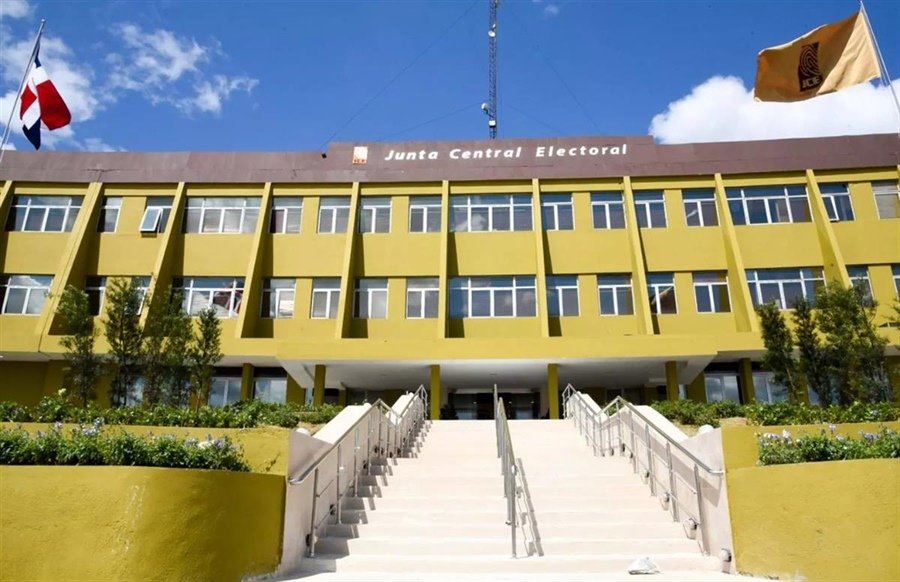
The Junta Central Electoral (JCE), usually translated as the Central Electoral Board, is an autonomous constitutional institution responsible for two major areas of public administration in the Dominican Republic: the organization of elections and the management of the country’s civil registration and identity systems.
Its responsibilities extend well beyond election day. The JCE maintains the national electoral register, oversees the issuance of the Dominican identity and electoral card, supervises the civil registry, regulates aspects of electoral activity and coordinates a network of local electoral and civil registry offices.
The institution operates throughout the Dominican Republic and has responsibilities relating to Dominican citizens living abroad. Its legal framework is principally established by the Constitution, Organic Law No. 20-23 on the Electoral Regime and Organic Law No. 4-23 on Civil Status Acts.
History and Constitutional Status of the JCE
The JCE was established in 1923, initially to administer the country’s electoral processes. Over time, its responsibilities expanded, particularly in relation to civil registration and the official identification of citizens.
Its current constitutional status is defined by Article 212 of the Dominican Constitution. The provision establishes the JCE as an autonomous institution with legal personality and technical, administrative, budgetary and financial independence. It also grants the institution regulatory authority in matters within its jurisdiction.
This autonomy means that the JCE is not an ordinary department of a government ministry. It has its own institutional structure, budget and administrative responsibilities, although its actions remain subject to the Constitution and applicable laws.
The Constitution also establishes that the Civil Registry and the Identity and Electoral Card depend on the JCE. This gives the institution a dual role: it administers the electoral system while also managing records and documents that are essential to the legal identity of individuals.
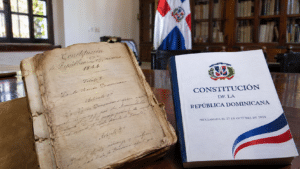
The institution’s constitutional framework can be consulted in the 2024 Constitution of the Dominican Republic.
How Is the Central Electoral Board Organized?
The Plenary Board
The JCE is governed by a five-member body known as the Plenary Board, or Pleno. It consists of a president and four members, each with an alternate. The Senate of the Republic appoints them for four-year terms, with the approval of two-thirds of the senators present.
The Plenary Board is the institution’s main decision-making authority. It adopts regulations and resolutions, establishes administrative policies, approves the institution’s budget and oversees the main areas of its work.
Its responsibilities include decisions affecting both electoral administration and civil registration. For example, it can establish rules for the electoral register, determine the territorial organization of civil registry offices and issue regulations governing the institution’s operations.
Administrative Departments and National Directorates
The Plenary Board is supported by specialized departments and national directorates that handle the institution’s day-to-day responsibilities. These units manage specific technical and administrative areas rather than making the institution a collection of separate independent authorities.
The JCE’s official directory identifies several important areas, including:
- Directorate of Elections: coordinates the administrative and technical work required to organize electoral processes.
- National Directorate of Civil Registry: supervises the civil registration system and the services provided by civil registry offices.
- Directorate of Identification: manages the issuance and administration of identity documents.
- Electoral Registry: maintains the information used to identify eligible voters and organize the electoral roll.
- Directorate of Political Parties: handles institutional matters involving recognized political organizations.
- Directorate of Information Technology: supports the institution’s digital systems and technological infrastructure.
- Legal Department: provides legal support for institutional decisions and procedures.
- Directorate of Statistics: handles statistical information associated with the institution’s responsibilities.
The JCE also has departments dealing with external voting, communications, finance, human resources, certification services and other administrative functions. Its official institutional directory provides the current list of departments and their contact details.
Local Electoral Boards
Below the national institution, the Dominican electoral system includes permanent local bodies known as Juntas Electorales, or Electoral Boards. There is an Electoral Board in the National District and in each municipality.
These bodies have both administrative and contentious responsibilities. In their administrative capacity, they operate under the authority of the JCE and carry out functions assigned by the national institution. Their work includes local electoral administration and responsibilities connected with voting and the processing of election results.
In their contentious capacity, they exercise specific first-instance electoral jurisdiction. Their decisions can be appealed to the Tribunal Superior Electoral (TSE), according to the applicable legal procedures.
The composition of each Electoral Board depends on its jurisdiction. Under Law No. 20-23, the Electoral Board of the National District and those covering more than 1,000 polling stations have a president and four voting members. Other boards have a president and two voting members. Alternate members are also appointed.
Offices and Coordination Abroad
The JCE’s responsibilities are not limited to Dominican territory. It maintains a presence abroad to provide services to Dominican citizens and administer voting arrangements outside the country.
For civil registration, Dominican consular officials perform certain civil registry functions within their jurisdictions under the legal framework established by Law No. 4-23. The Ministry of Foreign Affairs works with the JCE to transmit relevant records and documents to the Dominican civil registration system.
For electoral administration, the institution coordinates overseas voting arrangements through dedicated structures, including the Offices for Electoral Logistics Coordination Abroad (Oficinas de Coordinación de Logística Electoral en el Exterior, or OCLEE). These structures support the organization of voting in locations where Dominican citizens abroad are registered to vote.
The JCE’s Main Responsibilities in Electoral Administration
The JCE is the highest administrative authority responsible for organizing and managing electoral processes in the Dominican Republic. Its work covers the institutional, technical and regulatory arrangements required to conduct elections, rather than simply supervising the act of voting.
Organizing and Supervising Elections
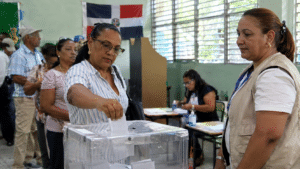
The JCE organizes, directs and supervises elections at the national and local levels. Its responsibilities include preparing the administrative structure, coordinating the work of Electoral Boards, establishing polling stations and ensuring that the necessary electoral materials and systems are available.
The institution also issues the official proclamation announcing elections and may call extraordinary elections when required by the Constitution and the law. It establishes the administrative arrangements needed for the electoral process and coordinates the bodies operating under its authority.
These responsibilities apply to presidential, congressional and municipal elections, as well as other voting mechanisms established by the Constitution and legislation.
Managing the Electoral Register
One of the JCE’s central responsibilities is maintaining the Registro Electoral, or Electoral Register. This is the official database used to identify citizens entitled to vote and determine the electoral roll for each election.
The institution is responsible for the formation, updating, review and preservation of this register. Its work includes recording new eligible voters, processing changes of address, updating relevant information and handling cancellations when legally required.
The electoral register is closely connected to the identity system because the Cédula de Identidad y Electoral serves both as an official identification document and as the principal document used for electoral purposes.
Regulating Electoral Activity and Political Parties
The JCE has regulatory responsibilities intended to ensure that electoral activity follows the Constitution and electoral legislation. It issues resolutions and regulations covering matters within its legal authority and supervises specific activities involving political parties, groupings and movements.
Its responsibilities include overseeing aspects of internal party selection processes, such as primaries and conventions, in accordance with the law and the rules applicable to each organization. It also examines documentation relating to political alliances and coalitions and performs administrative functions connected with the recognition and registration of political organizations.
The Constitution specifically requires the JCE to protect freedom and fairness in electoral campaigns and transparency in campaign financing. It therefore has authority to regulate campaign spending limits, advertising arrangements and equitable access to the media, within the framework established by law.
Overseeing Voting Technology and Results Administration
The institution is responsible for the technical and administrative arrangements used to process electoral information. These include the systems used for vote counting, the transmission of results and the publication of electoral information.
The JCE can establish the procedures and technological mechanisms needed to facilitate the processing of results. Preliminary results may be communicated as information becomes available, while the official computation follows the legal procedures involving the relevant Electoral Boards.
Once the final results have been established through the applicable procedures, the JCE has responsibility for preparing the general electoral results, declaring winners within its legal authority and issuing the corresponding certificates to elected officials at the levels assigned to it by law.
Electoral Security and Observation
During elections, the Constitution provides that the JCE assumes the direction and command of the public force in accordance with the law. This includes the Police Electoral Militar, the specialized security structure assigned to electoral operations.
The institution also regulates electoral observation activities and establishes the administrative conditions under which authorized observers can monitor electoral processes. These responsibilities form part of its broader role in protecting the orderly administration of elections.
The JCE and the Civil Registry: A Responsibility Beyond Elections
One of the most important aspects of the JCE’s work is its responsibility for the Registro del Estado Civil, or Civil Registry. This system records legally significant events in a person’s life and provides official documentation of their civil status.
The Civil Registry is not simply an electoral database. It is a permanent public record system that establishes and preserves information about individuals, including events that can create, modify or end legal rights and relationships.
Law No. 4-23, the Organic Law on Civil Status Acts, defines the JCE as the authority responsible for overseeing this system. It gives the institution responsibility for its administration, regulation, infrastructure and preservation.
What Events Are Recorded?
The Civil Registry covers a range of events and legal acts, including:
- Births: the official registration of a person’s birth and the information establishing their legal identity.
- Recognition of children: the formal registration of legally recognized parentage.
- Marriages: the registration of civil and legally recognized religious marriages.
- Divorces: the recording of legally effective divorce decisions and related civil status changes.
- Deaths: the official registration of a person’s death and the issuance of the corresponding death certificate.
- Other civil status acts: additional events and legal changes that must be recorded under Dominican law.
These records are essential for establishing family relationships, proving identity, documenting marital status and completing many administrative and legal procedures.
How the Civil Registry Is Organized
The National Civil Registry System operates under the authority of the JCE Plenary Board. Its main management bodies are the National Directorate of Civil Registry, the Central Civil Registry Office and the local Civil Registry Offices, known as Oficialías del Estado Civil.
The National Directorate supervises the technical, administrative and operational functioning of the system. It issues instructions to local offices, monitors their work and handles matters requiring national-level review or authorization.
The local Civil Registry Offices are the main point of contact for many citizens. They receive and register civil status acts, prepare official records and issue certificates and copies of documents. Their services operate under the supervision of the National Directorate and the rules established by the JCE.
There are also civil registry delegations in certain hospitals and other locations. These facilities help bring registration services closer to citizens, particularly for the registration of births and deaths.
Coordination with Other Public Institutions
The JCE does not obtain every piece of information required for civil registration independently. Law No. 4-23 establishes a national system in which several public institutions cooperate to ensure that records are accurate and properly documented.
For example, the Ministry of Public Health provides certificates of live birth and death that serve as the basis for the corresponding civil registry entries. The Ministry of Foreign Affairs works with the JCE on civil status acts involving Dominicans abroad, while the Ministry of Interior and Police and the General Directorate of Migration collaborate on matters involving foreign nationals and naturalization.
The National Statistics Office also receives information about vital events for statistical purposes. This division of responsibilities is important: the JCE administers and safeguards the civil registry, but other institutions provide information and perform functions assigned to them by law.
Identity Cards and the National Identification System
The Constitution places the Dominican identity card system under the authority of the JCE. The institution is responsible for the administration and preservation of the official identification system and for issuing the relevant documents.
The Cédula de Identidad y Electoral
The Cédula de Identidad y Electoral is the Dominican Republic’s principal national identity document for Dominican citizens. It serves two related purposes: identifying the holder and providing the identification information used for electoral registration.

The card is used in a wide range of everyday and administrative situations, including interactions with public institutions, financial entities and other organizations that require official identification.
Because the document is connected to both identity administration and the Electoral Register, the JCE plays a central role in maintaining the information that supports these systems. The institution also determines the design, format and content of the identity and electoral cards through its legally authorized procedures.
Services Related to Identity Documents
The JCE operates identification services through its national and local facilities. These include procedures for issuing identity cards, updating relevant information and providing services to Dominicans living abroad through designated channels.
The specific requirements depend on the procedure and the applicant’s circumstances. Citizens should consult the institution’s official identification services section before visiting an office.
JCE vs. Tribunal Superior Electoral: What Is the Difference?
One of the most important distinctions in the Dominican electoral system is the separation between electoral administration and electoral justice. The JCE is responsible for administering elections, while the Tribunal Superior Electoral (TSE), or Electoral Superior Court, is the constitutional judicial authority responsible for deciding electoral disputes.
Although both institutions operate within the electoral system, they do not perform the same functions and one does not replace the other.
What the JCE Does
The JCE manages the administrative side of the electoral system. It organizes and supervises elections, issues regulations within its jurisdiction, maintains the Electoral Register, coordinates local Electoral Boards and performs the other functions assigned by electoral legislation.
It can also issue administrative decisions and resolve matters that fall within its statutory responsibilities. However, it is not the court with final jurisdiction over contentious electoral disputes.
What the Tribunal Superior Electoral Does
The TSE is an autonomous constitutional court responsible for judging and deciding electoral disputes. Article 214 of the Constitution gives it authority over contentious electoral matters and disagreements arising within or between political parties, groupings and movements.
Its responsibilities include hearing appeals against decisions made by Electoral Boards and resolving disputes involving political organizations. Its decisions in contentious electoral matters are not subject to ordinary appeal, although the Constitution and applicable law provide for the possibility of constitutional review in the cases permitted by law.
The TSE also has judicial responsibilities in certain civil registry matters, including judicial rectification of civil status records and changes of names. This is an important distinction: the JCE manages civil registration and can process administrative corrections within its legal authority, but matters requiring judicial intervention fall within the competence of the courts designated by law, including the TSE in the cases assigned to it.
The Role of Local Electoral Boards
The distinction is not limited to the national JCE and the TSE. Local Electoral Boards also have a dual role. Administratively, they are subordinate to the JCE. In specific contentious matters, however, they act as first-instance electoral bodies, and their decisions can be appealed to the TSE.
The arrangement can be summarized as follows:
- JCE: national electoral administration, civil registry oversight, identity documents and electoral regulation within its legal powers.
- Local Electoral Boards: local administrative functions and specific first-instance contentious electoral responsibilities.
- Tribunal Superior Electoral: judicial resolution of electoral disputes, including appeals and conflicts involving political organizations.
More information about the court’s responsibilities is available on the official Tribunal Superior Electoral website.
What Services Does the JCE Provide to Citizens?
For ordinary citizens, the JCE is often encountered through its civil registry, identification and electoral services rather than through its institutional role in organizing elections.
The main services and responsibilities include:
Birth and Civil Status Documentation
Citizens can use Civil Registry Offices to register births, obtain birth certificates and request documents relating to other civil status events. The institution also manages procedures involving marriage, divorce, death and recognition of children.
Certificates and Copies of Civil Registry Records
The JCE provides official copies and certifications of records held in the Civil Registry. These documents may be needed for administrative applications, legal procedures, family matters and other situations in which official proof of civil status is required.
Corrections to Civil Registry Information
Some errors in civil status records can be addressed through administrative procedures when the law assigns the matter to the JCE. The National Directorate of Civil Registry supervises these procedures and can issue certifications or promote administrative corrections within its competence.
Other cases require a judicial decision. The appropriate procedure therefore depends on the type of error, the supporting documentation and whether the law permits an administrative correction or requires judicial intervention.
Identity Card Services
The institution manages the issuance and administration of identity and electoral cards. Its identification offices provide services connected with the document and its associated records.
Electoral Registration and Voter Information
The JCE administers the Electoral Register and provides information about voter registration, electoral locations and services for Dominican citizens living abroad. Its official website also publishes electoral regulations, resolutions, results and institutional reports.
How to Contact the Central Electoral Board
The JCE’s main headquarters is located at the intersection of Avenida 27 de Febrero and Avenida Luperón, in Santo Domingo Oeste, within the Greater Santo Domingo metropolitan area.
The institution provides several telephone channels for general inquiries and specialized departments. Its published directory includes the following contacts:
- Main telephone: (809) 523-0404.
- Administrative offices: (809) 539-5419 and (809) 537-0188.
- Toll-free telephone: 1-809-200-1959.
- General information and correspondence: (809) 537-0188.
- Registration and civil registry inquiries: (809) 537-0188, extensions 637, 633 and 638.
- Electoral Register: (809) 539-5419, extension 2343.
- Voting abroad: (809) 539-5419, extension 2292.
The official website, jce.gob.do, provides information about services, requirements, office locations, appointments, institutional resolutions and public records. Because procedures and contact details can change, it is advisable to verify the latest information before visiting an office.
Frequently Asked Questions About the JCE
What does JCE stand for in the Dominican Republic?
JCE stands for Junta Central Electoral, translated into English as the Central Electoral Board. It is the autonomous constitutional institution responsible for administering elections and overseeing the Civil Registry and national identity documentation.
Is the JCE part of the Dominican government?
The JCE is a public constitutional institution, but it is not an ordinary department of the executive branch or a government ministry. It has legal personality and technical, administrative, budgetary and financial autonomy under Article 212 of the Constitution.
Who appoints the members of the JCE?
The Senate of the Republic appoints the JCE’s president and four members, together with their alternates, for four-year terms. Their appointment requires the vote of two-thirds of the senators present.
Does the JCE issue birth certificates?
Yes. Birth registration and the issuance of birth certificates are among the services provided through the Civil Registry system under the authority of the JCE. Local Civil Registry Offices process the relevant records and issue official documents.
Does the JCE resolve electoral disputes?
The JCE handles electoral administration and matters within its administrative jurisdiction. The Tribunal Superior Electoral is the constitutional court responsible for deciding contentious electoral disputes. Local Electoral Boards also have specific first-instance contentious functions, and their decisions can be appealed to the TSE.
Is the JCE responsible for the Dominican identity card?
Yes. The Constitution places the Civil Registry and the Cédula de Identidad y Electoral under the JCE. The institution administers the identity system and the services associated with issuing and maintaining the official identification document.
Does the JCE operate outside the Dominican Republic?
Yes. The institution has responsibilities abroad, including services for Dominican citizens through overseas voting arrangements and coordination with consular authorities on civil registration matters. Its overseas structures help administer electoral services in locations where Dominican citizens are registered to vote.
Why the JCE Is More Than an Electoral Authority
The Central Electoral Board occupies a distinctive position in the Dominican Republic’s institutional system because it connects two areas that are essential to citizenship: legal identity and political participation. Its electoral responsibilities support the administration of democratic processes, while its civil registry and identification functions provide the official records and documents used throughout people’s lives.
Its relationship with local Electoral Boards and the Tribunal Superior Electoral also illustrates the distinction between administering elections and judging electoral disputes. The JCE organizes and regulates the administrative system, while the judicial bodies exercise the contentious functions assigned to them by the Constitution and the law.
For anyone seeking to understand how public administration, civil identity and electoral institutions operate in the Dominican Republic, the JCE is therefore one of the country’s most important constitutional bodies.