 24°C


Presidential Elections in the Dominican Republic: How They Work
The President and Vice President of the Dominican Republic are elected together through a direct popular vote held every four years. Under the country's Constitution, a presidential ticket must obtain more than half of all valid votes to win in the first round. If no candidate reaches that threshold, a runoff election is held between the two tickets with the highest vote totals. The electoral system also establishes specific nationality, age and eligibility requirements for presidential candidates, as well as rules governing political nominations, voting rights and the organization of elections.


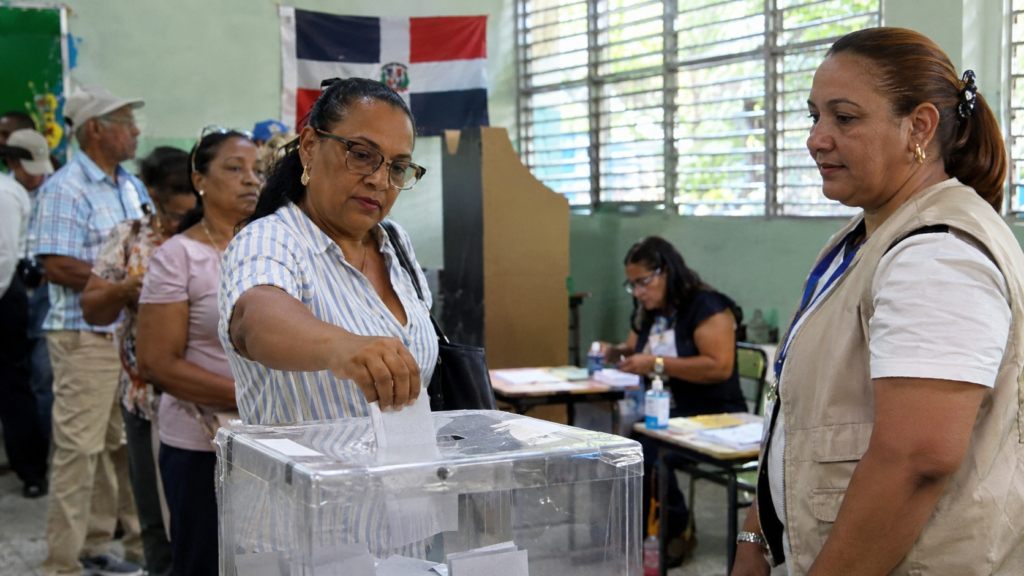
The Dominican Republic has a presidential electoral system in which citizens directly elect the country’s President and Vice President for a four-year term. Presidential elections are governed primarily by the Constitution and the Organic Law on the Electoral Regime (Law No. 20-23), with the Central Electoral Board responsible for organizing and supervising the voting process.
The system requires an absolute majority rather than simply allowing the candidate with the largest number of votes to win. A presidential ticket must receive more than half of the valid votes cast to secure victory in the first round. Otherwise, the two leading tickets advance to a second round, in which the one receiving the most valid votes is elected.
Understanding these rules is important for anyone seeking to understand Dominican politics, follow an election campaign or learn how the country’s democratic institutions operate.
How Is the President Elected in the Dominican Republic?
The President of the Dominican Republic is elected directly by the population through a nationwide popular vote. The electoral process takes place every four years, with presidential elections constitutionally scheduled for the third Sunday in May.
Unlike parliamentary systems, in which the head of government is selected by members of the legislature, the Dominican Republic uses a presidential system. Citizens vote directly for presidential candidates rather than electing legislators who subsequently choose the head of government.
The President and Vice President are elected jointly on the same electoral ticket. Political organizations present a presidential candidate together with a vice-presidential candidate, and voters choose the ticket as a single electoral option.
This means that voters do not cast separate votes for the two positions. The presidential candidate and their running mate are elected together and serve the same four-year term.
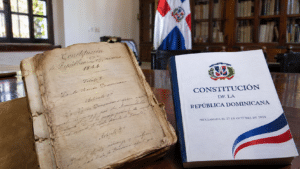
The principal constitutional provisions governing this process are Articles 123, 124 and 125, which establish presidential eligibility, direct election and the joint election of the Vice President.
Requirements to Become President of the Dominican Republic
The Dominican Constitution establishes specific conditions that individuals must meet to run for President. These requirements are designed to establish minimum standards concerning nationality, age, political rights and military or police service.
According to Article 123 of the Constitution, a presidential candidate must meet all the following conditions:
- Dominican nationality by birth or origin: The candidate must be Dominican by birth or origin. A person who acquires Dominican nationality through naturalization cannot become President.
- Minimum age of 30: Candidates must have reached their thirtieth birthday.
- Full civil and political rights: Candidates must be in full possession of their civil and political rights.
- No active military or police service during the preceding three years: Candidates must not have been on active military or police service for at least three years before the presidential election.
These requirements also apply to candidates for Vice President. Article 125 expressly establishes that the Vice President must meet the same constitutional conditions as the President.
Nationality and Dual Citizenship
The nationality requirement deserves particular attention because Dominican law distinguishes between nationality acquired by birth or origin and nationality acquired through naturalization.
Article 18 of the Constitution recognizes several ways of acquiring Dominican nationality, including being born to a Dominican mother or father, being born in Dominican territory under the constitutional conditions, and being a direct descendant of Dominicans living abroad.
However, Article 19 expressly excludes naturalized citizens from eligibility for the presidency and vice presidency.
Dual nationality is subject to an additional constitutional condition. Dominicans who have acquired another nationality, either voluntarily or through their place of birth, may seek the presidency or vice presidency only if they renounce the acquired nationality at least ten years before the election and have resided in the Dominican Republic during the ten years preceding the office.
These provisions are particularly relevant to members of the Dominican diaspora who hold another nationality but retain their Dominican nationality.
Who Can Vote in Dominican Presidential Elections?
Voting is a constitutional right and duty in the Dominican Republic. Article 208 establishes that the vote must be personal, free, direct and secret. No individual can be forced or coerced into voting in a particular way or required to disclose their choice.
In general, Dominican citizens aged 18 or older are entitled to participate in presidential elections, provided they retain their civil and political rights and meet the applicable electoral registration requirements.
The Constitution also establishes specific exclusions. Members of the Armed Forces and the National Police cannot exercise the right to vote while serving in those institutions. People who have lost their citizenship rights or have had those rights suspended are also excluded.
Can Dominicans Living Abroad Vote?
Yes. Dominican citizens residing abroad can participate in presidential and vice-presidential elections, provided they satisfy the requirements established by electoral legislation.
Law No. 20-23 recognizes the right of eligible Dominican citizens living overseas to vote for the President and Vice President. This provision allows the Dominican diaspora to participate in choosing the country’s national leadership without having to travel back to the Dominican Republic.
To vote abroad, eligible citizens must:
- Possess a Dominican identity and electoral card.
- Be registered in the Electoral Register of Voters Residing Abroad.
- Retain their civil and political rights.
- Not fall under any of the constitutional or legal voting restrictions.
The Central Electoral Board administers the overseas electoral register and coordinates voting arrangements through its electoral logistics offices abroad.
The overseas vote is an important part of the presidential electoral system because it extends participation to Dominican communities in countries such as the United States, Spain and other destinations with significant Dominican populations.
How Are Presidential Candidates Nominated?
Presidential candidates must be formally nominated through the Dominican political organization system. Under the current legal framework, candidacies for elected office are presented by political parties, groupings or movements.
Political organizations select their candidates through internal procedures established by electoral legislation and their respective statutes. These procedures can include:
- Primary elections: Internal elections in which eligible party members or registered voters, depending on the selected system, participate in choosing candidates.
- Conventions: Selection processes involving party delegates, members or leaders.
- Other internal selection mechanisms: Political organizations may use legally permitted procedures established in their statutes to nominate candidates.
Article 141 of Law No. 20-23 establishes that nominations must receive the affirmative vote of the majority of participants in the relevant primary, convention or internal selection mechanism.
Presidential nominations must subsequently comply with the formal registration requirements and deadlines established by the Central Electoral Board.
Are Independent Presidential Candidates Allowed?
The rules governing independent candidacies have undergone an important legal change.
Law No. 20-23 originally included provisions allowing independent candidacies, including presidential applications. However, the Constitutional Court ruled in December 2024, through judgment TC/0788/24, that the previous statutory framework was unconstitutional.
In March 2026, Law No. 13-26 repealed Articles 156, 157 and 158 of Law No. 20-23, which had regulated independent candidacies.
Under the resulting legal framework, presidential nominations are reserved for political parties, groupings and movements. An individual cannot simply register as an independent presidential candidate outside these recognized political organizations under the current statutory arrangements.
This distinction is important when interpreting older information about the Dominican electoral system, as publications describing the previous independent candidacy procedure may no longer reflect the law in force.
How Many Votes Are Needed to Win a Presidential Election?
The Dominican Republic uses an absolute majority system for presidential and vice-presidential elections.
According to Article 209 of the Constitution and Article 293 of Law No. 20-23, a presidential ticket must receive more than half of all valid votes cast to win in the first round.
This means that simply obtaining more votes than the other candidates is not sufficient. A candidate can finish first in the initial election and still fail to become President if their ticket receives 50% or less of the valid votes.
For example, consider a hypothetical election with 1,000,000 valid votes:
- Candidate A receives 480,000 votes (48%).
- Candidate B receives 350,000 votes (35%).
- Candidate C receives 170,000 votes (17%).
Although Candidate A finishes in first place, the ticket has not obtained more than half of the valid votes. Consequently, the election must proceed to a second round between Candidates A and B.
To win in the first round with 1,000,000 valid votes, a presidential ticket would need at least 500,001 votes.
What Is the Difference Between a Simple and an Absolute Majority?
A simple majority means obtaining more votes than any other individual candidate or ticket, regardless of whether the winner receives more than half of the total.
An absolute majority requires receiving more than 50% of the valid votes.
The Dominican presidential system applies the second standard in the first round. This is why a runoff may be necessary even when one candidate has a substantial lead over their competitors.
How Does a Presidential Runoff Election Work?
If no presidential ticket receives more than half of the valid votes in the first round, the Dominican Constitution requires a second election, commonly known as a runoff or second round.
Article 209 establishes the following rules:
- Only two tickets participate: The two presidential and vice-presidential tickets receiving the highest numbers of valid votes in the first round advance.
- The election takes place in June: The second round is held on the last Sunday of June of the same year as the first election.
- The highest vote total wins: The ticket receiving the greater number of valid votes in the second round is declared the winner.
Unlike the first round, the runoff does not require a candidate to obtain more than 50% of the valid votes. The ticket receiving the most votes wins.
Can Political Parties Change Their Alliances Before the Second Round?
Law No. 20-23 establishes restrictions on political agreements between the two rounds.
Article 293 states that modifications to alliances or coalitions and new political agreements are not permitted for the runoff. Only the two tickets that achieved the highest vote totals in the first round can participate.
This means that the second round is not an opportunity to introduce new presidential candidates or replace the two tickets that qualified through the initial vote.
What Happens If One Candidate Withdraws From the Runoff?
The electoral law also addresses the possibility that one of the two qualifying presidential tickets withdraws from the second election.
Under Article 293 of Law No. 20-23, if one of the tickets entitled to participate withdraws, the other ticket is declared the winner without the need to hold the runoff.

This provision prevents the electoral process from requiring a second vote when only one of the two qualifying options remains.
When Are Presidential Elections Held in the Dominican Republic?
Presidential elections take place every four years, on the third Sunday of May, according to Article 209 of the Constitution.
If a runoff is required, it takes place on the last Sunday of June of the same year.
The electoral calendar therefore provides a defined period for the first round, the verification of results and, when necessary, a second vote.
The President and Vice President elected in the general elections are sworn into office on August 16 following their election, as established by Article 126 of the Constitution.
Who Organizes Presidential Elections in the Dominican Republic?
The Junta Central Electoral (JCE), or Central Electoral Board, is the independent constitutional institution responsible for organizing, directing and supervising elections in the Dominican Republic.
Article 211 of the Constitution assigns responsibility for electoral administration to the JCE and the electoral boards operating under its authority.
Its responsibilities include:
- Organizing and administering the electoral process.
- Maintaining the electoral register and the identity and electoral card system.
- Supervising political organizations’ candidate selection processes in accordance with the law.
- Establishing the rules and procedures required for voting.
- Supervising the counting and consolidation of election results.
- Declaring the winners and issuing the corresponding electoral certificates.
The JCE operates as an autonomous institution with technical, administrative, budgetary and financial independence. Its constitutional role is to safeguard the freedom, transparency, fairness and objectivity of elections.
For additional information, readers can consult the official website of the Central Electoral Board.
What Happens After a President Is Elected?
Once the electoral process has been completed and the results have been formally established, the President-elect and Vice President-elect prepare to assume office.
Article 126 of the Constitution establishes August 16 as the date on which the newly elected President and Vice President are sworn into office, marking the end of the outgoing administration’s term.
The date is constitutionally significant because it provides a fixed transition point between presidential administrations, regardless of whether the election was decided in the first round or through a runoff.