 24°C

Dominican Republic to Host 2026 International Anti-Corruption Conference
The Dominican Republic will host the 22nd International Anti-Corruption Conference in Punta Cana from December 1 to 4, 2026. The event is expected to bring together more than 2,000 participants from approximately 140 countries, as the government highlights reforms to public procurement, institutional oversight and transparency.


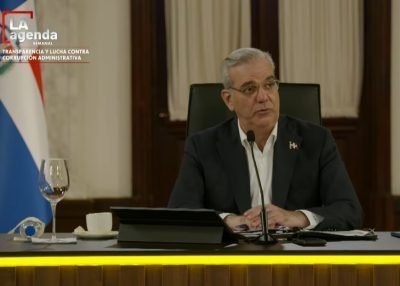
The announcement was made by President Luis Abinader during his weekly government briefing, where he described transparency as a tool for identifying irregularities, correcting institutional weaknesses and strengthening public oversight. The conference will place the country at the center of an international discussion on corruption prevention, public accountability and institutional integrity.
Why the Dominican Republic Was Selected
According to Carlos Pimentel, director general of Public Procurement, the selection reflects improvements in international indicators related to corruption perceptions, institutional integrity and budget transparency. He pointed to legal reforms, stronger public institutions, the creation of an anti-fraud unit and a team dedicated to recovering public assets as part of the changes introduced in recent years.
Pimentel also cited the independence of the Public Prosecutor’s Office as a factor in the country’s institutional development. These points represent the government’s explanation for the selection; hosting the conference does not, by itself, establish that corruption has been eliminated or that institutional challenges have been resolved.
The event is the 22nd International Anti-Corruption Conference (IACC), an international forum organized around cooperation and the exchange of approaches to transparency and integrity. Transparency International identifies Punta Cana as the venue and December 1–4, 2026, as the dates. The organization has described the Dominican Republic’s progress since 2021 while also noting that, as in every country, further improvements remain necessary.
Public Procurement Reforms and Digital Oversight
Public procurement has been one of the areas highlighted by the government. Pimentel said the number of institutions incorporated into the electronic procurement system increased from 220 in 2020 to approximately 670. The expansion includes more than 100 hospitals and close to 200 local governments and municipal districts.
He also reported that the average time taken by the State to pay suppliers has fallen to 22 days. The government points to Infopago as a platform through which payment information can be consulted, providing suppliers with a way to follow the status of payments.
Expanding electronic procurement can make public purchasing processes easier to monitor by increasing the availability of information about institutions and transactions. Its effectiveness, however, also depends on the quality of published data, oversight and the ability of authorities to investigate irregularities.
Higher Procurement Quotas for Small Businesses and Women
The government has also highlighted changes intended to broaden access to public contracts. According to Pimentel, the new Public Procurement Law increased the minimum share of government purchases allocated to micro, small and medium-sized enterprises (MSMEs) from 20% to 30%. He said these businesses currently account for 38% of public procurement participation.
The minimum allocation for women-led businesses was raised from 5% to 10%, while more than 1,400 cooperatives have been incorporated as government suppliers.
These measures are intended to widen the range of businesses able to compete for public contracts. For smaller suppliers, access to government purchasing opportunities can provide an additional source of demand, although participation quotas do not guarantee that every eligible business will secure a contract.
Punta Cana to Welcome International Delegates in December
The December conference is expected to bring together government representatives, civil society organizations, journalists, academics, business leaders and specialists working on corruption prevention. Its international participation will give the Dominican Republic an opportunity to present its institutional reforms while engaging with experiences and proposals from other countries.
For the host destination, the event will also bring an international gathering to Punta Cana during the first week of December. The conference is scheduled to run for four days, from December 1 to 4, 2026.
Further information about the event, its international scope and the host country is available through Transparency International’s announcement of IACC 2026.