 25°C
25°C
Dominican Republic Assumes CEPAL Presidency Through 2028
The Dominican Republic has formally taken over the presidency of the Economic Commission for Latin America and the Caribbean (CEPAL) through 2028, as Santiago de los Caballeros hosts the organization’s 41st Session.


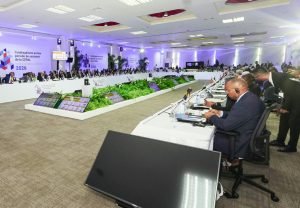
The Dominican Republic formally assumed the Presidency of the Economic Commission for Latin America and the Caribbean (CEPAL) through 2028 on Wednesday, October 7, as the United Nations regional body opened its 41st Session in Santiago de los Caballeros.
The biennial meeting brings together governments and senior officials from across Latin America and the Caribbean to address the region’s economic, technological and geopolitical challenges. The Dominican Republic succeeds Peru, which held the presidency during the previous two-year period.
Bisonó Calls for a Shift From Diagnosis to Implementation
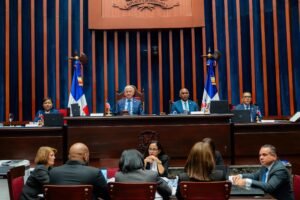
Foreign Minister Víctor “Ito” Bisonó presided over the session’s working proceedings following the opening ceremony. In discussing CEPAL’s first position paper, “Managing Transformations in an Era of Disruptions,” he said the Dominican Republic was assuming the responsibility at a time of major economic, technological and geopolitical change.
Bisonó called for greater emphasis on translating regional analysis and policy proposals into measurable results. He said the presidency should help move the region from identifying challenges toward implementing policies and building agreements that can be sustained, evaluated and replicated.
The foreign minister also highlighted the Dominican Republic’s experience with its Digital Transformation Cabinet, which CEPAL has identified as a reference for coordinating political decision-making, institutional leadership and implementation. He said the country was willing to share that experience with other nations in the region.
Regional Cooperation Takes Center Stage
The CEPAL position paper was presented by Executive Secretary José Manuel Salazar-Xirinachs. It examines a global environment characterized by fragmentation of the multilateral system, the use of economic interdependence as a strategic instrument and increasing competition for technological leadership.
Those developments have altered the conditions under which Latin American and Caribbean countries pursue development and participate in the international economy. The session therefore places regional cooperation, digital transformation, artificial intelligence, productive development and macroeconomic policy among its central areas of discussion.
The first Dialogue of Foreign Ministers and Senior Authorities also addressed the issue, with delegations from Haiti, Panama, Antigua and Barbuda, Venezuela, Saint Lucia, Jamaica, Cuba, Mexico and Germany presenting their perspectives on the challenges and opportunities facing the region.
Dominican Republic Highlights Economic Diplomacy
Bisonó also emphasized the broader role of economic diplomacy. He said it goes beyond promoting exports and supporting trade negotiations, requiring governments to understand global value chains, anticipate changes in the international environment, connect the public and private sectors and identify new opportunities for their economies.
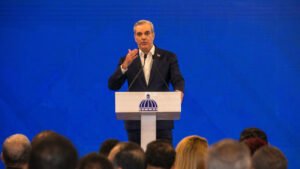
The Dominican government has presented its CEPAL presidency as an opportunity to strengthen dialogue among member states, share national experiences and promote cooperation around regional priorities. President Luis Abinader said at the opening ceremony that the country would assume the responsibility with a commitment to dialogue, shared experiences and agreements addressing the region’s challenges.
The 41st Session is being held from October 7 to 9 in Santiago de los Caballeros. CEPAL has described the meeting as its most important biennial gathering, with representatives examining the regional outlook and possible responses to a changing international environment.