 25°C
25°C

Dominican Senate Advances Cybercrime Treaty to Strengthen Global Evidence Sharing
The Dominican Republic is moving closer to ratifying an international agreement that would strengthen its ability to combat cybercrime, facilitate cross-border access to electronic evidence, and enhance cooperation with other countries in criminal investigations. The Senate took a key step forward after receiving support from national intelligence, cybersecurity, telecommunications, and law enforcement authorities.



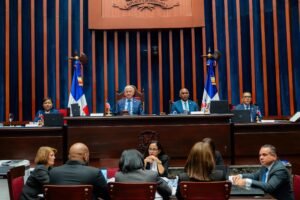
The Foreign Relations and International Cooperation Commission of the Dominican Senate has moved to advance the Second Additional Protocol to the Council of Europe Convention on Cybercrime, a pivotal agreement designed to enhance international cooperation and the cross-border disclosure of electronic evidence.
During a comprehensive hearing, senators heard testimonies from top national security, intelligence, and telecommunications officials who unanimously backed the legislative proposal. The initiative aims to significantly bolster the country’s legal and operational framework against the rising tide of digital crimes.
Key Security and Telecom Agencies Voice Support
The commission’s plenary session featured presentations from prominent state officials, including Luis Soto, Director General of National Intelligence (DNI); Carlos Leonardo, Executive Director of the National Cybersecurity Center (CNCS); and Armando Díaz, Head of Cybercrime Investigations.
They were joined by Rafael Lara, representing the Board of Directors of the Dominican Institute of Telecommunications (Indotel), and Fernando Quezada from the Attorney General’s Office. All representatives attended the session to formally endorse the treaty, emphasizing its absolute necessity in the modern digital landscape.
Addressing Cross-Border Cyber Threats
Luis Soto, head of the DNI, strongly recommended the ratification of the protocol, highlighting its practical benefits for law enforcement and national security.
“This piece of legislation will facilitate international cooperation in criminal investigations, allowing us to expedite access to data and the exchange of evidence, while also establishing urgent mechanisms for emergency situations,” Soto stated.
He elaborated on the transnational nature of modern cyber threats, noting that many cyberattacks targeting Dominican institutions and essential services originate from outside the country. Consequently, vital digital evidence is frequently stored on servers managed by foreign corporations, making international legal frameworks essential for successful prosecutions and rapid threat mitigation.
A “Fundamental Tool” for the Nation
Senator María Mercedes Ortiz Diloné, President of the Foreign Relations and International Cooperation Commission, announced that the committee has agreed to issue a favorable report on the agreement, which was initially submitted by the Executive Branch.
Ortiz Diloné stressed the urgency of the matter, asserting that the Dominican Republic requires the immediate application of this tool, which she described as “fundamental” to effectively combating cybercrimes in the region.
The commission meeting was also attended by Senators Santiago José Zorrilla, Aracelis Villanueva, and Gustavo Lara Salazar. The favorable report will now pave the way for the treaty’s debate and voting on the floor of the Senate, before proceeding to the Chamber of Deputies for final ratification.