 24°C
24°C

Political Party Coalitions and Alliances in the Dominican Republic
Political party coalitions and alliances are a central feature of elections in the Dominican Republic, where parties can cooperate on presidential, congressional, and municipal candidacies without necessarily merging into a single organization. The practice is governed principally by the country’s political-party and electoral legislation and administered by the Junta Central Electoral (JCE), the independent authority responsible for organizing elections. Over time, alliances have connected major parties with smaller organizations, influenced the distribution of candidacies, shaped electoral competition, and sometimes brought together organizations with very different political traditions.


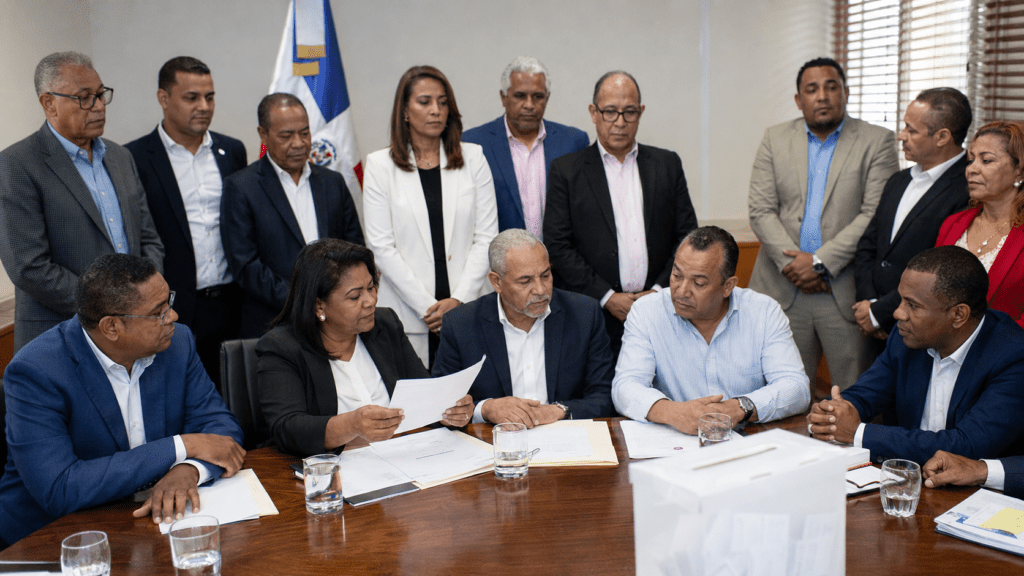
Political party coalitions and alliances are one of the defining characteristics of electoral competition in the Dominican Republic. They allow two or more political organizations to coordinate candidacies while preserving their separate legal identities, and they can be established for an entire election or limited to particular electoral levels, districts, or candidacies. For international readers, understanding these arrangements is essential because a candidate may appear on the ballot with the support of several parties even though only one organization formally presents or personifies the candidacy.
The system is not simply a matter of parties informally agreeing to campaign together. Dominican law establishes procedures for registering and approving alliances, coalitions, and mergers, while the Junta Central Electoral (JCE) reviews the agreements and administers their implementation. The legal framework also permits parties to reserve and transfer certain candidacies as part of electoral agreements. As a result, alliances affect not only campaign strategy but also the practical organization of the ballot and the allocation of political representation.
What Is a Political Alliance in the Dominican Republic?
In the Dominican electoral system, an alliance is an agreement through which political organizations cooperate in presenting candidates for an election. The participating organizations do not necessarily cease to exist as separate parties. Instead, they coordinate their electoral participation according to the terms of the agreement approved by the electoral authorities.
This distinction matters. A voter may see several party symbols associated with the same candidate, while the organizations behind those symbols remain legally distinct. Under the framework established by Law No. 33-18 on Political Parties, Groups and Movements, political organizations are separate legal entities with defined geographic scopes and electoral rights. National political parties can present candidates across the country and abroad, while political groups and movements have more limited geographic scopes.
The law defines political parties, groups, and movements as organizations with legal personality and public-interest purposes, including participation in elections and access to elected office. It also recognizes pluralism, ideological diversity, alternation in power, transparency, and the rights of minorities among the principles governing political activity.
The legal framework therefore treats alliances as part of the normal functioning of a multiparty democratic system rather than as an exceptional mechanism. The JCE maintains a dedicated administrative structure for recognized political organizations and publishes legislation, regulations, resolutions, and information concerning their electoral activity.
Alliance, Coalition, and Merger: What Is the Difference?
The terms alliance, coalition, and merger are often used together, but they should not be treated as identical concepts. In practical electoral terms, the most important distinction is whether the organizations remain separate or become part of a single political entity.
| Arrangement | Basic Meaning | Political Effect |
|---|---|---|
| Alliance | Two or more organizations coordinate electoral candidacies under an agreement. | The organizations generally retain their separate identities while cooperating in specified electoral contests. |
| Coalition | Political organizations form a broader electoral grouping under the terms permitted by electoral law. | The organizations coordinate their participation, potentially across multiple candidates or electoral levels. |
| Merger | Organizations combine into a new or continuing political structure according to the applicable legal procedures. | The separate organizations cease operating independently as the same political entities. |
The practical distinction is especially important when examining Dominican elections because an alliance can be highly extensive without being a merger. Several parties may support the same presidential candidate while presenting different candidates in congressional or municipal contests. Conversely, an agreement may be limited to a particular district or electoral level.
How Political Alliances Work Under Dominican Electoral Law
The principal legal framework is found in Law No. 33-18, which regulates political parties, groups, and movements, together with Law No. 20-23, the Organic Law of the Electoral Regime. The JCE has also issued regulations governing mergers, alliances, and coalitions.
Law No. 33-18 specifically addresses candidacies reserved or assigned as a result of an alliance or merger. It establishes that candidacies agreed between political organizations must be reflected in the corresponding political agreement. The law also requires the agreement to identify the candidates presented by the alliance so that the representation of each participating organization can be determined.
One particularly important feature is that allied organizations continue to be represented individually on the ballot through their respective party boxes. Votes are therefore counted according to the political organization selected by the voter, even when the organizations support the same common candidate. This makes Dominican alliances different from systems in which a coalition automatically produces a single party list or a single electoral identity.
The law also allows political organizations to reserve up to 20 percent of candidacies for their senior leadership, including positions that may be allocated through agreements, alliances, or mergers. Candidacies assigned through such arrangements must satisfy the applicable legal and internal requirements.
The JCE has translated these legal requirements into administrative procedures. For example, before the 2024 elections it established an electronic system for registering alliances and candidacies. The JCE explained that Law No. 20-23 requires the use of an information system for the registration of candidacies and electoral agreements, while coalition documentation can be subject to specific filing procedures.
Why Do Dominican Political Parties Form Alliances?
The reasons vary from election to election, but several recurring strategic objectives explain why alliances are so common.
Combining Electoral Strength
The most obvious reason is to combine support behind a common candidate. A major party may have a strong national organization but still benefit from the territorial networks, local leaders, or established voter base of smaller parties.
For a smaller organization, supporting a major presidential candidate can provide access to a broader electoral structure while allowing it to maintain its separate political identity. The larger party, in turn, may gain additional votes and local organizational capacity.
Preventing Vote Fragmentation
Alliances can also reduce the fragmentation of support among candidates who share overlapping political constituencies. If several organizations support the same candidate rather than competing separately, they can concentrate their electoral resources around a common contender.
This is particularly important in presidential elections, where the Dominican Republic uses a two-round system. A presidential candidate must obtain more than half of the valid votes to avoid a runoff. Alliances can therefore become part of a broader strategy to build a sufficiently large electoral coalition before voting day.
Negotiating Congressional and Municipal Representation
Presidential alliances are only one part of the equation. Parties can also negotiate congressional and municipal candidacies. An organization may support another party’s presidential candidate while maintaining its own candidates for particular Senate, Chamber of Deputies, mayoral, or council contests.
This flexibility makes alliances useful for organizations with different geographic strengths. A party may be nationally relevant but relatively weak in a particular province, while a smaller organization may have a stronger local network there. An electoral pact can allow both sides to coordinate instead of competing directly.
Sharing Political Infrastructure
Campaigns require candidates, activists, polling agents, transportation, communications, fundraising, and local organization. Alliances can provide access to networks that would otherwise be expensive or difficult to reproduce independently.
The importance of organization is especially evident in a country with national, provincial, municipal, overseas, and district-level electoral contests. A political alliance can therefore function as an organizational partnership as much as a formal electoral agreement.
Alliances Can Be Partial Rather Than Total
One of the most important concepts for understanding Dominican politics is that an alliance does not necessarily apply to every race. Political organizations can cooperate at one electoral level while competing against each other at another.
A historical example can be found in the 2012 presidential election. The JCE approved agreements involving the Partido Revolucionario Dominicano (PRD) and several other organizations. Some agreements covered the presidential contest while treating overseas congressional seats separately. The JCE also recorded agreements involving parties such as the PRSD, PDI, MODA, PHD, and Alianza Social Dominicana.
This illustrates why simply describing two parties as “allies” can be misleading. The relevant question is always: allies for which election, which level, which district, and which candidacies?
The Historical Role of Coalitions in Dominican Politics
Electoral alliances have a long history in the Dominican Republic. The country’s political system has repeatedly been characterized by negotiations among major parties and smaller organizations, especially when presidential contests become closely balanced.
The contemporary pattern cannot be understood without considering the country’s three major political traditions: the Partido Revolucionario Dominicano (PRD), the Partido de la Liberación Dominicana (PLD), and the Partido Reformista Social Cristiano (PRSC). The rise of the Partido Revolucionario Moderno (PRM) and later the Fuerza del Pueblo (FP) changed the balance among the country’s principal political forces.
Over successive elections, smaller parties have frequently entered alliances with larger organizations. These relationships have not always followed a simple left-right ideological pattern. Electoral calculations, leadership relationships, geographic strength, candidate selection, and negotiations over representation have often been just as important as formal ideological compatibility.
The 1996 Election and the Importance of Second-Round Alliances
The 1996 presidential election provides one of the clearest historical examples of how political alliances can determine the outcome of a Dominican presidential contest.
The election was conducted in a political environment in which no candidate won enough support in the first round to take the presidency outright. The subsequent alignment of political forces was decisive in determining the second-round result. The experience demonstrated an enduring feature of Dominican politics: alliances can become especially important when no party can independently assemble a majority.
The political significance of the 1996 election extends beyond the personalities involved. It demonstrated that electoral competition does not necessarily end with the first round. Political organizations can negotiate new alignments between rounds, and the support of a party that did not reach the final contest can become decisive.
Alliances in the 2008 Presidential Election
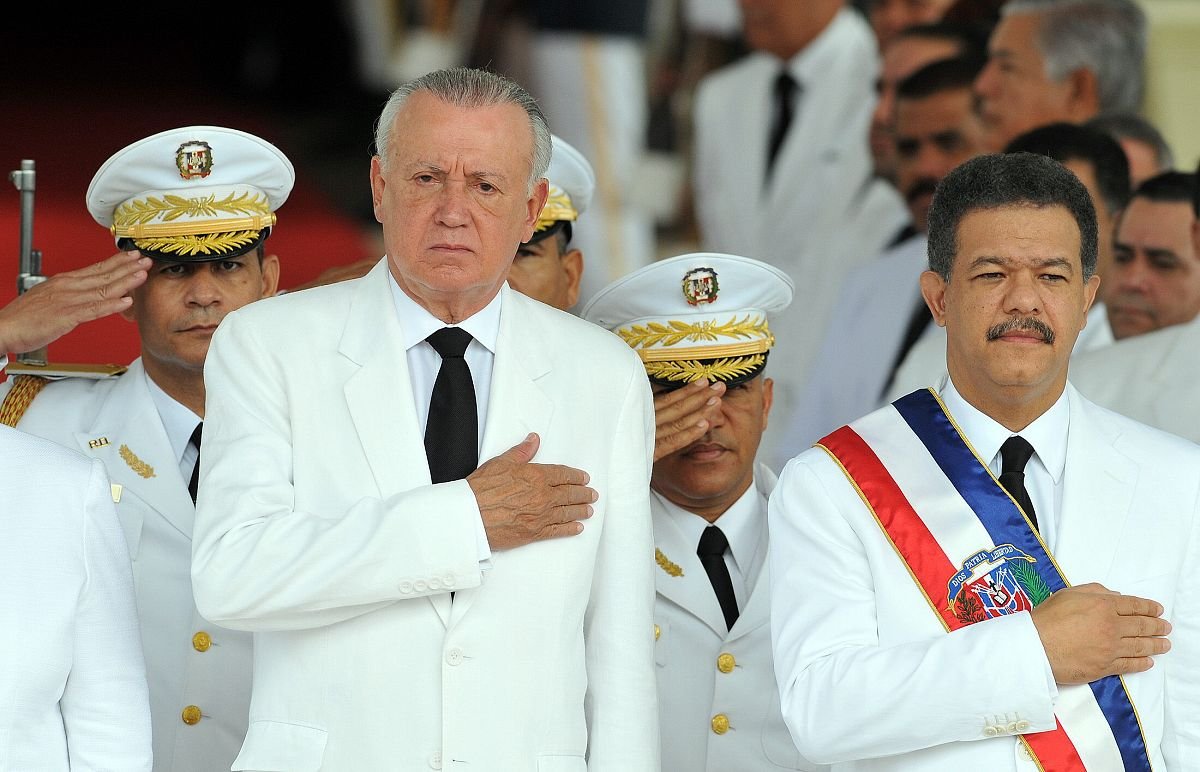
The 2008 presidential election continued the established pattern of major parties competing with the support of allied organizations. Electoral results compiled from JCE data show Leonel Fernández running under the PLD and allied organizations, while Miguel Vargas Maldonado ran under the PRD and allied organizations.
Fernández won the election with 53.83 percent of valid votes, while Vargas received 40.48 percent. The PRSC candidate, Amable Aristy Castro, obtained 4.59 percent. The result illustrates how Dominican presidential elections have frequently involved major parties supported by networks of smaller allied organizations rather than competition exclusively among the principal parties.
The 2012 Election: Highly Structured Alliances
The 2012 election offers an especially useful illustration because the JCE publicly documented numerous alliance agreements. The PLD deposited alliances involving 14 political organizations, while the PRD deposited agreements involving eight organizations.
The JCE’s records show that these agreements were not necessarily identical in scope. Some were presidential alliances, while others extended to representatives of Dominicans living abroad or to other electoral contests. The arrangements therefore demonstrate the flexibility of the Dominican alliance system.
The important lesson is that a party’s electoral coalition should not be interpreted simply by counting the number of organizations that endorse its presidential candidate. The geographic and institutional details of each pact matter.
The 2020 Election and the End of PLD Dominance
The 2020 election marked a major change in the country’s party system. The PRM emerged as the principal electoral force and displaced the PLD from government after the latter had dominated national politics for 16 years.
The election was held on July 5, 2020, after the original May date was postponed because of the COVID-19 pandemic. The Chamber of Deputies results show the PRM winning 90 seats, compared with 75 for the PLD. Other parties and political groupings also obtained representation, including the PRSC, Fuerza del Pueblo, PRD, Frente Amplio, Alianza por la Democracia, and others.
Before the 2020 congressional and presidential elections, the JCE formally approved the alliances negotiated by the participating political organizations. This demonstrates that alliances were not merely campaign declarations; they were incorporated into the official electoral framework through JCE resolutions.
The 2024 Elections: Alliances as a Major Electoral Mechanism
The 2024 general election demonstrated the scale and strategic importance of electoral alliances in the contemporary Dominican Republic. The election included the presidency, 32 senators, 190 deputies, and representatives to the Central American Parliament.
The JCE formally approved pacts of alliances and coalitions for the presidential, senatorial, and deputy levels. During the process, political organizations were given opportunities to review and correct their registered agreements before the final candidacy deadlines.
The breadth of negotiations was reflected in the large number of recognized political organizations participating in the process. The JCE publicly identified organizations involved in discussions over alliances, including the PRM, PLD, Fuerza del Pueblo, PRSC, Alianza País, Dominicanos por el Cambio, Frente Amplio, Opción Democrática, Partido Primero la Gente, Justicia Social, and numerous other parties.
The election ultimately produced a dominant result for the PRM and its allies. Data compiled by the Inter-Parliamentary Union show that the PRM and allied organizations won 146 of the 190 seats in the Chamber of Deputies, while Fuerza del Pueblo and its allies won 28 and the PLD and its allies won nine, with the PLD itself also winning four seats outside that allied grouping.
The result illustrates an important characteristic of the Dominican system: a party’s effective congressional strength may be understood through both its own organization and the electoral agreements that surround it.
How Alliances Affect the Ballot
For an international observer, one of the most confusing aspects of Dominican elections is the appearance of multiple party symbols associated with the same candidate. This is a direct consequence of the country’s alliance structure.
Law No. 33-18 provides that political organizations participating in an alliance are represented individually on the ballot through their respective boxes. The votes received by each organization are therefore recorded separately, even when the organizations have endorsed the same candidate.
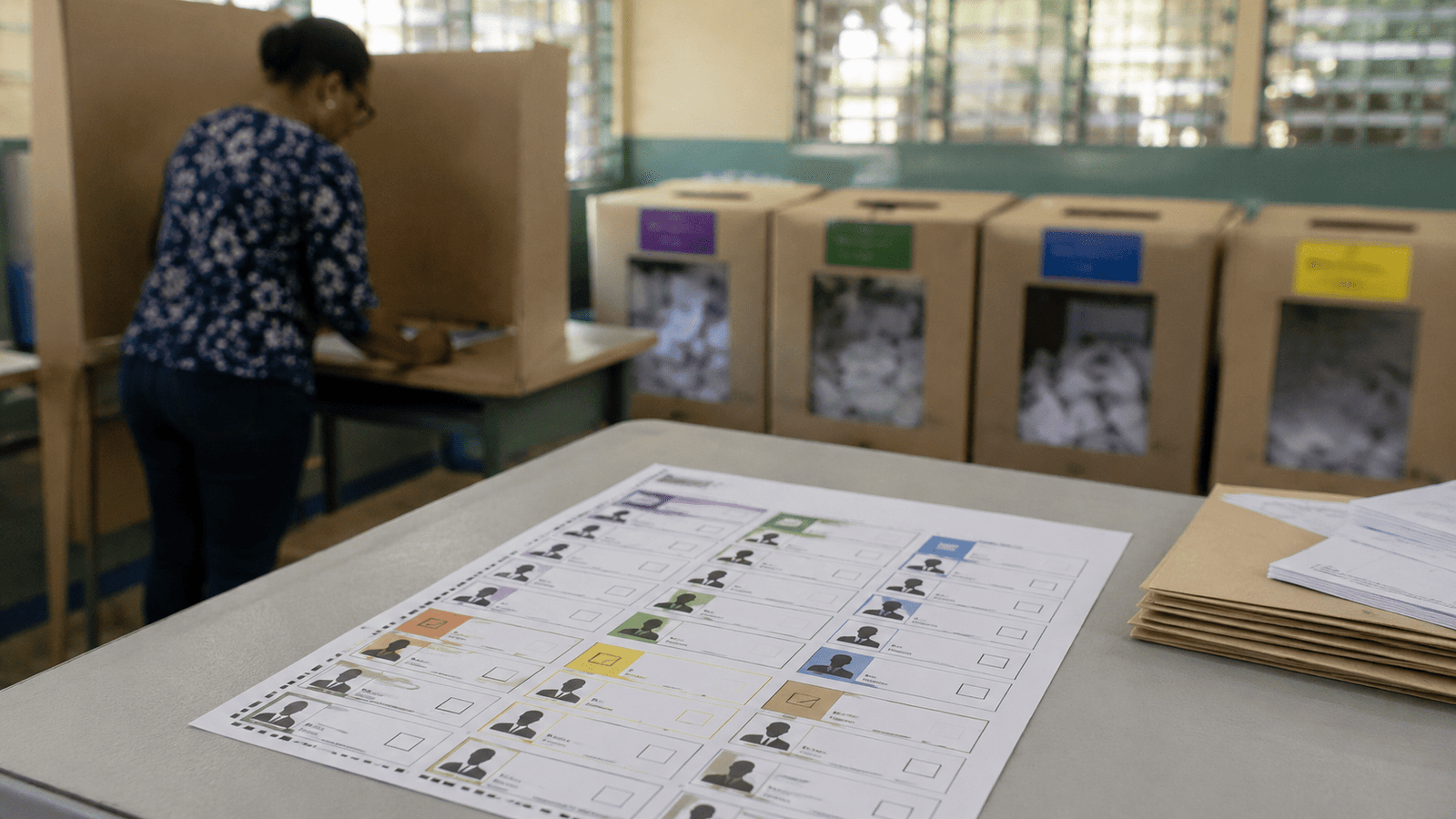
This means that a presidential candidate can receive votes through several allied party boxes. The candidate is the common political beneficiary, but the electoral records preserve the vote attributed to each participating organization.
The distinction is important for understanding election statistics. Adding the votes associated with a candidate’s allied parties may show the candidate’s total electoral support, but it does not mean that all those votes belong administratively to the candidate’s principal party.

Why Smaller Parties Join Larger Parties
For smaller parties, alliances can be a mechanism for remaining electorally relevant in a competitive multiparty environment. A smaller organization may have limited resources but a recognizable political identity, local leaders, or a specialized constituency.
An alliance can allow that organization to participate in a larger campaign without surrendering its legal identity. It can also create opportunities to negotiate specific candidacies or political positions within the broader electoral agreement.
However, alliances also create risks. A smaller party may become closely associated with the larger organization it supports, making it harder to distinguish its own political identity. Its electoral future can also become dependent on the strength of the larger party and on the terms negotiated before the election.
Why Major Parties Need Smaller Allies
The relationship is not one-sided. Major parties can benefit substantially from alliances with smaller organizations.
Smaller parties may possess strong local networks, established relationships with community leaders, or concentrated support in specific territories. Their participation can also broaden the political coalition surrounding a presidential candidate and help coordinate campaign activity across multiple constituencies.
The importance of these relationships is particularly visible when an election is close. A relatively small number of votes can determine whether a candidate wins in the first round, reaches a runoff, or captures a particular congressional or municipal seat.
Alliances and Candidate Reservations
Candidate selection is one of the most consequential aspects of an electoral alliance. Dominican law allows political organizations to reserve a portion of candidacies and use those arrangements in connection with alliances or mergers.
Law No. 33-18 establishes a maximum reservation of 20 percent of specified elected positions for the senior leadership of political organizations. The law expressly recognizes that positions within this reserved percentage can be used for agreements and alliances.
These provisions help explain why alliance negotiations can extend beyond the question of which presidential candidate to support. Parties may negotiate Senate seats, deputy seats, mayorships, municipal council positions, or other elected positions as part of the overall political agreement.
Alliances Can Vary by Geographic Area
Dominican electoral alliances can also be geographically selective. A political organization may support another party’s candidate in one province while presenting its own candidate elsewhere.
This makes local political knowledge essential when analyzing Dominican elections. A national description of an alliance may conceal substantial differences among provinces, municipalities, districts, and electoral levels.
The JCE’s electoral procedures reflect this complexity by requiring detailed information concerning the candidates and constituencies covered by alliance agreements. The result is a system in which political cooperation can be national in appearance but highly localized in practice.
Coalitions and the Dominican Party System
The prevalence of alliances reflects the structure of the Dominican party system itself. Political competition is multiparty, but electoral power is concentrated among a relatively small number of major organizations. Smaller parties therefore frequently have incentives to cooperate with larger parties rather than compete independently for every position.
Freedom House has characterized Dominican political parties as generally free to form and operate, while noting that newer and smaller parties can face difficulties obtaining public financing and equivalent media exposure. This institutional environment helps explain why the relationship between large and small parties is an important component of electoral competition.
The system is therefore neither a simple two-party model nor a situation in which every recognized party competes independently. Instead, it combines a large number of legally recognized political organizations with recurring electoral blocs centered around stronger parties and candidates.
Are Political Alliances Ideological?
Ideology can influence alliance formation, but it does not provide a complete explanation of Dominican electoral coalitions.
Political parties may share broad positions on economic policy, social issues, institutional reform, nationalism, or the role of government, but electoral alliances can also be driven by pragmatic considerations. Leadership relationships, territorial organization, candidate negotiations, historical rivalries, and the probability of winning can all influence whether parties cooperate.
This is why international observers should be cautious about importing political categories from countries with more rigid ideological party systems. A Dominican alliance should be analyzed on the basis of the actual agreement, the candidates involved, and the electoral level covered rather than inferred solely from a party’s traditional label.
The Role of the Junta Central Electoral
The Junta Central Electoral is central to the legal operation of alliances. It is an autonomous public institution responsible for organizing and directing elections and for administering important aspects of the political-party system.
The JCE maintains information on recognized political organizations, publishes electoral regulations, receives alliance agreements, conducts public hearings when required, and issues resolutions approving or rejecting electoral pacts.
The institution’s role is particularly important because an alliance is not simply a private political contract. Its terms must be compatible with the electoral framework, and the resulting candidacies must be capable of being incorporated into the official electoral process.
For the 2024 elections, the JCE operated an electronic system designed to facilitate the registration of alliances and candidacies. The JCE also conducted public hearings and provided political organizations with opportunities to correct or amend registered agreements.
Deadlines Matter
Alliance negotiations operate within strict electoral deadlines. Under the framework applicable to the 2024 elections, the JCE published a calendar specifying deadlines for the submission of requests involving mergers, alliances, and coalitions.
For the 2024 municipal elections, the JCE stated that requests for mergers, alliances, or coalitions had to be submitted 100 days before the scheduled municipal election. The electoral authority then established deadlines for hearings, decisions, communication of resolutions, and candidate registration.
These deadlines are not merely administrative details. Missing a deadline or submitting an agreement that does not comply with the applicable requirements can prevent an organization from implementing the intended electoral arrangement.
How Alliances Differ From Governing Coalitions
Another important distinction is between an electoral alliance and a governing coalition. An electoral alliance concerns how parties compete in an election. A governing coalition concerns how political organizations cooperate after an election to exercise political power.
In the Dominican Republic, parties can support the same candidate electorally without necessarily creating a permanent governing coalition. Likewise, parties that compete separately may cooperate later in Congress or on particular policy issues.
For this reason, election-day alliances should not automatically be interpreted as permanent political partnerships. Their duration and political meaning depend on the agreement and on what happens after the election.
The Advantages of Political Alliances
Electoral alliances can provide several advantages within a multiparty system.
- Vote concentration: parties can avoid dividing support among candidates with overlapping constituencies.
- Organizational reach: major parties can gain access to the territorial networks of smaller organizations.
- Broader representation: alliances can bring additional political organizations and constituencies into a common electoral project.
- Candidate coordination: parties can divide or coordinate candidacies across electoral levels and territories.
- Strategic flexibility: agreements can be limited to particular races instead of requiring complete political integration.
These advantages are most significant when the electoral contest is competitive and the participating organizations can contribute complementary forms of political support.
The Risks and Limitations of Alliances
Alliances also have disadvantages. The first is that organizations may have different political priorities. An agreement that makes sense electorally may be difficult to explain to voters if the participating parties have traditionally presented themselves as competitors.
There can also be internal disputes over candidate allocation. When several organizations want the same position, negotiations may become contentious. The use of reserved candidacies can further complicate internal party processes because some positions are allocated through political agreements rather than ordinary internal selection mechanisms.
Another limitation is accountability. When several organizations support the same candidate, voters may find it harder to determine which party should receive political credit or blame for subsequent government decisions.
Finally, an alliance may strengthen a major party at the expense of smaller organizations if the smaller partners become permanently dependent on the larger electoral machine. The long-term effect therefore depends on whether the alliance strengthens genuine political representation or merely concentrates political resources.
What Voters Should Look For
For anyone trying to understand a Dominican election, the most useful approach is to look beyond the party name printed next to a candidate.
Voters and observers should ask five basic questions:
- Which party officially presents the candidate?
- Which other organizations are allied with that candidate?
- At which electoral level does the alliance apply?
- Which geographic districts are covered by the agreement?
- Which candidacies are actually shared or transferred between the organizations?
The answers can reveal a much more accurate picture of the political competition than a simple list of presidential candidates.
How to Research an Alliance Reliably
Because alliances can change from one election to another, the safest source is the official electoral documentation for the specific election being studied. The Junta Central Electoral publishes recognized political organizations, electoral resolutions, regulations, and information concerning alliance agreements.
The JCE’s political-party portal is particularly useful for checking the legal status of organizations and accessing relevant legislation. For historical election results, institutional databases such as the Inter-Parliamentary Union and Georgetown University’s Political Database of the Americas can provide useful complementary information.
International organizations such as International IDEA can also provide country-level electoral information and explain the structure of Dominican elections, including the presidency, Senate, Chamber of Deputies, and electoral administration.
The Legal Framework Has Continued to Evolve
The legal environment surrounding political participation does not remain static. Law No. 33-18 and Law No. 20-23 form important parts of the framework, but subsequent constitutional and legislative developments can alter how political organizations participate in elections.
In 2026, for example, President Luis Abinader promulgated Law No. 13-26, following a Constitutional Court decision concerning the previous legal framework for independent candidacies. The new law established that candidacies for elected office are reserved to recognized political parties, groups, and movements under the applicable constitutional framework.
This development is relevant to the broader study of political alliances because it reinforces the central role of recognized political organizations as the institutional vehicles through which electoral participation takes place. It does not eliminate alliances; rather, it places political cooperation within a system in which recognized organizations remain the principal legal actors.
What the 2024 Election Revealed About Alliances
The 2024 election provides perhaps the clearest recent demonstration of how deeply alliances are integrated into Dominican electoral politics. The JCE processed extensive agreements involving the principal parties and numerous smaller organizations, while the final congressional results were reported for both individual parties and allied groupings.
The PRM and its allies achieved a dominant position in the Chamber of Deputies, while Fuerza del Pueblo and its allies also secured a substantial bloc. The PLD competed with a different alliance structure, illustrating how the country’s major political forces can construct distinct electoral networks around their candidates.
The result also demonstrates why electoral alliances should be studied as institutional arrangements rather than simply as campaign slogans. They influence candidate selection, ballot presentation, vote attribution, congressional representation, and the broader organization of political competition.
Frequently Asked Questions
What is a political alliance in the Dominican Republic?
A political alliance is an electoral agreement between political organizations that coordinate support for candidates or electoral contests while generally retaining their separate organizational identities. The agreement must comply with Dominican electoral law and be submitted through the procedures established by the JCE.
Can two parties support the same presidential candidate?
Yes. Multiple political organizations can support the same presidential candidate through an approved electoral alliance. Each participating organization may remain separately identifiable on the ballot.
Do allied parties become one party?
No. An alliance does not automatically create a merger. Political organizations can cooperate electorally while maintaining separate legal and organizational identities.
Can an alliance cover only one electoral level?
Yes. Dominican electoral agreements can be structured differently depending on the electoral level and geographic area. A party can cooperate on a presidential candidacy while presenting separate candidates in other contests.
How are votes counted when parties are allied?
Under Law No. 33-18, allied organizations are represented individually on the ballot through their respective boxes, and votes are counted according to the organization selected by the voter, even when the organizations support a common candidate.
Why do small parties form alliances with major parties?
Smaller parties may gain access to broader campaign infrastructure, territorial networks, and competitive candidacies by cooperating with a major organization. They can also maintain their own political identity while participating in a larger electoral coalition.
Why do major parties need smaller allies?
Smaller organizations may contribute local networks, established constituencies, campaign personnel, and additional votes. Their support can be particularly valuable in closely contested elections or specific geographic areas.
Does an electoral alliance mean the parties will govern together?
Not necessarily. An electoral alliance concerns participation in an election. Whether the organizations subsequently cooperate in government or Congress is a separate political question.
Who approves political alliances?
The Junta Central Electoral is responsible for administering and deciding on electoral alliance agreements under the applicable legal framework. The JCE publishes resolutions and procedures governing their registration and approval.
Where can I verify a Dominican political alliance?
The most authoritative starting point is the official JCE website, particularly its political-party section and its repository of electoral resolutions. Historical election databases maintained by institutions such as International IDEA, the Inter-Parliamentary Union, and Georgetown University’s Political Database of the Americas can provide additional context.
Conclusion
Political party coalitions and alliances are not a peripheral feature of Dominican politics. They are an established mechanism through which parties organize electoral competition, negotiate candidacies, combine political resources, and broaden their support. Their importance is especially clear in presidential elections, but their effects extend to Senate, Chamber of Deputies, municipal, and overseas contests.
The defining characteristic of the Dominican model is its flexibility. Political organizations can cooperate without merging, form agreements that apply only to particular contests, maintain separate ballot identities while supporting common candidates, and negotiate candidacies across different geographic areas. This creates a political system in which the formal number of parties does not necessarily correspond to the number of meaningful electoral blocs.
For international observers, the key is therefore to distinguish between a party’s legal identity and its electoral alliances. Understanding who is formally registered, who supports whom, where the agreement applies, how votes are attributed, and which candidacies are shared provides a far more accurate picture of Dominican political competition than looking only at party labels.
The system also remains subject to legal and institutional change. For that reason, historical analysis should rely on the rules and alliance agreements applicable to each election, while current analysis should be checked against the latest JCE resolutions and electoral legislation. The enduring feature, however, is clear: in the Dominican Republic, political power is often built not only through individual parties, but through the alliances they are able to construct.
Official and institutional references:
- Junta Central Electoral: Political Parties
- Law No. 33-18 on Political Parties, Groups and Movements
- JCE: Registration of Alliances and Candidacies
- JCE: 2020 Presidential and Congressional Alliances
- Inter-Parliamentary Union: Dominican Republic 2024 Election Results
- International IDEA: Dominican Republic 2024 Elections