 22°C
22°C

New Dominican Penal Code Prompts Construction Industry to Strengthen Compliance
The Dominican Republic's new Penal Code is expected to reshape risk management practices in the construction industry by expanding criminal liability for companies and increasing the importance of corporate compliance programs.


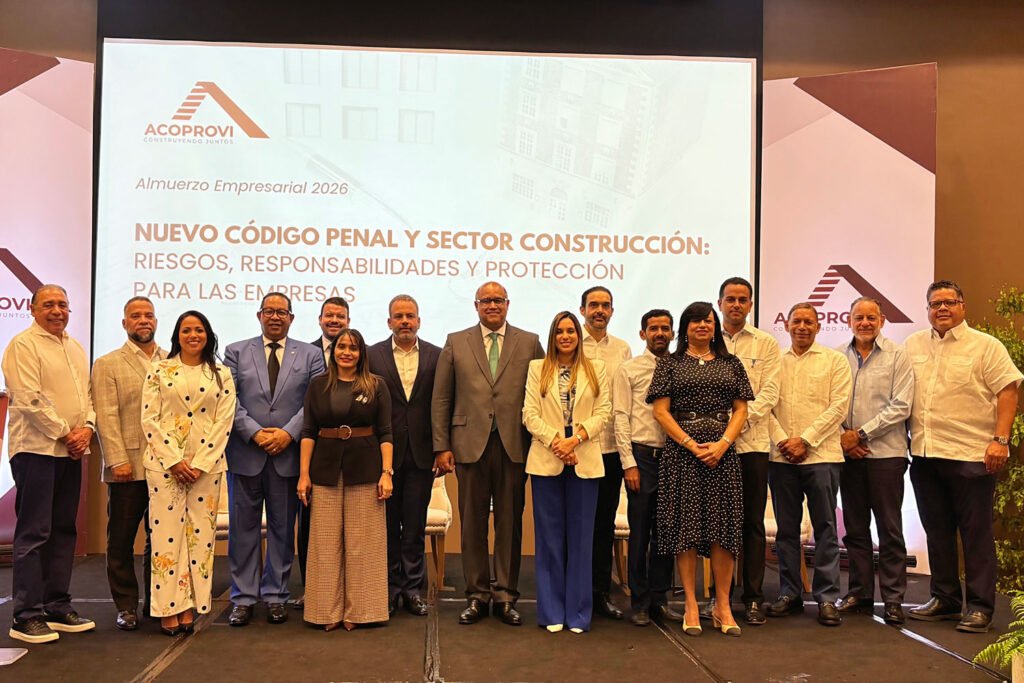
The implementation of the Dominican Republic’s new Penal Code is expected to bring significant changes for the construction industry, introducing greater legal responsibilities for corporate entities and placing a stronger emphasis on compliance and risk prevention.
The topic was the focus of a conference organized by the Asociación Dominicana de Constructores y Promotores de la Vivienda (ACOPROVI), where legal experts discussed how the updated legislation will affect businesses operating in the sector.
Companies Urged to Adopt Preventive Compliance Measures
During the event, legal scholar Miguel Valerio said the new Penal Code requires construction companies to review their internal procedures and adopt a preventive approach to criminal risk management.
“The new Penal Code requires companies in the construction sector to review their internal processes and implement compliance systems that protect organizations, executives and employees,” Valerio said, stressing that understanding the law alone is no longer sufficient without effective corporate governance measures.
ACOPROVI Highlights Regulatory Preparedness
Annerys Meléndez, president of ACOPROVI, said understanding the scope of the new legislation will be essential for companies seeking to adapt successfully to the country’s updated legal framework.
She said the association remains committed to providing members with timely information and practical tools that help businesses anticipate regulatory changes while strengthening compliance, corporate management and legal certainty throughout the industry.
Experts Discuss Corporate Criminal Liability
The conference also featured a panel titled “New Penal Code and the Construction Sector,” with participation from compliance specialist Tania de León, business attorney John Seibel, partner at the law firm Seibel Henríquez, and Rafael Armstrong Báez García, a judge of the First Criminal Chamber of the National District Court of Appeals.
The panel examined the principal challenges companies are expected to face under the new legal framework, including expanded corporate criminal liability, regulatory compliance obligations and the need for stronger internal risk management systems.
Industry Focuses on Long-Term Compliance
The discussion took place during ACOPROVI’s monthly Business Luncheon, which brought together representatives from across the construction industry to review the implications of the new Penal Code for business operations.
According to the association, the initiative forms part of its broader effort to help the construction sector prepare for regulatory changes by promoting continuous professional development, legal compliance and sound corporate governance as key elements of sustainable industry growth.