 23°C
23°C

Colombia And Venezuela Quakes Highlight Dominican Seismic Risks
Recent earthquakes measuring 7.4 in Colombia and 7.2 and 7.5 in Venezuela have renewed attention on seismic safety across the Caribbean and northern South America, as the Dominican Republic continues to expand high-rise construction on areas of soft soil.


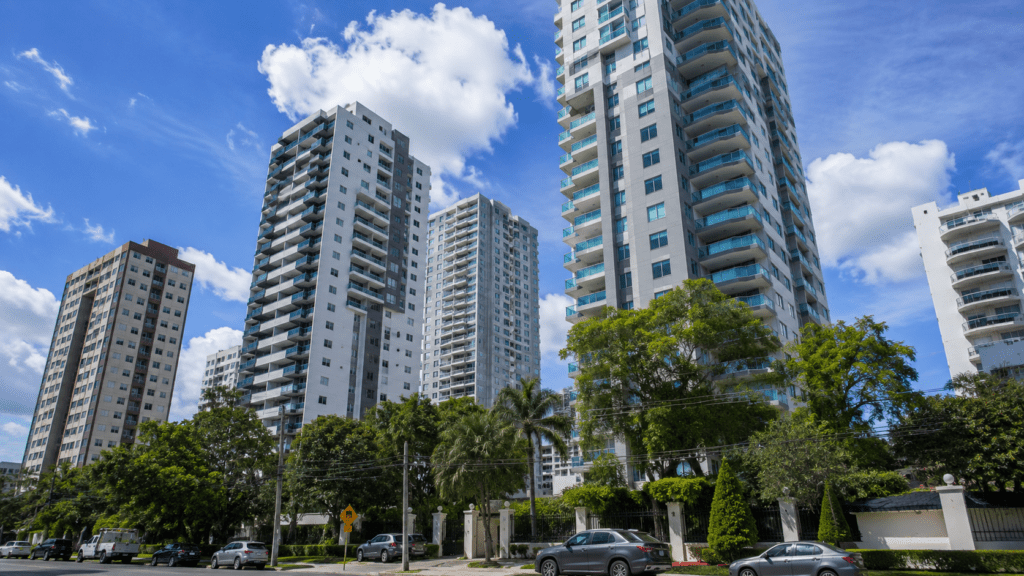
The 7.4-magnitude earthquake that struck Colombia on August 10, after two powerful earthquakes of 7.2 and 7.5 hit northern Venezuela on June 24, has brought renewed attention to how buildings perform when strong ground motion meets vulnerable urban areas. For the Dominican Republic, where high-rise residential construction is expanding, the recent disasters provide a regional reminder of the importance of site-specific seismic analysis and construction standards.
In Colombia, the August earthquake caused widespread damage and more than 250 deaths, while the Venezuelan sequence produced extensive structural damage across the country’s north. The events occurred in different tectonic settings and should not be treated as direct predictions of what could happen in the Dominican Republic, but they illustrate how earthquake magnitude alone does not determine the consequences for buildings and communities. Ground conditions, structural design, construction quality and enforcement of building standards can all influence the outcome.
Soft Soil Is a Particular Concern for High-Rise Buildings
That regional experience adds context to concerns raised by geologist Osiris de León about towers being developed on soft soils in the Dominican Republic. He argues that these projects should undergo a local seismic response analysis before structural design is completed, allowing engineers to assess how the specific ground beneath a building could affect its behavior during an earthquake.
Soft soils can have lower shear-wave velocities and strong contrasts in seismic impedance. These characteristics can amplify seismic waves, potentially increasing the demands placed on structures. The issue is therefore not simply whether a building complies with a general seismic standard, but whether its design adequately reflects the characteristics of the site where it will stand.
The concern is relevant in several populated areas of the Dominican Republic. De León identified soft soils in parts of Santo Domingo Norte, Santo Domingo Este and the Cibao Valley, including areas around Villa Mella, Los Alcarrizos, Santiago, La Vega, Bonao, Moca, Salcedo, San Francisco de Macorís and Valverde.
Recent Regional Earthquakes Put Building Performance in Focus
The June earthquakes in Venezuela were particularly significant because two high-magnitude events, 7.2 and 7.5, struck northern Venezuela in rapid succession. The U.S. Geological Survey reported that the sequence also generated significant landslide hazards, while international humanitarian agencies documented extensive damage to buildings and infrastructure.
Colombia was then hit by a 7.4-magnitude earthquake on August 10. The event caused severe damage in several areas and demonstrated again that the consequences of an earthquake depend heavily on how structures and communities withstand the resulting ground motion. Reuters reported that the quake caused more than 250 deaths.
For the Dominican Republic, the lesson is not that the country should expect an earthquake identical to either event. Rather, the recent disasters underscore why seismic risk needs to be evaluated according to local geological and structural conditions. A building designed without adequately accounting for the response of its foundation soil can face different seismic demands from a similar structure erected on firmer ground.
High-Rise Construction Is Expanding
The issue comes as apartment construction accelerates across the country. During the first half of 2026, apartments represented 57.6% of the 5,450,657.5 square meters covered by construction licenses, according to the National Statistics Office, an increase of 122.8% compared with the same period of 2025.
The Ministry of Housing, Habitat and Buildings also issued 102 licenses for buildings of seven to 15 floors between January and July 2026, compared with 44 during the same period last year. The figures illustrate the growing importance of ensuring that the country’s expanding residential towers are designed with both structural and geological conditions in mind.
Dominican Seismic Rules Cover Two Broad Zones
The Dominican Republic’s Regulation for the Seismic Analysis and Design of Structures (R-001) divides the country into two broad seismic zones. The high-seismicity zone includes the Cibao region and a significant portion of the northeastern coast, while the southern and eastern regions are classified as having medium seismicity.
De León has said the regulation, whose latest update dates to 2011, should be strengthened through seismic microzonation and more detailed assessments of local seismic response. Such studies could provide more precise information about differences in ground behavior within cities and other developed areas.
Informal Construction Adds Another Layer of Risk
Eliseo Christopher, president of the Dominican Confederation of Micro, Small and Medium-Sized Construction Enterprises, said high-rise projects generally operate under the applicable construction standards. His main concern is the large number of informal structures built outside established regulatory processes, including multi-story buildings near formally developed projects.
Christopher also pointed to construction companies operating informally, where compliance with technical standards cannot always be guaranteed. He argued that encouraging smaller construction businesses to formalize could strengthen regulatory compliance and gradually reduce the number of structures built outside the established system.
The recent earthquakes in Venezuela and Colombia therefore provide a regional backdrop to a debate already emerging around the Dominican Republic’s rapid vertical development. They do not establish that Dominican buildings would suffer the same consequences, but they reinforce the importance of understanding local soil conditions, applying seismic design standards and ensuring that construction practices match those requirements.
As more residential towers rise across Santo Domingo and other urban centers, seismic safety will increasingly depend on decisions made before construction begins: how the ground is characterized, how the structure is designed and whether the applicable standards are consistently followed.