 25°C
25°C

Dominican University Develops Portable Soil and Air Monitoring Device
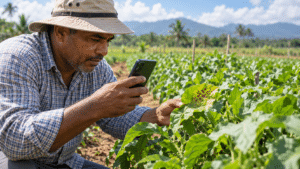
Access to reliable environmental data can help farmers make better-informed decisions about soil management and crop conditions. In the Dominican Republic, researchers are working on a portable technology that could bring soil and air measurements directly to the field, reducing reliance on costly, fixed monitoring systems.


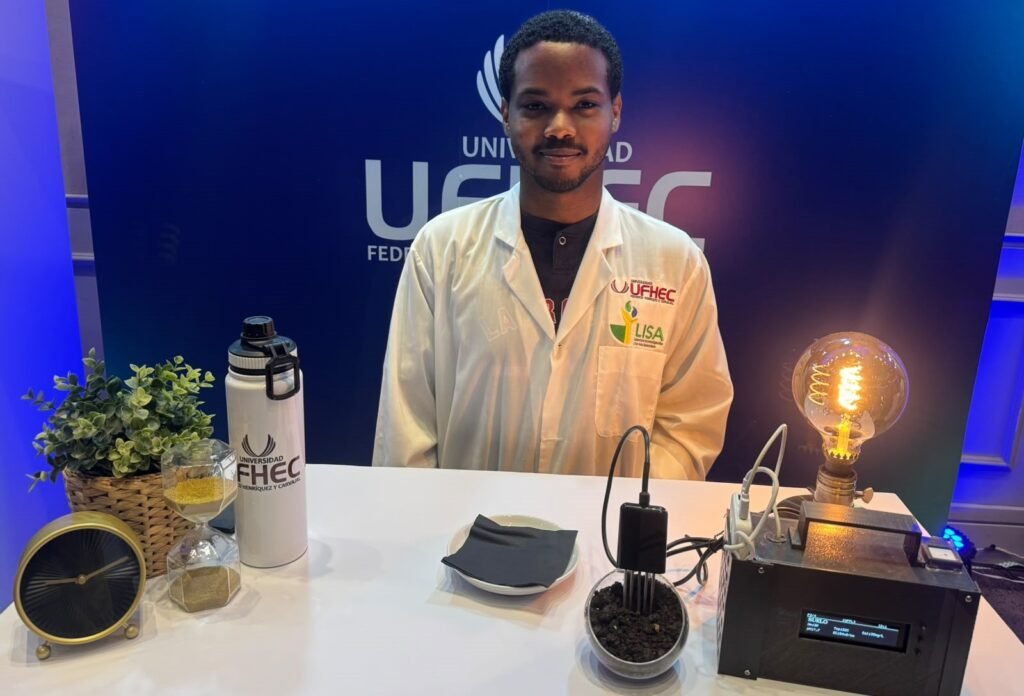
Researchers at Federico Henríquez y Carvajal University (UFHEC) in the Dominican Republic are developing a portable device designed to measure soil conditions and air quality directly in the field, potentially making environmental monitoring more accessible for agricultural and research applications.
The multiparameter device is being developed in collaboration with an Italian higher education institution. The project has been underway for approximately two years, according to Andretty Aquino Montero, a chemistry graduate and researcher at the university’s Environmental Services Laboratory.
The prototype aims to address a practical challenge: many environmental and meteorological monitoring systems are expensive and remain installed at fixed locations, limiting their use when measurements are needed across different sites.
Aquino Montero discussed the project during EmprendeLab, an initiative that promotes youth entrepreneurship through educational institutions with support from Promipyme. The project adds to a broader landscape of Dominican innovation projects emerging from the country’s universities and research community.
Measuring Soil Conditions
The device can measure several soil parameters, including moisture, pH, temperature, salinity and electrical resistivity. These indicators can help characterize a plot of land and assess whether its conditions are compatible with the requirements of particular crops.
Soil requirements vary depending on the plant species. Some crops thrive in more acidic conditions, others require alkaline environments, while others perform better in soils closer to neutral pH. Field measurements can help users understand these differences when evaluating agricultural land.
The prototype can also monitor changes in soil after the application of conditioners. If a treatment is intended to alter acidity or alkalinity, for example, repeated measurements can show how those parameters evolve over time.
However, Aquino Montero clarified that the device does not independently determine the ideal conditions for a specific crop or provide agricultural recommendations. Its purpose is to measure environmental parameters that can support further analysis.
Monitoring Air Quality and Greenhouse Gases
The prototype also includes capabilities for measuring gases in the air, including carbon dioxide (CO₂), methane and sulfur compounds. These functions could support environmental monitoring and research into emissions associated with agricultural activities.
One potential application is the study of methane emissions from livestock operations, including emissions associated with cattle and their waste. Methane is a greenhouse gas, making its measurement relevant to research on agricultural emissions and their environmental effects.
The researcher also indicated that future stages of development could allow the device to assess the quality of biogas intended for use as an energy source. This could create another potential application for the technology in environmental research and renewable energy.
A Flexible Prototype for Different Applications
In addition to soil and gas measurements, the device is designed to monitor other environmental parameters, including temperature, pH and light intensity. Its structure allows functions to be added or removed according to the needs of a particular application.
The current unit is a prototype designed to provide immediate functionality while allowing further development. Its eventual usefulness will depend on factors such as measurement accuracy, durability, ease of operation and performance under field conditions.
The information currently available does not establish whether the device is ready for commercial production or when it might become available to farmers and other users.
For the Dominican Republic, locally developed environmental monitoring tools could expand the resources available to agricultural researchers and environmental specialists. The prototype represents a potential step in that direction, although its broader impact will depend on continued development and validation.