 25°C
25°C

Google to Add Three Submarine Cables in Dominican Republic
Google is expanding its submarine cable network across the Caribbean and Pacific with three new systems involving the Dominican Republic, creating additional routes to the United States, Latin America and Europe.


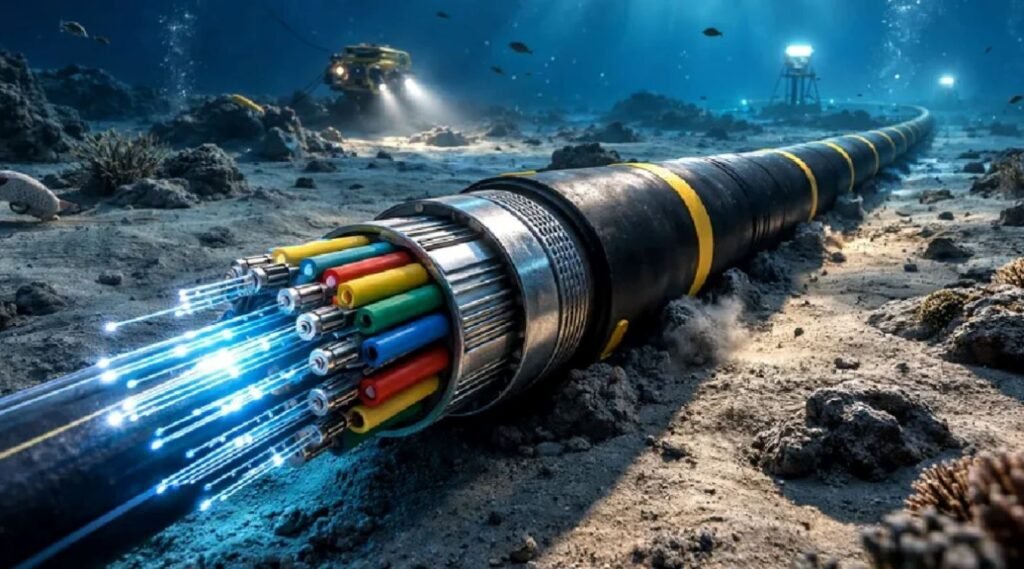
Google is planning a major expansion of its digital infrastructure in the Dominican Republic, with three new submarine cables designed to strengthen connections between the Caribbean, the Americas and Europe.
The initiative, known as Americas Connect, includes the Alisios, Canoa and OlaLuz cable systems, along with a new branch of Google’s existing Firmina cable. Together, the routes are intended to add capacity and create alternative paths for data traveling between the Dominican Republic, the United States, Latin America and Europe.
For the Dominican Republic, the project places the country at the center of several interconnected subsea routes. These systems are designed to provide greater network redundancy, meaning traffic can be redirected through alternative routes if one connection experiences an outage or disruption.
Three New Cables Will Connect the Dominican Republic
The Alisios cable will connect the Dominican Republic with Panama and Chile, creating an additional Pacific-Caribbean pathway. Its name refers to the trade winds of the Caribbean and reflects the geographic role of the route.
Canoa, whose name comes from a Taíno word, will link the Dominican Republic with Bermuda. The system will then connect with existing submarine infrastructure, creating alternative routes toward the United States and Madrid.
The third new system, OlaLuz, will establish a direct connection between the Dominican Republic and Florida. The name combines the Spanish words for “wave” and “light,” a reference to the optical-fiber technology carried by submarine cables.
Google also plans to extend Firmina, its existing submarine cable linking North and South America, with a branch reaching the Dominican Republic. The additional landing will allow the country to become an interconnection point between several of Google’s cable systems.
Redundant Routes Across the Caribbean and Pacific
The new infrastructure will be connected with existing Google systems including Curie, Nuvem and Sol. Rather than relying on individual point-to-point connections, the planned network will use interconnected routes to provide greater geographic diversity and redundancy.
In the Pacific, the configuration will create additional paths between Chile and Panama, with another connection extending from Panama to the U.S. West Coast. Google says the network will provide connectivity to its Cloud regions in Chile, Los Angeles and Las Vegas.
Across the Caribbean, Alisios will connect Panama with the Dominican Republic before linking through additional routes toward the U.S. East Coast. The planned configuration will provide access to Google’s Cloud regions in South Carolina and Virginia.
The Dominican Republic will therefore serve as a convergence point for Alisios, the Firmina branch and OlaLuz, allowing traffic to move between Caribbean, Latin American and U.S. routes through a more diversified network.
Atlantic Links Will Extend Toward Europe
The Atlantic component will center on Canoa and its connection to the existing Nuvem and Sol systems. Those interconnections are intended to create alternative paths toward the United States and Madrid, giving the network access to both American and European destinations.
Submarine fiber-optic cables carry a substantial share of international internet traffic and are a core part of modern digital infrastructure. Google has previously described subsea systems as a way to increase capacity, improve reliability and reduce latency for its users and Google Cloud customers. Its Latin American network already includes systems such as Firmina and Curie.
For the Dominican Republic, the planned expansion could strengthen its position within regional digital infrastructure by adding more international routes rather than relying on a smaller number of connections. The practical impact will depend on the deployment and operation of the new systems, but the architecture announced by Google is focused on greater reach, reliability and resilience.
Google said the broader Americas Connect initiative is intended to connect geographically separated Google Cloud regions while increasing diversity in submarine cable routes. The Dominican Republic’s role in several of those routes gives the Caribbean country a central position in the planned network linking North America, South America, the Caribbean and Europe.