 25°C
25°C

SpaceX Falcon 9 Rocket Stage Crashes Into the Moon as Predicted
A discarded second stage of a SpaceX Falcon 9 rocket has impacted the Moon, with astronomers confirming the collision after detecting a temporary cloud of debris and chemical traces using one of the world's most powerful telescopes.


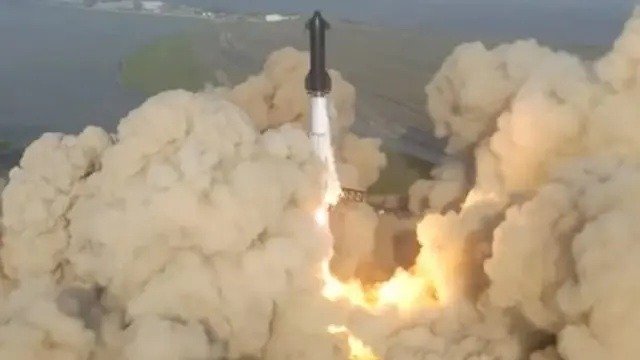
A SpaceX Falcon 9 rocket stage approximately the size of a bus struck the Moon on Wednesday, an event scientists had predicted in advance. The impact was confirmed by the European Southern Observatory (ESO), whose Very Large Telescope (VLT) in Chile detected a cloud of debris created by the collision.
According to the observatory, the telescope identified spectral lines—often described as chemical “fingerprints”—corresponding to sodium and lithium in the debris cloud. The cloud remained visible for between five and ten minutes before dissipating.
Chemical Clues From the Collision
Researchers said the sodium most likely originated from the lunar surface, while the lithium is believed to have been released from the Falcon 9 rocket stage during the impact. These observations provide scientists with valuable information about both the Moon’s surface and the behavior of human-made objects striking it.
No Threat to Earth
The rocket stage impacted the Moon at an estimated speed of 8,690 kilometers per hour. Scientists emphasized that the collision posed no danger to Earth and was the result of the object’s natural orbital evolution rather than an intentional mission.
The impact is expected to have created a new crater on the lunar surface. Space agencies, including NASA, are expected to document its location and size using orbiting spacecraft in the coming weeks or months.
Benjamin Fernando, a researcher at the Los Alamos National Laboratory in New Mexico, confirmed to AFP that the collision occurred as predicted.
Rocket Stage Left in Space After 2025 Mission
The Falcon 9 second stage had remained in space since January 2025, when it was used to help launch two lunar landers. While the rocket’s first stage successfully returned to Earth, the upper stage remained in orbit until gravitational forces gradually altered its trajectory and sent it toward the Moon.
NASA has said that understanding how space debris behaves in lunar orbit is increasingly important as the agency prepares for future missions aimed at establishing a sustained human presence on the Moon. Although meteoroid impacts occur regularly on the lunar surface, collisions involving human-made spacecraft remain relatively rare, making events like this scientifically valuable.